THE DAY AFTER LORETTA LYNN DIED, “COAL MINER’S DAUGHTER” STOPPED SOUNDING LIKE WHERE SHE CAME FROM — AND STARTED SOUNDING LIKE WHERE SHE WENT BACK TO. On October 5, 2022, Loretta Lynn’s voice was still coming through radios, old records, and kitchen speakers across America. But the woman behind it was gone. Just one day earlier, she had passed away peacefully at her home in Hurricane Mills, Tennessee, leaving behind a story that began in the hills of Kentucky and somehow became part of every honest corner of country music. People remembered the hits, of course. But the next day, “Coal Miner’s Daughter” felt different. It no longer sounded like just a memory of Butcher Holler. It sounded like a road leading back to her — the girl, the mother, the fighter, the woman who said hard things plainly and made millions feel less alone. That was Loretta’s gift. She did not polish life until it looked pretty. She sang it as it was. And one day after she was gone, country music still knew exactly where to find her. – Country Music
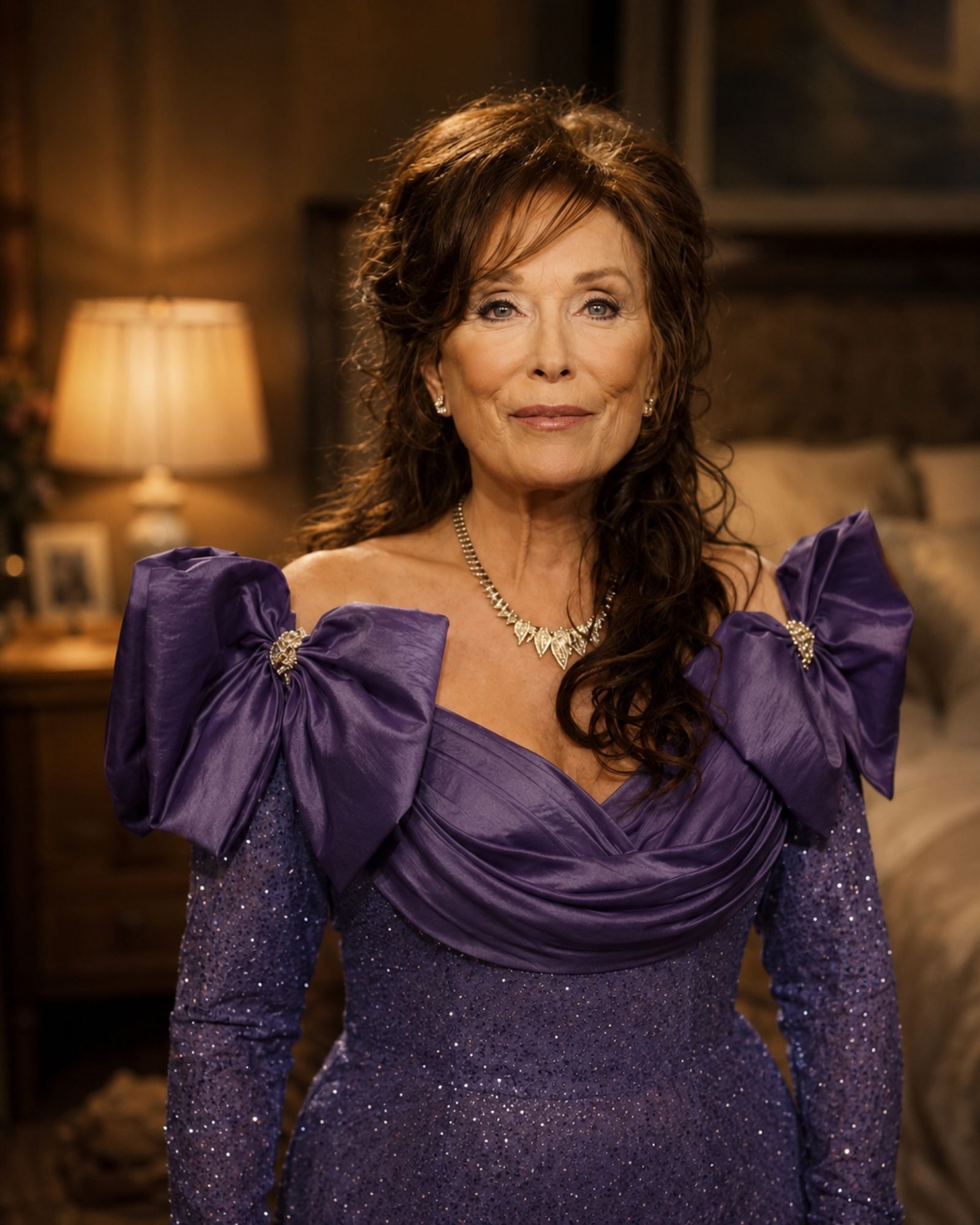
On October 5, 2022, the news of Loretta Lynn’s death moved through the country with a quiet force that felt bigger than a headline. She had died peacefully the day before at her home in Hurricane Mills, Tennessee, at the age of 90. For millions of people, it was a moment that felt strangely personal, as if someone had opened a door to a memory everyone shared.
By that afternoon, her songs were everywhere. Radios played them in trucks and grocery stores. Old records spun in living rooms. Kitchen speakers carried her voice into ordinary places, the same places she had always seemed to understand so well. Loretta Lynn was gone, but her voice was still there, steady and unshaken, as if it refused to leave the room.
A Song That Changed Its Meaning Overnight
“Coal Miner’s Daughter” had always been one of Loretta Lynn’s defining songs. Before that day, it sounded like a proud introduction, a story about where she came from, told with the kind of honesty that made her unforgettable. It was about Butcher Holler, Kentucky, about a childhood shaped by poverty, work, and family, and about a woman who never forgot her roots even after becoming a star.
But the day after Loretta Lynn died, the song felt different. It was no longer just a memory of the place that made her. It sounded like a road leading back to her. Every line seemed to carry a new kind of weight, as if the story had folded in on itself and become something more tender, more final.
“Coal Miner’s Daughter” had once been Loretta Lynn looking back. After her death, it sounded like America looking back at Loretta Lynn.
That shift happened because Loretta Lynn had never been a distant legend. She had always felt close enough to touch. She sang about marriage, motherhood, hardship, pride, and heartbreak in a voice that did not ask for permission. She told the truth in a way that made people trust her. That trust is why her songs lasted so long, and why they changed meaning the moment she was no longer here to sing them herself.
The Girl From Butcher Holler Became a National Voice
Loretta Lynn’s story began far from the spotlight. She was born in Kentucky, one of eight children, and grew up in a world where hard work was not a slogan but a way of life. Those early years stayed with her forever. They gave her songwriting its backbone and her voice its plainspoken power.
When she became famous, she never polished away those beginnings. Instead, she carried them with pride. She built a career on songs that sounded like real life because they were rooted in real life. That was part of what made her different. She did not sing from above people. She sang from beside them.
Over time, she became one of country music’s most important figures. She was brave enough to write about subjects many women in her era were expected to keep private. She was strong enough to stand her ground in an industry that did not always make room for women to do that. And she was warm enough to make all of it feel human, never distant or cold.
Why the Silence Felt So Loud
After Loretta Lynn died, the silence around her music felt louder than usual. That is often what happens when an artist becomes part of the cultural landscape. Their absence creates a space people suddenly notice.
“Coal Miner’s Daughter” became more than a signature song. It became a farewell without ever trying to be one. Listeners heard the child in the hills, the young woman chasing a future, the mother carrying a family, the performer standing under the lights, and the older voice that had lived long enough to become part of history. All of it was there in the song, and all of it felt newly alive in the days after her passing.
That is the strange power of a song like this. It can hold two truths at once. It can remember where someone came from, and it can help us understand where they went after they left. In Loretta Lynn’s case, it did both.
What Loretta Lynn Left Behind
Loretta Lynn left behind more than famous songs. She left behind a way of telling the truth that still feels rare. She showed that country music could be tough and tender at the same time. She proved that an artist could come from humble beginnings and still shape the culture of an entire nation.
Most of all, she left behind a voice that never sounded fake. Whether she was singing about love, loss, family, or survival, Loretta Lynn always sounded like she meant every word. That is why her music did not fade when she died. It deepened.
The day after Loretta Lynn died, “Coal Miner’s Daughter” stopped sounding like a story about the past. It started sounding like a place she had returned to, carrying all the grace, grit, and honesty she gave the world. And for everyone who listened, that felt like the truest ending she could have given herself.
Post navigation
In the early 1970s, a young man from Sabinal, Texas stepped into Nashville with no famous last name, no industry machine behind him, and no polished image built for television. His name was Johnny Rodriguez, and he carried something stronger than connections: a voice that made people stop, listen, and feel.
Country music had always claimed to tell the stories of ordinary Americans. But in practice, the stage had room for only a narrow idea of who belonged. For a Mexican American singer in that era, the door was there, but it was not really open. Johnny Rodriguez did not wait for permission. He walked in anyway.
A Voice That Changed the Room
Johnny Rodriguez arrived in Nashville with a sound that was warm, aching, and full of quiet confidence. He did not sound like a calculated trend. He sounded real. That mattered more than image, and it mattered more than anyone expected.
By 1973, Johnny Rodriguez had back-to-back No. 1 hits, and country radio could not ignore him. Listeners heard a singer who understood heartbreak without overplaying it, and who knew how to hold a note just long enough to make it hurt. He sang in English, but when the feeling demanded something deeper, he slipped into Spanish. It was not a gimmick. It was identity. It was memory. It was home.
Johnny Rodriguez did not ask country music to make room for him. He sang so honestly that the room had to widen.
More Than Talent
Johnny Rodriguez mattered because his presence meant something larger than chart success. In an industry that often acted as if country music belonged to one accent, one background, or one kind of American story, Johnny Rodriguez proved otherwise. He showed that the emotional center of country music was not limited by race or language.
That was a quiet revolution. He did not deliver speeches about breaking barriers. He did not need to. Every performance said it for him. Every song carried the simple truth that a Mexican American kid from South Texas could stand in the middle of mainstream country and belong there completely.
Fans connected to him because he made the music feel lived-in. He was never trying to sound like somebody else. He brought his own experience into the genre and trusted that honesty would carry him. It did.
A Door Opens, Even If Slowly
Before Johnny Rodriguez, the country music world had kept certain doors half-closed, especially for artists who did not fit its preferred image. Johnny Rodriguez did not break that door down with force. He opened it by doing the hardest thing of all: succeeding in a space that was not designed for him.
That success changed expectations. It showed future artists that country music could be broader, richer, and more truthful than the gatekeepers imagined. It reminded audiences that the genre’s deepest themes — longing, family, loss, pride, and survival — belong to many kinds of people.
Johnny Rodriguez never seemed interested in becoming a symbol, but history made him one. He became proof that country music did not have to sound one way to be authentic. It could carry English and Spanish. It could carry Texas and Nashville. It could carry the life of a Mexican American artist and still feel unmistakably country.
The Legacy He Left Behind
When Johnny Rodriguez died on May 9, 2025, country music lost more than a memorable voice. It lost a pioneer who had changed the landscape simply by standing in it with honesty and grace. He never tried to close the door after himself. That may be the most important part of his story.
His legacy is not just in the hits, or the history books, or the applause that followed him for decades. His legacy lives in every artist who sees themselves differently because Johnny Rodriguez once proved it could be done. It lives in every listener who heard that voice and felt, maybe for the first time, that country music had room for them too.
Johnny Rodriguez did not just sing songs. He widened the meaning of the genre. He reminded Nashville that country music’s heart was always bigger than its gatekeepers imagined. And long after the spotlight moved on, the door he opened remained open.