TAMMY WYNETTE SAID HE WAS THE ONLY SINGER WHO COULD HOLD A CANDLE TO GEORGE JONES — AND THIS ONE SONG PROVED IT.Vern Gosdin didn’t just sing this song; he bled through every devastating syllable of it.Before it existed, his co-writer Max D. Barnes had buried his 18-year-old son in a car accident — and carried that unspeakable grief silently for over a decade.This isn’t a typical barroom ballad. It is an old widower’s quiet, shattering warning to a young fool who doesn’t yet understand what real loneliness means — the kind that only arrives when the person you love is beneath the ground.With his impossibly pure baritone — the voice Tammy Wynette herself bowed to — Gosdin delivered those words with such unbearable tenderness that grown men wept in their trucks.He didn’t dramatize the pain. He simply named it. And naming it was enough to break you.Some truths don’t need to shout. They just need to be carved into permanence. – Country Music
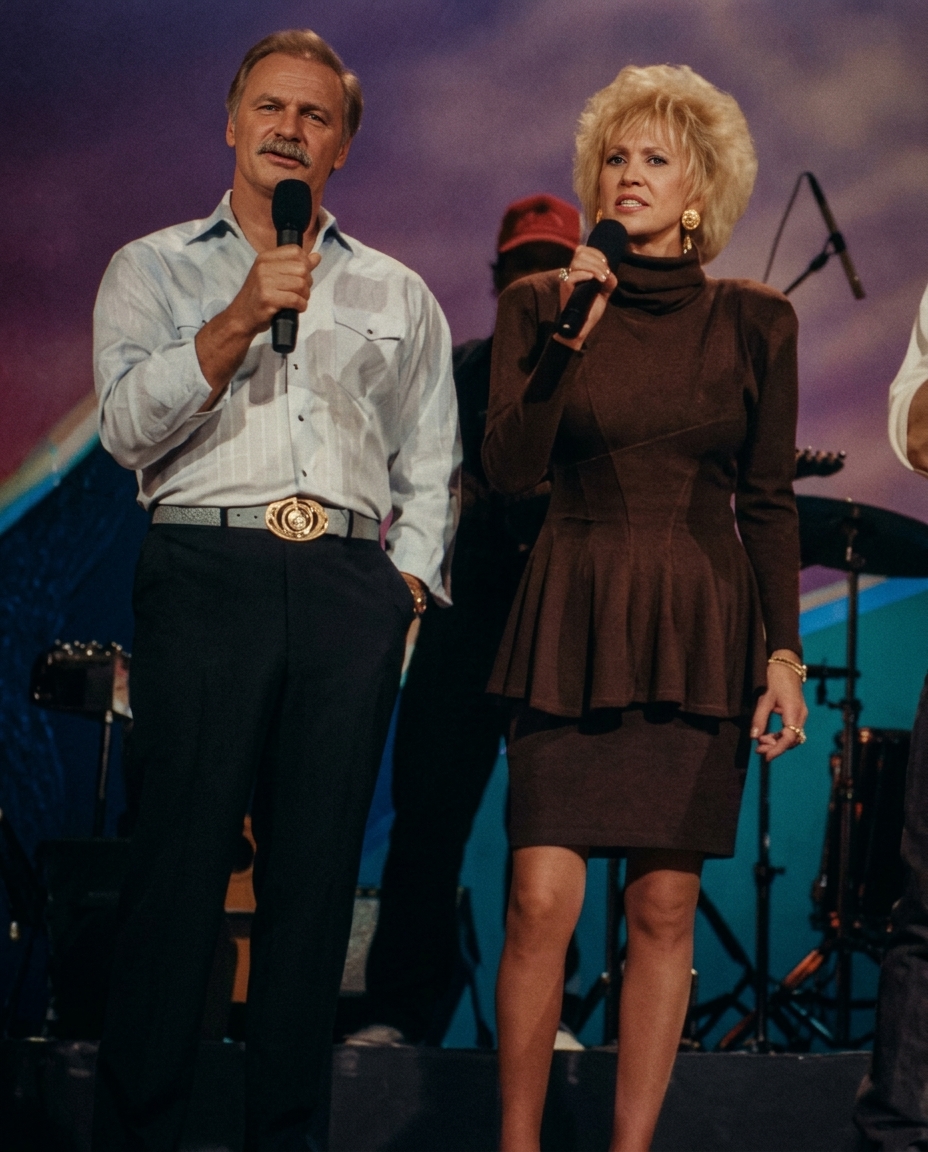
There are country songs that entertain you for three minutes and disappear by morning.
Then there are songs that stay. Songs that feel less like music and more like a scar somebody finally found the courage to show.
Vern Gosdin recorded one of those songs.
For years, Tammy Wynette said there was only one singer who could hold a candle to George Jones. She meant Vern Gosdin. Coming from Tammy Wynette, that was not a casual compliment. Tammy Wynette had stood beside George Jones through the best and worst years of his life. She knew what a true country voice sounded like. She knew the difference between somebody singing a song and somebody living inside it.
When Vern Gosdin walked into a studio, he never tried to overpower a lyric. He did not chase high notes or flashy moments. Vern Gosdin sang quietly, almost carefully, as if he knew every word had weight.
And no song revealed that gift more completely than “Chiseled in Stone.”
A Song Born From Real Grief
By the time “Chiseled in Stone” was written, Max D. Barnes had already spent years carrying a loss almost too painful to speak aloud.
More than a decade earlier, Max D. Barnes had lost his 18-year-old son in a car accident. Friends said Max D. Barnes rarely talked about it. He buried himself in work, in writing, in long nights where grief sat beside him in silence.
But grief has a way of finding its own voice.
One day, Max D. Barnes and Vern Gosdin began writing together. What came out was not a typical country heartbreak song. There were no cheating lovers, no angry goodbyes, no dramatic final scene in the rain.
Instead, “Chiseled in Stone” told the story of an old widower sitting in a bar, listening to a younger man complain about a broken romance. The younger man believes his pain is unbearable. The older man listens for a while, then quietly tells him he does not yet understand what loneliness really is.
“You don’t know about lonely until it’s chiseled in stone.”
That line did not feel written. It felt discovered.
Because the widower in the song is not talking about a woman who left. He is talking about a woman who died. He is talking about waking up in a house that still feels full of her, even though she has been gone for years. He is talking about seeing her clothes in the closet, hearing her laugh in memories, and realizing there is no argument, no apology, no second chance left.
Only a grave.
Vern Gosdin Never Raised His Voice
Another singer might have turned “Chiseled in Stone” into a performance. Another singer might have pushed the tears too hard or tried to make the heartbreak bigger than it already was.
Vern Gosdin did the opposite.
Vern Gosdin sang the song with such stillness that every word landed harder. His voice was rich and pure, but there was something else in it too — a kind of exhausted wisdom. Vern Gosdin sounded like a man who knew exactly what the song meant and did not need to explain it.
When Vern Gosdin reached the final chorus, there was no dramatic cry. No grand gesture.
Just that voice.
Low. Steady. Human.
It was the sound of somebody finally saying the thing most people spend their whole lives trying not to think about.
The sound was so honest that it left people stunned. Men who never cried admitted later that they had to pull their trucks to the side of the road when the song came on. Widows heard themselves in it. Husbands heard their worst fear.
And younger listeners heard something else: a warning.
Love feels ordinary while you still have it. You assume there will always be one more conversation, one more drive home, one more night sitting beside the person who knows you better than anybody else.
Then one day there is not.
The Song That Made Tammy Wynette Right
Tammy Wynette understood why Vern Gosdin mattered.
George Jones could sing pain in a way that made you believe every terrible thing had happened to him personally. Vern Gosdin had that same rare gift. Neither man needed to force emotion into a song. They simply stood inside the truth of it.
“Chiseled in Stone” became Vern Gosdin’s signature because it captured everything that made Vern Gosdin different. The tenderness. The restraint. The unbearable honesty.
There are bigger songs in country music. There are louder songs. There are songs with bigger hooks and more famous stories.
But “Chiseled in Stone” remains because it tells the truth most people are afraid to say out loud.
Some pain does not fade. Some love does not leave.
Sometimes it stays with you forever, carved deep and permanent, like something chiseled in stone.
Post navigation
When the news of Charley Pride’s passing reached the world in December 2020, it felt like more than the loss of a country music legend. It felt like the closing of a chapter that had changed the genre forever. Charley Pride was 86 years old, but even in the final weeks of his life, Charley Pride was still doing what Charley Pride had always done best: standing tall, singing with calm strength, and reminding the world that real country music comes from the heart.
What made that moment so powerful was not only the sadness of goodbye. It was the fact that Charley Pride had never become a memory while he was still here. Charley Pride was not tucked away in the past, remembered only through old records and faded photographs. Charley Pride was still present. Still singing. Still carrying that unmistakable smooth baritone voice that had comforted listeners for generations.
Only weeks before the end, Charley Pride appeared beneath the lights of the CMA Awards. For many fans, it was more than a performance. It was a reminder. Country music was hearing one of its truest voices once again. There was dignity in that appearance. There was history in it too. Charley Pride did not need loud gestures or dramatic speeches. Just standing there was enough. The meaning was already written into the room.
A Voice That Opened a Door
Charley Pride’s story was never ordinary. Long before Charley Pride became one of the most beloved names in country music, the genre had barriers that seemed impossible to break. Nashville could be traditional, guarded, and slow to change. Yet Charley Pride walked into that world with patience, talent, and a voice so warm and believable that listeners could not turn away.
That may be the most remarkable part of Charley Pride’s journey. Charley Pride did not force country music to accept something artificial. Charley Pride simply belonged there. Every note proved it. Every performance confirmed it. Charley Pride sang about love, distance, longing, home, and heartache with the same honesty that made country music matter in the first place.
And once people heard Charley Pride, they remembered Charley Pride.
Sometimes a singer changes music not by shouting for attention, but by making the truth impossible to ignore.
The Songs That Stayed With People
When people began mourning Charley Pride, they did not need to search long for the soundtrack. The songs came back immediately, almost on instinct. “Kiss an Angel Good Mornin’.” “Is Anybody Goin’ to San Antone.” “Crystal Chandeliers.” Those titles were not just hits. They were companions. They had lived in kitchens, car radios, dance halls, porches, and quiet afternoons for decades.
That is one reason the loss felt so personal. For many listeners, Charley Pride was never just a famous voice on a recording. Charley Pride sounded familiar in the deepest way. There was kindness in the phrasing. Confidence without arrogance. Emotion without excess. Charley Pride sang in a way that made people feel understood, and that kind of connection does not disappear just because the years pass.
Over more than fifty years, Charley Pride gave country music something larger than awards or chart positions. Charley Pride gave the genre a wider horizon. By succeeding with grace in a space that had once seemed closed, Charley Pride made it harder for anyone to argue that country music belonged to only one kind of person. Charley Pride did not just make history. Charley Pride made the future broader.
A Goodbye That Felt Like Losing a Friend
There are some artists whose passing feels distant, almost ceremonial. Charley Pride was not one of them. The sadness around Charley Pride carried a softer weight. It felt like losing someone who had quietly been there all along. Someone steady. Someone whose voice had stayed warm even as the world grew louder and more divided.
That is why Charley Pride’s farewell still carries emotion years later. The records remain, the songs still play, and the influence is woven permanently into country music. But there is still a silence where that living voice used to be. Not an empty silence, exactly. More like a respectful one.
Charley Pride changed country music forever not simply because Charley Pride broke barriers, though Charley Pride certainly did. Charley Pride changed country music because Charley Pride made greatness feel gentle. Charley Pride showed that dignity could be powerful, that warmth could endure, and that one honest voice could open a door wide enough for generations to walk through.
And that is why Charley Pride is not gone in the way people fear. The man may have said goodbye, but the sound remains. Every time those songs return to the air, Charley Pride returns with them.