STREAMS JUMPED 999% IN 7 DAYS — AND NOW IT’S OFFICIALLY PLATINUM. Jason Aldean released “Try That In A Small Town” in May 2023, and honestly, not many people noticed at first. It was doing about 1,000 sales a day. Quiet. Then the music video dropped in July — and everything changed overnight. CMT pulled the video from rotation within four days. But here’s what nobody expected. Instead of fading away, the song exploded. Streams went from 987,000 to 11.7 million in a single week. Sales jumped from 1,000 to 228,000. It had the biggest sales week for a country song in over 10 years. The song hit #1 on the Billboard Hot 100 — the first time in Aldean’s entire career. And now, after all that noise, all that debate, “Try That In A Small Town” has been officially certified Platinum by the RIAA. Some songs get famous because everyone agrees. This one got famous because they didn’t. – Country Music
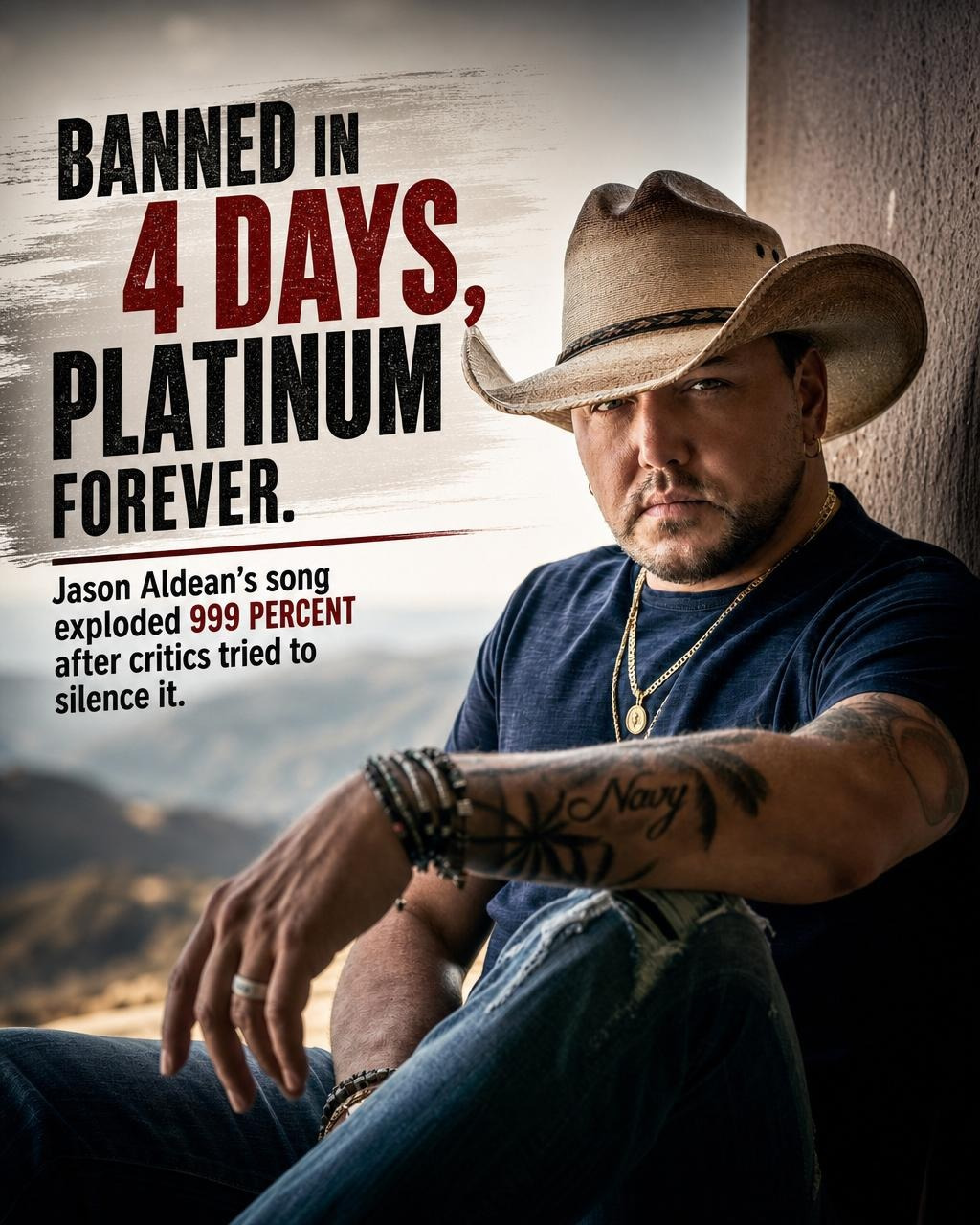
When Jason Aldean released “Try That In A Small Town” in May 2023, the song arrived with little sign that it would become one of the most discussed country releases of the year. At first, the track moved quietly, selling about 1,000 copies a day and drawing a steady but modest audience. For a while, it looked like just another strong entry in a long career.
Then the music video arrived in July, and the story changed fast. Within days, the clip sparked widespread conversation, drawing reactions from fans, critics, and media outlets alike. CMT pulled the video from rotation after four days, which only added more attention to the song. What could have faded instead turned into a full-scale breakout moment.
A Song That Refused to Slow Down
While the debate around the video kept growing, the music itself surged in a way few expected. Streams jumped from 987,000 to 11.7 million in a single week. Sales climbed from about 1,000 to 228,000. That kind of leap is rare in any genre, and for country music, it was especially striking. The song recorded the biggest sales week for a country track in more than a decade.
For Jason Aldean, the result was more than just a headline. “Try That In A Small Town” became the first song of his career to reach No. 1 on the Billboard Hot 100. That milestone alone would have marked a major chapter in his career, but the path there made it even more notable. The song did not rise because everyone agreed about it. It rose because people were paying attention.
Some songs become hits through comfort and consensus. Others become hits because the conversation around them refuses to stop.
From Controversy to Certification
Now the song has reached another major milestone: official Platinum certification from the RIAA. That means “Try That In A Small Town” has crossed the line into long-term commercial success, far beyond the short burst of debate that first pushed it into the spotlight.
In the music industry, certifications like Platinum matter because they show more than attention. They show sustained listening, purchasing, and cultural reach. For Jason Aldean, this certification confirms that the song’s impact was not just temporary noise. It became part of the year’s larger musical conversation and stayed there.
Why This Moment Stands Out
The story of “Try That In A Small Town” is unusual because it shows how modern music can move. A song can start quietly, spark controversy, and then explode in popularity almost overnight. In this case, the reaction helped carry the track far beyond its original release.
Jason Aldean has had many successful songs over the years, but this one stands apart. It is a reminder that in today’s music world, attention can change everything in a matter of days. And sometimes, the songs that divide people the most end up making the biggest commercial mark.
With Platinum now added to its list of achievements, “Try That In A Small Town” has gone from an unassuming release to one of the most talked-about country hits of the past several years. Whether people loved it, questioned it, or simply watched the conversation unfold, the result is the same: Jason Aldean’s song became impossible to ignore.
Post navigation
Hawkshaw Hawkins, “Lonesome 7-7203,” and the Song That Outlived Its Singer
On March 2, 1963, Hawkshaw Hawkins released “Lonesome 7-7203.” At the time, it looked like the kind of moment every singer dreams about: the record was moving up the country charts, the audience was paying attention, and the momentum was finally building in the right direction. After years of working in music, Hawkshaw Hawkins had reason to believe that his biggest chapter might still be ahead of him.
But life changed almost immediately.
Just three days later, Hawkshaw Hawkins boarded a small Piper Comanche with Patsy Cline and Cowboy Copas. The group had finished a benefit performance in Kansas City for the family of a disc jockey who had died in a car crash. They had the option to drive back to Nashville, but the decision was made to fly. The pilot believed he could manage the weather and get them home safely.
He could not.
Ninety miles from home, the plane went down near Camden, Tennessee. Everyone on board was killed. Hawkshaw Hawkins was 41 years old.
A Career Built on Patience
Hawkshaw Hawkins was not an overnight success story. He had spent years building a name in country music, recording songs that connected with listeners through plainspoken emotion and a warm, familiar style. He was respected for his voice and for the steady presence he brought to the stage.
That is what makes the story of “Lonesome 7-7203” so heartbreaking. The song arrived at exactly the wrong moment, or perhaps at the most painful one imaginable. It became the biggest hit of Hawkshaw Hawkins’ life just as his life was ending.
Sometimes a song becomes more than a song. It becomes a final echo, carrying a voice farther than the person ever could.
The Chart Success That Came Too Late
“Lonesome 7-7203” stayed on the Billboard country chart for 25 weeks. It reached number one for four of those weeks, making it a major success by any standard. Fans heard the record. Radio stations played it. The song kept moving long after the tragedy in Tennessee had already happened.
There is something especially haunting about that kind of timeline. Hawkshaw Hawkins never got to watch the song rise. He never got to enjoy the celebration that should have followed. The applause came after the silence.
For listeners then and now, the record carries a strange double feeling: it is lively enough to remember as a hit, but heavy enough to feel like a farewell. That contrast has helped keep Hawkshaw Hawkins’ name alive in country music history.
Why the Story Still Stays With Us
People remember this story not only because of the crash, but because it reveals how quickly success and loss can meet. One moment, Hawkshaw Hawkins was riding the wave of a promising release. The next, the future was gone. The song remained, but the man behind it was no longer here to hear the applause.
That is what makes “Lonesome 7-7203” more than a chart record. It is a reminder that music can outlast the life that created it. It can carry a voice into the years that follow, even when the singer never gets to witness the legacy firsthand.
Hawkshaw Hawkins did not live to see how far his song would go. But the song kept going anyway, and that may be the most moving part of all.