Sook Jai: When Freedom Finally Found Her. – Daily News
For most of her life, Sook Jai did not know what freedom felt like.
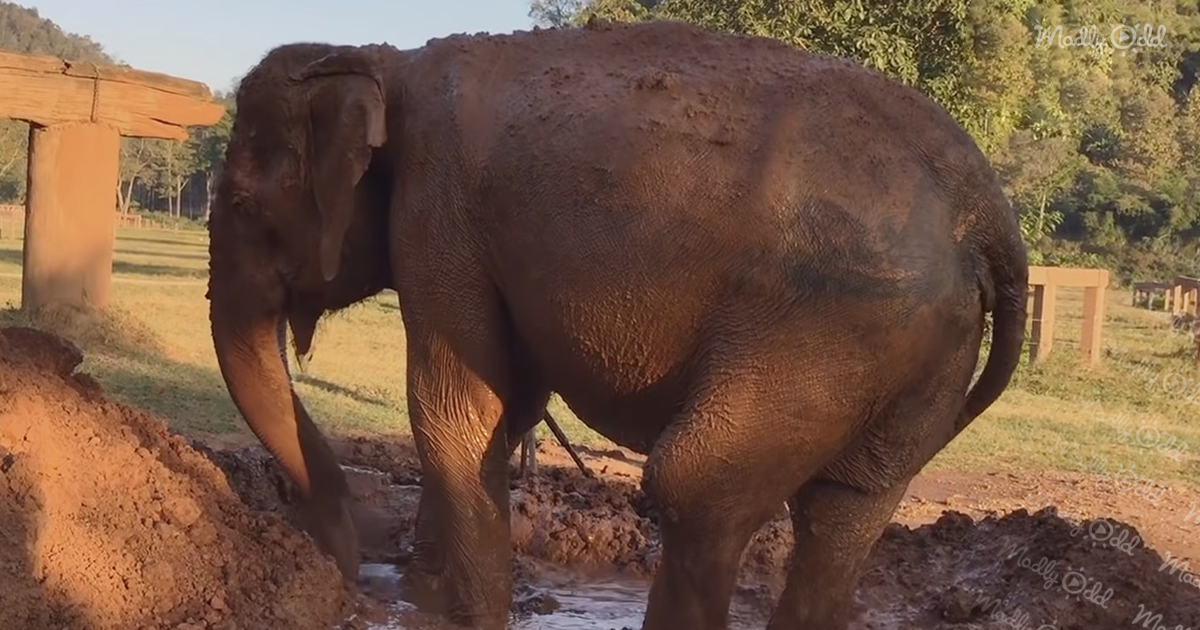
At seventy-three years old, her body carried the weight of decades—wrinkled gray skin etched with scars, legs stiff from years of strain, eyes clouded by darkness that would never lift. But the heaviest burden she carried was invisible: a lifetime of fear, pain, and memories she could never escape.
No one knows exactly how old Sook Jai was when she was taken from the wild.
What is known is that she was still young—young enough to cry for her mother, young enough to be confused by the sudden violence that tore her world apart. Somewhere in the forests of Thailand, she was captured, separated from everything familiar, and dragged into a life she could not understand.
Elephants are among the most intelligent and emotionally complex animals on Earth. They grieve. They remember. They form deep family bonds that last a lifetime.
That is what made Sook Jai’s suffering especially cruel.
She was “trained” the only way her captors knew how—through pain. Beaten, restrained, deprived of sleep and food until her spirit bent enough to obey. The goal was not companionship or care, but profit. Once she was broken, she was sent to the streets.
For years—decades—Sook Jai begged.
She stood on hot pavement, day after day, while crowds passed her by. Some people stared. Some laughed. Some dropped coins. Most never saw her as a living being at all—just part of the background noise of city life.
Behind the scenes, the abuse continued.
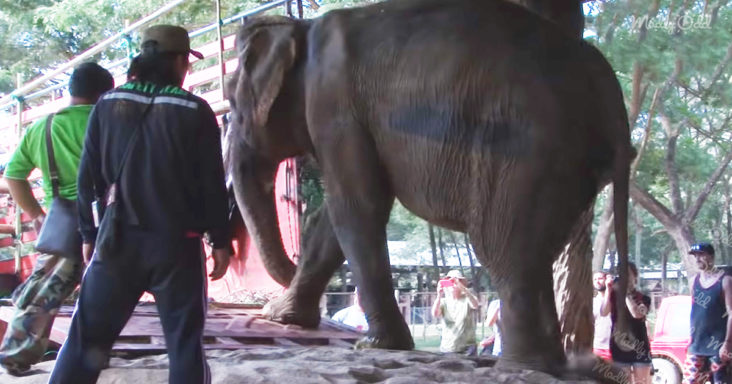
Different owners came and went, but the cruelty remained the same. Chains cut into her skin. Hooks struck her sensitive flesh. Loud noises, shouting, and constant stress eroded her senses until, slowly, the world began to fade.
By the time help finally arrived, Sook Jai was blind.
Her hearing was badly damaged. She could no longer react quickly to danger. She moved cautiously, feeling her way through a world she could barely perceive, guided not by trust but by fear.
Still, she survived.
That alone was a testament to her strength.
In 2017, after years of suffering, word reached the Elephant Rescue Park about an elderly elephant living in horrifying conditions. When rescuers arrived, what they found shattered them.
Sook Jai was weak. Emaciated. Her body showed signs of long-term neglect. Her eyes—empty and unfocused—held no spark of curiosity, only exhaustion.
She did not resist when they approached.
She did not trumpet or pull away.
She simply stood there, motionless, as if expecting the worst.
The journey to the sanctuary was quiet.
Sook Jai swayed gently in the transport vehicle, her massive body tense, unsure of where she was being taken. She had learned long ago that change rarely meant kindness.
But when she arrived, something different happened.
The air was calmer. There were no shouts. No chains. No sharp commands. The ground beneath her feet was soft. Grass brushed against her legs—a sensation she hadn’t felt in years.
As caretakers guided her slowly into her new home, something extraordinary occurred.
Sook Jai began to cry.
Tears streamed down her wrinkled face, tracing paths through dust and grime. The sight silenced everyone present. Seasoned rescuers—people who had seen unimaginable cruelty—stood frozen, tears filling their own eyes.
Elephants can cry. Not just from physical irritation, but from emotional release.
For Sook Jai, those tears told a story words never could.
They were tears of confusion.
Tears of disbelief.
Tears of relief.
For the first time in her long life, no one raised a hand to strike her. No one forced her to perform. No one demanded anything from her except that she eat, rest, and heal.
Caretakers worked tirelessly to nurse her back from the edge. They cleaned her wounds, treated infections, and fed her carefully, knowing her aging body could not handle sudden changes. They spoke softly, announcing themselves so she would not be startled by unseen movement.
Because Sook Jai could not see them.
She learned her new world through sound and touch. Gentle hands on her trunk. Calm voices calling her name. The steady presence of humans who came back every day—not to hurt her, but to care.
Slowly, she began to respond.
Her steps grew more confident. Her body relaxed. She explored her enclosure with cautious curiosity, reaching out with her trunk to feel trees, water, earth—things she had been denied for so long.
She was old. Her body would never fully recover from the damage inflicted over a lifetime. But something far more important was healing.
Her spirit.
Videos of Sook Jai’s rescue spread across the world, touching millions. Viewers watched an elderly elephant—once beaten into submission—take tentative steps toward peace. Many wept openly, overwhelmed by the realization that suffering like hers had gone on for so long, unseen.
But they also felt something else.
Hope.
Sook Jai’s story became a symbol—not just of cruelty, but of resilience. Of the power of compassion arriving even when it feels too late. Of the truth that dignity matters, no matter how old, no matter how broken.
Today, Sook Jai lives her remaining years in safety.
She wakes without fear. She eats without pain. She rests without chains biting into her skin. She listens to the sounds of nature instead of traffic and shouting. She is surrounded by caretakers who know her history and honor her survival.
She will never return to the wild. Her blindness makes that impossible. But she no longer needs to.
Because freedom is not always about where you go.
Sometimes, it’s about what finally stops.
The beatings stop.
The hunger stops.
The terror stops.
And in their place, something new begins.
Sook Jai’s life stands as a reminder to humanity—of our capacity for cruelty, yes, but also of our responsibility to do better. To speak up. To rescue when we can. To refuse to look away.
She endured seventy-three years of suffering.
But she did not die in it.
She lived long enough to know peace.
And that, in the end, is a victory no one can take from her.
On the hottest days, when the air itself seems to press down like a heavy blanket, even the strongest bodies look for rest.

Colonel knows this well.
At nearly five tons and 29 years old, the Asian elephant has learned the rhythms of heat, shade, and relief. His massive body carries power and grace, but also a quiet wisdom earned through years of experience. And on one sweltering afternoon, Colonel reminded everyone watching that sometimes the most beautiful moments of life come not from effort—but from surrender.
The splash pool sat still in the afternoon light, its surface shimmering under the sun. The heat lingered everywhere, clinging to skin, slowing movement. Caretakers watched as Colonel approached the water with calm familiarity. There was no rush in his steps. No urgency. Just intention.
He had done this before.

Slowly, deliberately, Colonel stepped into the pool. The water wrapped around his legs, climbing higher as he moved forward, the heat releasing its grip inch by inch. A low rumble escaped his chest—a sound somewhere between satisfaction and relief.
Then, with a gentleness that always surprises those seeing elephants up close, he lowered himself down.
His enormous body sank beneath the surface until only the water remained—rippling softly, disturbed only by a single, remarkable thing: the tip of his trunk.
Like a living snorkel, Colonel lifted his trunk just enough above the waterline to breathe. The rest of him rested fully submerged, weightless, cool, suspended in quiet.
And there, at the bottom of the pool, Colonel fell asleep.
Not the tense rest of an animal on alert. Not the half-doze of something waiting to move. But a true nap—deep, peaceful, unguarded.
For elephants, water is more than play. It is comfort. It is therapy. It eases joints, cools skin, softens the weight of a body built to carry immense strength. In the wild, Asian elephants bathe, swim, and even cross long stretches of water when needed. Their relationship with water is ancient, instinctive.
But watching Colonel nap underwater felt different.
It felt intimate.

His side rose and fell slowly. Tiny bubbles escaped near his mouth. Every so often, he shifted slightly, rolling just enough to stir the water around him, then settling again. His trunk remained steady, lifting and lowering with each breath—proof of how perfectly designed elephants are for both land and water.
Those who work with him smiled quietly.
They knew what they were witnessing.
Trust.
It hadn’t always been this easy for Colonel.
When he was first introduced to the pool, he was cautious. He lingered at the edge, splashing water onto his body instead of stepping in. The depth was unfamiliar. The bottom unseen. Elephants are intelligent, and intelligence comes with careful assessment of risk.
So his caretaker, Christine, stayed patient.
Day after day, she encouraged him gently. She stood nearby. She spoke softly. Sometimes, she coaxed him forward with treats—not as bribery, but reassurance. “You’re safe,” her presence seemed to say. “I’m here.”
And eventually, Colonel believed her.

The first time he stepped fully into the pool, there was a pause. A moment where the water surrounded him and he had to decide whether to retreat or trust it. He chose trust.
Now, water is his favorite place.
When Colonel sees Christine approaching, he doesn’t hesitate. He moves toward the pool with eagerness, sometimes breaking into a surprising burst of speed for an animal his size. The same elephant who once tested the edge now dives in with confidence, splashing joyfully, rolling onto his side, sending waves sloshing over the pool’s rim.
But the naps—those are special.
Every day, after moving, exercising, and socializing, Colonel returns to the pool and lowers himself down. He chooses the same spot. The same depth. And he rests.
There is something profoundly moving about watching a creature so large allow itself to be completely still.

Elephants are often symbols of strength, memory, endurance. But in moments like this, they are also symbols of peace.
Colonel’s underwater naps aren’t about entertainment or novelty. They are about comfort. About an animal feeling safe enough in his environment to let his guard down completely. To sleep deeply, even beneath the surface of the water, trusting that nothing will disturb him.
And that trust didn’t happen by accident.
It was built—day by day—through consistent care, respect, and understanding.
As the zoo undergoes major renovations, plans are underway to create even larger, more natural spaces for elephants like Colonel. Pools designed not just for cooling, but for swimming. Sloping banks for resting. Shallow edges for gentle naps. Places where elephants can choose how they want to move, rest, and exist.
Because choice matters.
Colonel may live in human care, but his dignity remains his own. His naps are not commanded. His swims are not scheduled. He enters the water because he wants to. He rests because his body tells him it’s time.

And in a world that often rushes, demands, and pushes forward relentlessly, there is something deeply healing about witnessing that.
Watching Colonel sleep beneath the water, trunk lifted to the air, is like watching a meditation made visible. A reminder that rest is not weakness. That even giants need stillness. That peace can exist in simple, quiet moments if we allow space for it.
When Colonel finally stirs, lifting his head slightly, the water ripples outward in slow circles. His eyes blink open. He exhales, long and content. Then, with an unhurried grace, he rolls upright and rises, water streaming from his massive frame.
Refreshed.
Calm.
Ready to return to the world.
And for everyone lucky enough to see that moment—whether in person or through a simple video—it lingers long after the screen goes dark.
Because sometimes, the most powerful thing an animal can teach us isn’t how to survive.
It’s how to rest.
And in Colonel’s quiet underwater nap, the world is reminded that peace doesn’t have to be loud to be profound.