SHE WROTE HER OWN WILL ON A PLANE AT 28 — DESCRIBING THE DRESS SHE WANTED TO BE BURIED IN. TWO YEARS LATER, ANOTHER PLANE MADE EVERY WORD COME TRUE. “The third one will either be a charm or it’ll kill me.” In April 1961, Patsy Cline sat on a Delta flight and pulled out a piece of airline stationery. She wasn’t writing a song. She was writing her will. She was 28. No lawyer had asked her to. No illness forced her hand. She described a white western dress she wanted to be buried in. She named who would raise her two children. She listed who’d get her awards, her belongings, her costumes her mother had sewn by hand. Then she folded the paper, put it away, and kept flying. She told Dottie West she wouldn’t live much longer. She told June Carter. She told Loretta Lynn. She started giving away personal items to friends — quietly, as if packing for a trip she hadn’t announced. On March 5, 1963, she climbed into a Piper Comanche after a benefit show in Kansas City. The pilot had 44 hours of flight experience. The weather was brutal. Thirteen minutes after takeoff, the plane hit a wooded hillside near Camden, Tennessee. Everyone on board died instantly. Her wristwatch stopped at 6:20 PM. She was 30. The will she wrote on that Delta stationery was never legally filed. But every word in it came true — the dress, the children, the goodbye she had rehearsed in her head two years before anyone believed her. A plane gave her the paper to write her ending. Another plane made sure she needed it. – Country Music
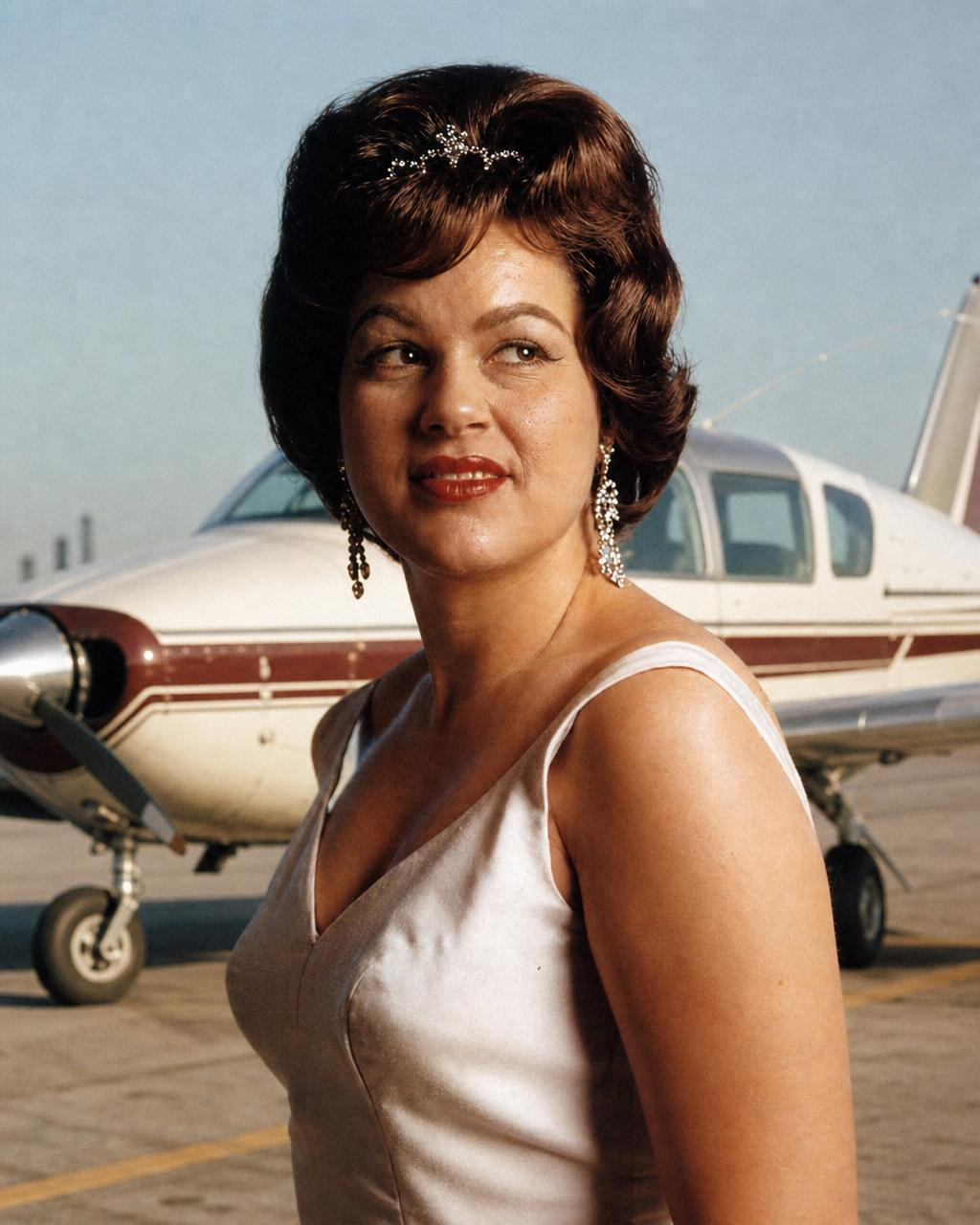
In April 1961, Patsy Cline sat quietly on a Delta flight and pulled out a piece of airline stationery. She was not writing lyrics. She was not scribbling down a melody. She was writing her will.
She was only 28 years old.
No doctor had ordered her to do it. No lawyer was standing over her shoulder. Nothing in the moment said this was necessary, and yet Patsy Cline seemed to know something she could not quite explain to anyone else. On that plane, she wrote about the people and things that mattered most to her. She described a white western dress she wanted to be buried in. She named who should care for her two children. She listed the awards she wanted passed on, the belongings she wanted remembered, and the costumes her mother had sewn by hand.
Then she folded the paper and put it away.
She kept flying.
The woman behind the warning
By then, Patsy Cline was already becoming one of the most unforgettable voices in country music. She had the kind of voice that could make a room go still. Strong, rich, and full of feeling, it carried heartbreak without sounding fragile. People loved her for her songs, but those close to her knew she also carried a private seriousness that did not always match her public glow.
She told friends she did not think she would live very long. She said it to Dottie West. She said it to June Carter. She said it to Loretta Lynn. At times, it sounded like dark humor. At other times, it sounded like a warning she could not stop herself from repeating.
She also began giving away personal items to friends, almost as if she were quietly packing for a journey no one else could see. It made people uneasy. Still, many around her assumed she was being dramatic, or tired, or overwhelmed by the hard pace of touring and recording. Patsy Cline had a way of talking about danger as though she had already met it.
“The third one will either be a charm or it’ll kill me.”
That line would later hang over her story like an echo no one could forget.
A paper will that felt too real
The strange part of the will is not only that she wrote it, but how detailed it was. Patsy Cline did not write in vague language. She was specific. The dress mattered. The children mattered. The heirlooms mattered. The personal items mattered. Even the costumes her mother had sewn carried meaning. This was not a casual note from a bored passenger on a long flight. It was a deeply personal document, written with the steady hand of someone staring into a future she feared more than she admitted.
The will was never legally filed, and at the time, many would have dismissed it as a strange impulse. But time has a way of turning strange impulses into chilling clues.
Two years later, everything changed.
The final flight
On March 5, 1963, after a benefit show in Kansas City, Patsy Cline climbed into a Piper Comanche. The pilot had only 44 hours of flight experience. The weather was harsh, the conditions were brutal, and the decision to fly was already carrying risk before the plane ever left the ground.
Thirteen minutes after takeoff, the aircraft hit a wooded hillside near Camden, Tennessee. Everyone on board died instantly. Patsy Cline was 30 years old.
Her wristwatch stopped at 6:20 PM.
The loss was immediate, devastating, and deeply felt by the world she left behind. Fans grieved, friends were stunned, and country music lost one of its most powerful voices far too soon. The will she had written on that Delta stationery was never officially filed, but in a haunting way, it still came true.
Why her note still matters
What makes this story so unforgettable is not just the tragedy. It is the eerie clarity of Patsy Cline’s instinct. Long before the final flight, she seemed to understand that her life might end earlier than anyone expected. Whether that came from intuition, fear, exhaustion, or something she could not name, she acted on it in a way that now feels almost impossible to read without pausing.
The dress she wanted to be buried in. The children she wanted protected. The belongings she wanted remembered. The quiet farewell hidden inside a simple piece of airline stationery. It all feels less like a rumor and more like a message from someone who sensed the shape of her own goodbye.
And that is why the story still lingers. A plane gave Patsy Cline the paper to write her ending. Another plane made sure she needed it.
In the end, the note was never just about death. It was about control, love, memory, and the human urge to prepare for what we cannot prevent. Patsy Cline wrote her own will at 28, and two years later, the world learned that every word had been waiting for the moment it would matter most.
Post navigation
Some honors are loud. Some arrive with cameras, speeches, and applause that rolls through a building like thunder. And then there are the quiet ones that somehow hit harder, because they feel personal. They feel earned. They feel like a circle finally closing.
That is exactly what happened in Austin, where the Moody Center unveiled The Troubadour, a backstage lounge dedicated entirely to George Strait. The name alone carries weight, but the details made it unforgettable. George Strait’s boot prints are pressed into bronze on the floor. His signature is etched beside them. In one corner sits a vintage jukebox that plays nothing but George Strait. Even the pool table is burnt orange, a Texas touch that makes the room feel less like a display and more like a love letter.
For fans, it is easy to see the obvious symbolism. George Strait is not just another country star with a long list of hits. He is part of the foundation. He is the voice many people associate with the feeling of home, the sound of long drives, Friday nights, and memories that never really fade. So when a venue like the Moody Center creates a space just for him, it does more than decorate a wall. It acknowledges history.
But what made the moment especially moving was not just what happened in Austin. It was what was happening quietly in Nashville at the same time.
Another Country Legend Gets His Own Place in History
While George Strait was being honored in Texas, the Nashville Palace announced something equally meaningful: The front room will now be known as The Randy Travis Room. For anyone who has followed Randy Travis’s career, that is not a small gesture. It is the kind of tribute that recognizes both the music and the struggle behind it.
Before the fame, before the awards, and before the songs became part of country music’s permanent memory, Randy Travis was just a young man trying to get noticed. He once washed dishes and cooked short orders at the Nashville Palace while asking for a chance to sing. That detail matters, because it turns the tribute into more than a name on a wall. It becomes a full-circle moment. The very place where Randy Travis once worked now carries his name forever.
On June 3rd, the venue will cut the ribbon to celebrate 40 years since Storms of Life, the album that helped change Randy Travis’s career and, in many ways, country music itself. The timing feels right. Not forced. Not manufactured. Just sincere.
Why These Tributes Hit So Hard
In an age when so much is temporary, these kinds of honors stand out because they last. A room named after an artist. A bronze plaque underfoot. A jukebox filled with one voice. These are physical reminders that music is not just something people hear. It is something they live with. Something they carry.
“It means a lot to me.”
George Strait said it simply, and somehow that made it even more powerful. No long speech was needed. No dramatic explanation. Just a plain statement that held real gratitude. That is often the mark of someone who understands the value of the moment. When a person has spent decades giving audiences songs, comfort, and consistency, being recognized in return can feel almost surreal.
The same is true for Randy Travis. The Nashville Palace tribute does not just celebrate a famous name. It honors persistence, humility, and the kind of talent that had to fight to be heard. Labels may have once said he was “too country”, but that phrase has aged poorly. What was once meant as a criticism is now part of the legend. Sometimes the qualities people try to smooth out are the very qualities that make an artist unforgettable.
A Reminder That Country Music Still Knows How to Honor Its Own
These stories matter because they remind us that country music still values its roots. It still knows how to look back and say thank you. It still understands that legends are not built in a single night. They are built over years of songs, miles, heartbreak, work, and sacrifice.
In Austin, George Strait now has a lounge that feels like his spirit is part of the floor plan. In Nashville, Randy Travis is being welcomed back into a room that once belonged to his earliest days. Different cities. Different stories. Same message: the music endures, and so do the people who made it matter.
Sometimes money can buy a lot of things. But it cannot buy this kind of legacy. It cannot buy the way a name lives on in the place where it was first earned. It cannot buy the emotional weight of a bronze plaque, a jukebox full of memories, or a room that says, without hesitation, you belonged here all along.
And maybe that is why this story resonates so deeply. It is not just about fame. It is about respect. About memory. About country music paying tribute to the artists who helped define it, one room, one song, and one name at a time.