SHE WAS 28, A MOTHER OF FOUR, AND SHE SPENT THE NIGHT BEFORE HER GRAND OLE OPRY DEBUT ASLEEP IN A PARKED CAR. Loretta Lynn wrote her first single in about twenty minutes on a seventeen-dollar guitar her husband had given her for their anniversary. A small label cut it in Hollywood in February 1960. Nobody was going to promote it, so they promoted it themselves. She sewed her own fringed cowgirl outfit. They mailed out 3,500 copies. Then they got in Doo’s old Mercury and drove east out of Washington State, stopping at every radio tower they passed to ask the DJ if he’d play it. By that summer it was number fourteen in the country. It got her an invitation to the Opry. They reached Nashville late and didn’t have money for a room, so Doolittle parked across the street from the Ryman and they slept in the car. She woke up looking at the old tabernacle, and he came back with a box of donuts. October 15, 1960. She sang “I’m a Honky Tonk Girl.” Years later, the only thing she could remember about it was tapping her foot the whole way through. They asked her back seventeen weeks in a row. – Country Music
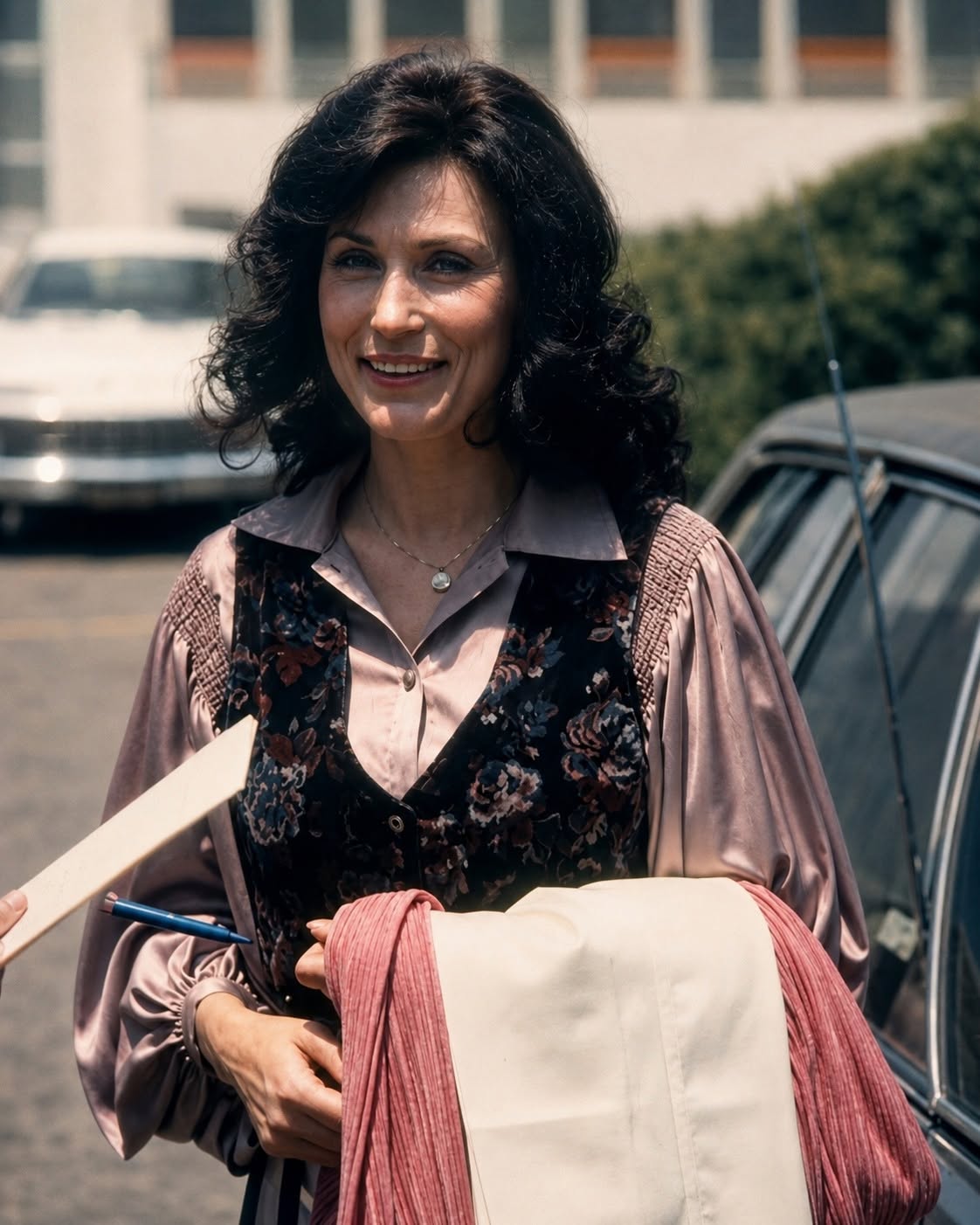
Before Loretta Lynn became a name that country music would never forget, she was a 28-year-old mother of four trying to turn one song into one chance. The story did not begin with comfort or confidence. It began with a seventeen-dollar guitar, a husband who believed in her, and a song written in about twenty minutes. That song was “I’m a Honky Tonk Girl.”
In early 1960, a small label in Hollywood cut the record. Nobody was planning a major campaign, so Loretta Lynn and Doolittle “Mooney” Lynn handled the work themselves. They mailed out thousands of copies and drove east from Washington State, stopping at radio stations along the way and asking DJs to play the record. It was a grass-roots push long before that kind of hustle had a name.
The effort paid off. By the summer of 1960, “I’m a Honky Tonk Girl” had climbed to number 14 on the country charts. That success brought an invitation that many singers dreamed about: an appearance at the Grand Ole Opry.
A Long Drive to Nashville
The trip to Nashville was not glamorous. Loretta Lynn and Doolittle arrived late and did not have enough money for a room. So Doolittle parked across the street from the Ryman Auditorium, and the two of them slept in the car. It was a hard night, but also the kind of night that seems to hold a whole future inside it.
When Loretta Lynn woke up, she could see the old tabernacle. Doolittle came back with a box of donuts, and soon they were ready for the biggest moment of their lives so far. On October 15, 1960, Loretta Lynn sang “I’m a Honky Tonk Girl” on the Grand Ole Opry stage.
Years later, Loretta Lynn said the main thing she remembered was tapping her foot the whole way through.
The Beginning of Something Bigger
That first Opry performance was not the end of the story. It was the start. Loretta Lynn was invited back again and again, and the Opry kept calling her for weeks. The response was not a one-night thank-you. It was a sign that something real was happening, something built on talent, persistence, and the plain courage to show up when the odds were not friendly.
What makes the story endure is not just the fame that came later. It is the image of a young mother, far from home, sleeping in a car before her debut and walking onto one of country music’s most respected stages the next day. That contrast says everything about the kind of life Loretta Lynn was living at the start: uncertain, practical, and full of determination.
Long before the awards, the landmark songs, and the legend, there was a parked car, a box of donuts, and a woman who kept going anyway. That is where the myth begins, but also where the truth begins.
Post navigation
There is a strange kind of afterlife for old songs. Some fade quietly into collectors’ shelves and dusty playlists. Others somehow jump generations, find a new audience, and keep walking.
“Big Iron” is one of those songs.
A Cowboy Ballad With a Sharp Edge
Released in 1959 on Marty Robbins’s album Gunfighter Ballads and Trail Songs, “Big Iron” tells a simple western story: a ranger rides into Agua Fria to confront an outlaw named Texas Red. The song is spoken, tense, and direct, like a tiny movie set to music. Marty Robbins recorded the whole album in a single eight-hour session, and the record’s most famous track is usually remembered as “El Paso,” but “Big Iron” has never really stayed in the background. It has always carried its own gravity.
That is part of why the song lasts. It does not depend on fashion. It depends on structure, character, and suspense. A stranger enters town. Everyone knows what is coming. The ending is inevitable, and that inevitability is exactly what makes it memorable.
How a Generation Met Marty Robbins Again
For many younger listeners, the first encounter with “Big Iron” did not come from a radio station, a vinyl record, or a parent’s old country collection. It came through Fallout: New Vegas, where the song plays on the game’s radio and becomes part of the world’s mood. For some players, it was the first Marty Robbins song they ever heard. For others, it was the first time they realized a decades-old western ballad could feel completely at home in a post-apocalyptic game.
That new life created a divide. Some country purists heard a classic turned into a meme, repeated by people who could recite the lyrics but had never opened the original album. They saw irony where they wanted reverence. But that reaction misses something important: people do not memorize songs that leave no mark. They memorize songs that stick.
What the Revival Really Means
The song did not survive because it was protected from the modern world. It survived because the writing was strong enough to cross into one. The game did not cheapen “Big Iron.” It carried it into a place Marty Robbins could never have predicted and let it do what great songs do: lodge itself in memory.
That is not a joke. It is proof of endurance.
Some songs are preserved in museums. Others keep finding new ears.
Today, “Big Iron” stands as both a classic and a conversation starter. It belongs to the 1950s, to country fans, to gamers, to meme culture, and to anyone who has ever felt a story tighten around a final showdown. The song did not need a trend to matter. It already mattered. The trend just revealed how far it could travel.
So what do you call it when a game introduces a classic to a new generation and the song comes out stronger on the other side?
You call it survival.