SHE PROVED A WOMAN COULD TOP THE COUNTRY CHARTS IN 1953. THEN SHE CHOSE A RANCH, 3 KIDS, AND 47 YEARS WITH ONE MAN. Goldie Hill came out of Karnes City, Texas, sang with her brothers on the Louisiana Hayride, and recorded “I Let the Stars Get in My Eyes” — an answer to the male hit “Don’t Let the Stars Get in Your Eyes.” It went to No. 1. She was one of the first women to ever reach the top of the country charts. Then Carl Smith walked in. He’d just come off a divorce from June Carter and was still one of country’s biggest names. But what Goldie did next surprised everyone more than the hit that made her famous. She married him in 1957. They toured together on the Philip Morris Country Music Show, then she stepped back. Children came. Horses. A quiet ranch south of Nashville. She tried a brief comeback in the late ’60s as Goldie Hill Smith. It didn’t stick. They stayed married for 47 years — until the day she was gone. – Country Music
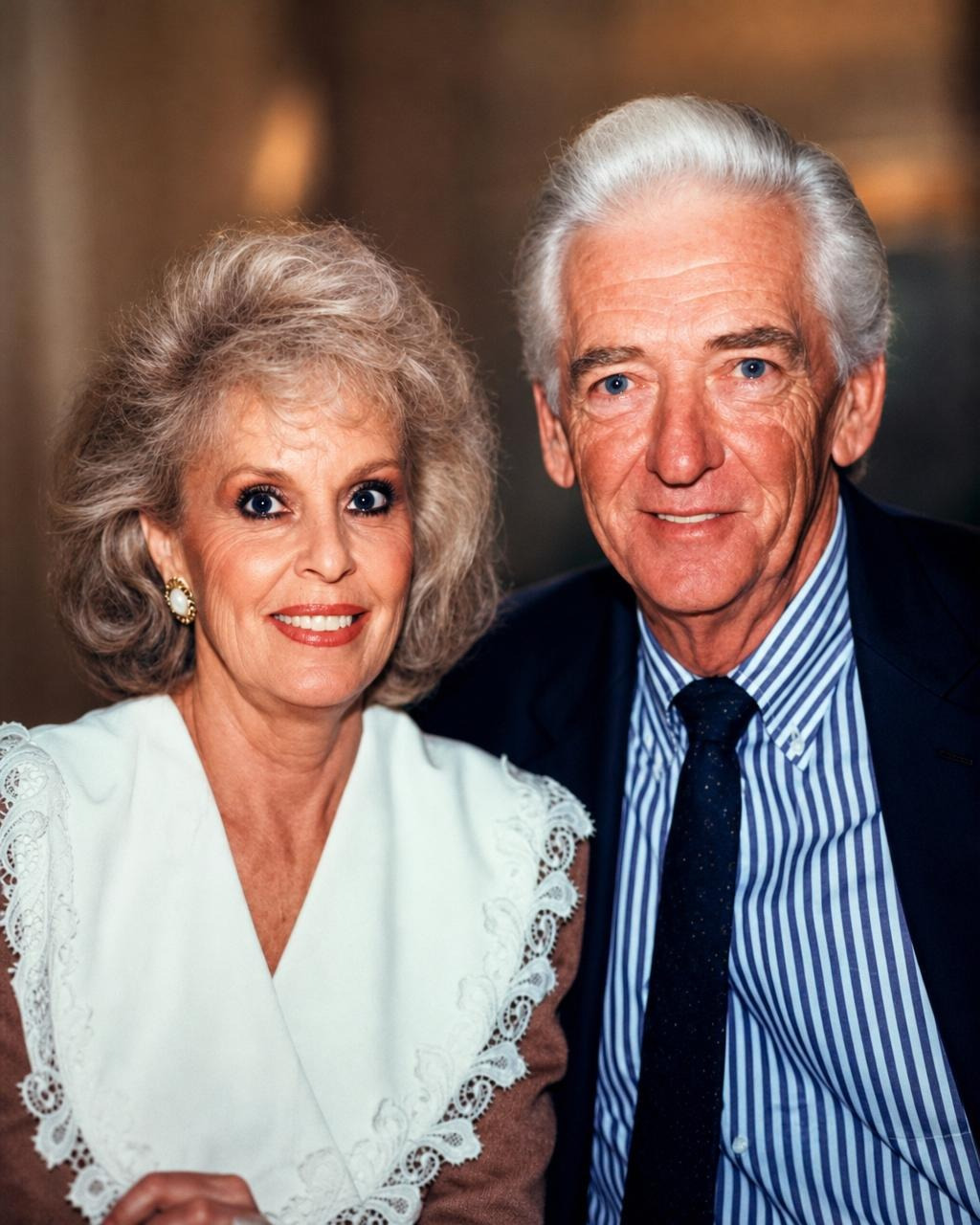
Goldie Hill: The Country Star Who Chose a Quiet Life After Making History
In the early 1950s, country music was changing fast, and Goldie Hill was part of that change in a way few people expected. She came out of Karnes City, Texas, sang with her brothers, and worked her way onto the Louisiana Hayride, where raw talent mattered more than polish. Her voice had warmth, confidence, and a kind of easy truth that listeners remembered.
Then came the record that changed everything. Goldie Hill recorded “I Let the Stars Get in My Eyes” as an answer to the male hit “Don’t Let the Stars Get in Your Eyes.” It was sharp, playful, and smart without losing its heart. The song climbed all the way to No. 1, making Goldie Hill one of the first women to reach the top of the country charts. At a time when women in country music still had to fight for room, Goldie Hill proved the door could open wider.
A Star With a Different Dream
Success could have pushed Goldie Hill toward a long, nonstop spotlight. Instead, her life took a turn that surprised many fans. Carl Smith, already one of country music’s biggest names, entered the picture. He had recently come through a divorce from June Carter, and he and Goldie Hill quickly became one of the most talked-about couples in the genre.
They married in 1957, and for a while, their careers moved side by side. They toured together on the Philip Morris Country Music Show, performing for crowds that knew them as both stars and partners. But while Goldie Hill had already made history, she was not interested in chasing fame at any cost.
Goldie Hill did not just become a country star. She chose when to step forward, and when to step back.
Choosing Family Over the Spotlight
As the years went on, Goldie Hill made a decision that defined her life just as much as her hit record did. She stepped away from the pace of constant touring. Children came. Horses came. A quiet ranch south of Nashville became home. For many people, that might have looked like retreat. For Goldie Hill, it looked like peace.
She tried a brief comeback in the late 1960s under the name Goldie Hill Smith, but the moment had passed. The music business had changed, and she did not force herself into a version of success that no longer fit her life. Instead, she continued living on her own terms, rooted in family and steady devotion.
A Marriage That Lasted
One of the most remarkable parts of Goldie Hill’s story is not only that she made history, but that she also built a life that lasted. Goldie Hill and Carl Smith remained married for 47 years. In an industry known for movement, reinvention, and pressure, that kind of endurance stood out.
Goldie Hill’s legacy is easy to miss if you only look at the headlines. Yes, she had a No. 1 record. Yes, she helped prove that a woman could top the country charts in 1953. But her deeper story is about choice: the choice to succeed, the choice to love, and the choice to value a quieter life after the applause.
When Goldie Hill’s life came to an end, the music she made and the life she built were both still part of the same story. She was not only a chart-topper. She was a woman who changed country music and then stepped gently into the life she wanted most.
Post navigation
Some stories in music feel almost too full of fate to be real. The story of Jett Williams is one of them. She was born five days after Hank Williams died on New Year’s Day in 1953, and for much of her life, she did not even know he was her father.
Hank Williams was already a legend by the time he left the world. He had more than 50 singles in the top 10 and helped shape country music in a way few artists ever have. His songs carried heartbreak, longing, and truth in a way that made people feel like he was singing directly to them. Then, suddenly, he was gone at only 29 years old.
Five days later, in the quiet aftermath of that loss, a baby girl was born. Her name was Jett Williams.
But Jett did not grow up with the story most children take for granted. She did not hear Hank Williams sing in person. She did not know him as a father. She did not sit in his lap or grow up with family stories that clearly explained where she came from. For nearly 30 years, her real identity remained hidden from her.
That kind of silence can shape a life in ways people rarely see. Imagine growing up with questions that nobody answers. Imagine feeling that something important is missing, but not knowing what it is. Jett Williams lived that mystery for decades before the truth finally came into view.
When it did, it was more than a family revelation. It was a connection to one of the most important voices in American music. Suddenly, the songs were no longer just songs. They were part of her own story.
“I was born into the story after the ending had already happened.”
Later, when Jett Williams stepped onto the stage at Country’s Family Reunion Generations, she chose a song that carried all of that history in its lines: “I Can’t Help It (If I’m Still in Love with You)”. Hank Williams recorded it long before she was born, and it reached No. 2 on the Billboard country chart in 1951. It was a song about missing someone who cannot be brought back, and in Jett Williams’ hands, it became something even more personal.
She sang it quietly. No dramatic gestures. No attempt to overshadow the moment. Just a daughter standing where her father once stood, giving voice to words he wrote before she ever existed.
That is what made the performance so powerful. It was not only about legacy. It was about recognition. About a child finding a father through music after years of silence. About a song crossing time and loss to bring two lives into the same emotional space.
Jett Williams’ story reminds us that family can be complicated, history can be hidden, and truth can arrive late. But when it does, it can still heal something deep. And sometimes, the most moving performances are not the loudest ones. Sometimes they are the quiet ones, where a daughter sings her father’s song and lets the music speak for both of them.