SHE CALLS HIM “UNCLE HAT.” HE JUST INVITED HER TO STEP INTO THE CIRCLE WHERE HE’S STOOD FOR 35 YEARS. Carlisle Wright was sitting with her dog Bing when the phone rang. On the other end — Alan Jackson, her great-uncle, calling on the exact 35th anniversary of his own Grand Ole Opry induction. They chatted about her CMA Fest debut. Normal family stuff. Then Alan brought up his Opry anniversary, and she congratulated him. She didn’t know what was coming next. “They asked me to call you today to extend you an invitation to make your Opry debut on June 28th.” Her chin quivered before he even finished. She couldn’t stop the tears. But here’s the thing Alan didn’t mention — the night before her Opry debut, she’ll be opening for his sold-out final concert at Nissan Stadium. 55,000 seats. George Strait, Luke Combs, Miranda Lambert sharing that same stage. She’s 19. A Belmont University student. And “Uncle Hat” just quietly handed her the weekend of a lifetime. – Country Music
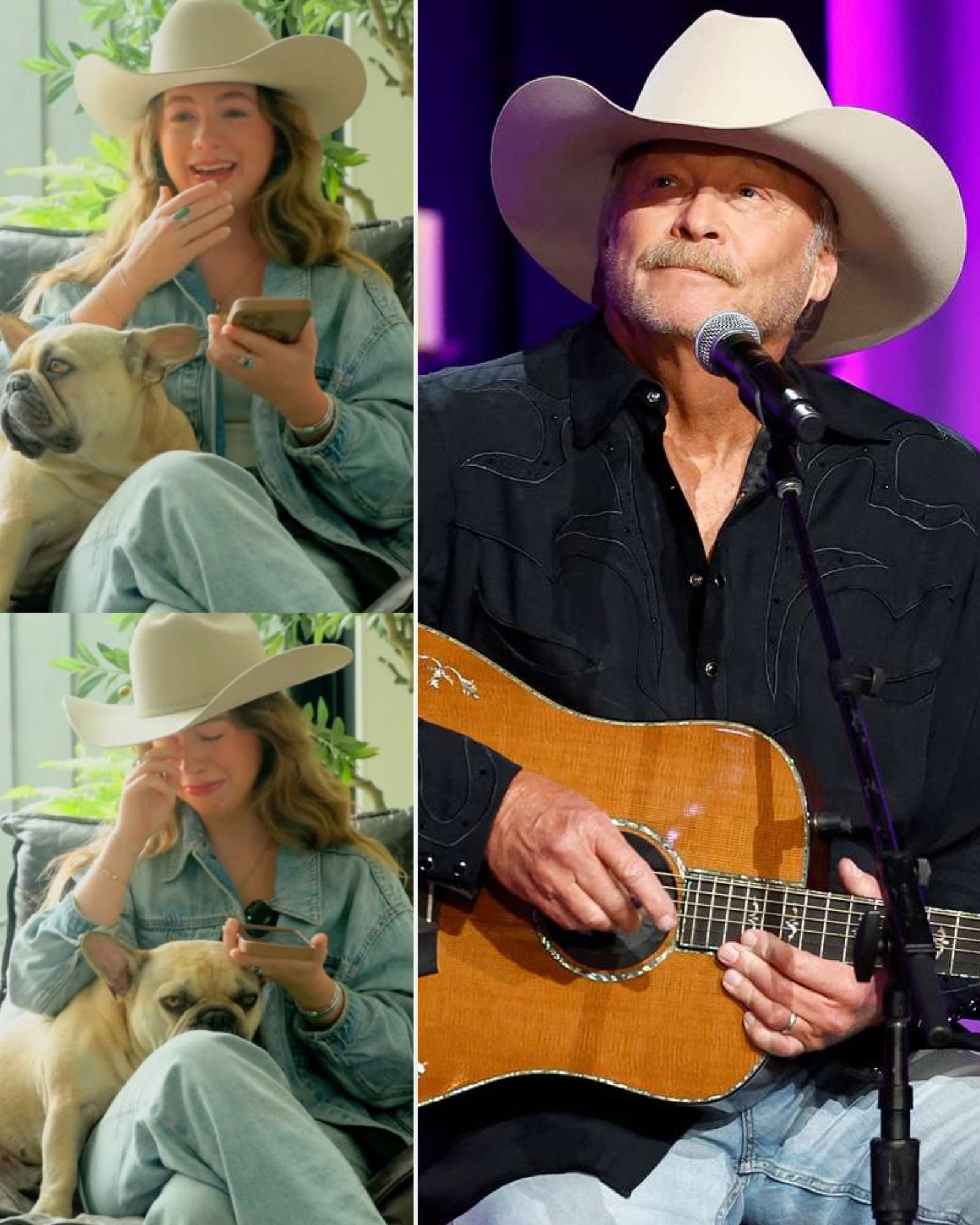
Alan Jackson Gives Carlisle Wright a Family Moment She Will Never Forget
Carlisle Wright was sitting quietly with her dog Bing when her phone rang. On the other end was Alan Jackson, her great-uncle, calling on the exact 35th anniversary of his Grand Ole Opry induction. The timing alone would have made the moment special, but what happened next turned an ordinary conversation into a life-changing memory.
They started with normal family talk. Carlisle had been preparing for her CMA Fest debut, and Alan Jackson listened like any proud relative would. Then he brought up his own Opry anniversary, and Carlisle congratulated him. She had no idea that the conversation was building toward something she would never forget.
“They asked me to call you today to extend you an invitation to make your Opry debut on June 28th.”
Before Alan Jackson even finished the sentence, Carlisle Wright’s chin began to quiver. The tears came fast, and she could not stop them. At 19, as a Belmont University student chasing her dreams, she had just been handed a moment that many artists wait years to experience. The Grand Ole Opry is more than a stage. For country music performers, it is a rite of passage, a place where history feels alive every time the lights come up.
A Quiet Call With a Big Meaning
What made the moment even more moving was the way Alan Jackson delivered the news. There was no big stunt, no public reveal, and no dramatic buildup. It was a simple family phone call, full of warmth and trust. That is part of what made it feel so real. In a world filled with loud announcements, this one happened with tenderness.
Carlisle Wright has often been known by family nicknames, but this call showed something bigger than a nickname or a title. It showed a connection built over time, grounded in shared roots and mutual respect. Alan Jackson, one of country music’s most recognizable voices, was not just celebrating his own milestone. He was making room for the next generation.
The Weekend That Changed Everything
The Opry debut would already have been a career highlight, but Carlisle Wright’s weekend became even more remarkable. The night before stepping into the Opry circle, she was set to open for Alan Jackson’s sold-out final concert at Nissan Stadium. With 55,000 seats and a lineup that included George Strait, Luke Combs, and Miranda Lambert, the event carried the kind of scale that artists dream about.
For Carlisle Wright, the sequence of events felt almost unreal: a family call, a historic invitation, a stadium performance, and then the Opry debut. It was the kind of weekend that can shape a young artist’s confidence forever.
A Moment Full of Heart
Stories like this stand out because they remind people that behind every major stage is a human story. There are nerves, gratitude, family pride, and the overwhelming feeling that a dream has finally begun to open its door.
Alan Jackson did not just make a phone call. He gave Carlisle Wright a memory wrapped in love, tradition, and opportunity. For a young singer standing at the edge of her career, that gift meant everything. And for everyone watching from the outside, it was a reminder that sometimes the most powerful moments in music are the quiet ones.
Post navigation
Bobby Bare, “Detroit City,” and the Song That Carried a Worker’s Homesickness
On April 18, 1963, Bobby Bare walked into RCA Victor Studios in Nashville and recorded a song that would stay in country music history for decades. The room had the quiet confidence of a place where important records were made. Chet Atkins was behind the glass, listening closely, and Bobby Bare stepped to the microphone with a song that was simple on the surface but heavy with feeling.
The song was “Detroit City”, written by Danny Dill and Mel Tillis. It told the story of a Southern worker who had left home to chase steady pay in Detroit. On paper, that sounded like progress. In the heart of the song, it sounded like loneliness.
A song about work, distance, and the cost of leaving home
Country music had always known how to tell stories about hard lives, but “Detroit City” stood out because it spoke for people who were often too tired to explain themselves. The narrator writes letters home and tells everyone that life is going well. The truth is harder. He spends his nights in bars, thinking about the South, and feeling the ache of being far from the people and places that made him feel like himself.
That emotional split gave the song its power. It was not just about missing home. It was about trying to sound strong when you feel small. It was about the quiet performance so many workers knew well: keep going, keep earning, keep telling the family everything is fine.
Mel Tillis had already earned a reputation as a gifted writer, but his path to success was not easy. He stuttered so badly at times that some people assumed singing would never be his strength. That kind of doubt can silence a lot of talent. Instead, it helped shape one of the most honest songs in country music.
With Danny Dill, Mel Tillis helped create a story that felt lived-in, even to listeners who had never set foot in Detroit. The details were plain, but the feeling was deep. That is often what makes a great country song last: it does not try to impress first. It tries to tell the truth.
Bobby Bare gave the song its heartbeat
Bobby Bare did more than sing “Detroit City.” He made it feel personal. His voice carried a tired kind of dignity, the kind that does not ask for sympathy but earns it anyway. He sang like a man who had seen long roads, cheap rooms, and long nights that did not feel like victory.
Two minutes and 47 seconds about missing home, and it hit harder than anyone expected.
The record reached #6 on the country chart, crossed over to #16 on the Billboard Hot 100, and won a Grammy Award for Best Country & Western Recording. Those numbers tell part of the story. The rest is simpler: millions of listeners heard themselves in it.
Why “Detroit City” still matters
Some songs become hits. A few become memories. “Detroit City” became a mirror for people who had left home to build a life somewhere else. It spoke to workers, dreamers, and anyone who ever smiled in a letter while feeling homesick in real life.
That is why Bobby Bare’s recording still feels alive. It came from Nashville, but it belonged to every place where someone has ever worked far from home and wondered whether the sacrifice was worth it. In 1963, Bobby Bare turned that question into a song. The answer was not easy, but it was unforgettable.