“RING OF FIRE” SAT AT #1 FOR 7 WEEKS — AND IT STARTED AS A SECRET CONFESSION FROM A MARRIED WOMAN. In the early ’60s, June Carter was touring with Johnny Cash. Both married. Both with kids. And June was falling for a man she knew she shouldn’t love. She’d wake up crying in the middle of the night, trying to fight what she felt. So she wrote it down. With Merle Kilgore, she turned that guilt into a song — “(Love’s) Ring of Fire.” But she didn’t give it to Johnny. She gave it to her sister, Anita Carter, who recorded a quiet folk version in 1962. Billboard called it a “pick hit.” It never charted. Then Cash heard it — and dreamed the same song, but with mariachi horns. He told Anita: give it a few more months, and if it doesn’t hit, I’m recording it my way. On March 25, 1963, he added those trumpets and cut his version in Nashville. It hit #1 on the country chart and stayed there for 7 straight weeks — his first #1 since 1959. A love she tried to hide became the biggest hit of his career. – Country Music
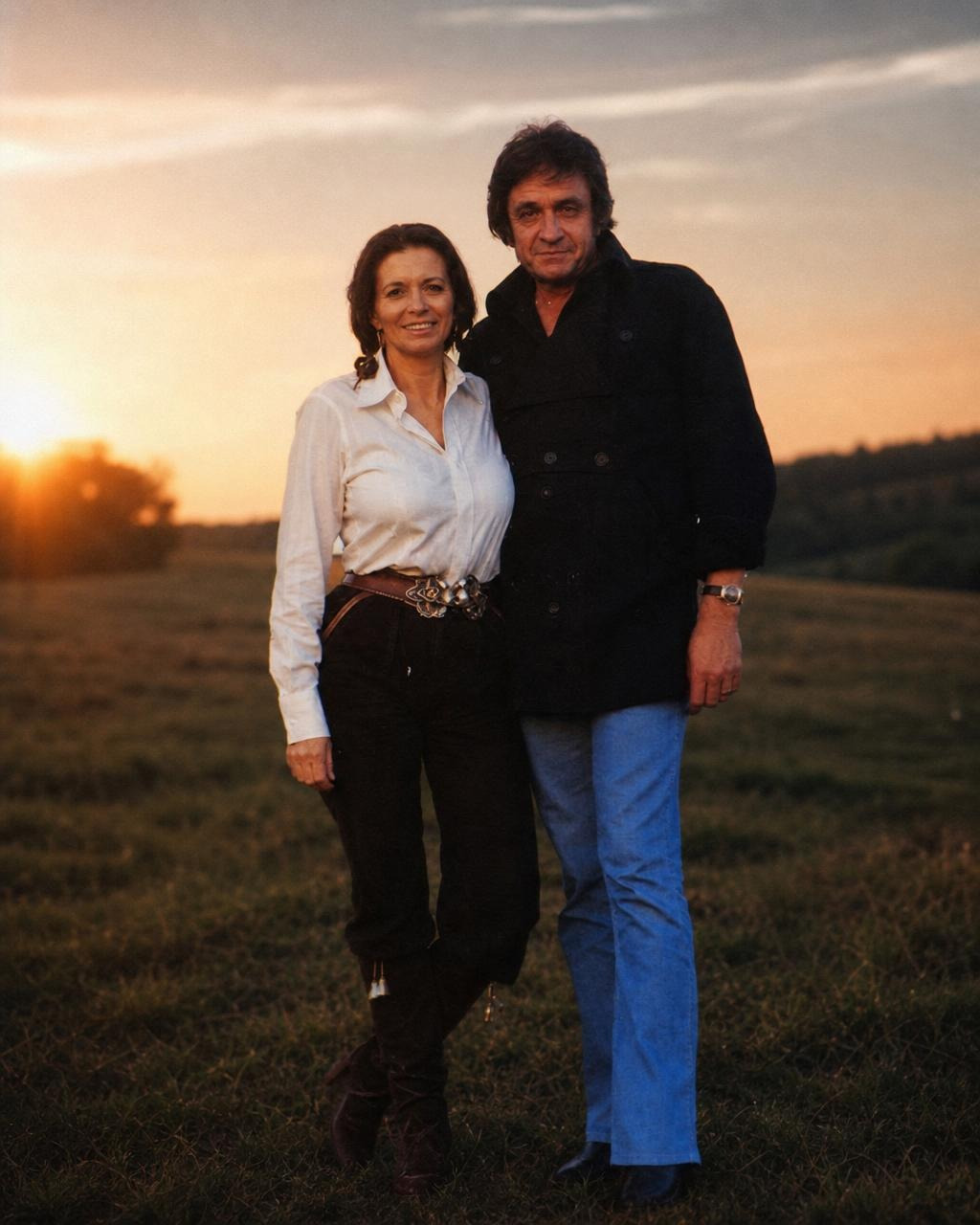
In the early 1960s, country music was full of heartbreak songs, traveling songs, and voices that sounded like they had lived every line they sang. But few stories behind a hit are as personal as the story of “Ring of Fire”. What began as a private confession from June Carter would go on to become one of Johnny Cash’s defining recordings.
A feeling June Carter could not ignore
June Carter was already a star when she toured with Johnny Cash. She was married, and she had children. Johnny Cash was married too. Yet the connection between them was hard to miss. June Carter later described nights when she would wake up upset, overwhelmed by feelings she did not know how to handle. She knew the situation was complicated, and she also knew she needed a way to let the emotion out without turning her life upside down.
So she did what songwriters often do when words become too heavy to carry alone. She wrote them down.
Turning guilt into melody
June Carter worked with Merle Kilgore to shape those feelings into a song. The result was “(Love’s) Ring of Fire”, a title that perfectly matched the heat, fear, and pull of forbidden emotion. The song did not sound like a simple love song. It sounded like someone trying to explain a feeling that was both painful and impossible to escape.
But June Carter did not hand the song directly to Johnny Cash. Instead, she gave it to her sister, Anita Carter.
Anita Carter records the first version
In 1962, Anita Carter recorded a quiet folk version of the song. It was gentle and restrained, very different from the version most listeners would later come to know. Billboard even called it a pick hit, but the recording never became a chart success.
Still, the song was alive. It had not yet found its strongest voice.
Johnny Cash hears the song differently
Johnny Cash heard “Ring of Fire” and imagined something bigger, bolder, and far more unusual. He said the song came to him in a dream with mariachi-style horns, a sound that gave the lyrics a sense of danger and urgency. When he spoke with Anita Carter, he suggested a simple plan: give it a few more months, and if it still did not take off, he would record it his way.
That decision changed everything.
The Nashville recording that made history
On March 25, 1963, Johnny Cash recorded his version in Nashville, adding the bright trumpet arrangement that made the song instantly recognizable. The result was powerful, dramatic, and unforgettable. When the record was released, listeners responded immediately.
“Ring of Fire” reached #1 on the country chart and stayed there for seven straight weeks. It became Johnny Cash’s first chart-topping country hit since 1959 and one of the most important songs of his career.
“A love she tried to hide became the biggest hit of his career.”
A song born from private truth
What makes “Ring of Fire” endure is not just the sound, but the story behind it. It came from a place of honesty, confusion, and restraint. June Carter turned a difficult feeling into art, and Johnny Cash transformed that art into a record that would outlive the moment it was made.
Decades later, the song still feels alive. It carries the tension of a secret, the drama of a confession, and the power of two artists whose lives were already becoming part of the same legend.
“Ring of Fire” did not simply climb the charts. It burned its way into music history.
Post navigation
When the lights went down at the Ford Center in Frisco, Texas, the crowd expected a big opening. After all, the ACM Awards are built for moments that sparkle. But Reba McEntire, hosting the show for the 18th time, chose something more meaningful than spectacle. She walked out and began with “Okie From Muskogee” by Merle Haggard.
It was not the loudest choice, and that was exactly why it mattered.
A Song That Set the Tone
Merle Haggard’s 1969 classic won ACM Song of the Year in 1970, and Reba McEntire’s decision to open with it felt carefully chosen. Reba McEntire is from McAlester, Oklahoma, and that detail gave the performance an extra layer of heart. She was not simply revisiting a well-known country song. She was honoring a fellow Oklahoman who helped shape the sound and spirit of modern country music.
Sometimes the most powerful tribute is the quietest one.
From the first notes, the medley felt like a bridge between generations. The production did not rush to impress. Instead, it invited the audience to remember. That opening song became the emotional doorway to a 12-minute celebration of six decades of ACM Song of the Year winners.
Six Decades in One Medley
After Reba McEntire’s opening, the performance moved through a carefully built chain of country favorites. Clint Black delivered “Rhinestone Cowboy” with the kind of ease that reminded everyone why the song still resonates. Wynonna added warmth and power to “Why Not Me”. LeAnn Rimes brought a clear, tender sound to “Blue”. Then Dan + Shay closed the medley with “Tequila”, giving the tribute a modern finish that still felt connected to the past.
Each artist brought something distinct, but the performance never felt fragmented. It felt like a single story told by different voices. That is what made it memorable.
Why Reba McEntire’s Opening Stood Out
Big award-show moments often depend on volume, speed, or surprise. This one worked because it trusted memory, history, and emotion. Reba McEntire started at the beginning, with a song that many country fans recognized instantly. That choice gave the entire medley a sense of purpose. It said that country music does not begin with the newest hit or the biggest stage effect. It begins with songs that last.
For longtime fans, the opening felt like a salute. For younger viewers, it was a reminder that every era of country music stands on the one before it. In only 12 minutes, the show managed to cover more than a playlist of songs. It captured the feeling of a genre that keeps changing while still honoring where it came from.
A Small Opening With a Lasting Echo
By the end, the audience had seen a tribute, a reunion of voices, and a timeline of country music history. But people kept talking about the beginning. Reba McEntire’s quiet opening with “Okie From Muskogee” gave the whole moment its soul.
Sixty years of country music was a big story. Reba McEntire made it feel personal.