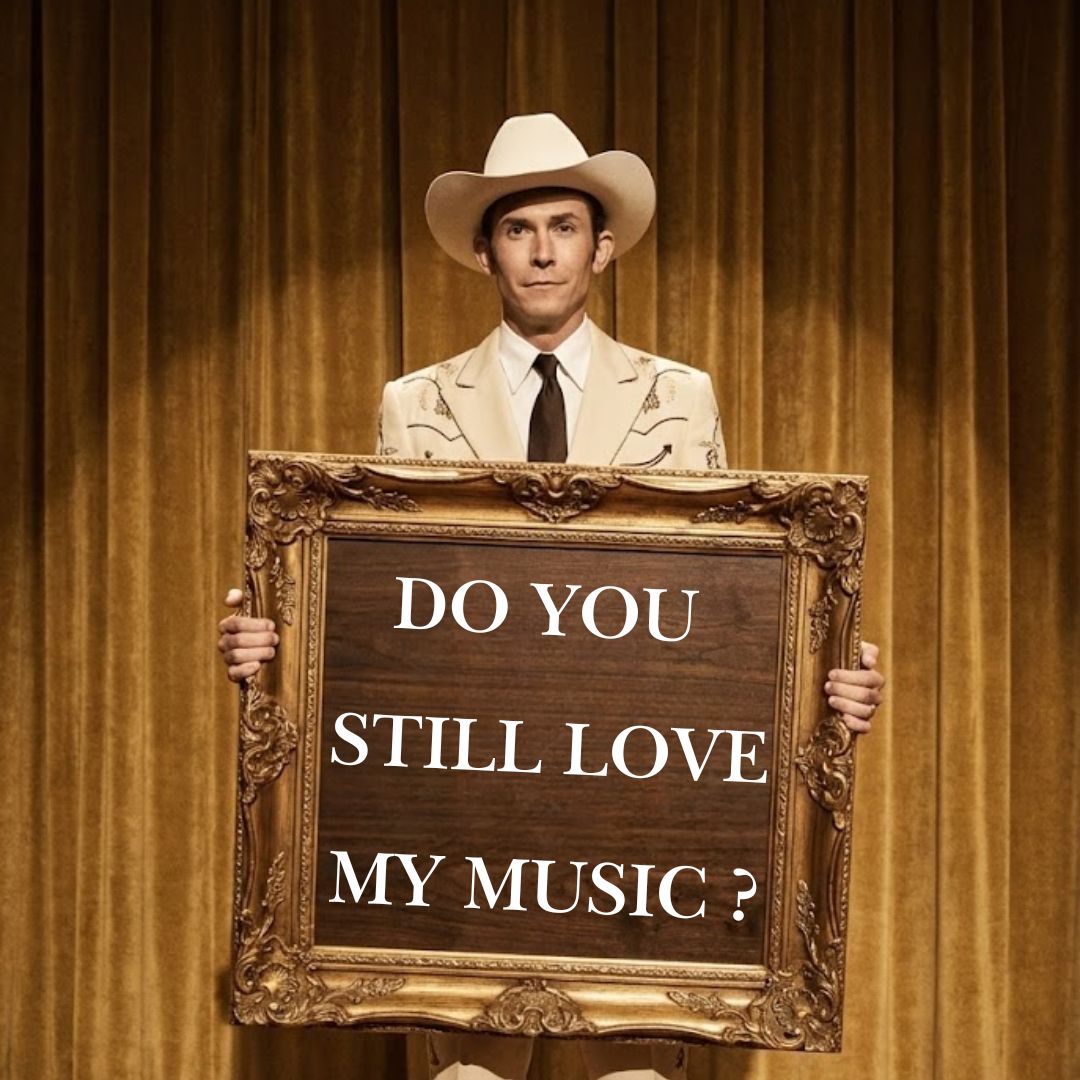
RECORDED JUST WEEKS BEFORE HIS DEATH, THIS SONG BECAME HANK’S FINAL WORD.
In December 1952, Hank Williams stepped into the studio and recorded “I’ll Never Get Out of This World Alive.” There was nothing ceremonial about it. No sense that history was being made. Just another session. Another song. Another tired man standing at a microphone, doing the one thing he still knew how to do.
Weeks later, on January 1, 1953, he was gone.
When you listen closely, what’s striking isn’t sadness. It’s the lack of struggle. Hank doesn’t sound like a man trying to outrun his fate. He sounds like someone who has stopped running. His voice is thinner than it used to be, but also steadier. Every line lands where it’s supposed to. No extra weight. No wasted breath.
-
THEY HELD A PRIVATE MEMORIAL FOR GLEN CAMPBELL AT THE COUNTRY MUSIC HALL OF FAME. THREE HUNDRED PEOPLE. INVITATION ONLY. AND ON THE STAGE, HIS SUITS AND GUITARS SAT SILENT FOR ONCE. For decades, Glen Campbell made rooms come alive. Twelve gold albums. Nine No. 1 hits. More than 45 million records sold. In 1968, he was so big that even The Beatles were looking up at him. But on August 24, 2017, the room was different. At the CMA Theater in Nashville, family, friends, and invited guests gathered to say goodbye. Brad Paisley sang the songs that had carried Glen across generations. Members of the Beach Boys, men connected to the world he once played in as a studio musician, were there too. Jimmy Webb sat in the room, the man whose words became “Wichita Lineman” and “By the Time I Get to Phoenix.” Then Julian Raymond performed “I’m Not Gonna Miss You,” the last song Glen ever recorded as Alzheimer’s was already taking so much from him. The song won a Grammy. It reached the Oscars. But the saddest part is that it belonged to a man who was slowly losing the world that still remembered him. Kim Campbell, his wife of 34 years, closed the service. She said there were no secrets with Glen. He was the real deal all the time. Then she spoke about the darkness of losing him. For a moment, the room had no answer. Nashville didn’t either. – Country Music
-
THEY HELD LORETTA LYNN’S MEMORIAL AT THE GRAND OLE OPRY HOUSE. BUT THE MOMENT THAT BROKE THE ROOM CAME BEFORE ANYONE SANG A NOTE. Loretta Lynn had more than fifty Top 10 hits across six decades. She was the first woman ever named CMA Entertainer of the Year, and she had been a Grand Ole Opry member for sixty years. But on October 30, 2022, none of that felt as powerful as hearing her voice one more time. The Opry House filled with family, fans, and the artists who had grown up in the shadow of her songs. Alan Jackson was there. George Strait was there. Brandi Carlile, Tanya Tucker, Keith Urban, and so many others came to honor the coal miner’s daughter who changed country music by telling the truth. Then Loretta spoke. It was a message she had recorded before she died. She thanked her friends and fans for giving her such a great life. Then she said that because of them, her kids did not have to grow up poor the way she did. That was Loretta. Even at the end, she was not talking about fame. She was talking about her children. She had already been laid to rest privately at her ranch in Hurricane Mills, beside Doolittle, exactly where her heart belonged. Country music gave her a standing ovation. Loretta had already given it everything else. – Country Music
-
THEY HELD LORETTA LYNN’S MEMORIAL AT THE GRAND OLE OPRY HOUSE. BUT THE MOMENT THAT BROKE THE ROOM CAME BEFORE ANYONE SANG A NOTE. Loretta Lynn had more than fifty Top 10 hits across six decades. She was the first woman ever named CMA Entertainer of the Year, and she had been a Grand Ole Opry member for sixty years. But on October 30, 2022, none of that felt as powerful as hearing her voice one more time. The Opry House filled with family, fans, and the artists who had grown up in the shadow of her songs. Alan Jackson was there. George Strait was there. Brandi Carlile, Tanya Tucker, Keith Urban, and so many others came to honor the coal miner’s daughter who changed country music by telling the truth. Then Loretta spoke. It was a message she had recorded before she died. She thanked her friends and fans for giving her such a great life. Then she said that because of them, her kids did not have to grow up poor the way she did. That was Loretta. Even at the end, she was not talking about fame. She was talking about her children. She had already been laid to rest privately at her ranch in Hurricane Mills, beside Doolittle, exactly where her heart belonged. Country music gave her a standing ovation. Loretta had already given it everything else. – Country Music
-
A NATION’S HISTORY UNFOLDS: Six Legends Unite for the “All-American Halftime Show” — A Powerful and Patriotic Alternative to the Super Bowl 60 Halftime Event Just announced in Nashville, Tennessee — Alan Jackson, George Strait, Trace Adkins, Kix Brooks, Ronnie Dunn, and Willie Nelson will share one unforgettable stage in this once-in-a-lifetime event honoring the late Charlie Kirk. Produced by his wife, Erika Kirk, the “All-American Halftime Show” promises to be more than just music — it’s a celebration of faith, freedom, and the enduring heart of America. – Country Music
-
“40 YEARS ON STAGE… BUT THAT LAST MOMENT WAS THE ONE NO FAN FORGOT.” There was something different in the air that night — a stillness, almost like the whole crowd knew they were watching the end of a beautiful chapter. Marty Robbins walked onto the stage slower than he used to, but his smile carried the same warmth it had for decades. When he reached the final line of “My Woman, My Woman, My Wife,” his voice trembled just enough to make your heart tighten. But his eyes… they were bright, steady, full of gratitude. It felt like he was holding the entire room in a quiet embrace. Then he leaned close to the mic and whispered, “I may not be back… but I loved every minute with you.” For a heartbeat, no one breathed. And then the crowd rose — thousands of hands, one roaring wave — honoring a man who gave them everything he had. ❤️ – Country Music
-
There’s no pleading in the performance. No dramatic swell meant to pull tears from the listener. Instead, there’s a strange calm. Like a person who has looked at their reflection long enough to stop arguing with it. He sings the words plainly, almost casually, as if stating a fact rather than confessing a fear.
The title still stings. It feels cruel in hindsight. Wry. Exhausted. Honest in a way that’s uncomfortable. “I’ll Never Get Out of This World Alive” doesn’t sound like a joke when Hank sings it. It sounds like acceptance. Not defeat. Just clarity.
You can hear it in the spaces between lines. In the way he doesn’t rush the melody. In how he lets the song breathe, even when his own body was clearly failing him. This isn’t a man clinging to legacy. It’s a man standing still inside the truth of his own life.
After his death, the song was released and climbed to No.1 on the country chart. Not because it was marketed as a farewell. Not because people were chasing tragedy. But because it felt real. Too real to ignore.
It wasn’t a comeback. It wasn’t a victory lap. It was something quieter.
A final sentence spoken without drama. A door closing softly instead of slamming shut. A goodbye that didn’t ask for applause.
And maybe that’s why it still lingers.
Because some songs don’t try to outlive the singer. They simply tell the truth one last time — and trust that someone, somewhere, will hear it.