PATSY CLINE DIDN’T JUST SING HEARTBREAK. AFTER 1961, SHE SOUNDED LIKE SHE HAD SURVIVED IT. Before the crash, Patsy Cline already had the voice. Smooth, strong, impossible to ignore. But after that head-on wreck in 1961, something about her felt different. She came back with pain still in her body and a scar she could not simply leave behind. The kind of scar people notice before they know what to say. Then she opened her mouth. That was the twist. The accident did not steal her voice. It seemed to make every word heavier. “Crazy” did not sound like acting anymore. “She’s Got You” did not sound like a pretty sad song. “Sweet Dreams” did not sound like a woman pretending to hurt. It sounded like Patsy knew exactly what it meant to keep standing when life had already knocked you through the glass. She was only 30 when she died. But her voice never sounded young. It sounded like it had already been through everything. – Country Music
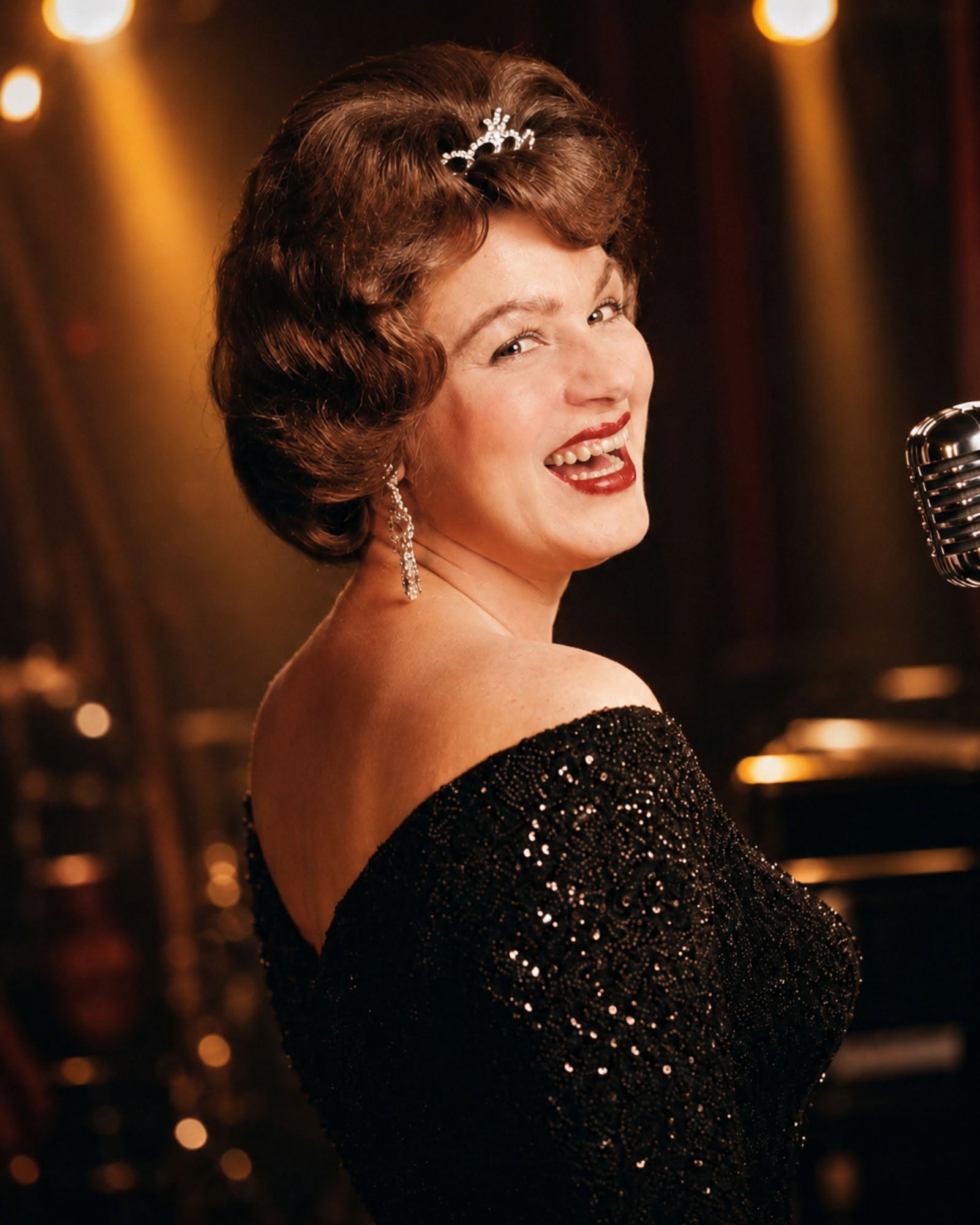
Patsy Cline was already unforgettable before 1961. Her voice had that rare kind of power that did not need to shout to be heard. It was smooth, rich, and controlled, but it also carried a quiet ache that made people stop and listen. She could sing a line like she was telling the truth in real time, and that was part of what made her so special.
Then came the head-on car crash in 1961, and everything changed.
The accident was serious, and Patsy Cline was left with injuries that did not disappear just because the headlines moved on. There was pain, recovery, and the kind of invisible burden that comes with learning how to keep going when your body has been shaken and your life has been interrupted. For many artists, that kind of event becomes a break in the story. For Patsy Cline, it became something stranger and more powerful.
She came back different.
Not weaker. Not less brilliant. Different in a way that listeners could feel even if they did not know the full story. There was a new weight in her delivery, a deeper stillness behind the notes. When Patsy Cline opened her mouth after the crash, it was as if she was no longer just performing heartbreak. She was carrying it.
The voice was still there, but the meaning had changed
Patsy Cline had always had a gift for emotional precision. She did not oversing. She did not push every lyric into melodrama. Instead, she made sadness sound elegant, honest, and human. That was true before the accident, but after 1961, the effect became even more striking.
Listen to “Crazy,” and it does not feel like a polished sad song. It feels lived in. Listen to “She’s Got You,” and the regret lands with a quiet force that can be almost unsettling. Listen to “Sweet Dreams,” and the longing does not seem imaginary anymore. It sounds like someone who has looked loss in the eye and kept singing anyway.
That is the twist that still fascinates fans today: the crash did not take Patsy Cline’s voice away. It seemed to deepen the emotional truth inside it. She sounded less like a woman acting out sorrow and more like a woman who understood what sorrow cost.
“Crazy” did not sound like a performance after 1961. It sounded like memory.
A scar people could see, and a voice they could feel
There was also something deeply human about the way Patsy Cline carried herself after the crash. People could see that she had been through something. Even before she sang, there was a sense that she had crossed into a harder chapter of life. And yet she did not let that hardship define her as fragile.
Instead, she turned it into presence.
That is why her performances from that period feel so commanding. She was not trying to prove she was unbroken. She was showing that broken does not mean finished. She stood in front of microphones with a voice that had already become legendary, and somehow it sounded even more intimate, even more fearless.
It is one thing to sing about heartbreak when everything is safe. It is another thing entirely to sing it after pain has already become personal. Patsy Cline gave listeners the second experience. That is why her songs from that era still hit so hard.
Why Patsy Cline still feels timeless
Patsy Cline died at only 30, which is one of the most heartbreaking facts in music history. She had so much ahead of her, and yet the recordings she left behind continue to feel complete, as if they already hold the full emotional shape of a longer life. Her voice never sounded young in a shallow sense. It sounded wise beyond its years, shaped by experience, loss, and resilience.
That is why new listeners keep finding her. They do not just hear an old country star from another era. They hear someone who understands the emotional aftermath of being human. Patsy Cline did not merely sing about heartbreak. After 1961, she sounded like someone who had survived it, held onto her grace, and turned that survival into music.
And maybe that is the reason her legacy still feels so powerful. Some voices entertain. Some voices impress. Patsy Cline’s voice did something rarer. It made pain sound unmistakably real, and it made survival sound beautiful.
That is not just talent. That is history in the throat of a singer who knew how to turn what hurt her into something unforgettable.
Post navigation
On March 5, 1963, a small plane crashed in Camden, Tennessee, and the country music world changed forever. Patsy Cline was gone at just 30 years old. The loss was sudden, painful, and impossible to measure. She left behind legendary songs, a sound that helped define country music, and a voice that still stops people in their tracks. “Crazy.” “Walkin’ After Midnight.” “I Fall to Pieces.” Those songs became part of American music history.
But for her daughter, Julie Fudge, the inheritance was never about fame, awards, or record sales. It was something quieter and more personal. It was a memory.
A Child’s Memory That Never Left
Julie Fudge was only four years old when Patsy Cline died. She was too young to fully understand the scale of the loss. She did not grow up with a long list of shared experiences or detailed conversations to remember. She barely remembers her mother’s face.
And yet one memory stayed with her with remarkable clarity.
“I remember the music and I remember the music belonged to Mom.”
That simple truth became the foundation of Julie Fudge’s lifelong connection to her mother. She never tried to turn that connection into a performance. She never chased the spotlight. She never tried to become a singer herself. In a world that often expects children of stars to copy the path of their parents, Julie Fudge chose something different.
Choosing to Protect, Not Perform
Some inheritances are meant to be carried, not copied. Julie Fudge understood that instinctively. She had every chance to step into music, but she chose not to. That decision was never about rejecting Patsy Cline. It was about respecting her.
Julie Fudge seemed to understand something many people overlook: the legacy of a great artist does not have to be repeated to be honored. Sometimes the deepest love is found in protection, care, and consistency. For decades, Julie Fudge helped guard the story of Patsy Cline so that fans old and new could still feel the power of her presence.
Charlie Dick and a Lifetime of Preservation
After Patsy Cline passed away, her husband, Charlie Dick, spent nearly 50 years protecting her legacy. He worked to keep her name alive and to preserve the music and memory of the woman who meant so much to so many. When Charlie Dick later passed away, that responsibility naturally continued with Julie Fudge.
Julie Fudge stepped into that role with care and purpose. She became involved with Patsy Cline Enterprises, helped oversee the Nashville museum dedicated to her mother, and co-produced the Lifetime biopic Patsy & Loretta. Through all of it, she stayed focused on the same mission: keeping Patsy Cline vivid in the public memory.
Why the Museum Matters
Every month, Julie Fudge walks through the museum in Nashville, where fans come to celebrate the life and music of Patsy Cline. For many visitors, it is a chance to stand close to history. For Julie Fudge, it is something more intimate. It is a way of caring for the story of her mother.
“It keeps her alive,” Julie Fudge once said. “It keeps her vivid.”
That line says everything. Memory is fragile. Fame can fade. But when someone protects a legacy with patience and love, it remains real for the next generation. Julie Fudge did not inherit a stage. She inherited responsibility. And she treated it with grace.
Two Very Different Kinds of Inheritance
The story of Julie Fudge stands out because it reminds us that family legacy does not always look dramatic. Some children inherit a voice, like Ronny Robbins, who inherited his father’s. Others inherit something quieter. Julie Fudge inherited her mother’s silence, and then spent a lifetime making sure the world never stopped hearing Patsy Cline’s voice.
That choice matters. In a culture that often celebrates attention and performance, Julie Fudge chose preservation. She chose memory over fame, stewardship over self-display. And because of that, Patsy Cline remains more than a distant legend from the past. She remains a living presence in the hearts of fans who continue to discover her music.
The Legacy Lives On
Sixty-three years after Patsy Cline passed away, her greatest inheritance was not written in a will. It was hidden in the memory of a little girl who remembered that the music belonged to Mom. That memory grew into a lifetime of devotion, and that devotion helped keep one of country music’s greatest voices alive.
Julie Fudge never sang a single note for the world. But she did something just as important. She made sure Patsy Cline’s voice was never lost.
Some children carry the song. Others carry the story.
If your mother left you only one memory, just one, would it be enough to build a lifetime around?