Nellie Bly: The Woman Who Redefined Journalism. – Daily News
In 1885, in Pittsburgh, Pennsylvania, an ordinary morning set the course of an extraordinary life. Elizabeth Cochrane, just eighteen years old, sat reading a newspaper article that declared women were suited only for raising children and keeping house. The words stung. To Elizabeth, they weren’t just condescending — they were insulting, dismissive of half the human race.
Outraged, she picked up a pen. Her rebuttal was fiery, full of wit and conviction. She argued that women were capable of far more than domestic duties, that they deserved opportunities equal to men, and that their voices mattered. She mailed the piece to the editor, perhaps expecting nothing. Instead, the editor was so impressed that he published her response — and offered her a job.
But there was a catch: Elizabeth would need a pen name. From a popular Stephen Foster song, he chose “Nellie Bly.” And so, Elizabeth Cochrane became Nellie Bly — a name that would soon be known around the world.
Breaking Out of the “Women’s Pages”
In those days, women journalists were confined to the “women’s pages” — society news, fashion, recipes, gossip. But Bly wanted more. She wanted to tell stories that mattered, stories of injustice, hardship, and truth.
At just twenty-one, she persuaded her editors to send her abroad as a foreign correspondent. She traveled to Mexico, where she reported fearlessly on poverty, corruption, and government repression. Her words were bold, critical, and unapologetic. So bold, in fact, that they caught the attention of Mexican authorities, who threatened her with arrest. Forced to return home, Bly had nonetheless proven herself: she was no ordinary reporter. She was brave, curious, and unafraid to rattle the powerful.
Ten Days in a Madhouse

At twenty-three, Nellie Bly accepted an assignment that would define her career — and test her limits. To expose the conditions inside New York’s Women’s Lunatic Asylum on Blackwell’s Island, she would go undercover.
She feigned madness, practicing strange behaviors until doctors declared her insane. Once committed, she was locked away with women who had truly lost their voices to the system. For ten days she endured the asylum’s horrors: freezing baths, rancid food, verbal and physical abuse, neglect of the sick, and the cruelty of guards who treated patients as less than human.
When she was finally released and her exposé — Ten Days in a Madhouse — hit the press, the impact was explosive. Readers were shocked. Outrage swept New York. Politicians were forced to act. Funding for mental health care increased, and reforms were introduced to improve treatment for patients. Bly’s bravery had changed lives — not just through words, but through action.
Around the World in 72 Days
Nellie Bly wasn’t finished. In 1889, inspired by Jules Verne’s novel Around the World in Eighty Days, she proposed an audacious idea: she would attempt the journey herself, alone, as a woman traveling light with only a single small bag.
The world watched as she boarded a steamship. She traveled by ship, train, rickshaw, and carriage, crossing oceans and continents. She visited France, where she met Jules Verne himself, sailed through the Suez Canal, traversed India, braved storms at sea, and rode across America by train.
Seventy-two days after leaving New York, Nellie Bly returned. She had shattered Verne’s fictional record, made international headlines, and proven that women could move through the world with as much daring and determination as any man.
Later Years and Legacy
Bly eventually stepped back from journalism after marrying industrialist Robert Seaman. Yet even then, she reinvented herself — running her late husband’s manufacturing company and becoming one of the first female industrialists in the United States.
When World War I broke out, she returned to reporting, covering the front lines as one of the first women war correspondents. She wrote about soldiers, refugees, and the human cost of war with the same courage she had shown since the beginning of her career.
In 1922, Nellie Bly died of pneumonia at just fifty-seven. But her story did not end there.
Her legacy is carved into journalism’s foundation. She broke barriers, redefined what women could do in the newsroom, and showed the world that truth-seeking knows no gender. From the asylum to the far corners of the globe, Nellie Bly proved that fearless reporting can change the world.
She was not just a journalist. She was a pioneer. A reformer. A traveler. And a reminder that sometimes, the greatest revolutions begin not with armies or weapons — but with a single outraged voice, a pen, and the courage to speak.
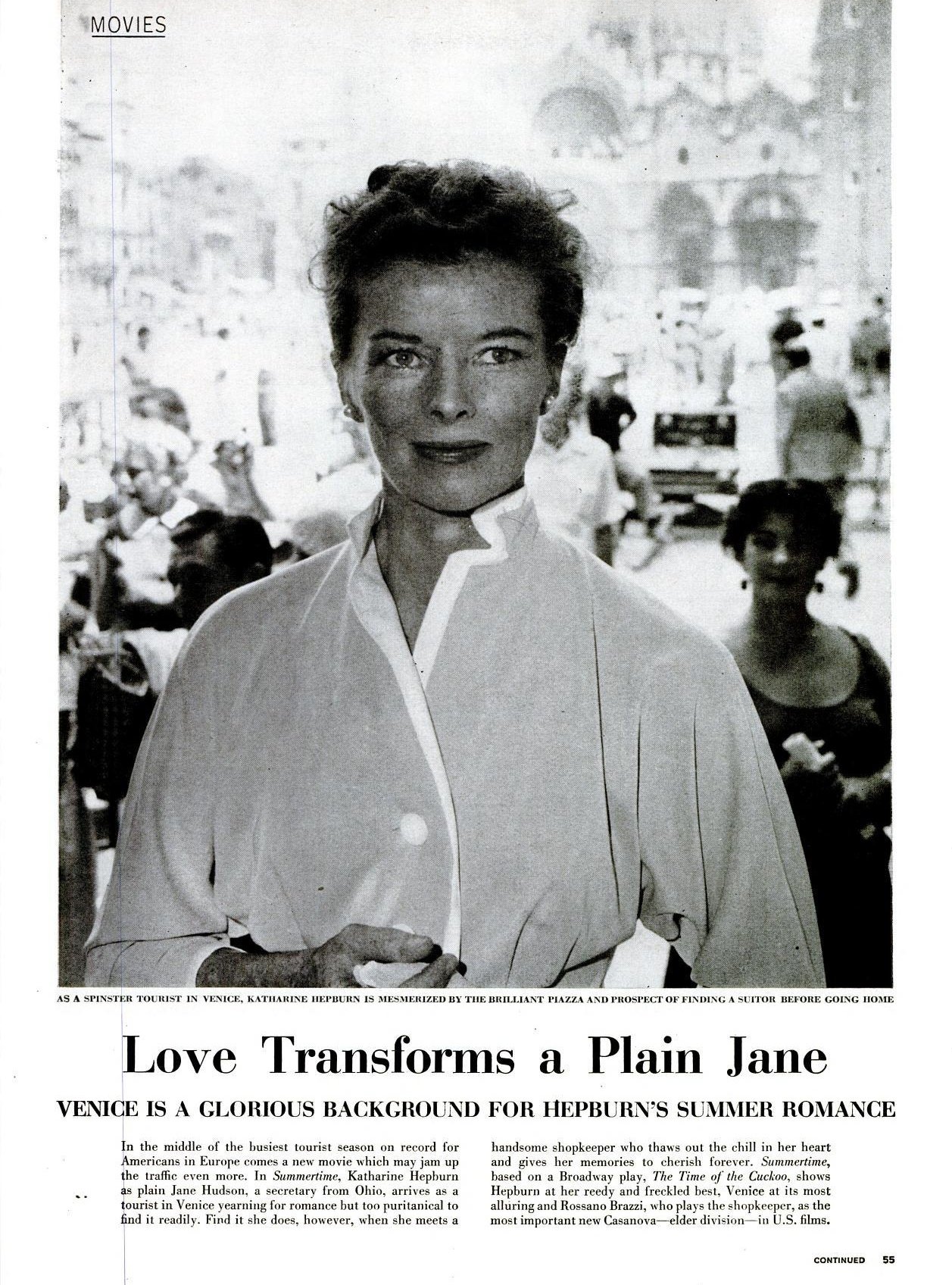
Katharine Hepburn often credited her father for shaping her values, not just through words, but through the quiet power of his actions. One evening in her teenage years, she witnessed a lesson that would remain with her forever—a story not about the circus itself, but about the beauty of giving.

It was a crisp evening, the kind that filled the air with excitement. Katharine and her father stood in line to buy tickets for the circus, anticipation bubbling inside her.
She had been looking forward to the smell of popcorn, the sight of the clowns, the thrill of the acrobats, and the magic of the big top. Ahead of them in line stood a family—a mother, a father, and eight children, all under the age of twelve.
The family’s clothing revealed much. Their outfits were simple, worn, and patched in places, but spotless. Their shoes were scuffed, yet polished with care. These were people of modest means, but also of dignity and pride.
The children stood in pairs, holding hands, their eyes shining with joy. It was clear this was no ordinary night for them. The circus would be a once-in-a-lifetime memory, something they would talk about for years to come.
Katharine watched as the children giggled softly to each other, whispering about the animals and clowns they were about to see. Their father stood tall at the front of the line, chest slightly puffed, proud to provide this moment for his family. His wife clutched his hand, looking at him with adoration, her eyes saying what words didn’t need to: You’ve made this happen for us.
When they reached the counter, the ticket seller smiled and asked how many tickets he would need. With quiet pride, the father responded, “Eight children’s tickets and two adult tickets, please.”
The price was given. And in an instant, the air shifted.
The man froze, his smile fading. His wife’s hand slipped from his. Her head lowered, heavy with silent realization. The man’s lips trembled. “How much did you say?” he asked softly, as though hoping he had misheard.
The seller repeated the amount.
It was more than he had.

The weight of the moment was unbearable. Katharine felt her heart ache as she realized what was happening. The man didn’t have enough money. How could he turn around and tell his eight excited children—children who had been waiting for this moment with sparkling eyes—that the night was over before it began? How could he shatter their joy with the truth?
Katharine’s father saw it too. Without hesitation, he reached into his pocket and pulled out a $20 bill. He didn’t hand it to the man. Instead, he let it fall deliberately to the ground. Then, bending down, he picked it up, tapped the man on the shoulder, and said gently, “Excuse me, sir, this must have fallen out of your pocket.”
The man understood immediately. This was no act of pity. It was a gift wrapped in dignity. His eyes filled with tears as he pressed both of his hands over Katharine’s father’s, clutching the bill as though it were the most precious thing in the world.

“Thank you, sir,” he whispered, his voice breaking. “This means so much to me and my family.”
The family moved forward, joy restored, their dream of the circus still alive.
Katharine and her father, however, quietly stepped away. They walked back to their car and drove home in silence. That $20 had been the money for their own tickets. They would not see the circus that night.
But Katharine never forgot the feeling in the car. It was not disappointment that filled them—it was joy. A deeper, richer joy than any performance could have given.
That night, she learned a lesson far greater than anything the circus could teach: the true value of giving.

Her father showed her that the act of giving is more powerful than receiving, that real greatness lies not in what we accumulate but in what we share. “Love,” Katharine would later reflect, “has nothing to do with what you expect to get—only with what you expect to give.”
The circus may have been missed that evening, but something much greater took place. A family’s happiness was preserved. A father’s pride was protected. And a young girl learned that the heart of life is not in taking, but in giving.