Mother in ICU After Throwing Her Daughter Out of a Burning Apartment. – Daily News

The fire did not announce itself with drama.
It began the way most real disasters do—quietly, invisibly, until suddenly it was everywhere.
Smoke filled the hallway first. Thick. Black. Choking. Then came the heat, rolling through the apartment like a living thing, swallowing walls, memories, and air all at once. By the time flames were visible, escape routes were already disappearing.
Inside the apartment were a mother and her nine-year-old daughter.
Kessy and Ni’lah.
And in those seconds—those unbearable, irreversible seconds—Kessy made a decision no parent ever imagines having to make.
She chose her child.
As the fire tore through the apartment, Kessy fought her way to a second-story window. Below, neighbors were shouting, running, pointing upward. Someone screamed that the building was burning. Someone else yelled to get out.
Kessy leaned out of the window, smoke pouring behind her, flames licking closer with every breath she took.
She looked down.
She saw strangers.
She saw concrete.
And she saw no other way.
“Please catch her,” she shouted.
Then she threw her daughter out of the window.
Ni’lah fell into open air—nine years old, arms flailing, a body too small to understand what was happening but old enough to feel fear crash through her chest. Below, a neighbor ran forward without hesitation, arms outstretched.
He caught her.
Hard.
Messy.
Human.
“She said please catch her,” the neighbor later recalled. “And then boom. I just knew—I had to. That could’ve been my niece. My nephew. I didn’t think. I just caught her.”
Ni’lah survived.
She walked out of the hospital with nothing more than a scratch on her leg and minor smoke inhalation. Doctors called it a miracle. Family called it grace. Strangers online called it proof that good still exists.
But while Ni’lah went home, her mother did not.
Kessy never made it out of the apartment.
She remains in the intensive care unit, heavily sedated, connected to breathing tubes, her body bearing the cost of a choice that saved her child’s life.
Her condition, according to doctors, is uncertain.
“Fifty-fifty,” her partner, Luis Ramirez, said quietly.
Fifty percent hope.
Fifty percent fear.
And a hundred percent pain.
Luis has not left his daughter’s side.
He is trying to be strong—for Ni’lah, who wakes up asking about her mother. For himself, because someone has to keep moving forward even when the world feels like it has burned down.
“It’s been rough,” he said. “I’m trying to keep it together for my daughter.”
There are moments he can’t.
Because how do you explain to a child that her mother may not wake up?
How do you explain that the same hands that tucked her in at night threw her from a window to keep her alive?
How do you tell a nine-year-old that love sometimes looks like letting go?
As firefighters worked the scene, five people were injured in the blaze. Sirens echoed through the neighborhood. Yellow tape fluttered in the cold morning air. Smoke hung heavy long after the flames were out, clinging to everything it touched.
Later that day, Milwaukee police announced the arrest of a 43-year-old man in connection with the fire, which they are investigating as arson.
One word.
Arson.
Not an accident.
Not faulty wiring.
Not a stove left on.
Someone allegedly set this fire.
And that is where the story becomes uncomfortable.
Because this is not just a story of heroism.
It is a story of accountability.
If the fire was intentional, then Kessy did not simply suffer injuries.
She paid the price for someone else’s decision.
Luis Ramirez does not hide his anger—but he also doesn’t pretend it’s simple.
“Shame on you,” he said of the suspect. “First and foremost. God says forgive, so I gotta forgive. But it’s going to be a process.”
That sentence alone has divided people.
Some praise his faith.
Others question why forgiveness is expected at all.
Many ask why parents who commit heroic acts are left fighting for their lives while alleged perpetrators wait for court dates.
Online, the debate is fierce.
Is forgiveness strength—or pressure?
Is calling for mercy too soon a betrayal of victims?
And why, so often, are we quicker to praise bravery than to demand justice?
Kessy did not choose to be a hero.
She chose to be a mother.
She did not weigh options or calculate odds. She did not stop to think about consequences. She saw flames, smoke, and her child—and she acted.
That action saved Ni’lah’s life.
But it may cost her own.
In hospital rooms and living rooms across the city, people are holding their children closer tonight. Parents are imagining that moment at the window and wondering if they would have the same courage—or the same terror.
Because this story is not just about fire.
It is about how fragile safety really is.
It is about how quickly ordinary life can turn into survival.
About how children depend entirely on adults—not just parents, but neighbors, bystanders, and yes, strangers—to keep them alive.
About how one person’s alleged act can force another into an impossible choice.
Ni’lah will grow up knowing her mother threw her into the arms of a stranger so she could live.
That truth will follow her forever.
Whether Kessy wakes up or not, that moment will always define them both.
And somewhere between gratitude and rage, this community is left holding a question that refuses to settle:
How many lives must be placed in danger before accountability comes as quickly as forgiveness is demanded?
For now, Ni’lah sleeps safely.
Her mother fights in silence.
And a city waits—hoping for recovery, demanding answers, and grappling with the uncomfortable truth that heroism is often born from someone else’s cruelty.
The morning began the way so many childhood mornings do — with movement, laughter, and the simple joy of being alive.
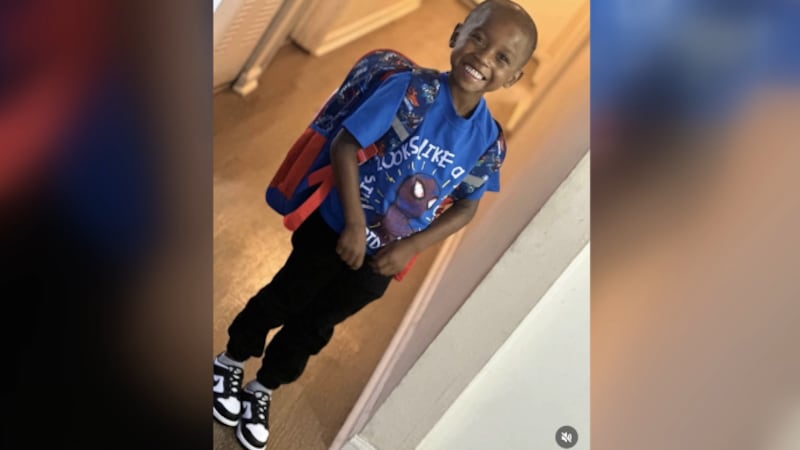
Six-year-old Macree Snelling was outside his home, riding his scooter, the wheels humming softly against the ground. Nearby was his older brother, nine years old, keeping watch in the quiet way siblings do when they play side by side. It was an ordinary moment, the kind parents don’t think twice about, the kind that usually fades unnoticed into memory.
Inside the house, Macree’s mother, Latouris Bell, was getting ready for work. She moved through her routine with the same trust every parent carries — that her children were safe just outside, that the world would behave as it always had.
But in a single, irreversible instant, everything changed.
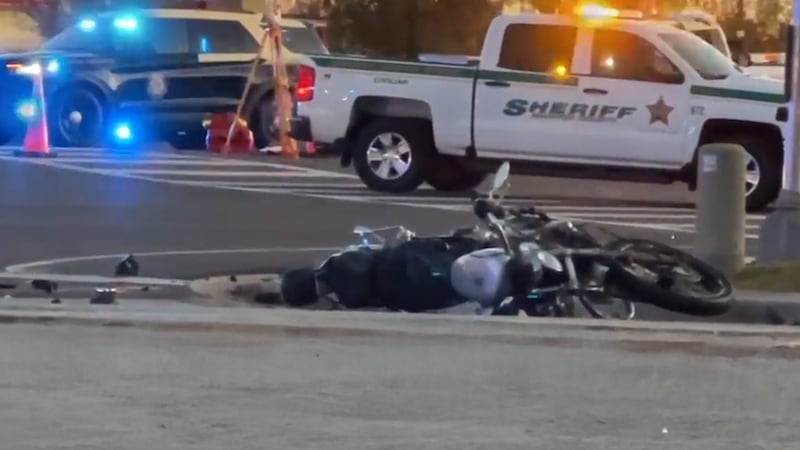
A landscaping truck passed by the home. Somewhere between the sound of its engine and the quiet rhythm of a child’s scooter, tragedy struck. Macree was hit.
There were no warning cries, no time to run, no chance to stop what was already unfolding.
Outside, a six-year-old boy’s life was ending.
Inside, his brother saw everything.
The nine-year-old ran into the house, panic cracking through his small voice as he told his mother what had happened. The words didn’t make sense at first. They couldn’t. A child saying his brother had been hit felt unreal, like a sentence pulled from a nightmare instead of real life.
For Latouris Bell, the moment shattered time.
“It feels like an out-of-body experience,” she would later say. “This is a nightmare.”
Parents often talk about a sound they never forget — the cry that tells them something is terribly wrong. For Bell, it wasn’t just a sound. It was the collapse of a world she had spent six years building around her son.
Macree was rushed for help, but the injuries were too severe. The boy who had been laughing and playing moments earlier was gone.
His grandmother, Victoria Favors, struggled to understand how such a thing could happen.
“How could you not see two kids out playing?” she asked quietly, not with anger, but with disbelief. “I’m not angry at him. I just feel that it could’ve been avoided.”
Those words linger — could’ve been avoided — because they echo the question so many families are left with after sudden loss. What if someone had slowed down? What if someone had looked twice? What if one small decision had gone differently?
Macree’s brother now carries a burden no child should have to carry — the memory of watching his little brother be struck, the knowledge that he ran for help but couldn’t save him. Children are not meant to witness death. They are meant to chase each other, argue over toys, and grow up side by side.
Macree was supposed to grow up too.
He was a kindergartner at Callaway Elementary School, a place that had quickly learned his name and his energy. Teachers and classmates knew him as the child who was always moving, always smiling, always bringing laughter into the room.
“He was just that energetic kid,” his grandmother said. “Always on the go. He would just make you laugh.”
Macree loved Spider-Man — the red and blue suit, the idea of a hero swinging through danger to protect others. To a six-year-old, superheroes are not just characters. They are symbols of safety. They represent a world where someone always arrives in time.
In honor of that love, Macree’s family made a heartbreaking decision: his funeral will be Spider-Man themed. A tiny casket adorned with the hero he admired. A farewell shaped by the innocence that defined his short life.
There is something devastating about a child’s funeral. The flowers are too bright. The toys left behind are too small. The room feels wrong without laughter echoing through it.
For Latouris Bell, the pain is beyond language.
“I don’t wish this on anybody,” she said.
Her words are not dramatic. They are quiet. Exhausted. Heavy with the understanding that no sentence, no comfort, no explanation will ever give her son back.
In the days following Macree’s death, his school community moved to respond. Counselors were made available for students — because children, even when they don’t have the words, feel loss deeply. Desks sit empty. Friends ask questions adults struggle to answer.
Why didn’t he come back?
Where did he go?
Will he ever play again?
There are no answers that make sense to a child.
A GoFundMe was created to help Macree’s family with funeral expenses, a reminder of another harsh reality: grief is expensive. Even in loss, families are forced to navigate logistics, paperwork, and costs while their hearts are breaking.
The crash remains under investigation. Facts will be reviewed. Statements will be taken. Reports will be written.
But no investigation can measure the weight of a mother’s silence when her house feels too quiet. No report can capture the moment a brother realizes his best friend is gone forever. No conclusion can undo the image of a scooter left behind, waiting for a child who will never ride it again.
Macree Snelling was six years old.
He loved Spider-Man.
He loved to play.
He loved to laugh.
He was someone’s baby.
Someone’s little brother.
Someone’s whole world.
And for a brief, ordinary moment, he was just a kid outside on his scooter — exactly where he was supposed to be.
That is what makes the loss so unbearable.
Not that it happened.
But that it happened in a moment that should have been safe.