Mom and Two Children Lost in a Single Night: When a Drunk Driving Decision Shattered an Entire Family. – Daily News
Some crashes don’t just take lives.
They leave behind silence that never lifts, questions no one wants to answer, and a kind of grief that refuses to stay quiet.
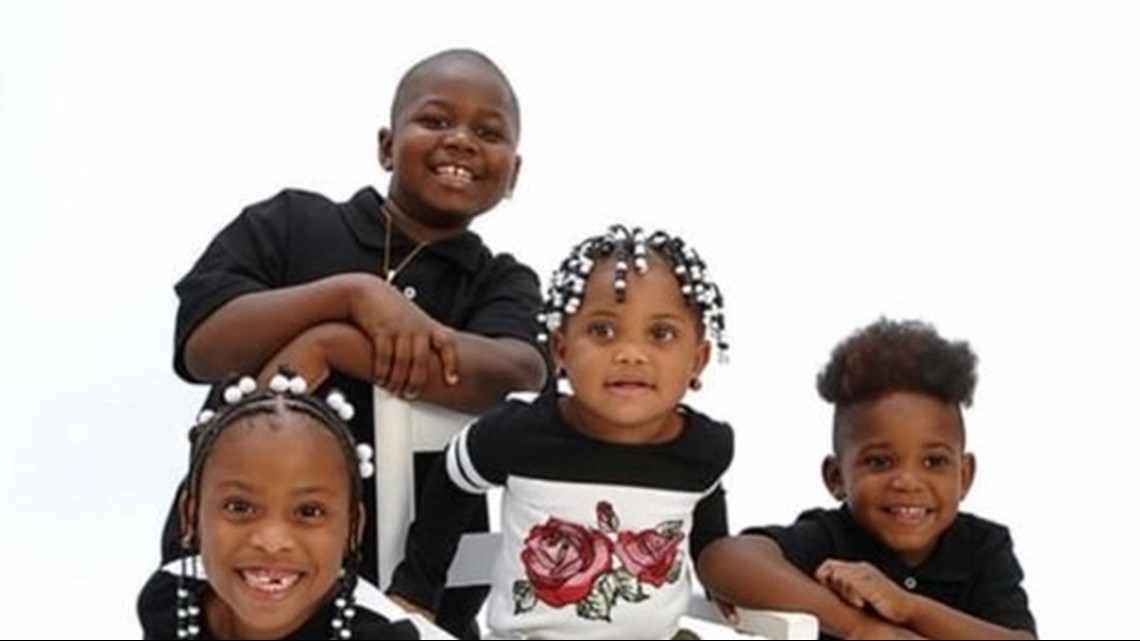
That night, Bernedine Spann wasn’t doing anything extraordinary.
She was driving with her children, moving through a familiar stretch of road, believing—like millions of parents do every day—that they would make it home safely. There was no warning. No sense of danger. No reason to think this would be the last time she would hear their voices in the car.
Inside the vehicle were three people.
Bernedine Spann, 32 years old.
Ja’Leah Spann, 13.
Jaxton Spann, just 7.
A mother. A teenage daughter. A little boy still learning how the world works.
They had no way of knowing that ahead of them, another car was coming straight toward them—driving the wrong way.
And the person behind the wheel was intoxicated.
The impact happened in seconds.

There was no time to react.
No chance to swerve.
No opportunity to escape the consequences of a decision they never made.
Bernedine and Ja’Leah died at the scene.
A mother and her daughter were taken from this world in the same instant, on the same road, because someone else chose to drive drunk.
Jaxton survived the initial crash.
He was rushed to the hospital, his small body fighting injuries far too heavy for a child to carry. Doctors worked. Machines hummed. Family members prayed for what felt like a miracle—that at least one child would be spared.
For days, hope clung to that possibility.
Then Jaxton died.
His father, James Spann, shared the news in a short message online—words that carried the weight of a world collapsing:
“Prayers, prayers, prayers as Jaxton Dontrez Spann transitions to be with his mom and sister.”
Three lives gone.
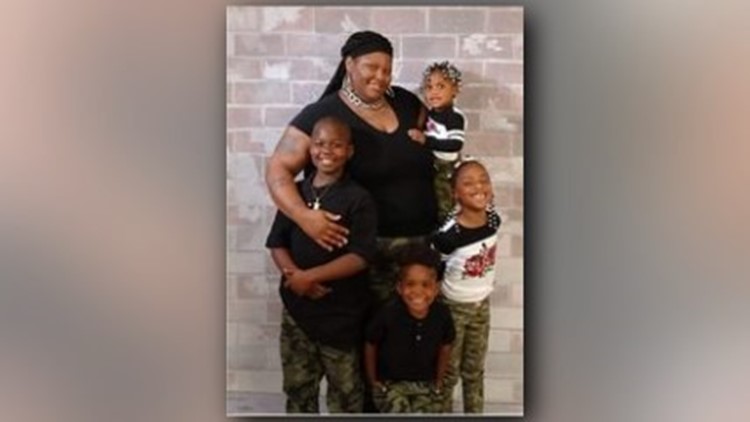
One family erased in a single night.
The driver accused of causing the crash was identified as 41-year-old Sherita Goddard, suspected of driving under the influence and traveling the wrong way when she collided with the Spann family’s vehicle. A passenger in her car—believed to be her daughter—was also injured.
They survived.
That fact alone has ignited outrage that refuses to quiet down.
At the time of reporting, it remained unclear whether Goddard would face criminal charges. And for the people who loved Bernedine, Ja’Leah, and Jaxton, that uncertainty feels like a second wound.
Shonda James, Bernedine’s best friend for over a decade, did not hide her anger.
“She needs to be held accountable to the fullest extent,” Shonda said. “She killed people. They did not have to die. I have no sympathy. I have no forgiveness for her at this moment.”

Her words quickly spread—and divided people.
Some argued that anger doesn’t bring justice.
Others said forgiveness is necessary for healing.
But many asked the question no one wanted to say out loud:
How do you talk about mercy when a drunk driver chose to get behind the wheel and killed a mother and two children?
Shonda didn’t stop there.
“It’s not just her,” she added. “How did anyone let her leave drunk? How did nobody stop her? And how do you drive intoxicated, with a child in your car, going the wrong way down the road?”
Those questions reach far beyond one person.
They reach into parties where keys aren’t taken away.
Into moments where friends stay silent instead of intervening.
Into a culture that calls these tragedies “accidents” instead of naming them for what they are—preventable choices.
Ja’Leah Spann was an eighth-grade student.
Jaxton Spann was in second grade.
Their school district confirmed counselors would be available for students and staff. Classmates had to learn about death far earlier than they should have. Teachers faced empty desks where laughter used to be.
At home, another child waited.
Bernedine’s son—who was not in the vehicle that night—lost his mother, his brother, and his sister all at once. According to the family’s GoFundMe, he is now learning how to live inside a loss most adults could never survive.
No courtroom can return bedtime routines.
No verdict can restore a mother’s voice.
No sentence can fill the silence of three missing lives.
But accountability matters.
This tragedy has reignited fierce debate about DUI laws, sentencing, and whether society is too forgiving when alcohol and driving intersect. Some demand harsher penalties. Others argue prevention and education are the answer.
But beneath all of it lies a simpler truth:
Drunk driving is not a mistake. It is a decision.
And when that decision kills children, the consequences should never be softened by hesitation or silence.
Bernedine Spann did not die because of fate.
Her children did not die because of bad luck.
They died because someone chose to drive drunk—and because that choice wasn’t stopped.
Until accountability is clear, until responsibility is named without hesitation, tragedies like this will keep repeating. Different roads. Different families. Same unbearable outcome.
Three lives lost.
And one question still hanging in the air, heavy with grief and anger:
Will justice be enough—and will it arrive in time to matter?

The fire did not announce itself with drama.
It began the way most real disasters do—quietly, invisibly, until suddenly it was everywhere.
Smoke filled the hallway first. Thick. Black. Choking. Then came the heat, rolling through the apartment like a living thing, swallowing walls, memories, and air all at once. By the time flames were visible, escape routes were already disappearing.
Inside the apartment were a mother and her nine-year-old daughter.
Kessy and Ni’lah.
And in those seconds—those unbearable, irreversible seconds—Kessy made a decision no parent ever imagines having to make.
She chose her child.
As the fire tore through the apartment, Kessy fought her way to a second-story window. Below, neighbors were shouting, running, pointing upward. Someone screamed that the building was burning. Someone else yelled to get out.
Kessy leaned out of the window, smoke pouring behind her, flames licking closer with every breath she took.
She looked down.
She saw strangers.
She saw concrete.
And she saw no other way.
“Please catch her,” she shouted.
Then she threw her daughter out of the window.
Ni’lah fell into open air—nine years old, arms flailing, a body too small to understand what was happening but old enough to feel fear crash through her chest. Below, a neighbor ran forward without hesitation, arms outstretched.
He caught her.
Hard.
Messy.
Human.
“She said please catch her,” the neighbor later recalled. “And then boom. I just knew—I had to. That could’ve been my niece. My nephew. I didn’t think. I just caught her.”
Ni’lah survived.
She walked out of the hospital with nothing more than a scratch on her leg and minor smoke inhalation. Doctors called it a miracle. Family called it grace. Strangers online called it proof that good still exists.
But while Ni’lah went home, her mother did not.
Kessy never made it out of the apartment.
She remains in the intensive care unit, heavily sedated, connected to breathing tubes, her body bearing the cost of a choice that saved her child’s life.
Her condition, according to doctors, is uncertain.
“Fifty-fifty,” her partner, Luis Ramirez, said quietly.
Fifty percent hope.
Fifty percent fear.
And a hundred percent pain.
Luis has not left his daughter’s side.
He is trying to be strong—for Ni’lah, who wakes up asking about her mother. For himself, because someone has to keep moving forward even when the world feels like it has burned down.
“It’s been rough,” he said. “I’m trying to keep it together for my daughter.”
There are moments he can’t.
Because how do you explain to a child that her mother may not wake up?
How do you explain that the same hands that tucked her in at night threw her from a window to keep her alive?
How do you tell a nine-year-old that love sometimes looks like letting go?
As firefighters worked the scene, five people were injured in the blaze. Sirens echoed through the neighborhood. Yellow tape fluttered in the cold morning air. Smoke hung heavy long after the flames were out, clinging to everything it touched.
Later that day, Milwaukee police announced the arrest of a 43-year-old man in connection with the fire, which they are investigating as arson.
One word.
Arson.
Not an accident.
Not faulty wiring.
Not a stove left on.
Someone allegedly set this fire.
And that is where the story becomes uncomfortable.
Because this is not just a story of heroism.
It is a story of accountability.
If the fire was intentional, then Kessy did not simply suffer injuries.
She paid the price for someone else’s decision.
Luis Ramirez does not hide his anger—but he also doesn’t pretend it’s simple.
“Shame on you,” he said of the suspect. “First and foremost. God says forgive, so I gotta forgive. But it’s going to be a process.”
That sentence alone has divided people.
Some praise his faith.
Others question why forgiveness is expected at all.
Many ask why parents who commit heroic acts are left fighting for their lives while alleged perpetrators wait for court dates.
Online, the debate is fierce.
Is forgiveness strength—or pressure?
Is calling for mercy too soon a betrayal of victims?
And why, so often, are we quicker to praise bravery than to demand justice?
Kessy did not choose to be a hero.
She chose to be a mother.
She did not weigh options or calculate odds. She did not stop to think about consequences. She saw flames, smoke, and her child—and she acted.
That action saved Ni’lah’s life.
But it may cost her own.
In hospital rooms and living rooms across the city, people are holding their children closer tonight. Parents are imagining that moment at the window and wondering if they would have the same courage—or the same terror.
Because this story is not just about fire.
It is about how fragile safety really is.
It is about how quickly ordinary life can turn into survival.
About how children depend entirely on adults—not just parents, but neighbors, bystanders, and yes, strangers—to keep them alive.
About how one person’s alleged act can force another into an impossible choice.
Ni’lah will grow up knowing her mother threw her into the arms of a stranger so she could live.
That truth will follow her forever.
Whether Kessy wakes up or not, that moment will always define them both.
And somewhere between gratitude and rage, this community is left holding a question that refuses to settle:
How many lives must be placed in danger before accountability comes as quickly as forgiveness is demanded?
For now, Ni’lah sleeps safely.
Her mother fights in silence.
And a city waits—hoping for recovery, demanding answers, and grappling with the uncomfortable truth that heroism is often born from someone else’s cruelty.