Mom Accused of Killing Daughter by Poisoning Her Wine at Thanksgiving Dinner, Officials Say. – Daily News
Thanksgiving is supposed to be a day of warmth — a day where families gather around a table, share food, exchange small smiles, and hold onto the fragile belief that whatever has gone wrong in the year might soften, just for one evening.

In November 2025, a family in North Carolina gathered for what should have been one of those ordinary, forgettable holidays. Twelve people sat together. Plates were passed. Glasses were filled. Conversation flowed in the way it always does when relatives try to hold tradition together.
No one at that table knew they were stepping into something far darker.
According to investigators, the danger did not come from outside the home. It came from the person hosting the meal.
Authorities say Gudrun Casper-Leinenkugel, a 52-year-old mother, deliberately poisoned a bottle of wine served at her Thanksgiving dinner — wine shared by her daughter, another daughter, and her daughter’s boyfriend.
The substance, officials allege, was acetonitrile — a clear, colorless chemical most people would never recognize, let alone suspect in a glass of wine.
Three people drank from that bottle.
And slowly, quietly, their bodies began to fail.
Thanksgiving ended. The dishes were cleared. Guests went home. But something was terribly wrong.

Soon after the meal, the three who had shared the wine began feeling sick. At first, the symptoms may have seemed vague — nausea, weakness, discomfort. The kind of illness people often try to endure, hoping it will pass.
It did not.
One of them, Leela Livis, never recovered.
She died on December 1, 2025.
For a family already fractured by grief, the loss of a daughter is unbearable. For a mother, it is often described as a pain that rewrites the soul.
But investigators now allege something almost impossible to comprehend: that this grief was not accidental — that it was engineered.
According to court documents, the wine consumed at the dinner was poisoned with acetonitrile, a chemical used industrially as a solvent and in manufacturing processes such as lithium battery production. It has no obvious taste or color that would immediately warn someone drinking it.
In other words, it could hide in plain sight.
Health authorities say exposure to acetonitrile can cause irritation, neurological symptoms, and — depending on dose and exposure — death. It is not a substance anyone would expect to encounter at a family meal.
Yet investigators say it was there, waiting in a bottle meant for celebration.
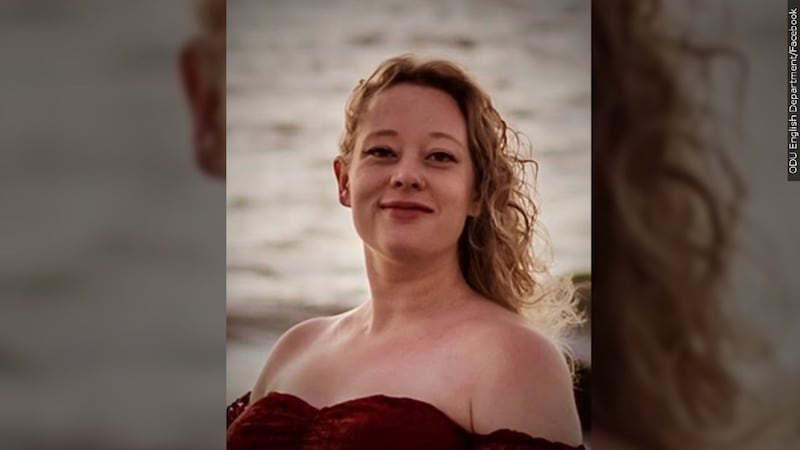
What makes the allegation even more chilling is what officials claim happened before the dinner.
According to the state, Casper-Leinenkugel’s internet search history included a haunting question: “What happens if I accidentally ingest acetonitrile?”
To prosecutors, that search suggests knowledge. Planning. Curiosity sharpened into intent.
By the time authorities began piecing the case together, the story had grown far larger than one poisoned bottle of wine.
On January 16, Casper-Leinenkugel was arrested and charged with two counts of first-degree murder, two counts of attempted murder, and three counts of distributing prohibited food and beverages. She was denied bond and now faces the possibility of the death penalty.
But the Thanksgiving poisoning was not the only shadow hovering over the courtroom.
Investigators with the Henderson County Sheriff’s Office revealed that evidence also links Casper-Leinenkugel to a man named Michael Schmidt, who died in a house fire in 2007. That death, once considered in isolation, has now been pulled back into the light.
During hearings, authorities disclosed that Casper-Leinenkugel may be connected to additional deaths — cases still under investigation.
Each revelation has widened the scope of fear surrounding the case. What once appeared to be an isolated tragedy now looks, to investigators, like a pattern still unfolding.
At the center of it all is a question that has no easy answer:
How does a family meal become a crime scene?
Thanksgiving carries powerful symbolism. It is about trust — trusting that the food placed in front of you is safe, that the person pouring your drink means no harm, that family, no matter how complicated, is still a place of refuge.
If prosecutors’ allegations are proven true, that trust was weaponized.
Leela Livis did not die in a dark alley or at the hands of a stranger. She died after sharing a meal prepared by her own mother.
For the surviving victims — the daughter and boyfriend who also drank the poisoned wine — recovery is not just physical. It is psychological. Every sip, every shared memory, every holiday going forward may now carry the weight of suspicion and trauma.
Experts say betrayal by a parent is among the deepest forms of psychological harm. It fractures a person’s understanding of safety at its most fundamental level.
This case has shaken the community not only because of its brutality, but because of its setting. Crimes committed in public spaces are easier to distance ourselves from. Crimes committed at the dinner table are not.
They force us to ask questions we do not want to ask.
What happens when danger wears the face of someone we love?
What happens when tradition becomes a trap?
What happens when the person meant to protect becomes the threat?
As the legal process continues, Casper-Leinenkugel is scheduled to return to court for a probable cause hearing on February 10. Prosecutors will lay out their evidence. Defense attorneys will respond. The system will move forward as it always does — slowly, methodically, without emotion.
But outside the courtroom, a family has already been destroyed.
There will be no do-over Thanksgiving. No empty chair that feels temporary. No explanation that can restore what was lost.
Leela Livis will remain gone — remembered not only as a victim of poisoning, but as a daughter whose final moments were spent trusting the person who raised her.
And for everyone who hears this story, one truth lingers with painful clarity:
Sometimes, the most dangerous place is not the street outside —
but the table where we believe we are safest.
The night Lesandro Guzman-Feliz stepped out of his home did not feel dangerous.

It did not carry the weight of destiny or the shadow of something terrible waiting just beyond the door. It felt ordinary — the kind of night that passes without leaving a mark. A hallway lit by tired bulbs. A familiar door. A promise to be back soon.
Junior was fifteen years old.
An age suspended between childhood and becoming — old enough to take responsibility seriously, young enough to believe the world still followed certain rules. That if you did nothing wrong, nothing wrong would happen to you. That home was something you could always return to.
That evening, he left to help a friend.
It wasn’t heroic. It wasn’t risky. It was a small favor, the kind teenagers do without thinking twice.

“I’ll be right back.”
His mother watched him leave with the quiet trust that parents are forced to practice every day — not blind faith, but the careful confidence built from routine, from knowing your child, from believing the streets you’ve walked for years will not suddenly turn cruel.
Nothing about the moment suggested danger.
No raised voices.
No tension.
No warning.
The door closed behind him with an ordinary sound — the soft click of life continuing as planned.
Outside, the Bronx moved in its familiar rhythm. Storefront lights glowed. Music drifted through open doors. People passed one another with the unspoken understanding that this was home.
Junior walked comfortably. He knew these streets. They had watched him grow. They had shaped his childhood, carried his laughter, held his footsteps.
Minutes passed.
Then more.

At home, his mother felt the first quiet stir of unease — not panic, not fear, just that subtle instinct parents recognize when something shifts slightly out of place. She reached for her phone and called him.
The phone rang.
No answer.
That silence — brief, ordinary — would later become unbearable.
Elsewhere, a different chain of events had already begun. Not driven by knowledge, but by rumor. Not by truth, but by assumption.

A video circulating on social media had sparked anger inside a small group of people. The person in the video was not Junior. But in the speed of outrage, facts were irrelevant. No one paused to verify. No one asked the most important question: Are we sure?
When Junior was seen, he was misidentified.
Not because of who he was — but because of who someone thought he looked like.
A human life was reduced to a guess.
When the danger became clear, Junior ran.

He ran toward safety.
Toward help.
Toward the place people go when something is wrong.
He reached the doors of a hospital.
Medical staff responded immediately. They fought for him with urgency and skill, doing everything humanly possible.
But some injuries cannot be undone.
Junior did not survive.
He was fifteen years old.

By morning, the Bronx felt different.
The news spread quickly — through phones, through whispers, through stunned conversations between neighbors. Parents held their children closer. Strangers stopped mid-step, absorbing the weight of a name they had never known but would never forget.
Outside the deli where it began, candles appeared. Flowers lined the sidewalk. Handwritten notes spoke of grief, rage, confusion, love.
An ordinary storefront became a place of mourning.
But Junior’s life could never be reduced to the final moments captured on cameras. He was not footage. He was not a headline.
He was a son.
A brother.
A friend.

Those who knew him spoke of his warmth, his humor, his loyalty. He laughed easily. He made plans. He dreamed out loud.
Junior was also part of the NYPD Explorers program — something he took seriously, something he was proud of. It wasn’t just an activity. It was a vision of who he wanted to become.
He wanted to be a detective.
He believed in justice.
He believed in protecting people.
He believed communities could be safer.

The contrast between his dream and the way his life ended was devastating. A boy who wanted to uphold the law lost his life to senseless violence.
Arrests were made. Names were identified. The legal process moved forward, as it must.
But no courtroom could restore what had been taken.
Later, Junior’s family received an anonymous message. It expressed regret. It admitted the truth.
“It wasn’t supposed to be him.”
The words echoed with cruelty of their own.

Not because they offered clarity — but because they revealed how fragile life becomes when decisions are made in anger. There is no comfort in knowing someone else was meant to be harmed. No relief in learning a death was a mistake.
For Junior’s family, grief settled into the quiet spaces of daily life.
The empty chair.
The hallway without footsteps.
The phone that would never ring with his voice again.
His mother returned again and again to that unanswered call — a moment frozen in time.
His sister struggled to reconcile the brother she knew with the version the world now spoke about. The boy who teased her. The boy who dreamed. The boy who should still be here.

In schools, counselors spoke to students about trauma and loss. Teachers faced classrooms where one desk sat empty.
Community leaders spoke about violence, misinformation, responsibility. They urged reflection. They urged change.
But none of those words could reach the one person who mattered most.
Junior could not hear them.
Vigils continued. Candles burned into the night. People said his name aloud, refusing to let it fade into statistics.
His story became part of a larger conversation — about how quickly anger spreads online, about how assumptions turn deadly, about how young lives are swallowed by cycles they did not create.

Yet beyond the public discussion, there was a quieter truth.
Junior was missed not as a symbol — but as a person.
For how he laughed.
For how seriously he took his future.
For how clearly he imagined a better world.
He believed the streets could be safer.
He believed he could help make them so.
Instead, the streets took him.

The phrase “it wasn’t supposed to be him” lingered long after the news cycle moved on — as if there could ever be a correct victim. As if violence ever makes sense.
Junior’s life mattered not because he was mistaken for someone else.
It mattered because it was his.
A fifteen-year-old boy who left home to help a friend.
A son whose mother called him one last time.
A future detective whose plans were cut short.

His story continues to be told not to shock, but to remember.
Not to sensationalize, but to honor.
To insist that behind every headline is a family changed forever.
To insist that lives lost to violence are more than footage and fragments.

Junior’s name deserves to be spoken with care.
His memory deserves dignity.
And his story deserves to be told gently — so it is never forgotten.