MILLIONS EVENTUALLY KNEW MERLE HAGGARD THROUGH “MAMA TRIED.” BUT ON HIS 21ST BIRTHDAY, HE WAS SITTING IN SOLITARY CONFINEMENT — PROVING JUST HOW HARD HIS MOTHER HAD TRIED. Merle was nine when his father died, leaving his mother, Flossie, to work and raise a boy already beginning to drift. She encouraged his music and tried to keep him away from trouble, but after years of running away, arrests, and escape attempts, Merle entered San Quentin at 20. Then came his 21st birthday. Caught drinking prison-made beer, he spent several days alone near death row with a Bible and a blanket. Years later, Merle turned that into “Mama Tried.” He never blamed the woman who raised him. The song made the opposite clear: she had done everything she could, but some lessons refused to be learned until a locked door finally closed. Flossie lived until 1984 — long enough to watch her one and only rebel child become one of the most respected songwriters in America. Millions eventually sang along with Merle’s confession. But behind every word stood a mother who had already lived through the story. – Country Music
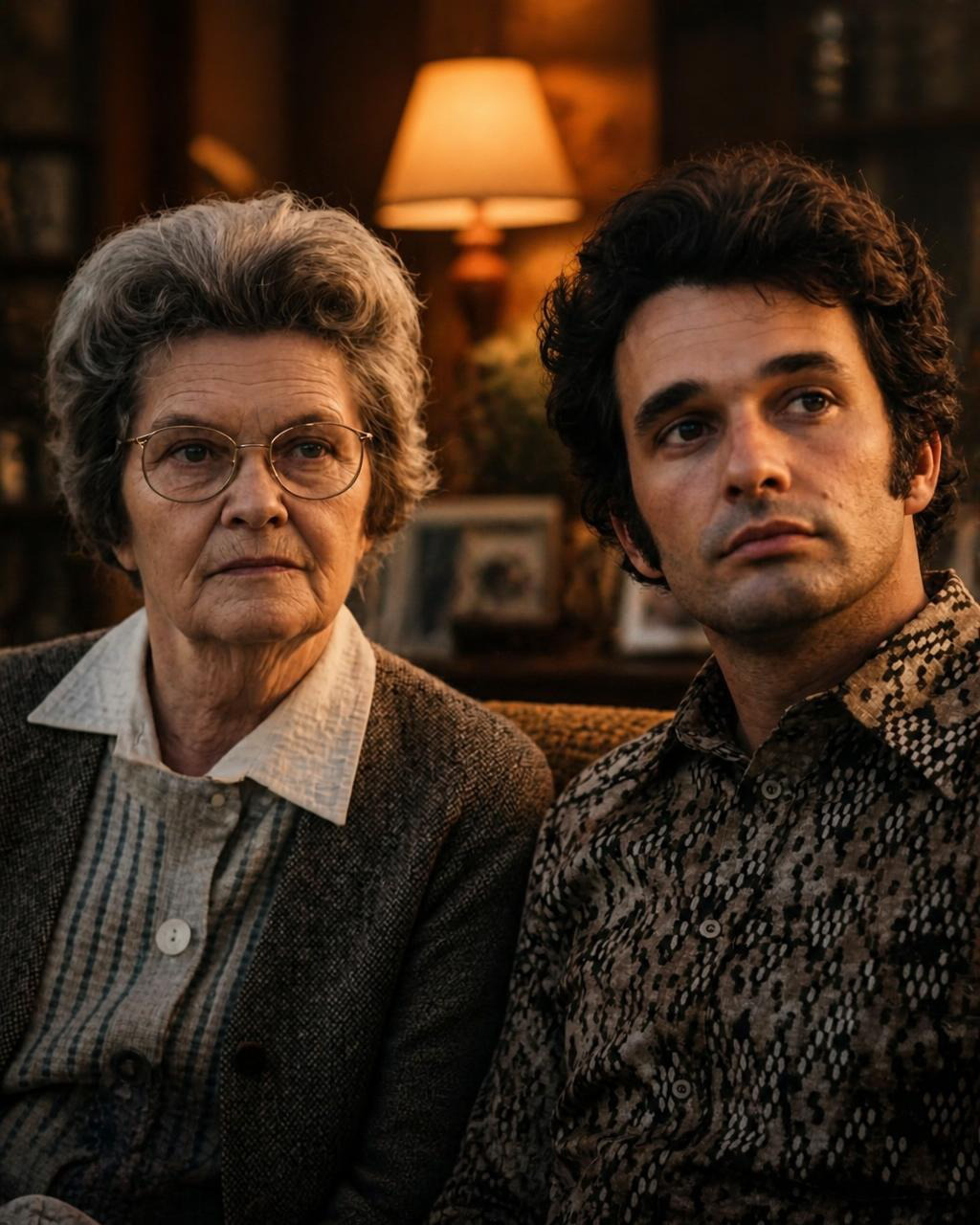
Millions of listeners came to know Merle Haggard through “Mama Tried,” a song that sounded simple on the surface but carried a lifetime of regret inside it. Long before it became a country classic, though, Merle Haggard was just a troubled boy from California, growing up under the care of a mother who kept trying to steer him straight.
A mother doing her best
Merle Haggard was born on April 6, 1937, in Oildale, California. After his father died when Merle Haggard was 9, his mother, Flossie Haggard, raised him alone and worked to keep the family moving forward. She encouraged his early interest in music, and she also kept trying to discipline a son who already seemed drawn to restlessness and trouble.
That tension shaped Merle Haggard’s life early. He ran away, got into trouble, and kept testing limits that Flossie Haggard could only try to set. In later years, Merle Haggard would describe that struggle with remarkable honesty. He did not turn his mother into a villain. Instead, he turned her into the emotional center of one of his most famous songs.
The birthday that changed everything
By the time Merle Haggard landed in San Quentin in 1957, his life was already headed in a dangerous direction. On his 21st birthday, he was caught drinking prison-made beer and was placed in solitary confinement near death row. For several days, he had only a Bible and a blanket. It was a brutal turning point, and one that forced Merle Haggard to face himself in a way no lecture ever had.
That experience helped shape the voice he later brought to country music: plainspoken, wounded, and unafraid to admit responsibility. When Merle Haggard wrote “Mama Tried,” he was not blaming Flossie Haggard. He was admitting that she had done her part, but he had still made his own choices.
Some stories become songs because they are too honest to stay silent.
Turning pain into a classic
“Mama Tried” turned Merle Haggard’s past into something unforgettable. The song’s power came from what it refused to do. It did not offer excuses. It did not soften the damage. It simply acknowledged that a mother can work, guide, warn, and love, yet still not be able to save a child from every bad decision.
That honesty is part of why the song lasted. Listeners heard not just rebellion, but remorse. They heard a man looking back and recognizing how much his mother had already lived through. Merle Haggard’s confession made the song bigger than biography. It became a story about consequences, family, and the painful distance between love and change.
Flossie Haggard lived to see the legacy
Flossie Haggard lived until 1984, long enough to see Merle Haggard become one of the most respected songwriters in American country music. The boy she raised through grief and rebellion had become a legend, and yet the heart of his most famous confession still pointed back to her.
That is the lasting beauty of “Mama Tried.” It is not a song of blame. It is a song of memory. Behind every line stands a mother who tried hard, loved deeply, and watched her son become the kind of man he had to become the hard way.
In the end, millions sang along with Merle Haggard’s confession. But the deeper story belonged to Flossie Haggard too: a mother who had already lived the pain before the song was ever written, and who still mattered in every word.
Post navigation
Ronny Robbins does not arrive on stage like a man trying to take over a room. He steps into it carefully, almost respectfully, as if the songs already belong to someone else and he has only been trusted to carry them for a while. That quietness is part of what makes people lean in.
For audiences who grew up with Marty Robbins, the resemblance is hard to ignore. Ronny Robbins is Marty Robbins’ son, and when Ronny Robbins sings songs tied to that family name, the sound can feel less like a performance and more like a return. The phrasing, the warmth, the way the emotion lands at the end of a line — it all invites memory to sit down and stay awhile.
A Voice That Opens Old Doors
Some listeners hear comfort in that. They hear inheritance, love, and a family tradition carried forward with care. Ronny Robbins has spent years connected to the legacy of Marty Robbins, and public performances have often been framed as tributes rather than attempts to replace anything. That distinction matters. Ronny Robbins is not trying to rewrite the past. He is helping people revisit it.
And yet, not everyone reacts the same way. For some, the sound brings back feelings they had long tucked away. A familiar song can do that. It can make a room fall quiet in the middle of a chorus. It can turn a casual listener into someone staring at the stage as if it just opened a door they had closed years ago.
“It’s not imitation. It’s something that never really left.”
That kind of reaction says a lot about why Ronny Robbins keeps drawing attention. His performances do not ask for applause with force. They ask for memory, and memory is usually more complicated than admiration.
Between Tribute and Identity
For supporters, Ronny Robbins represents continuity. He keeps a familiar sound alive without flattening it into nostalgia. For critics, the emotional weight of that sound can feel uncomfortable, as if the past is being pulled too close to the present. Both reactions can exist at once. That tension is part of the story.
What makes Ronny Robbins compelling is not that he sounds exactly like Marty Robbins. It is that he sounds connected to him in a way that feels lived-in rather than manufactured. There is no obvious attempt at spectacle. No grand announcement. Just a steady voice, a familiar song, and a crowd deciding what they want to feel about it.
The Part People Cannot Easily Explain
Maybe that is why Ronny Robbins continues to matter. He does not perform as a replacement, and he does not seem interested in argument. He sings as someone who understands the weight of the name he carries. That can be moving. It can also be unsettling.
In the end, Ronny Robbins stands in a rare place between inheritance and individuality. He is not trying to outshine the memory behind him. He is simply letting it breathe again, one song at a time.