MERLE HAGGARD DIDN’T DIE IN BAKERSFIELD. BUT BAKERSFIELD NEVER LET HIM LEAVE. On April 6, 1937, Merle Haggard was born in Oildale, just outside Bakersfield, California — into dust, hardship, and a life that never promised him softness. Seventy-nine years later, on April 6, 2016, he died on his own birthday. Not in Bakersfield. But somehow, that didn’t matter. Because Bakersfield had already followed him everywhere. It was in the edge of his voice. In the steel guitar. In the hard truth of songs that never tried to sound clean. Merle didn’t polish pain until it looked pretty. He left the dirt on it. San Quentin gave him lessons. The road gave him scars. Fame gave him a stage. But Bakersfield gave him the sound — rough, proud, restless, and impossible to fake. That is why his death felt less like an ending than a circle closing. The boy born near those oil fields had become the voice of men who worked too hard, loved too badly, and carried too much. Some artists leave behind hits. Merle Haggard left behind a road. And every time the radio goes quiet, you can almost hear him still riding it. – Country Music
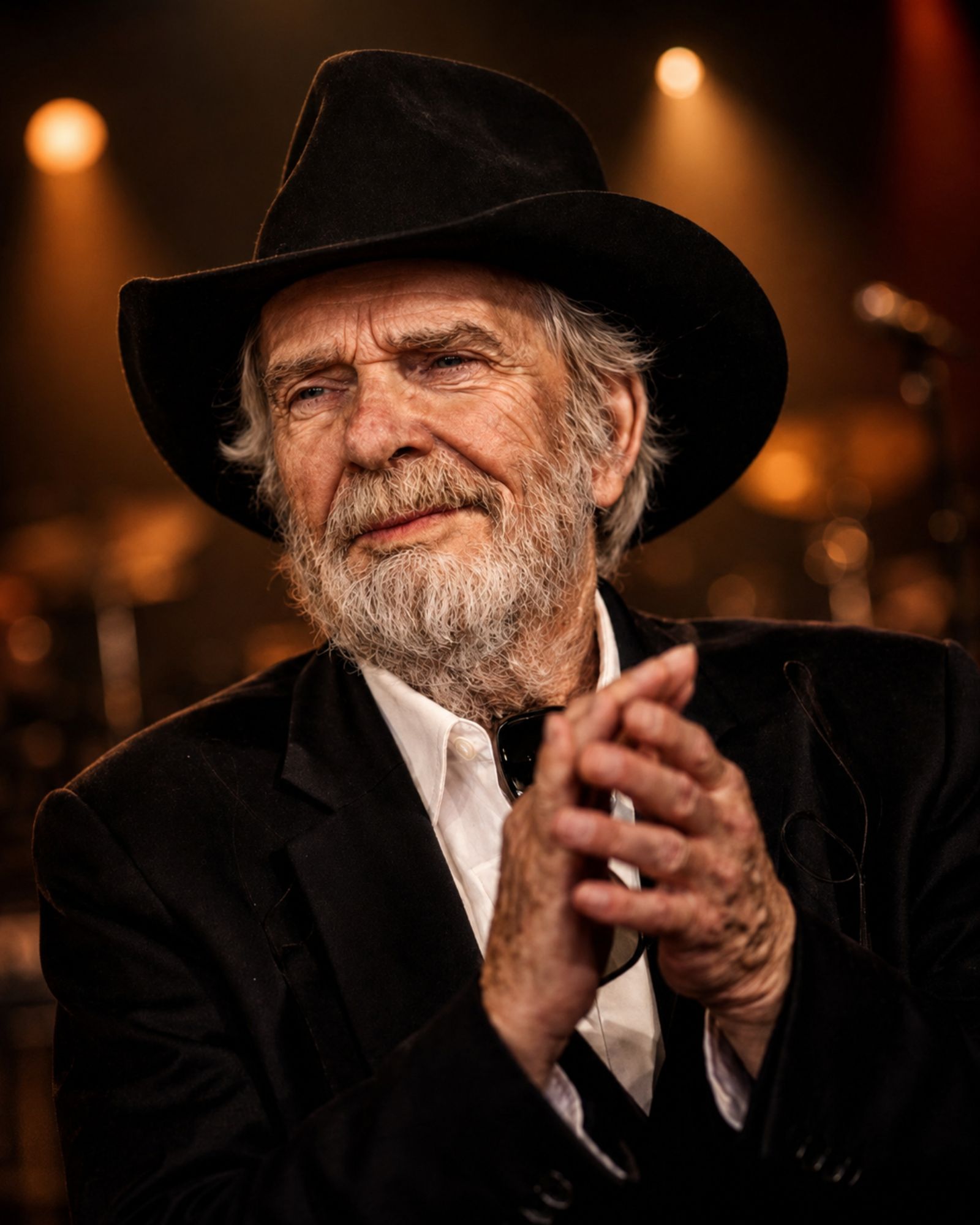
On April 6, 1937, Merle Haggard was born in Oildale, just outside Bakersfield, California. He arrived into a world of dust, hard work, and uncertainty. Nothing about that beginning suggested ease. Nothing about it promised comfort. It was the kind of place that teaches a person to listen carefully, to survive first, and to dream later.
Seventy-nine years later, on April 6, 2016, Merle Haggard died on his birthday. He did not die in Bakersfield. But in a way, Bakersfield never stopped being part of him. It stayed in his voice, in the plain honesty of his writing, and in the stubborn pride that made his music feel lived-in rather than performed.
The Boy from Oildale
Merle Haggard’s early life was shaped by hardship. His family struggled, and the losses and changes he faced as a child left deep marks. Bakersfield was not a polished town in those days. It was oil fields, working people, and long stretches of ordinary difficulty. That environment became part of the story before Merle Haggard ever picked up a guitar.
He did not grow into fame by forgetting where he came from. He grew into fame by carrying it with him. Even when the world learned his name, Merle Haggard still sounded like someone who had seen enough to know that words should mean something.
The Sound Bakersfield Gave Him
People often talk about Merle Haggard as if he were simply a great singer or a successful country star. He was both, of course, but that misses the deeper truth. Merle Haggard helped define a sound that felt blunt, proud, and unmistakably real. It was not shiny. It was not trying to impress anyone. It came from the ground up.
Bakersfield gave Merle Haggard more than a hometown. It gave him a frame of reference. It gave him the kind of perspective that can only come from knowing what struggle looks like up close. His music carried that experience everywhere it went. Whether he was singing about heartbreak, labor, regret, or resilience, he never sounded like he was acting.
Merle Haggard did not polish pain until it looked pretty. He left the dirt on it.
The Road, the Prison, and the Voice
Merle Haggard’s life took difficult turns. San Quentin became part of his story, and the lessons he carried from that time never left him. The road became another teacher. Fame arrived later, but it did not erase the earlier years. Instead, it made them louder.
That is part of why his songs still matter. They do not sound protected from life. They sound like they came through it. When Merle Haggard sang, there was history in the grain of his voice. There was regret, but also toughness. There was sorrow, but also a refusal to surrender.
He became a voice for working people, for families carrying too much, for anyone who knew that survival is sometimes the most honest form of success. His music did not pretend that life was fair. It did something harder. It told the truth and still found beauty in it.
Why His Death Felt Like a Circle
When Merle Haggard died on his birthday in 2016, it felt strangely complete. Not peaceful in a neat, storybook way, but finished in the sense that a long arc had come back around to where it began. The child born near Bakersfield’s oil fields had become one of the defining voices of American country music.
He left behind more than hit songs. He left behind a road. A style. A standard. A reminder that authenticity cannot be faked for long, and that audiences can hear the difference immediately.
Bakersfield did not appear in every line of every song, but it was always there underneath. It was in the steel guitar. It was in the plainspoken phrasing. It was in the refusal to make hardship sound glamorous.
The Legacy That Still Moves
Merle Haggard’s legacy lasts because it feels human. He was not trying to become a myth, even if that is what happened. He was trying to sing what he knew. That honesty is what made him unforgettable.
Today, when someone plays a Merle Haggard song, Bakersfield comes alive again for a moment. The dust, the grit, the pride, and the ache all return. He may not have died there, but Bakersfield never really let him go. And maybe that is the truest kind of hometown legacy there is.
Some artists leave behind records. Merle Haggard left behind a feeling. Every time the radio goes quiet, you can almost hear him still riding that long road home.
Post navigation
Johnny Cash and June Carter: A Love Story That Held Back the Dark
Johnny Cash was one of the most powerful voices in American music. He could sing to prisoners, to dreamers, to the lonely, and to people who had made mistakes they could not easily undo. He became known as the Man in Black, a man whose songs carried pain, faith, defiance, and hope all at once. But before the legend settled into place, Johnny Cash was a man fighting hard to keep his life from falling apart.
Behind the deep voice and the stage lights, he wrestled with addiction, grief, pressure, and the kind of darkness that can quietly take over a life. He was talented, famous, and deeply human. And for years, it seemed like the world saw the performance more clearly than the struggle.
June Carter did not fall in love with a polished hero. She fell in love with Johnny Cash when loving him required patience, courage, and a willingness to face his most fragile moments. She understood that the man she cared for was not made of steel. He was brilliant, wounded, restless, and often overwhelmed by his own battles.
June Carter did not pretend his problems were small. She did not romanticize the chaos. Instead, she stood beside him through the hard parts: the broken promises, the emotional storms, the nights that felt too long, and the long stretches when Johnny Cash had to confront himself honestly.
She loved him with a steadiness that was rare and real. June Carter did not turn Johnny Cash into a saint. She helped him become someone who could keep standing.
Love did not make Johnny Cash perfect. It gave him a reason to keep trying.
Music, Pain, and a Voice That Reached the Forgotten
Part of what made Johnny Cash unforgettable was his ability to sing with deep compassion for people the world often ignored. He sang behind bars, not as a star looking down from a distance, but as someone who understood that pain can make every human being look the same. His music carried conviction because it came from a life that had known temptation, regret, and redemption.
Audiences felt that honesty. Johnny Cash did not sound polished in a distant way. He sounded lived-in. He sounded like someone who had been tested and returned with something true to say.
That truth came at a cost. Fame did not protect Johnny Cash from loneliness. Success did not silence the private battles. Even at the height of his career, he remained a man who needed help, grace, and the kind of love that stays when applause ends.
Thirty-Five Years of Holding On
Johnny Cash and June Carter spent 35 years carrying each other through music, family life, illness, public pressure, and the unpredictable weight of fame. Their relationship was not a perfect story. It was a faithful one. They knew how to laugh together, work together, sing together, and survive the seasons when survival itself was the victory.
June Carter was more than a partner in the spotlight. She was a constant presence in Johnny Cash’s life, a person who helped anchor him when everything else seemed to move. In a world that often turns love into a performance, theirs remained something deeper: a shared endurance.
When June Carter died in May 2003, Johnny Cash kept going, but those who knew the story could sense that something had changed forever. He continued to sing. He continued to breathe. He continued to face the world. Yet the house was different now. The person who had helped steady his life was gone.
Four Months Later, the Silence Won
Johnny Cash died just four months after June Carter. The timing feels almost unbearable because it speaks to a love that was never casual. Some relationships are so woven together that when one thread is cut, the whole fabric begins to loosen.
Johnny Cash did not simply lose a spouse. He lost the person who had stood beside him through so much of his struggle and survival. And in that loss, the final chapter of his life became inseparable from the love story that defined it.
His ending was quiet compared with the roar of his career, but it carried its own truth. Some love stories do not end when one person dies. They end when the other realizes the world is still here, but the reason to stay is not.
Why Their Story Still Matters
Johnny Cash remains beloved not only because of his songs, but because his life felt honest. He showed that a person can be broken and gifted, troubled and compassionate, famous and still deeply human. June Carter’s love did not erase those contradictions. It gave him room to live inside them with more grace.
That is why their story still moves people. It is not just about a music legend and the woman who loved him. It is about what it means to stand with someone in the dark without pretending the dark is not there.
Johnny Cash sang to the broken. June Carter helped keep him from becoming lost among them. Together, they built a love story that was not tidy, but it was true. And sometimes, truth is the most moving thing of all.