MARTY ROBBINS LIVED HIS LAST 8 WEEKS LIKE A MAN WHO REFUSED TO SAY GOODBYE — AND THE WORLD DIDN’T EVEN KNOW HE WAS LEAVING. On October 11, 1982, Marty Robbins walked to the podium at the Country Music Hall of Fame. Three heart attacks behind him. A body running on borrowed time. Nobody in that room knew they were watching a farewell. Twenty-seven days later, he climbed into a Junior Johnson-built Buick Regal and raced NASCAR at Atlanta — his final race. Doctors begged him to stop. He didn’t. Then he went back to the stage. Performed his last concert. Came home. And his heart gave out. His last single that year was called “Some Memories Just Won’t Die.” Seven days after his death, his final film — Clint Eastwood’s Honkytonk Man — hit theaters. He never saw it. He once said: “I’ve done what I wanted to do.” 57 years. 500 songs. 35 NASCAR races. Zero regrets. Most legends slow down at the end. Marty Robbins hit the gas. What’s your favorite Marty Robbins song? – Country Music
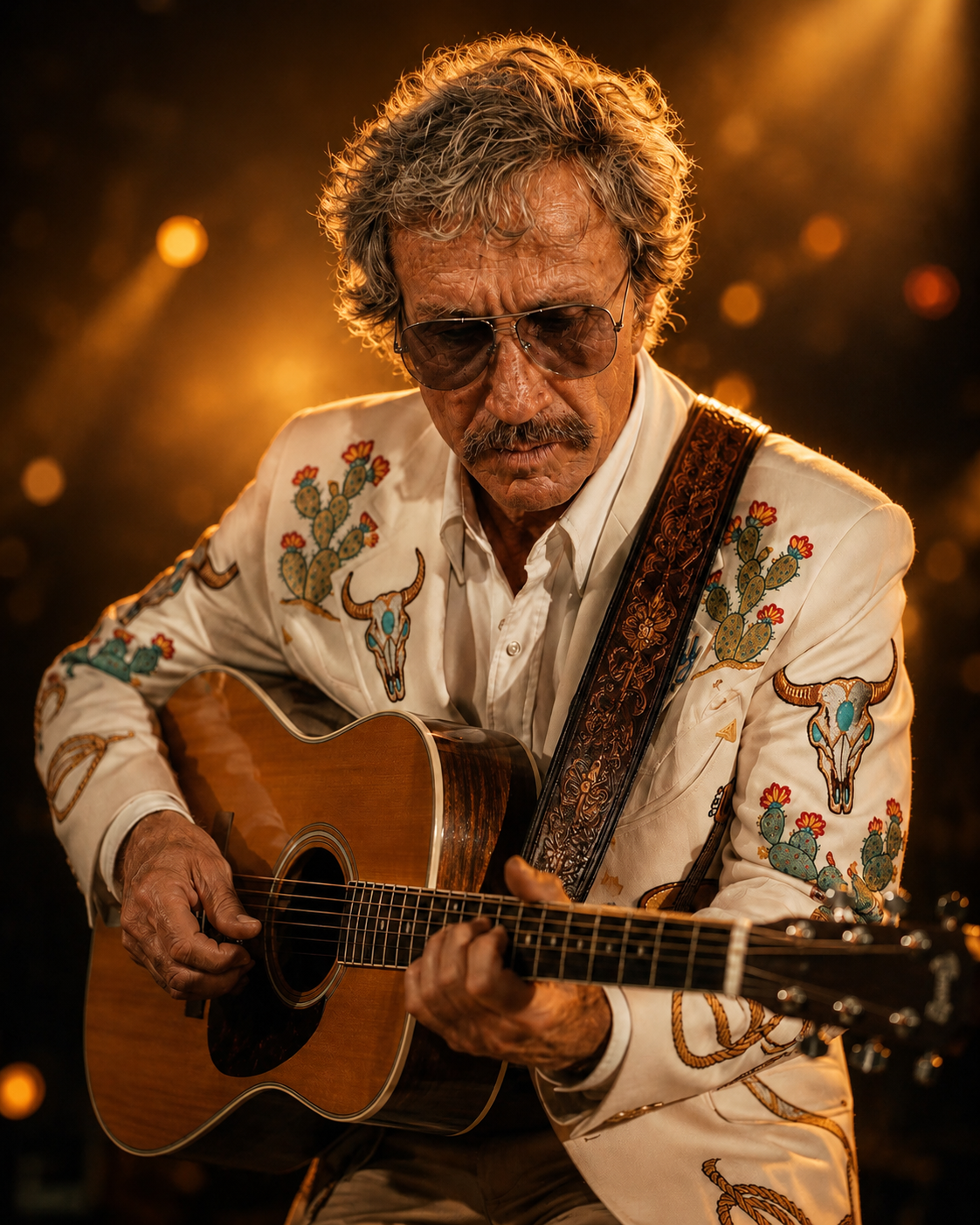
On October 11, 1982, Marty Robbins walked to the podium at the Country Music Hall of Fame with the calm of a man who had seen enough of life to know how quickly it can change. Behind him were three heart attacks, and ahead of him was a final stretch of time that almost nobody in the room could have recognized for what it was. The applause was warm, the moment was proud, and the future still looked ordinary from where everyone stood.
But it was not ordinary. Those last eight weeks of Marty Robbins’ life would become a story about courage, stubbornness, and the strange way some people meet the end without ever acting like it is near.
A Career Built on Motion
Marty Robbins was never a man who seemed content to sit still. He was a singer, songwriter, actor, and racing enthusiast who moved through life with the same restless energy he brought to his music. By 1982, he had already created a legacy that crossed genres and generations. He had recorded hundreds of songs, scored timeless hits, and built a reputation as one of country music’s most recognizable voices.
Yet fame never made him fragile in public. If anything, it made him more determined. He had the kind of personality that treated limits as suggestions. When other people might have stepped back, Marty Robbins leaned in.
“I’ve done what I wanted to do.”
That line carries a lot of weight when it comes from someone who truly means it. Marty Robbins had lived a full artistic life, and he seemed to know it. Even so, he did not turn his final weeks into a farewell tour. He kept going, as if the road itself still had somewhere for him to be.
The Final Race
Twenty-seven days after that Hall of Fame appearance, Marty Robbins climbed into a Junior Johnson-built Buick Regal and raced at Atlanta. It was his final NASCAR race, and it came with the kind of danger that makes hindsight feel almost unbearable. Doctors had urged him to stop. His body had already sent warnings. But Marty Robbins did not seem interested in surrendering the steering wheel.
That decision says everything about him. For Marty Robbins, life was not something to be carefully preserved in a box. It was something to be used. Whether he was on stage or behind the wheel, he wanted motion, risk, and the feeling of being fully alive.
There is something deeply human about that kind of defiance. Not foolishness, not denial, but determination. Marty Robbins did not spend his final weeks acting like a man waiting for an ending. He acted like a man still in the middle of his story.
One More Stage, One More Song
After the race, Marty Robbins returned to the stage and performed his last concert. For fans, it was another show. For history, it was a goodbye hidden in plain sight. No one in the audience had a way of knowing that this was the last time they would hear him sing live.
Then he went home. His heart gave out not long after, and the world lost a voice that had become part of American music history.
There is a quiet heartbreak in the timing of it all. His last single that year was Some Memories Just Won’t Die, a title that now feels almost unbearably fitting. Seven days after his death, his final film, Clint Eastwood’s Honkytonk Man, reached theaters. Marty Robbins never saw it.
What He Left Behind
Marty Robbins left behind more than songs, more than racing stories, more than movie roles. He left behind a rare example of a performer who seemed to live with complete honesty about who he was. He was not trying to become someone else in the final chapter. He was simply being Marty Robbins, all the way through.
He gave the world an enormous body of work, from tender ballads to vivid storytelling songs, and he did it without ever sounding like he was asking for permission. That is part of why his music still feels alive. It came from a man who understood adventure, loss, romance, and the thrill of the open road.
Most legends slow down at the end. Marty Robbins hit the gas.
A Lasting Question for Fans
Maybe that is why his final weeks still feel so powerful today. They were not polished or staged. They were real. A Hall of Fame speech. A final race. One more concert. One more song. And then silence.
Marty Robbins once said, “I’ve done what I wanted to do.” Few artists can leave behind a sentence that simple and make it feel complete. But Marty Robbins could. He lived hard, created constantly, and refused to say goodbye on anyone else’s terms.
What about you — what is your favorite Marty Robbins song?
Post navigation
On a quiet day in Hendersonville, Tennessee, First Baptist Church became the center of a grief that felt larger than music itself. More than 1,000 mourners filled the pews for the funeral of Johnny Cash, the man whose voice had carried through generations of American life. The same church had held another painful goodbye only four months earlier, when Johnny Cash had said farewell to June Carter Cash. Now the family and friends who had gathered for that earlier loss returned to face another heartbreak.
Everything about the service reflected Johnny Cash’s life: simple, solemn, and deeply personal. He was buried in a black coffin with silver handles, and no other color was ever considered. The funeral lasted two and a half hours, long enough for memories to settle in and for silence to do some of the speaking. There were no cameras inside. The moment belonged to the people who had loved him, worked with him, and walked through his final chapter beside him.
A Church Filled With Music, Memory, and Loss
The front rows told their own story. Vince Gill sat with Hank Williams Jr., George Jones, Kid Rock, Emmylou Harris, Sheryl Crow, and former Vice President Al Gore. They were joined by family, friends, and countless others who had come to pay respect to a man who had become a symbol of honesty in American music. Outside the church, the world knew Johnny Cash as a legend. Inside, he was remembered as a husband, father, friend, and artist who never stopped carrying sorrow and hope in the same song.
Kris Kristofferson stood to speak, and the room listened closely. He said, “He represented the best of America. We’re not going to see his like again.” Then he paused and added that Johnny Cash was “Abraham Lincoln with a wild side.” It was the kind of line that made people smile through tears, because it captured something true: Johnny Cash was rough-edged, moral, tender, restless, and impossible to copy.
“He represented the best of America. We’re not going to see his like again.”
“Abraham Lincoln with a wild side.”
Rosanne Cash’s Eulogy Carried the Weight of the Day
His daughter Rosanne Cash delivered the eulogy, and those who were there said the room changed in that moment. Reporters who had covered many celebrity funerals said they had never felt heartbreak quite like it. That kind of grief does not come from fame alone. It comes from watching a family say goodbye to someone who shaped their lives in private long before the public ever called him an icon.
Johnny Cash had already been through the hardest season of his life. Just months earlier, he had stood in the same church to say goodbye to June Carter Cash, the love of his life and his partner in music. The closeness of those two goodbyes made the second one even heavier. It felt as if the church itself had held two storms in the same place and never fully recovered.
The Music Did Not End With the Funeral
Even after the service ended, Johnny Cash’s story kept moving. He had finished recording his last song one week before he died, leaving behind a final piece of his voice for the world to hold onto. And he left more than thirty unreleased songs, which meant Nashville would not run out of Johnny Cash any time soon. His absence was real, but so was the strange comfort of hearing his voice again in new recordings, as if he had left one more trail for listeners to follow.
Two months after the funeral, the CMA Awards honored him with three trophies bearing his name. Each time his children walked to the stage to accept, the entire room stood. Every single time. It was not just respect. It was recognition. The industry understood that Johnny Cash was more than a star. He was part of the foundation.
A Goodbye That Still Echoes
What made Johnny Cash’s funeral unforgettable was not only the famous faces or the size of the crowd. It was the feeling that something irreplaceable had passed. The black coffin, the packed church, the long service, the silence between songs and speeches, and Rosanne Cash’s eulogy all came together to create a farewell that felt both intimate and historic.
Years later, people still return to that day in memory, because it marked the end of an era. Johnny Cash had spent his life singing for the broken, the hopeful, the restless, and the redeemed. In the end, more than 1,000 mourners gathered to return that gift, one last time, in the church where love and loss had already met him before. Nashville said goodbye, but the voice remained.