MARTY ROBBINS DIDN’T DIE IN A DESERT GUNFIGHT, ON A RACETRACK, OR UNDER A WESTERN SKY. On December 8, 1982, his heart gave out in a Nashville hospital after emergency surgery. He was 57. For decades, Marty had chased the things most men only sang about — danger, speed, distance, and the kind of love that makes a man ride back even when he knows the ending. He survived a heart attack in 1969. He came back to the stage. Came back to the studio. Came back to NASCAR tracks where concrete walls waited at speeds no ballad could soften. That was Marty Robbins. He didn’t know how to halfway live. The man who wrote “El Paso” understood the cost of turning around. In that song, a cowboy rides back toward death because love is stronger than survival. For most singers, that would have been storytelling. For Marty, it sounded closer to a confession. He spent his life writing about men who saw the danger clearly — and went anyway. In the end, Marty Robbins didn’t die like one of his songs. He lived like them. – Country Music
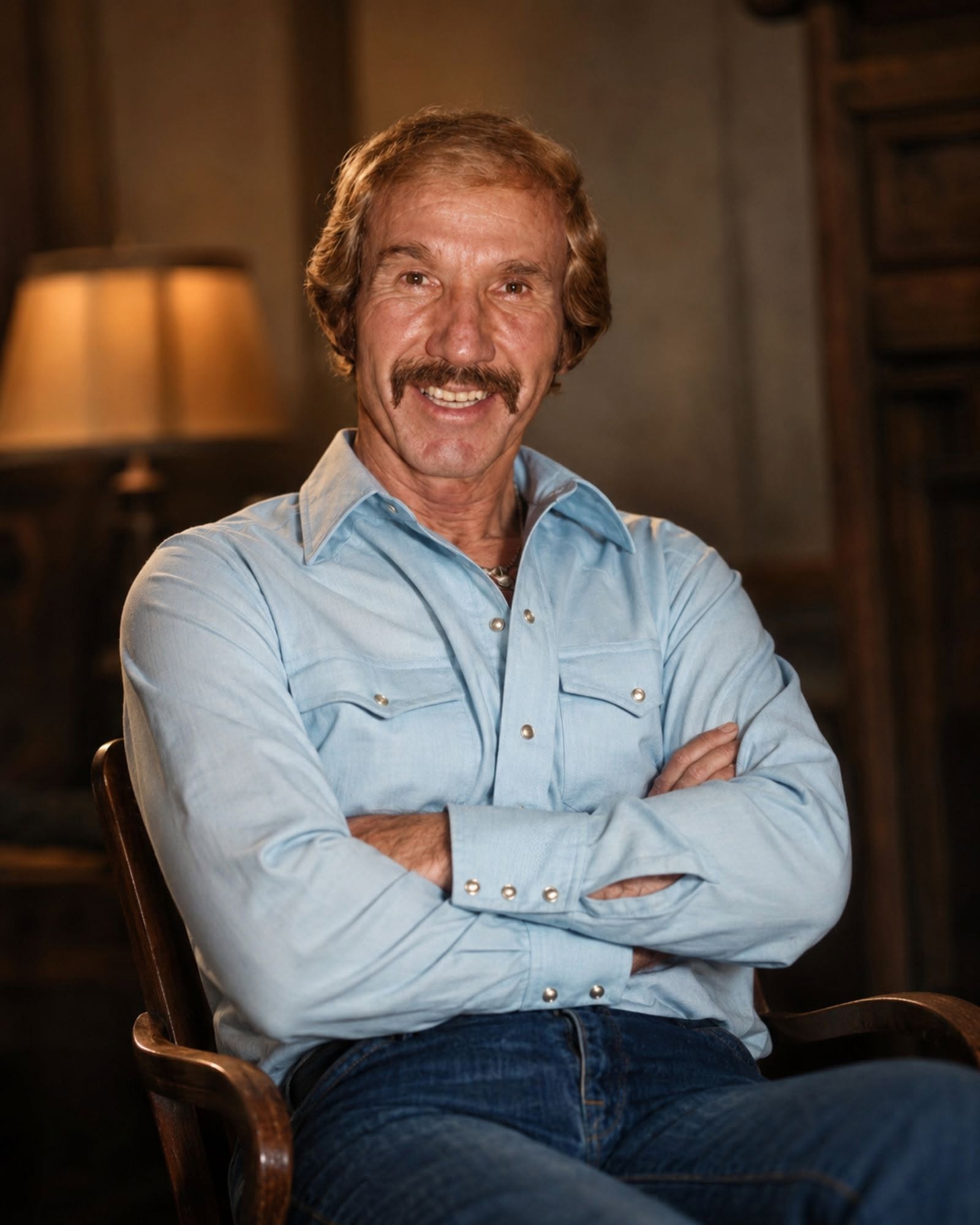
On December 8, 1982, Marty Robbins died in a Nashville hospital after emergency surgery. He was 57 years old. The ending was not dramatic in the way his songs often were. There was no desert showdown, no last stand on a dusty road, no final ride into a western horizon. It was quieter than that, and in some ways sadder, because Marty Robbins had spent so much of his life living as though every day might already be the climax.
He was a singer, a songwriter, a performer, and a man who seemed unable to accept a safe, ordinary life. Marty Robbins chased the things most people only imagine from a distance: speed, risk, distance, heartbreak, and the stubborn pull of love even when reason said to walk away. His songs were full of men who knew the danger and stepped toward it anyway. That wasn’t just a style. It was part of the man himself.
The Voice Behind the Myth
Marty Robbins became one of country music’s great storytellers because he understood how to make a song feel lived-in. He could sing about a cowboy, a broken heart, or a long road home, and somehow it never felt like an act. Listeners believed him. Maybe that was because he never sang like a man standing outside the story. He sang like someone who had already walked through it.
“El Paso” is the clearest example. In that song, a cowboy turns back toward danger because love pulls harder than survival. The story ends in tragedy, but it also ends with commitment. For many performers, that would be fiction. For Marty Robbins, it sounded almost personal, as if he understood the emotional math of choosing the thing that can destroy you.
Marty Robbins spent his career singing about men who knew the cost, and went anyway.
A Life That Refused to Slow Down
Marty Robbins did not live carefully. In 1969, he survived a heart attack, and many people might have taken that as a warning to slow down. Marty Robbins came back instead. He returned to the stage. He returned to the studio. He returned to the life he seemed determined not to leave behind any sooner than necessary.
He also came back to NASCAR tracks, where the walls were hard, the speeds were high, and the risk was real. That detail matters because it says something essential about Marty Robbins. He was not only fascinated by danger from a safe distance. He moved toward it. He loved fast cars, loud engines, and the kind of excitement that made the heart work harder. It was as if ordinary caution had never quite fit him.
That energy showed up in everything he did. He was not a man who lived halfway. If he wanted to sing, he sang with conviction. If he wanted to race, he raced hard. If he wanted to tell a story, he told one that could carry sorrow, romance, and fate all at once. There was nothing small about the way Marty Robbins approached the world.
The Distance Between a Song and a Life
People often separate the artist from the art, but with Marty Robbins, the connection feels impossible to ignore. The songs are full of motion, longing, and decisions that cannot be undone. They carry the feeling of someone looking straight at the ending and still refusing to change course.
That is what makes Marty Robbins unforgettable. He did not simply write about danger. He seemed to understand it. He did not just perform Western songs. He gave them emotional weight. He did not just entertain audiences. He invited them into a world where love and loss were always closer together than anyone wanted to admit.
And yet, for all the drama in the songs, the final chapter was not written like a ballad. It happened in a hospital in Nashville after emergency surgery. It was sudden, human, and heartbreaking. The man who had made so many stories feel larger than life was gone at 57, leaving behind a body of work that still feels alive.
What Marty Robbins Left Behind
Marty Robbins left behind more than hits. He left behind a feeling. His music still carries the dust, motion, and ache of a life fully felt. When people hear his songs today, they hear more than a voice from the past. They hear a man who understood that every beautiful thing has a price, and that some people pay it willingly.
That is why the legend of Marty Robbins lasts. Not because he died in the way people might imagine from listening to his music, but because he lived with the same intensity his songs demanded. He followed danger. He followed passion. He followed the road until the road could go no farther.
Marty Robbins didn’t die like one of his songs. He lived like them. And that may be the truest ending of all.
Post navigation
They called her the coal miner’s daughter, and the name stuck because it was true. Loretta Lynn came from hardship, from a world where coal dust settled into everything and life did not wait for anyone to get ready. But that title was always too gentle for what she really was. Loretta Lynn was not just a country singer. She was a force. She was the woman Nashville loved, resisted, celebrated, and could never fully contain.
Her story began in Butcher Hollow, Kentucky, in a home where work came early and comfort came late. She married young, became a mother young, and entered adulthood before most people even begin to understand it. When her husband, Oliver “Doolittle” Lynn, bought her a $17 guitar, it was not a grand gesture in the way history likes to romanticize. It was simple, cheap, almost accidental. But that small guitar changed everything. Loretta taught herself to play it while raising children and carrying the weight of a life that had never once made things easy.
That guitar cost less than a family grocery run. It ended up costing the music industry its old rules.
The Woman Who Would Not Stay Quiet
Loretta Lynn did something many people in Nashville did not know how to handle: she told the truth without apology. She sang about marriage, motherhood, betrayal, poverty, double standards, and the daily grind of being a woman expected to endure everything with grace. Her songs did not ask permission. They spoke directly to women who were tired of swallowing their pain and smiling through it.
When she released “The Pill,” radio stations pushed back hard. More than 60 stations refused to play it. The song was treated like a scandal because it dared to mention birth control and female choice in a way that felt blunt, public, and impossible to ignore. But the resistance only made the message louder. Loretta Lynn had a gift for turning controversy into momentum. Every time Nashville tried to shove her aside, the audience seemed to move closer.
She did not become famous because she was easy to market. She became famous because she was impossible to dismiss.
That was the threat Loretta carried. She was not polished in a way that made people comfortable. She was honest in a way that made people nervous. She wrote about cheating husbands, unfair expectations, and women who had every reason to be angry. In another era, she might have been called difficult. In country music, she was often called controversial. But over time, the world found a safer word: legend.
Nashville Loved Her, But Only After She Changed It
Eventually, Nashville gave Loretta Lynn the honors she had earned many times over. She won CMA Awards. She entered the Country Music Hall of Fame. She received the Presidential Medal of Freedom. Much later, she made another stunning mark on music with a Grammy-winning album alongside Jack White in her seventies, proving that age had never been the limit people tried to make it.
For decades, her influence kept growing even when the industry around her tried to move slowly. She did not wait for permission to be herself, and that became her greatest power. In 1972, Loretta Lynn became the first woman to win CMA Entertainer of the Year. It was a breakthrough moment, one that should have changed everything immediately.
But here is the part that still stings: fifty years later, women were still fighting for the same space she helped open.
The Warning Nashville Heard and Chose to Ignore
Loretta Lynn’s legacy is not just about success. It is about what her success revealed. She showed that women in country music could be commercially powerful, emotionally direct, and socially fearless. She proved that songs about female experience were not niche complaints. They were central truths.
And yet, even after all the awards, all the tributes, and all the standing ovations, the larger industry kept struggling to make room for the kind of honesty Loretta Lynn represented. She had already shown the cost of silence. She had already shown the value of speaking up. Still, the warning was treated like history instead of policy.
On October 4, 2022, Loretta Lynn died at 90. The tributes were immediate and sincere. People called her a trailblazer, a pioneer, a country icon. All of that was true. But it was not the whole truth.
Loretta Lynn was not simply a woman who helped country music grow. She was the woman who made it uncomfortable to stay small. She turned a $17 guitar into a revolution. She turned personal truth into public power. And she made Nashville love her only after she had already forced it to change.
They called her the coal miner’s daughter. But the better name might be this: the woman who made the room larger for everyone who came after her.