KEITH WHITLEY RECORDED “I’M NO STRANGER TO THE RAIN” — THEN LOST THE BATTLE HE SANG ABOUT. On May 9, 1989, Keith Whitley was found lifeless in his Nashville home. He was 33. His blood alcohol level was 0.477 — nearly five times the legal limit. Just weeks earlier, his single “I’m No Stranger to the Rain” had hit #1 on the Billboard country chart. His wife, Lorrie Morgan, was on tour and received the call no spouse ever wants. Keith had sold millions of records in barely five years. Nashville insiders called him “the purest country voice since Hank Williams.” Producer Norro Wilson once said: “God gave him the voice — but forgot to give him the armor.” Lorrie later recorded a duet with his unreleased vocals. The song charted. His voice still sounded alive… and that’s exactly what haunts everyone who listens. – Country Music
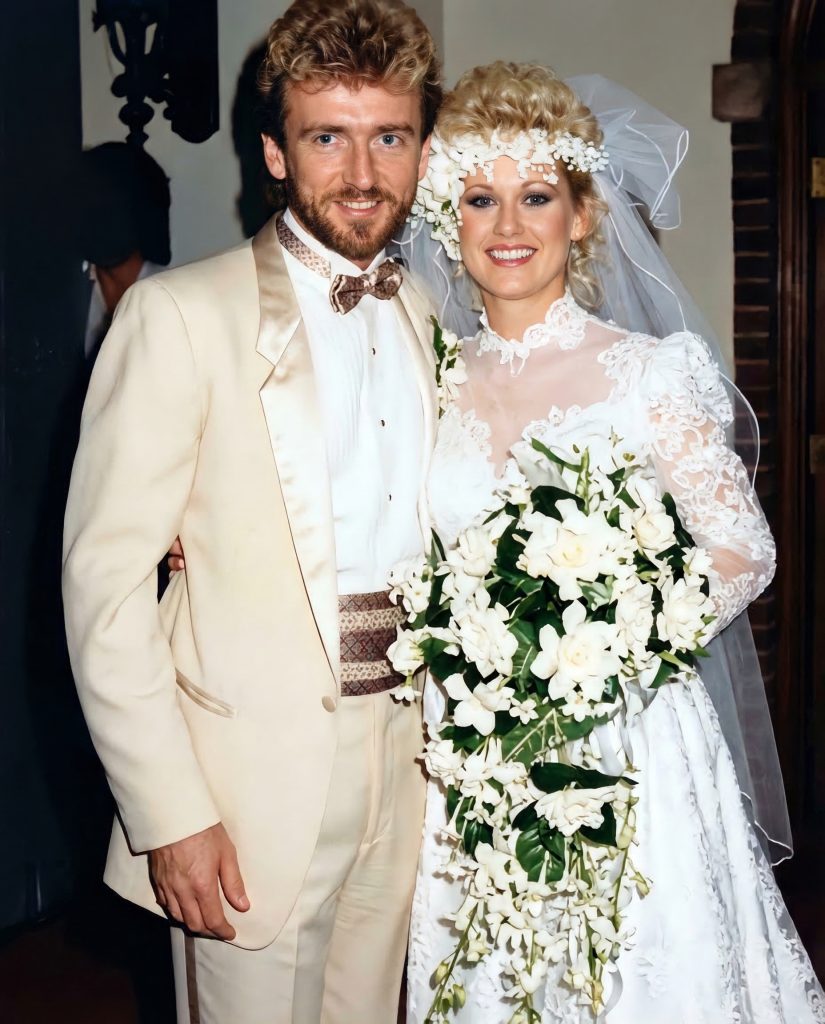
Country music has always had a way of sounding beautiful even when it is telling the hardest truth. Few songs prove that more painfully than “I’m No Stranger to the Rain.” When Keith Whitley recorded it, the performance felt lived-in, not performed. The voice was steady, bruised, and deeply human. It sounded like a man who understood storms well enough to sing about surviving them. That is part of what makes the song so unforgettable now. Keith Whitley did not just sing those lines. Keith Whitley seemed to carry them.
By early 1989, Keith Whitley had become one of the most admired voices in country music. In just a few short years, Keith Whitley had built a reputation that many artists spend a lifetime chasing. Fans loved the honesty in songs like “Don’t Close Your Eyes” and “When You Say Nothing at All.” Other singers admired the control, the warmth, and the ache in every note. Around Nashville, Keith Whitley was often spoken about with a kind of reverence. There was nothing flashy about the way Keith Whitley sang. The power came from how real it felt.
Then “I’m No Stranger to the Rain” reached the top of the Billboard country chart. On paper, it was a triumph. Another number one. Another sign that Keith Whitley was not just rising, but arriving. Yet the song carried a sadness that feels almost unbearable in hindsight. Its lyrics are about struggle, endurance, and learning how to live with pain without letting it define you. Keith Whitley gave the song a voice that felt personal, as though every word had already passed through his life before it ever reached the microphone.
A Voice Nashville Couldn’t Ignore
There was a reason people compared Keith Whitley to the genre’s most important traditional voices. Keith Whitley could sound tender without losing strength. Keith Whitley could sound broken without falling apart. That balance is rare. Producer Norro Wilson famously said,
“God gave him the voice — but forgot to give him the armor.”
It remains one of the saddest descriptions ever attached to a great singer because it captures the contradiction at the center of Keith Whitley’s legacy. The gift was obvious. So was the vulnerability.
Keith Whitley’s personal struggles were not hidden from those close to him. Success did not erase them. Fame did not protect him from them. If anything, the pressure of being a rising star in country music seemed to exist beside a private pain that never fully let go. Friends, collaborators, and family saw both sides of Keith Whitley: the extraordinary artist and the man quietly fighting battles that talent could not solve.
The Day Everything Changed
On May 9, 1989, that fight came to a tragic end. Keith Whitley was found lifeless in his Nashville home. Keith Whitley was only 33 years old. The shock moved through country music with the force of something unreal. A man whose voice sounded timeless was suddenly gone before his story had even fully begun. For fans, it was devastating. For Nashville, it felt like losing not just a star, but a standard-bearer for a certain kind of pure country emotion.
Lorrie Morgan, Keith Whitley’s wife, was on tour when she received the news. It is hard to read that detail without stopping for a moment. One phone call separated ordinary life from permanent loss. The public knew Keith Whitley as a singer with remarkable gifts. Lorrie Morgan knew Keith Whitley as a husband, a partner, and the center of a shared future that suddenly vanished.
Why the Song Still Hurts
After Keith Whitley’s death, the music did not disappear. In fact, it seemed to deepen. Listeners went back to “I’m No Stranger to the Rain” and heard something different. What once sounded resilient now sounded prophetic. What once felt like a hard-earned country anthem now carried the weight of a final warning no one could stop in time.
Lorrie Morgan later recorded a duet built around Keith Whitley’s unreleased vocals. The song charted, and for many listeners, it was difficult to hear without feeling a chill. Keith Whitley’s voice still had its warmth. Keith Whitley’s phrasing still felt immediate. Nothing about it sounded distant or gone. That may be the most haunting part of all. The records keep playing as if Keith Whitley just stepped out of the room and might come back for the next verse.
That is why Keith Whitley still matters. Not only because Keith Whitley had hits. Not only because Keith Whitley was admired. Keith Whitley matters because the music still holds a truth that country fans recognize instantly. Sometimes the strongest voices carry the deepest hurt. Sometimes the songs that comfort millions are born from struggles nobody can fully see. And sometimes a number one song becomes something far larger than a chart success. It becomes a lasting echo of a life that ended far too soon.
When “I’m No Stranger to the Rain” comes on today, it still sounds alive. That is the gift. That is the heartbreak. And that is why Keith Whitley’s voice continues to linger long after the silence that followed.
Post navigation
The Nashville Center went quiet in a way that felt almost sacred. Not the silence of an empty room, but the kind that happens when hundreds of people suddenly understand that something tender is about to unfold.
Zuma Rossdale and Kingston Rossdale stepped into the light without drama. No giant entrance. No big announcement. No polished speech to tell the audience how to feel. Just two boys, a stage washed in soft color, and the first gentle notes of “Cover Me in Sunshine.”
It did not feel like a performance built for applause. It felt like something more private somehow made visible.
Blake Shelton did not stand at center stage. Blake Shelton did not reach for a microphone or try to turn the moment into one more headline. Blake Shelton stayed seated, hands folded, shoulders still, head slightly lowered as if any movement at all might break whatever fragile truth was rising in front of him.
For years, the world has known Blake Shelton as the loud laugh, the quick wit, the easy confidence. The kind of man who can own an arena with one line and make a crowd feel like an old friend. But family has changed the shape of that public image. Since marrying Gwen Stefani, Blake Shelton has spoken more openly about the responsibility and gratitude he feels toward the life the two of them built together, including Gwen Stefani’s sons, Kingston Rossdale, Zuma Rossdale, and Apollo Rossdale.
That was what made the moment feel so different. The audience was not watching a star being celebrated. The audience was watching a man being trusted.
A Song That Said What Conversation Sometimes Can’t
Zuma Rossdale and Kingston Rossdale sang with a softness that made the room lean closer. There was no need for huge vocal runs or dramatic gestures. The power came from restraint. A held note. A breath between lines. A quick glance toward Blake Shelton that seemed to say more than any speech could manage.
“Cover me in sunshine.” In another setting, it might have sounded bright and playful. Here, it sounded protective. Grateful. Almost like a promise.
Anyone who has lived inside a blended family understands the quiet complexity of moments like that. Love does not always arrive with a title. It does not always ask for a role. Sometimes it shows up in rides home, in patient listening, in staying when no one is asking for applause. Sometimes it earns its name slowly.
Maybe that was why the performance landed so deeply. It was not really about whether anyone used the word “dad.” It was about the fact that Blake Shelton never seemed to demand one. Blake Shelton simply kept showing up.
The Part No One Expected
When the final note faded, the room stayed still for one long second. Then another. The crowd did not rush to break it. Even applause felt too small at first.
Zuma Rossdale looked toward Blake Shelton. Kingston Rossdale gave the kind of half-smile people wear when they know they have made it through something emotional without falling apart. Blake Shelton finally stood, crossed the short distance to them, and pulled both boys close.
No cameras could fully catch what passed across Blake Shelton’s face in that instant. Pride was there. So was surprise. But more than either of those, there was the look of a man who realized that love had come back to him in a form he had never asked for and never expected to need.
What Blake Shelton whispered after the song was not loud enough for the room. Only the boys heard it clearly. But those close to the stage said Blake Shelton’s voice broke when Blake Shelton thanked them.
“You didn’t have to say it,” Blake Shelton reportedly whispered. “I heard it anyway.”
That may have been the line nobody expected. Not because it was dramatic, but because it was simple. And simple truth tends to land hardest.
Why Moments Like This Stay With People
Long after the lights go down, audiences rarely remember perfection. They remember honesty. They remember the pause before tears. They remember the way one song can suddenly reveal the shape of a family more clearly than years of interviews ever could.
That night at the Nashville Center, Zuma Rossdale and Kingston Rossdale did not give Blake Shelton a trophy, a tribute speech, or a carefully rehearsed declaration. They gave Blake Shelton something quieter and, maybe because of that, far more lasting.
They gave Blake Shelton a song.
And for one suspended moment, that seemed to say everything.
::contentReference[oaicite:0]{index=0}