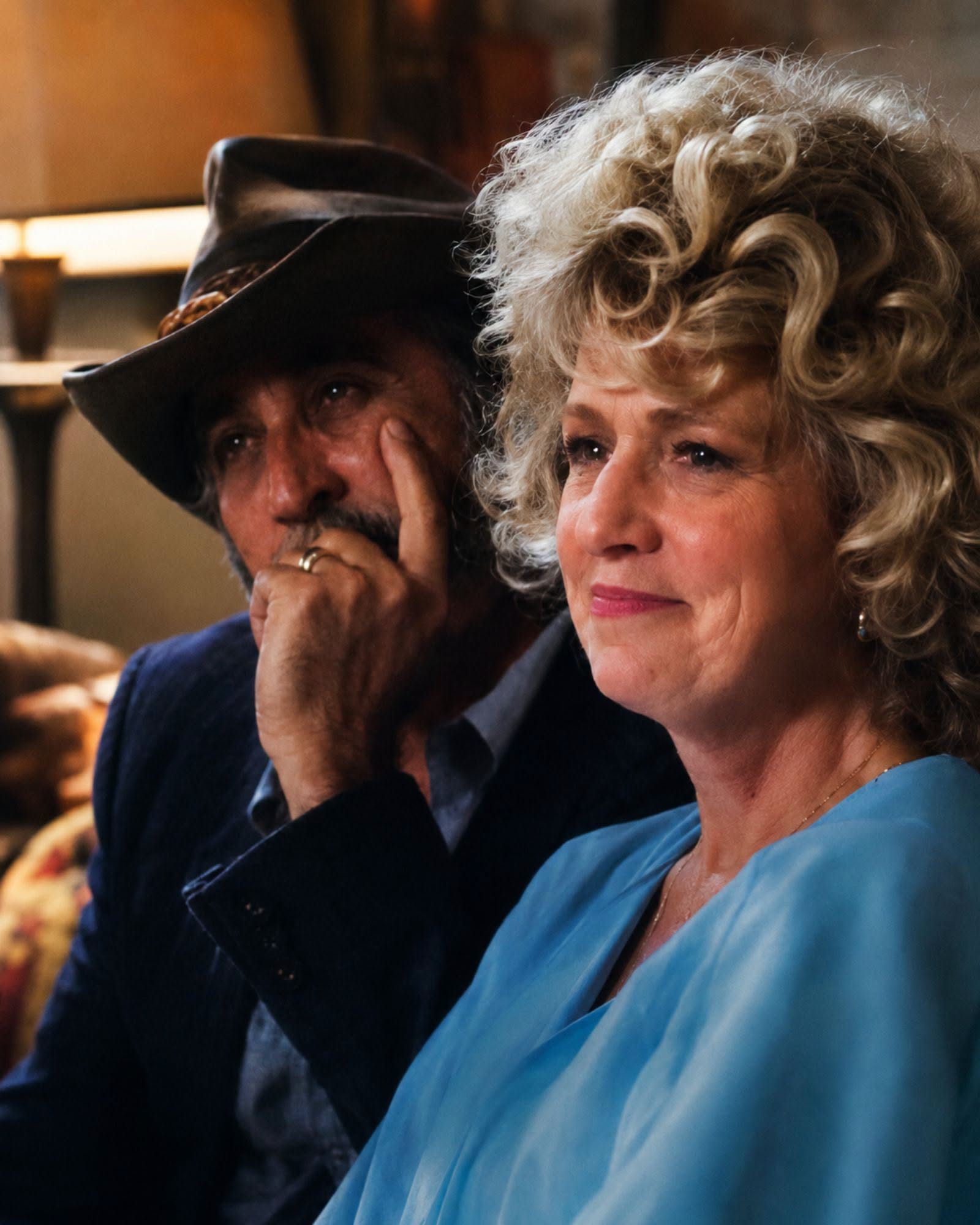
JOY WILLIAMS STOOD BESIDE DON BEFORE NASHVILLE KNEW HIS NAME. AFTER 57 YEARS OF MARRIAGE, THEY WERE GIVEN ONLY 151 DAYS OF THEIR 58TH YEAR. Don Williams married Joy Bucher on April 10, 1960. He was only 20, and there was no record contract waiting for him. To support the family they were beginning, Don worked ordinary jobs—including oil-field work and collecting debts—while he continued playing music around Texas. Together, they raised two sons, Gary and Tim. Music came slowly. First there was the Pozo-Seco Singers. Then Nashville. By the time the world began calling him the “Gentle Giant,” Don had built one of country music’s most consistent careers, eventually collecting 17 No. 1 country hits and entering the Country Music Hall of Fame in 2010. Joy remained outside the spotlight. She had known Don before the quiet voice, the packed theaters and songs such as “I Believe in You” made him famous around the world. In 2016, Don retired from touring. He said it was time to hang up his hat and enjoy some quiet time at home with the people who had loved him through it all. On April 10, 2017, Don and Joy completed 57 years of marriage. Don died on September 8. He was 78. Only 151 days of their 58th year had passed. The world remembers Don Williams for singing about lasting love without raising his voice. Joy knew that the longest love story of his life was the one they had quietly lived together. – Country Music
Long before Don Williams became a country music legend, before the quiet voice, the easy smile, and the “Gentle Giant” nickname, he was simply a young husband trying to build a life. On April 10, 1960, Don Williams married Joy Bucher. He was 20 years old, still years away from the spotlight, and still working the kinds of jobs that kept a family moving forward when music could not yet pay the bills.
That early life was not glamorous. Don Williams worked ordinary jobs, including oil-field work and collecting debts, while he kept playing music around Texas. Through all of it, Joy Williams stayed beside him. Their life together was built in the quiet spaces: the long days, the uncertain years, and the steady decision to keep going even when success was still far away.
A Marriage That Grew Before the Fame
Don Williams and Joy Williams raised two sons, Gary and Tim. By the time the world began to notice Don Williams, the foundation of his life had already been laid at home. First came the Pozo-Seco Singers. Then came Nashville. Then came the long run of songs that made him one of country music’s most dependable hitmakers.
His career would eventually include 17 No. 1 country hits and an induction into the Country Music Hall of Fame in 2010. But even with all that success, Don Williams never seemed to lose the calm, grounded manner that made fans trust him. He sang as if he understood the weight of ordinary life, because he had lived it.
Joy Williams remained outside the spotlight, but her role was never small. She knew Don Williams before the packed theaters, before songs like “I Believe in You” reached listeners around the world, and before the public saw him as a legend. In many ways, she knew the part of Don Williams that mattered most: the man before the fame.
In 2016, Don Williams retired from touring. He said it was time to hang up his hat and enjoy quiet time at home with the people who had loved him through it all. That quiet ending felt true to the life he had built. He never chased noise. He valued home, family, and the long loyalty that lasts longer than applause.
Only 151 Days Into Their 58th Year
On April 10, 2017, Don Williams and Joy Williams completed 57 years of marriage. Then, only 151 days into their 58th year, Don Williams died on September 8, 2017, at age 78. The numbers are simple, but the meaning is heavy. A long marriage had been interrupted too soon.
The world remembers Don Williams for singing about lasting love without raising his voice. Joy Williams knew the longest love story of his life was the one they lived together.
That is the part history should never rush past. Don Williams became famous for calm, timeless songs, but the quiet strength behind those songs was already there at the beginning, standing beside him in Joy Williams.
Waylon Jennings: A Quiet Goodbye for Country’s Loudest Outlaw
Waylon Jennings spent much of his life refusing to follow Nashville’s rules. He built a career on grit, independence, and a voice that sounded like it had lived through every hard mile on the road. By the time the music world finally gave him the honor he had long deserved, his health had already taken so much from him that the moment arrived with a shadow over it.
In October 2001, Waylon Jennings was inducted into the Country Music Hall of Fame. It was a major recognition for an artist who had helped shape the outlaw movement and changed the sound of country music forever. But even that triumph came late in his story. Four months later, on February 13, 2002, Waylon Jennings died in Chandler, Arizona, at age 64, after years of serious health problems linked to diabetes.
The goodbye his family chose was just as private as he wanted it to be. He was laid to rest in a small graveside service in Mesa, Arizona, away from cameras, crowds, and spectacle. There was no grand public display at the cemetery, only a quiet ceremony that matched the way Waylon Jennings wanted to leave the world. For an artist known for living loudly, the final moment was deeply restrained and personal.
That silence said something powerful. Waylon Jennings had spent decades pushing back against limits, whether in the studio, onstage, or in the business of country music itself. He was not interested in polished obedience. He wanted honesty, force, and room to be himself. In the end, his family honored that same spirit by keeping his burial private and respectful.
“He had a voice and a way with a song like no one else.”
Emmylou Harris remembered him with admiration, calling him a class act as both an artist and a man. George Jones described his death as a great loss for country music. Those reactions reflected what so many people felt: Waylon Jennings was more than a star. He was a force who helped make room for a rougher, freer kind of country sound.
Weeks later, Nashville gave Waylon Jennings a public memorial at the Ryman Auditorium, the same stage where he had taken one of his final bows. It was a fitting contrast to the private burial in Mesa. One moment was intimate and family-centered; the other belonged to the wider world that had loved his music for decades.
Waylon Jennings spent his whole life refusing to do things Nashville’s way. Even in death, he stayed true to that rule. He left quietly, on his own terms, with the same stubborn dignity that defined his music and his legend.