Ivory Dress Saved for Fifty-Five Years Uncovers Family Will Fraud on Porch – America Focus
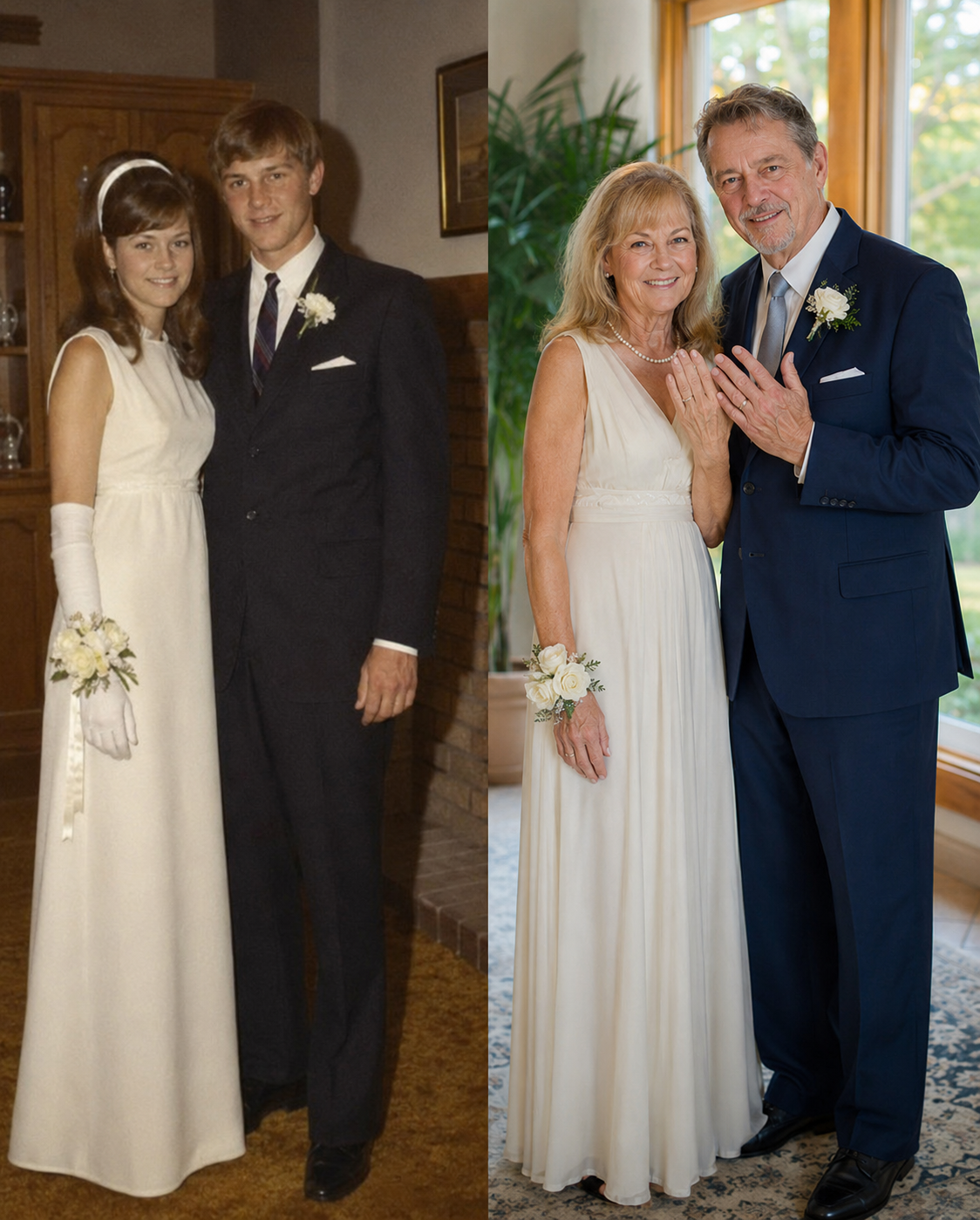
The vinyl garment bag was stuck fast, trapping the hem of the ivory dress inside a rusted metal zipper. From the landing below, my sister Margaret’s voice rose with the high, thin rattle of a woman who had spent the morning calculating the price of cedar shingles.
I used the flat of my thumb to brush a grey skim of soot from the plastic casing. Inside, the heavy satin of my nineteen sixty-nine prom dress showed through like a yellowed tooth.
“The appraiser is coming on Tuesday, Ellen,” Margaret said, her head appearing above the floorboards as she climbed the attic stairs. She was twisting her gold wedding band round and round her knuckle, her eyes already darting toward the stacked cardboard boxes in the eaves.
“The house is not sold yet,” I said, smoothing my blue cotton apron down against my knees.
“The buyers are solid, and the closing is in six weeks,” she said, her voice dropping into that rapid, bossy clip she used when she wanted to shorten a conversation. “You need to clear this junk out. Nobody wears satin from the old days anymore, and that garment bag is only holding onto grease.”
I smelled the sharp, medicinal tang of the lavender sachets I had tucked into the pockets twenty years ago. The scent had gone sour over the decades, turning into something like vinegar.
“I am keeping the dress, Margaret.”
“It is clutter, Ellen. Just like those five-dollar tea tins you keep lined up on the sideboard downstairs.” Margaret reached out and tapped the vinyl bag with one long, manicured fingernail. “You are clinging to things that have no value to anyone else.”
I did not answer her, which always made her move faster. She took a step back toward the stairs, her leather shoes scraping on the rough pine planks.
“The developer wants the lot cleared by June,” she said.
The silence that followed was heavy with the weight of the forty-eight thousand dollars that separated our lives, the difference in the inheritance our father had left behind.
-

Andrew Collins is a contributor who enjoys writing about everyday topics, people, and ideas that spark curiosity. His approach is simple and conversational, aiming to make stories easy to read and relatable. Outside of writing, Andrew follows current trends, enjoys long walks, and likes turning small observations into meaningful stories.
Post navigation
By four o’clock, the attic was locked again, and we were downstairs in my small kitchen. I lifted the heavy copper kettle and poured hot water over the chamomile leaves inside my favorite blue ceramic teacup.
“The new senior apartments near the bypass have a waiting list,” Margaret said, scraping her chair closer to the oilcloth table. She did not touch the sugar bowl. “I could put your name down. It would save you the trouble of managing the yard here.”
“I paid three thousand dollars to have the shingles on this cottage replaced last summer,” I said, setting the teacup in front of her. “I have no intention of leaving.”
“You are seventy-three, Ellen. You cannot keep pretending you are twenty-five and waiting for a boy who went missing in action before we even had color television in the living room.”
She took a quick, hot sip of her tea and winced.
“Daniel was not just a boy,” I said, my voice remaining level as I sat down opposite her.
“He was a soldier who did not come back,” Margaret said, her fingers tightening around her cup. “The government sent the letters. The town built the memorial plaque behind the Presbyterian church. You have spent your whole life holding a vigil for a ghost, and it has made you stubborn.”
She set the blue cup down with a sharp clink against the saucer.
“The church board is already asking about the cottage lot,” she added, her eyes narrowing as she watched my face. “They want to know if you have a copy of the original lease from nineteen seventy.”
“The lease is in my desk,” I said.
“We will see,” Margaret said, rising from the table and pulling her beige cardigan over her shoulders. “I am driving over to the county seat tomorrow to settle the final utility transfers for the main house. Do not lose that lease, Ellen.”
-
Andrew Collins is a contributor who enjoys writing about everyday topics, people, and ideas that spark curiosity. His approach is simple and conversational, aiming to make stories easy to read and relatable. Outside of writing, Andrew follows current trends, enjoys long walks, and likes turning small observations into meaningful stories.
She let herself out, leaving her tea half-finished.
I sat in the kitchen until the yellow light of the afternoon turned into the deep, slate blue of an Ohio dusk. The cottage was quiet, the kind of quiet that settled into the corners of the baseboards and stayed there for weeks at a time.
At seven o’clock, the wind shifted from the east, carrying the scent of damp earth and coal smoke from the valley. I stood by the front door, my hand reaching for the black toggle of the porch light switch.
A shadow moved near the bottom of the steps, breaking the clean line of the privet hedge.
“Ellen,” a voice said.
It was a soft, halting sound, not much louder than the dry leaves scraping across the gravel driveway.
I clicked the switch, and the yellow bulb overhead sputtered once before throwing a circle of light onto the concrete porch.
A man stood at the edge of the step, his shoulders slightly hunched against the damp air. He was wearing a faded canvas field jacket that looked two sizes too large for his frame. His left hand was tucked into his pocket, but his right was raised, his thumb slowly rubbing his left wrist where a heavy watch used to sit.
-
Andrew Collins is a contributor who enjoys writing about everyday topics, people, and ideas that spark curiosity. His approach is simple and conversational, aiming to make stories easy to read and relatable. Outside of writing, Andrew follows current trends, enjoys long walks, and likes turning small observations into meaningful stories.
I did not move from the screen door.
“It is Daniel,” he said.
His hair was entirely white, cropped close to his scalp, and his face was lined with the deep, permanent creases of a man who had worked thirty years under a hard sun. But his eyes were the same pale, clear grey they had been when he stood on my father’s lawn in his dress khakis.
“Daniel,” I said.
My hand found the screen door handle and pushed it open. The metal latch gave a short, familiar groan as I stepped out onto the concrete.
He did not rush toward me. He remained at the top of the steps, his breathing shallow and even. When I reached out, my fingers touched the rough, cold wool of his sleeve first, then the dry warmth of his palm.
“I have been trying to find my way back to you, Ellen,” he said.
We stood on the porch in the gathering dark, our hands joined between us like two people trying to steady themselves on a narrow bridge.
“Come inside,” I said.
-
Andrew Collins is a contributor who enjoys writing about everyday topics, people, and ideas that spark curiosity. His approach is simple and conversational, aiming to make stories easy to read and relatable. Outside of writing, Andrew follows current trends, enjoys long walks, and likes turning small observations into meaningful stories.
The living room was warm from the pilot light of the gas heater. I guided him to the small green sofa by the window and went to the closet for the green knitted throw blanket my mother had made before her eyes went bad.
I wrapped it around his shoulders, tucking the fringe under his chin. He sat very still, his eyes moving slowly over the framed photographs on the mantelpiece, the small pewter bowl on the side table, the framed sampler on the wall.
“They kept me in the North,” he said, his voice dropping to a whisper that seemed to struggle against the stillness of the room. “Near the border. There were four of us in the camp.”
“We thought you were gone,” I said, sitting on the cushion beside him. “The War Department sent the certificate in seventy-one.”
“My parents,” he said, his fingers tightening on the edge of the wool blanket. “I went to the house on Cherry Street first. The neighbors said they passed away.”
“Your mother went during the winter of seventy-three,” I told him. “Your father followed her six months later. They died believing the telegram, Daniel.”
-
Andrew Collins is a contributor who enjoys writing about everyday topics, people, and ideas that spark curiosity. His approach is simple and conversational, aiming to make stories easy to read and relatable. Outside of writing, Andrew follows current trends, enjoys long walks, and likes turning small observations into meaningful stories.
He looked down at his boots, which were dusty and worn at the heels.
“I wrote to them,” he said. “From the hospital in California. I wrote three times, Ellen. The letters came back to the ward marked undeliverable.”
The small clock on the shelf gave a single soft chime for the half-hour.
“Who sent them back?” I asked.
Daniel did not answer. He slowly reached out and took my hands in his, his fingers wrapping around mine as the first thin drops of rain began to tap against the glass of the window pane.
The rain was still tapping against the glass at eight the next morning when I stood by the toaster. I sliced two thick pieces of white bread, keeping my eyes steady on the serrated knife to ensure they were even. Daniel sat at the small formica table, his thumb slowly circling the brass ring of my house keys. He picked up the long, flat brass key with the three square notches at the end, holding it up to the gray light that filtered through the damp curtains.
-
Andrew Collins is a contributor who enjoys writing about everyday topics, people, and ideas that spark curiosity. His approach is simple and conversational, aiming to make stories easy to read and relatable. Outside of writing, Andrew follows current trends, enjoys long walks, and likes turning small observations into meaningful stories.
“You still keep this one,” Daniel said, his voice soft and halting.
I set the bread knife down on the counter and smoothed my apron. “That is for our father’s safety deposit box at the Elmwood Bank. Margaret told me the box was cleared out and closed after he passed away in seventy-five.”
Daniel rubbed his left wrist, his fingers searching for the heavy watch strap that had not been there for decades. “The bank does not usually let you keep the key when a box is closed, Ellen. They require both copies to be returned to the vault manager before they sign off on the termination.”
He laid the key back on the table with a soft metallic click that sounded too loud in the quiet kitchen.
“Perhaps they made an exception for Margaret,” I said, though I could not recall her ever mentioning a spare key on my keyring. “She handled all the paperwork with the lawyers while I was still working at the dress shop on Main Street.”
The toast popped up, the smell of warm yeast filling the room. I buttered the bread and set the plate between us, but neither of us reached for a slice.
-
Andrew Collins is a contributor who enjoys writing about everyday topics, people, and ideas that spark curiosity. His approach is simple and conversational, aiming to make stories easy to read and relatable. Outside of writing, Andrew follows current trends, enjoys long walks, and likes turning small observations into meaningful stories.
“She told me everything was settled according to the standard terms,” I added, looking at the way his fingers stayed near the brass key.
Daniel looked out the window toward the gravel driveway where my green Buick LeSabre sat under the dripping maple trees. “Standard terms usually require two signatures, Ellen. Especially for a family box that was registered in both your names.”
I did not answer him, but I slipped the keyring into my apron pocket, the brass key cold against my thigh.
“The bank manager back then was Mr. Henderson,” I said, pouring two cups of black coffee. “He was a friend of our father. He might have let her keep it as a keepsake.”
“A keepsake for a safety deposit box,” Daniel said, his voice trailing off as he looked at the steam rising from his cup.
We drove to the post office at eleven, the Buick engine humming its low, familiar rattle. I pulled into a parking space near the blue mail collection boxes and reached into the glove compartment. From behind the registration papers, I pulled out a bundle of letters tied with a faded yellow ribbon, their edges worn soft from years of sitting in the dark of the car.
-
Andrew Collins is a contributor who enjoys writing about everyday topics, people, and ideas that spark curiosity. His approach is simple and conversational, aiming to make stories easy to read and relatable. Outside of writing, Andrew follows current trends, enjoys long walks, and likes turning small observations into meaningful stories.
These were the envelopes I had sent to his parents’ old address on Maple Street during the first year of his absence. Every single one had come back to my mailbox marked undeliverable.
Daniel took the bundle, his fingers tracing the yellowed paper of the top envelope. He pointed to the red ink stamped across my handwriting.
“These markings on the envelope do not look like official post office ink,” he said.
I leaned closer, the scent of old paper rising between us in the front seat. “What do you mean, Daniel? They have the official return stamp.”
“The postal stamp in sixty-nine was always a heavy black roller,” he said, his voice dropping to a whisper. “This red ink was written with a felt-tip pen, the kind they sold at the five-and-dime. Look at the way the ink bled into the grain of the paper.”
I looked at the capital letters spelling out the word Return. The cursive line on the letter R looped backward in a tight, elegant circle, exactly like the letters on my sister’s grocery lists.
-
Andrew Collins is a contributor who enjoys writing about everyday topics, people, and ideas that spark curiosity. His approach is simple and conversational, aiming to make stories easy to read and relatable. Outside of writing, Andrew follows current trends, enjoys long walks, and likes turning small observations into meaningful stories.
“My sister always had beautiful penmanship,” I said, my voice barely carrying over the idling engine of the Buick. “She must have helped the postman sort the mail when the local office was short-staffed during the holidays. She was always volunteering for town projects.”
Daniel turned the envelope over, his thumb resting near the corner where the stamp had been cancelled. “The post office does not let civilians mark official mail, Ellen. Not even in a small town like Elmwood. And these letters were sent in April, not during the winter holidays.”
“Margaret was always helping people,” I said, though my fingers felt cold as I took the letters back from him. “She spent half her time at the church or helping neighbors with their paperwork. She probably just offered to help clear the backlog.”
“Did she help his parents with their mail too?” Daniel asked.
I did not answer. I put the letters back in the glove compartment and clicked the door shut, the latch catching with a heavy metallic snap.
-
Andrew Collins is a contributor who enjoys writing about everyday topics, people, and ideas that spark curiosity. His approach is simple and conversational, aiming to make stories easy to read and relatable. Outside of writing, Andrew follows current trends, enjoys long walks, and likes turning small observations into meaningful stories.