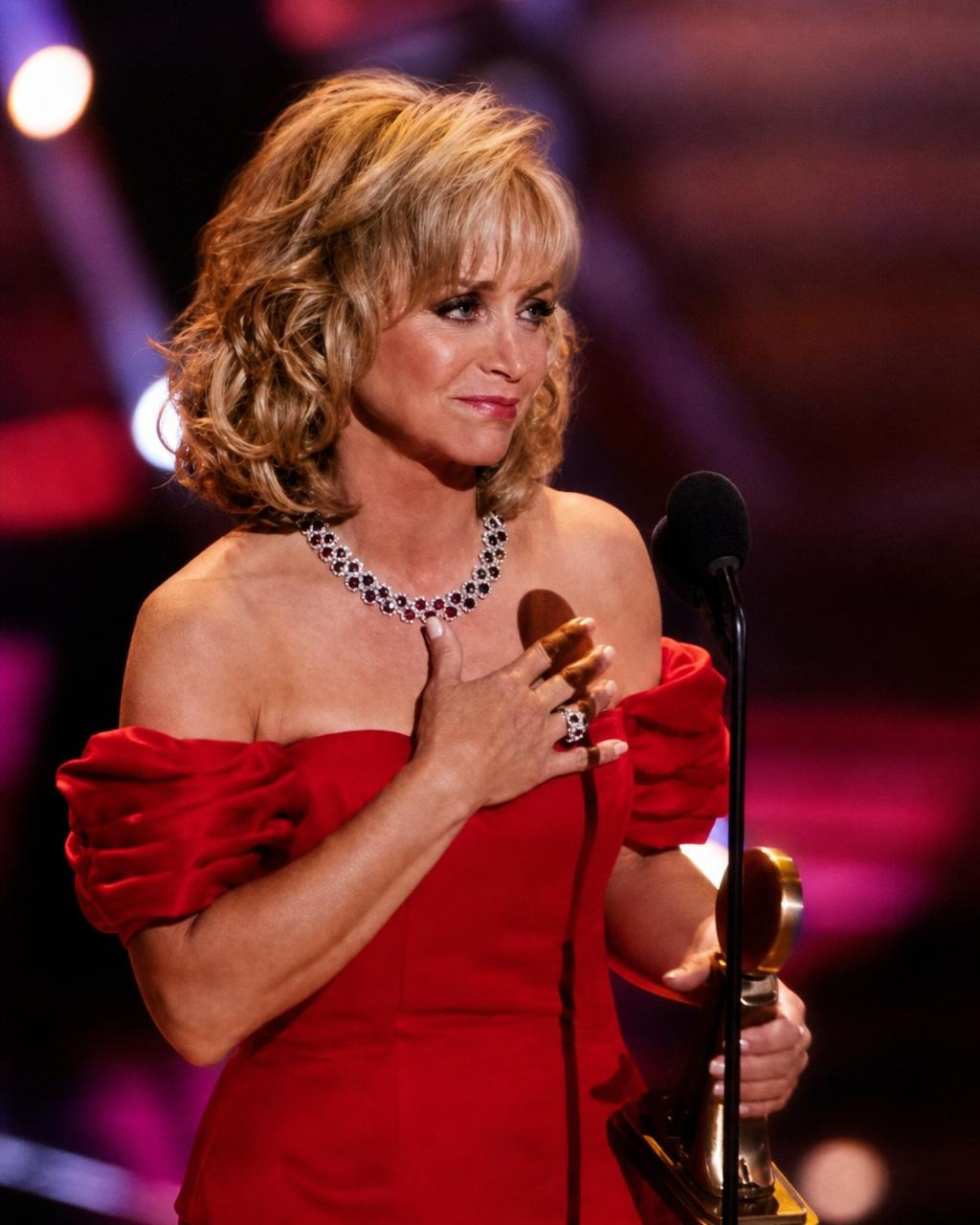
IN 1984, BARBARA MANDRELL SURVIVED THE CRASH — BUT THE HARDER ROAD STARTED AFTER THE AMBULANCE LEFT. By then, Barbara Mandrell was already one of country’s brightest names: two straight CMA Entertainer of the Year wins, a hit TV show with her sisters, and a schedule that had already taken her voice once. On September 11, 1984, she was driving in Tennessee with two of her children when another car crossed into her lane. The crash was head-on. The other driver died. Barbara lived with a broken femur, shattered ankle, damaged knee, cuts, and a concussion. But the part fans did not see came after: the surgeries, the rehab, the pain, and the fear that the old Barbara might not come back. Eighteen months later, at the Universal Amphitheatre, Dolly Parton opened the night. Then Barbara stepped out again — not fully healed, but still standing. – Country Music
Barbara Mandrell’s 1984 Crash: The Survival Story That Changed Everything
By 1984, Barbara Mandrell was not just a country star. She was a full-force presence in American music, a performer with a television show, major awards, and a reputation for professionalism that seemed almost impossible to shake. Fans saw the polished stage moments, the bright smile, and the confidence. What they did not see was how much her body had already endured in the years leading up to that September day in Tennessee.
On September 11, 1984, Barbara Mandrell was driving with two of her children when another car crossed into her lane. The collision was head-on and violent. The other driver died. Barbara Mandrell survived, but she was left with serious injuries, including a broken femur, a shattered ankle, a damaged knee, cuts, and a concussion. In an instant, the public image of a woman at the height of her career gave way to something far more fragile and human.
The part the cameras never captured
For the public, the story could have ended with the crash report and the first headlines. But for Barbara Mandrell, that was only the beginning. Once the ambulance left and the immediate shock faded, the real work started: surgeries, rehabilitation, and the daily struggle to accept how much had changed.
Recovery was not just about healing bones. It was about pain management, patience, and the emotional weight of wondering whether life onstage would ever feel normal again. For an artist whose career depended on movement, stamina, and presence, every step had new meaning. The fear was quiet but constant: Would Barbara Mandrell still be Barbara Mandrell after this?
What fans remember most is the comeback, but the hardest part was the silence in between.
A public return, and a private victory
Eighteen months later, Barbara Mandrell returned to the stage at the Universal Amphitheatre. Dolly Parton opened the night, and then Barbara Mandrell stepped out again. She was not fully healed, and she did not need to be. The moment mattered because it proved something bigger than perfection: resilience.
The audience did not just see a singer returning to work. They saw a woman reclaiming a part of herself after a life-changing event. That kind of return carries a special power. It reminds people that survival is not the same as recovery, and recovery is not always smooth or fast.
Why Barbara Mandrell’s story still resonates
Barbara Mandrell’s accident remains one of the most memorable turning points in country music history because it revealed the cost behind fame. Success can look effortless from a distance, but real life rarely is. Pain does not pause for applause, and healing does not follow a schedule.
Barbara Mandrell’s story is not only about tragedy. It is about endurance, family, and the courage to step back into the light after the body and spirit have been tested. For fans, that return was moving because it was honest. Barbara Mandrell came back changed, but still herself.
That is what makes the story last. Long after the headlines faded, Barbara Mandrell stood as a reminder that the hardest road often begins after the ambulance leaves.
How Lainey Wilson Turned a Soccer Tradition Into a Shared American Moment
Mauricio Pochettino did not arrive in the United States men’s national team camp with a country music playlist in mind. He came from Argentina, brought his coaching philosophy, and stepped into one of the most demanding jobs in world soccer. Yet somewhere during this World Cup journey, something unexpected happened: country music became part of the team’s nightly routine.
Before matches, Pochettino and his staff began gathering and playing songs from Lainey Wilson, Luke Combs, and Ella Langley. It was a small ritual, but it gave the team a sense of comfort and energy. Pochettino even shared a clip of himself preparing for training with Lainey Wilson playing in the background, describing the mood as American vibes. For a coach from Argentina leading the U.S. men’s team, it was a striking, human detail that fans noticed right away.
Then Lainey Wilson found out what the team had been doing. Instead of simply reacting with a quick comment or a social post, she made it personal. She sent the squad a message and recorded an acoustic version of God Bless America. It was a thoughtful gesture, one that felt less like a celebrity appearance and more like a genuine salute to a group preparing for a major challenge.
That alone would have been memorable. But Lainey Wilson went further.
Before the Belgium match, she sang God Bless America and Take Me Home, Country Roads for the team. The moment carried a warmth that cut through the pressure of tournament football. Players listened, staff members smiled, and the atmosphere shifted from tense preparation to something shared and celebratory.
A Song No One Planned
The real surprise came with Take Me Home, Country Roads. No one planned for it to become part of the team’s story, yet that is exactly what happened. After every U.S. win in the World Cup, 66,000 fans rose to their feet and sang it together. The song moved from a private team ritual to a stadium-wide anthem, creating a link between players, coaches, and supporters.
From the pitch, the U.S. players clapped along. On the sideline, Mauricio Pochettino joined in too. The Argentine coach, known for his tactical discipline, was suddenly singing a 1971 John Denver classic with the kind of emotion usually reserved for lifelong fans. It was an image that said more than a press conference ever could.
Sometimes a team finds its identity in the most unexpected place. For this U.S. squad, it was a country song, a coach from Argentina, and a singer who understood the value of showing up with heart.
Why It Resonated
What made this story stand out was not just the music. It was the way music created connection. A World Cup can feel distant and intense, but moments like this bring it back to people. Fans saw a coach embracing a new culture. Players felt supported. And Lainey Wilson turned a passing mention into a memory the team and supporters will carry with them.
In the end, the story was never only about one song or one performance. It was about how traditions begin, how they grow, and how a simple gesture can bring an entire crowd together. For the U.S. men’s team, country music became part of the journey. For Lainey Wilson, it became a chance to give something back. And for Mauricio Pochettino, it proved that belonging can sound a lot like a stadium singing in unison.