“I’M WRITING THIS DOWN IN A TRENCH, MOM…” — THE LAST WORDS OF A SOLDIER WHO NEVER CAME HOME. Redd Stewart wrote “Soldier’s Last Letter” from an actual trench in the South Pacific — drafted after Pearl Harbor, writing what he saw, what he felt. Ernest Tubb recorded it in 1944 and it dominated the charts for seven months. Then decades passed. Merle Haggard — a man who never served a single day in uniform — picked up that same song during the Vietnam War. His version climbed to #3 on the country chart and even crossed over to the Billboard Hot 100. But here’s what gets you. The lyrics are just a boy writing to his mother. Mud on his boots. Orders from the captain. “I’ll finish this letter the first chance I get.” He never got that chance. And his mother knew — the moment her hands started trembling — before she even read the last line. Haggard didn’t need to be a soldier to understand that weight. He just needed to sing it like he meant every word. And somehow, after all these years, “The Hag” still makes you feel like you’re holding that letter yourself. – Country Music
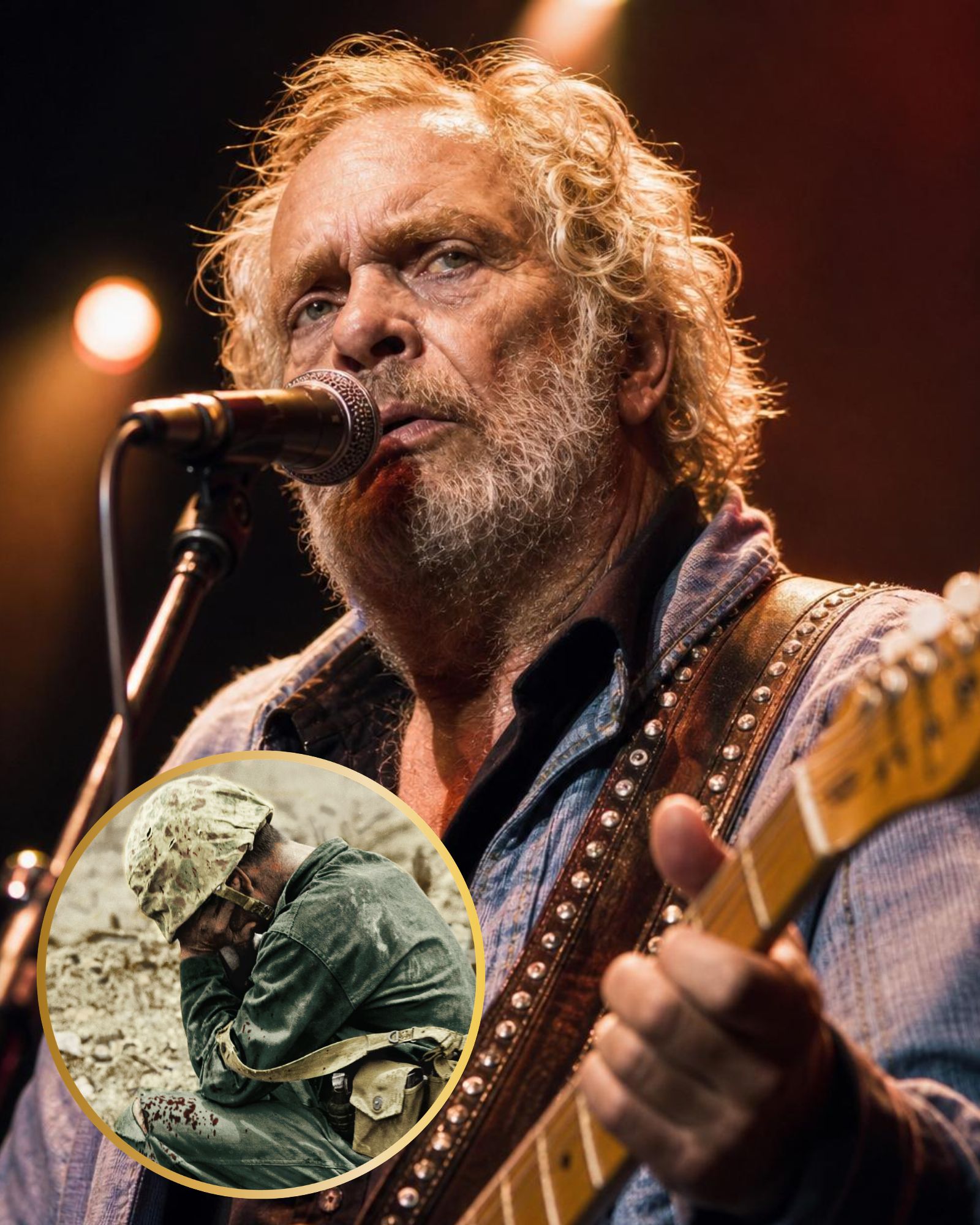
Some songs do more than tell a story. They feel like a folded piece of paper pulled from a pocket, damp with rain, dirt, and fear. “Soldier’s Last Letter” is one of those songs. It sounds simple at first: a young man writing home to his mother from the front lines. But the more you listen, the heavier it gets.
The song was written by Redd Stewart after Pearl Harbor, and the image behind it was heartbreakingly real. Stewart was in the South Pacific when he drafted the song, surrounded by the uncertainty of war. He wrote about what he saw and what he felt, and that honesty gave the song its power. It was not polished fiction. It sounded like a real letter from a real son who was trying to stay brave.
Ernest Tubb Turns a Letter Into a National Moment
When Ernest Tubb recorded “Soldier’s Last Letter” in 1944, the world was already living with the weight of war. Families were waiting for news. Mothers were checking mailboxes. Wives were listening for footsteps. In that moment, Tubb’s voice gave the song something even bigger than melody. He gave it a place in the hearts of people who were hoping, praying, and sometimes fearing the worst.
The record became a major hit and stayed on the charts for months, reaching listeners far beyond the people who usually followed country music. Why? Because the song did not ask people to imagine war as a grand event. It asked them to imagine one son, one letter, and one mother reading between the lines.
“I’ll finish this letter the first chance I get.”
That line hurts because it sounds ordinary. A young man is not writing a speech. He is not trying to be a hero. He is just promising to write again when he can. But the listener knows what the mother does not yet know. That next letter may never come.
The Power of What Is Left Unsaid
What makes “Soldier’s Last Letter” unforgettable is not only what it says, but what it leaves hanging in the air. Mud on the boots. Orders from the captain. A son trying to sound calm so his mother will not worry. Every line carries a small, private fear beneath it. The music never needs to shout. The sadness is already there.
And then comes the moment that changes everything: the mother sensing, before the last line is even read, that something is wrong. That detail is what makes the song linger. It captures a kind of truth that many families understand without ever saying aloud. Sometimes love notices the silence before words do.
Merle Haggard Brings the Song Back to Life
Decades later, during the Vietnam era, Merle Haggard recorded his own version of the song. It was a striking choice. Merle Haggard did not serve in the military, yet he understood the emotional cost carried by families, communities, and young men sent into impossible situations. He knew how to sing about regret, distance, and ordinary people caught in history.
His version of “Soldier’s Last Letter” reached No. 3 on the country chart and even crossed over to the Billboard Hot 100. That success proved something important: the song was never tied to one war or one generation. It belonged to anyone who has waited for a loved one to come home.
Why Merle Haggard’s Version Still Hits Hard
Merle Haggard did not need combat experience to sing the truth of the song. He needed empathy, timing, and a voice that could carry the ache without dressing it up. That is what made his version so moving. He sang it like a man who understood that a letter can hold an entire life: fear, hope, duty, and the unbearable possibility of goodbye.
Some performances entertain you. Others follow you home. Merle Haggard‘s recording does the second thing. It makes you picture the paper, the handwriting, the trembling hands, and the mother who knows something is wrong before she reaches the end.
A Song That Never Really Left
In the end, “Soldier’s Last Letter” survives because it remains painfully human. It is not about politics. It is not about glory. It is about a son trying to reassure his mother from a trench and a mother trying to hold on to hope. That is why the song still matters. The details may come from another time, but the emotions are timeless.
And maybe that is the real reason the song still lands so deeply. Somewhere in that muddy, fading letter is a truth people never stop recognizing: some goodbyes arrive quietly, in ordinary handwriting, before anyone is ready for them.
Redd Stewart wrote the words. Ernest Tubb made them famous. Merle Haggard made them feel immediate again. And every time the song plays, it sounds like one more chance to hear a son say what he can before the moment slips away.
Post navigation
On May 9, Lorrie Morgan shared something that instantly stopped the country music world in its tracks. There were no flashy edits, no long speech, no attempt to dress up grief. Just a short, aching message that felt too honest to scroll past.
“I still love you Keith. You will forever be the love of my life.”
For fans of country music, the post was more than a tribute. It was a reminder that some love stories do not end cleanly. They pause. They linger. They keep breathing long after one person is gone.
Along with her words, Lorrie Morgan shared vintage footage of herself and Keith Whitley singing “That’s the Way Love Goes” together in the late 1980s. The clip had a quiet electricity to it. Keith Whitley and Lorrie Morgan looked like two people who were completely at ease in each other’s presence, the kind of couple whose chemistry is impossible to fake. Even through a screen, it felt intimate, almost private.
A Love Story Country Fans Never Forgot
Keith Whitley died in 1989 at just 34 years old, at a moment when his career was rising fast and his future seemed full of possibility. He was widely admired for his voice, his presence, and the kind of emotional honesty that made every song feel lived-in. He was only three weeks away from being invited to join the Grand Ole Opry, one of country music’s highest honors. He never got the chance to hear those words.
Lorrie Morgan has spent the decades since carrying the memory of that life and love. She went on to build her own respected career, but the bond she shared with Keith Whitley never disappeared into the background. For many fans, their relationship became one of country music’s most heartbreaking and unforgettable stories.
What makes the story even more moving is that Keith Whitley left behind something deeply personal just before his death. Just days before he died, he drove Lorrie Morgan to the Nashville airport and handed her a handwritten note. At the time, she did not think much of it. It was only after he was gone that the meaning of those words changed completely.
The Note That Felt Like a Goodbye
Some messages become more powerful with time. That was the case with the note Keith Whitley gave Lorrie Morgan. What seemed ordinary in the moment later felt, in her words, almost like a farewell. It was not written for the public. It was not meant to become part of country music history. It was just a private message from one person to another, written in the language of a relationship that mattered deeply.
That is part of why it still resonates. Famous lives often get remembered through awards, records, and headlines, but the most meaningful pieces are usually the smallest ones. A note. A shared ride. A song sung side by side. A sentence saved for later.
When Lorrie Morgan revisited that note after Keith Whitley’s death, the words carried a weight that could not be erased by time. They became one more reminder that love stories do not always end when we want them to. Sometimes they remain unfinished, and that unfinished feeling becomes part of the memory itself.
A Legacy That Arrived Late, But Not Too Late
Keith Whitley was finally inducted into the Country Music Hall of Fame in 2022, 33 years after his death. For many fans and fellow artists, the honor felt overdue, but also deeply fitting. He had already secured his place in country music through his voice, his influence, and the emotional truth he brought to every performance.
Recognition can arrive late. Love can, too. But neither loses its meaning because of time.
Lorrie Morgan ended her message with a line that captured everything in one breath:
“I can’t wait to see you in Heaven some glad morning.”
It was simple, direct, and impossible not to feel. After 37 years, her tribute was not about nostalgia or publicity. It was about devotion. It was about remembering someone who never stopped being important. It was about the kind of love that continues even when life does not.
Why This Story Still Touches People
People were moved because the tribute felt real. It did not try to explain grief in a polished way. It simply showed that some people remain part of us forever. Keith Whitley may have died at 34, but his presence still lives in the songs, the memories, and the love Lorrie Morgan continues to carry.
That is what made her post so powerful. It was not just a memory of a famous country singer. It was a living testament to a relationship that shaped two lives, one of them forever changed by loss and the other remembered with enduring tenderness.
In the end, the story of Lorrie Morgan and Keith Whitley is not only about fame, tragedy, or unfinished dreams. It is about love that refuses to disappear. And after 37 years, that kind of love still has a way of reaching people right where it hurts.