“I MADE THIS RECORD… IT WAS THE ONLY WAY I KNEW HOW TO SAY GOODBYE.” — STEVE EARLE, AFTER LOSING HIS SON AT JUST 38. Steve Earle named his son after the person he admired most — his mentor, Townes Van Zandt. A man who spent his whole life drowning in addiction. And Steve gave that name to his firstborn like it was a blessing. Justin Townes Earle built his own path — 8 albums in 13 years, an Americana Music Award, stages with John Prine and Levon Helm. But what people didn’t see was that he’d survived 5 heroin overdoses before turning 21. And what happened on the night of August 20, 2020 — no one could have changed it. That evening, Steve and Justin talked on the phone. Said “I love you” to each other. A few hours later, Justin was gone. Fentanyl-laced cocaine. He was 38. Steve didn’t do tribute records. He walked into Electric Lady Studios and recorded 10 of Justin’s songs — plus one original, “Last Words,” about that final phone call. He released the album on January 4, 2021. Justin’s birthday. Every dollar goes to Justin’s daughter, Etta. – Country Music
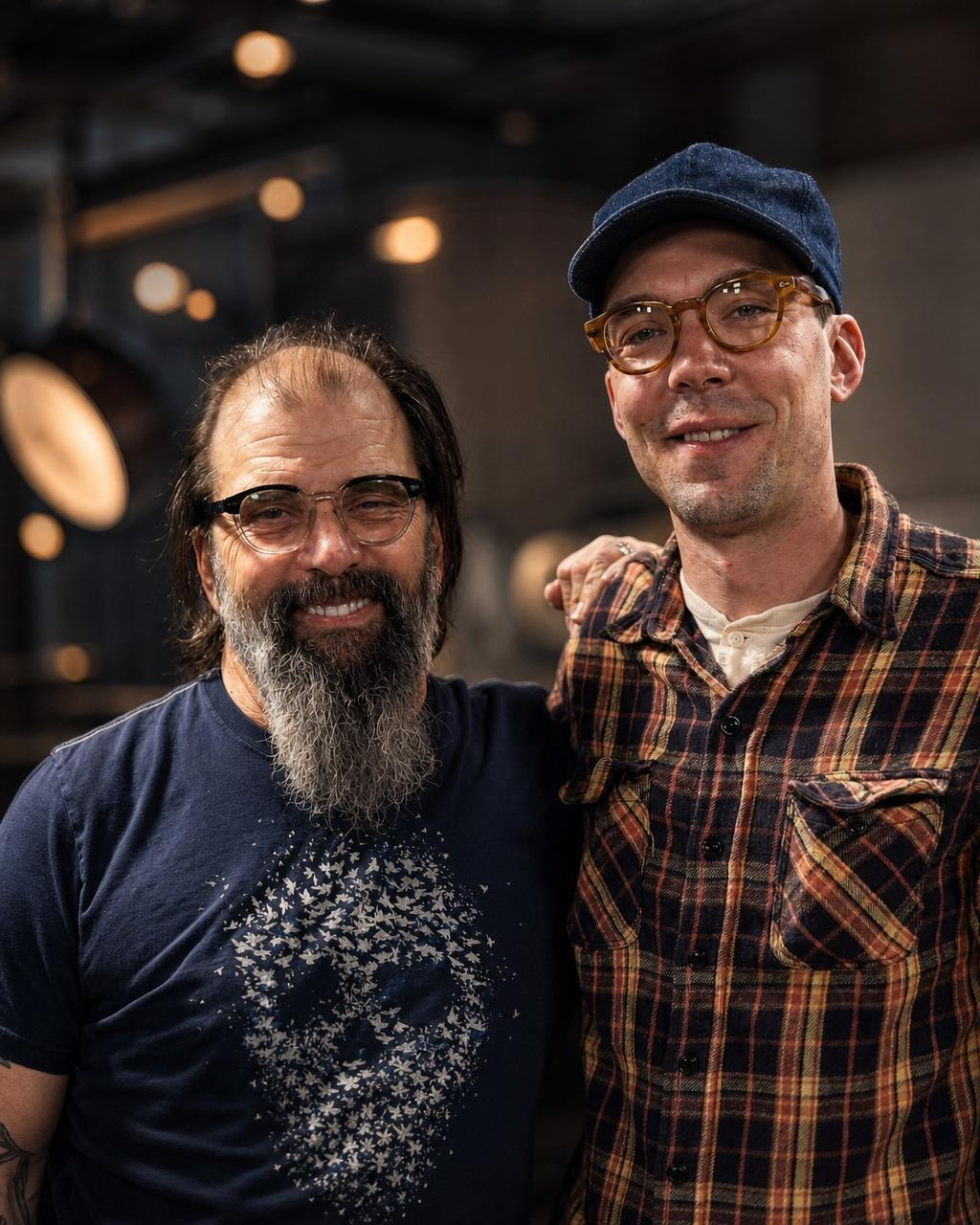
When Steve Earle says, “I made this record… it was the only way I knew how to say goodbye,” the words carry the weight of a father’s heartbreak. He was speaking about his son, Justin Townes Earle, who died at 38 after a life marked by talent, struggle, and hard-won music. For Steve Earle, the loss was not something he could explain away. It became something he had to answer with songs.
Steve Earle named Justin after the person he admired most, his mentor Townes Van Zandt, a legendary songwriter whose brilliance was shadowed by addiction. In that choice, Steve Earle hoped to pass down greatness, honesty, and a connection to American roots music. Justin Townes Earle carried that name into the world and built a career that was fully his own. Across eight albums in 13 years, he earned respect as one of the sharpest voices in Americana, sharing stages with artists like John Prine and Levon Helm and receiving an Americana Music Award along the way.
A son’s life lived in public, and in pain
What many fans saw was the music. What they did not see was the private battle Justin Townes Earle fought for years. He survived multiple heroin overdoses before the age of 21, and even as he kept moving forward, the struggle never fully disappeared. His story became one of resilience, but also of vulnerability, and the kind of pain that can hide behind a bright stage light.
On the night of August 20, 2020, Steve Earle and Justin Townes Earle spoke on the phone. They said, “I love you,” to each other. Those words became the last shared moment between father and son. A few hours later, Justin Townes Earle was gone. He had died from fentanyl-laced cocaine, a reminder of how quickly tragedy can arrive and how little time is left when it does.
“I made this record… it was the only way I knew how to say goodbye.”
Turning loss into something lasting
Steve Earle did not respond with a simple tribute. Instead, he went into Electric Lady Studios and recorded 10 of Justin Townes Earle’s songs, along with one original song titled “Last Words.” That original track was shaped by the final phone call, by memory, by the ache of saying goodbye without warning. The album was released on January 4, 2021, which would have been Justin Townes Earle’s birthday.
The project was deeply personal, but it was also practical in the most loving way. Every dollar from the record goes to Justin Townes Earle’s daughter, Etta. In that choice, Steve Earle turned grief into care, and memory into support for the next generation.
A farewell that keeps singing
For listeners, the album is more than a collection of songs. It is a father standing in the middle of heartbreak and choosing to keep his son’s voice alive. It is not loud, not dramatic, and not interested in spectacle. It is quiet, direct, and human. That is what makes it stay with people.
In the end, Steve Earle did what many grieving parents can only imagine: he found a way to say goodbye without letting go of love. And through Justin Townes Earle’s songs, that love still has a place to live.
Post navigation
Some stories in country music are remembered for the songs. Others are remembered for the heartbreak behind the spotlight. Dottie West lived both. She had the kind of talent that could fill a room, and the kind of determination that kept her going even when life seemed determined to take everything away.
At one point, the IRS had already taken her house and belongings, and her debt had grown so overwhelming that much of what she owned was sold off. Yet Dottie West kept doing what she had always done: she kept showing up. She kept making her way to the Grand Ole Opry, to the stage, to the work that gave her life meaning.
Kenny Rogers knew what she was facing and wanted to help in a practical way. He gave Dottie West a car so she could still get to her performances. It was a simple gift, but for someone trying to hold onto a career while everything else was slipping away, it meant dignity. It meant movement. It meant she could still arrive where she was needed.
Then came August 30, 1991.
On that night, Dottie West was on her way to the Grand Ole Opry when her Chrysler New Yorker stalled on Harding Road. She was late, stranded, and trying to solve a problem that must have felt painfully familiar: how to keep going when the road suddenly stops.
Her 81-year-old neighbor, George Thackston, saw her and offered a ride. It seemed like a kind gesture in a difficult moment, the sort of help anyone would hope to receive when time was running out. But as they continued on, the drive took a tragic turn. Thackston took the Briley Parkway exit at 55 mph in a 25 mph zone.
The car went airborne and struck a concrete divider.
At first, Dottie West did not look badly hurt. That detail makes the story even harder to carry, because some injuries do not show themselves right away. Inside her body, the damage was severe. Her liver and spleen had been ruptured.
She fought for five days. Doctors performed three surgeries. Friends and loved ones held onto hope as long as they could. Kenny Rogers came to Vanderbilt hospital before she passed. He sat beside her and promised they would record one more song together.
She never answered.
On September 4, 1991, Dottie West died during surgery. She was 58 years old.
Her story is not just about a crash. It is about endurance, friendship, and the cruel way fate can interrupt even the most determined life. Dottie West kept showing up until she no longer could. And in country music history, that may be one of the most human legacies of all.