“I Couldn’t Take It Anymore”: A Family, a Baseball Bat, and the Question No One Wants to Answer. – Daily News
There are crimes that shock because they are sudden and violent.
And then there are crimes that haunt because they feel like the end of a long, silent collapse.
This was one of those.
It did not begin with a baseball bat.
It did not begin with blood.
It began long before—inside a home where love, faith, exhaustion, and unspoken struggle slowly twisted into something unrecognizable.
By the time the phone rang just before midnight, it was already too late.
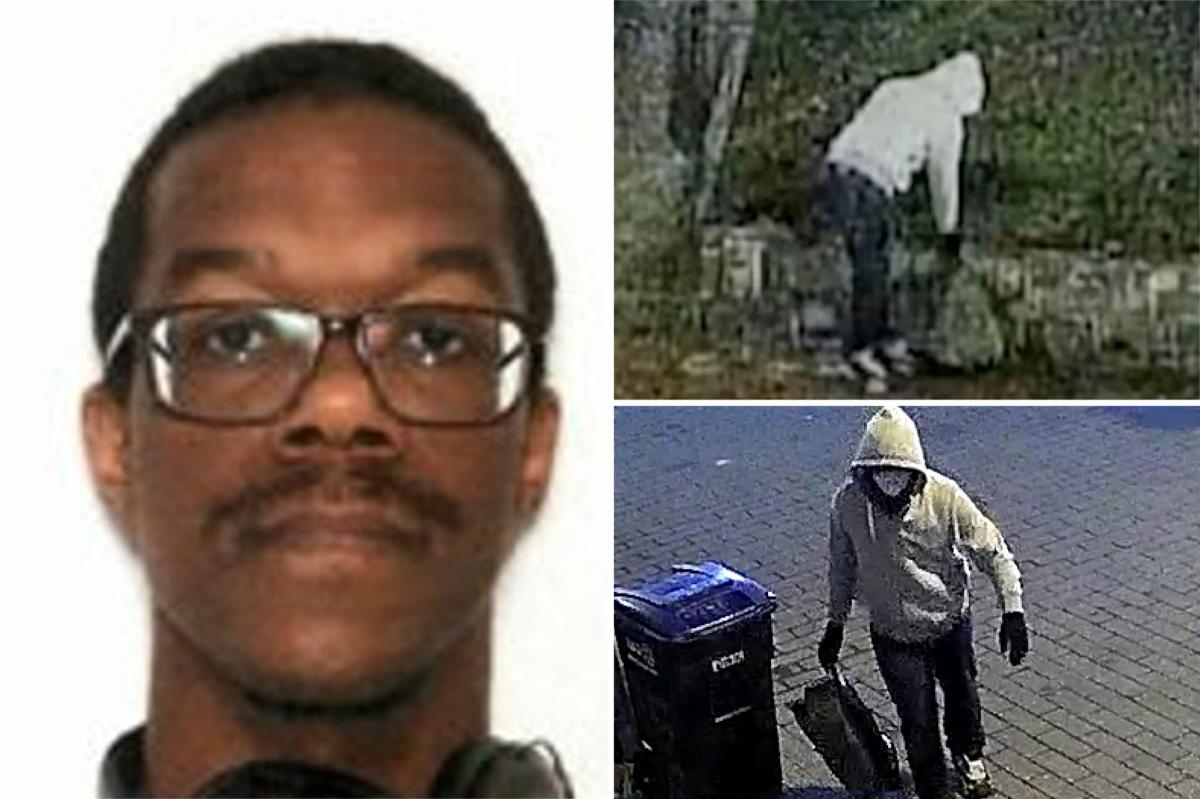
The Call That Ended Everything
The dispatcher heard a young man’s voice on the other end of the line. It was calm, but frayed at the edges. Not panicked. Not screaming.
Just empty.
“I killed them,” he said.
Adrian Bailey, 27, allegedly told police he had beaten his parents to death. He said he “couldn’t take it anymore.” He did not give an address. He did not ask for help.
He simply stated what he said he had done.
Moments later, during another call from a different location, he allegedly made a chilling request: officers should kill him “on sight.” He described himself as a danger—to himself and to others.
When asked if he had killed himself, he reportedly replied, “Not yet. But I’ve done some others.”
Those words would echo long after officers traced the call and arrived at a quiet home on New Brunswick Avenue.
Inside the living room, they found Roger and Kristine Bailey.
Broken.
Bleeding.
Unrecoverable.

The Parents Everyone Thought Were Safe
Roger Bailey was not a man people associated with danger.
He was described as steady. Prayerful. Kind. A man who served his church faithfully and worked for the city of Las Vegas for more than three decades, building trust between neighborhoods and leaders. He was known for gentle humor, long walks, swimming, movies, and quiet evenings with his wife.
Kristine Bailey was known for children.
Sunday school. Vacation Bible School. Small hands reaching for hers week after week. She was described as devoted, patient, and constant—the kind of woman whose presence anchored a room.
They were not reclusive.
They were not volatile.
They were not strangers to their community.
They were parents.
And now, they were victims—killed, police allege, by their own son, using a baseball bat inside the home they shared.
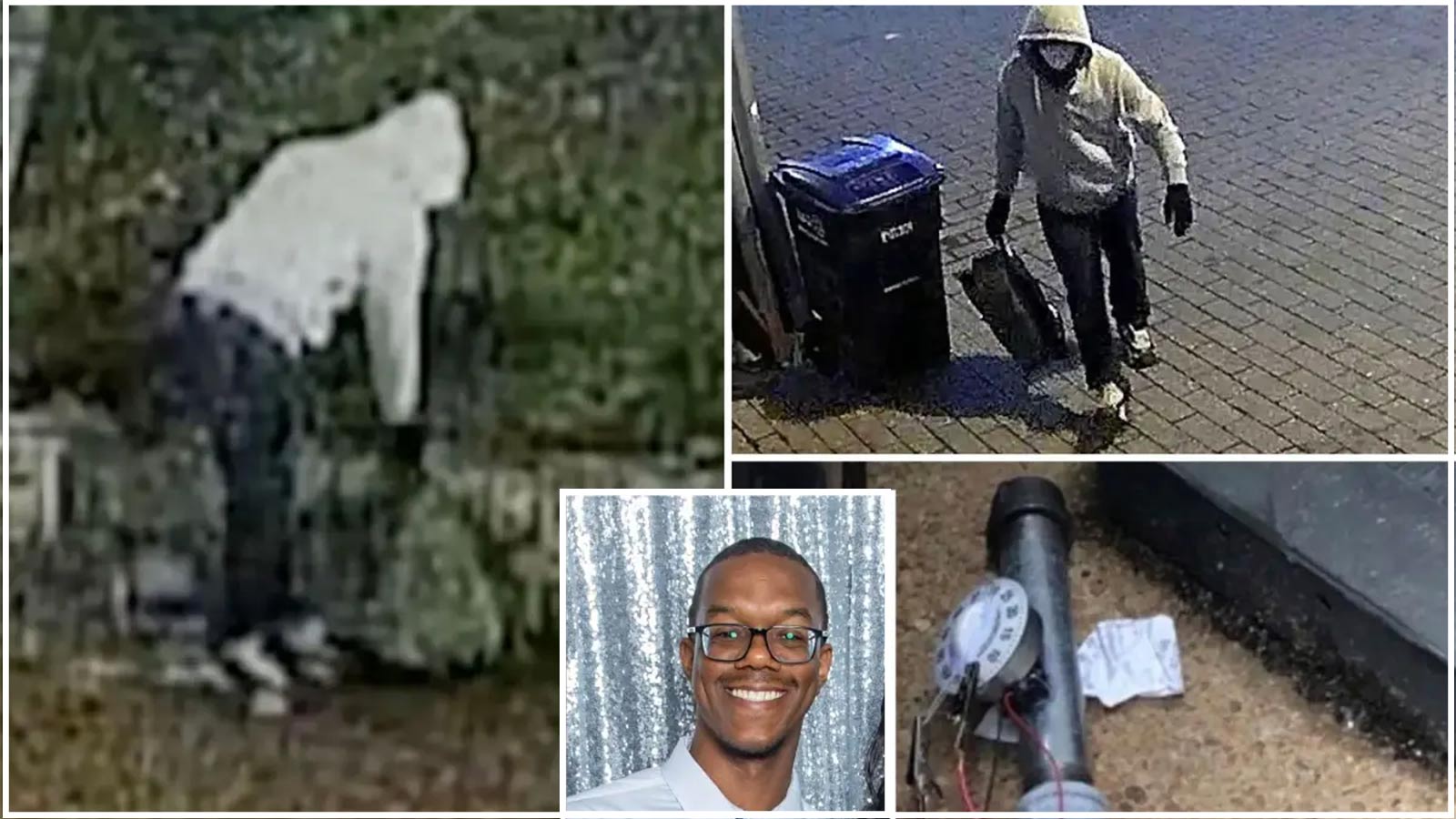
What Neighbors Knew — and Didn’t Say Loudly Enough
After the news broke, neighbors stood in small groups, stunned. Some cried. Some shook their heads. Some admitted something that made the story more unsettling.
“They told us a long time ago they were having issues with him,” one neighbor said quietly.
Issues.
It’s a word people use when the truth feels too heavy to name.
Issues can mean addiction.
Issues can mean mental illness.
Issues can mean rage, fear, instability, or years of walking on eggshells.
Issues can mean parents who are trying—desperately—to help a child they love, even as that child slowly becomes someone they no longer recognize.
And this is where the story becomes uncomfortable.
The Question That Divides People
When a child kills their parents, the public almost always splits into two camps.
One side asks: How could he do this?
The other asks: How did it get this far?
Some will say nothing justifies what happened. And they are right. Two people are dead. A home is destroyed. A family is erased.
Others will say this didn’t happen overnight. And they are also right.
Because violence like this rarely appears out of nowhere. It grows in silence, fed by untreated illness, denial, fear, shame, or systems that respond only after something irreversible happens.
The most controversial part of this case is not the bat.
It’s the phrase: “I couldn’t take it anymore.”
What does that mean?
A Son at 27 — Still at Home
Adrian Bailey was 27 years old and living with his parents.
For some, that fact alone sparks judgment. But in today’s world, living at home can mean many things—financial struggle, health issues, caregiving, dependence, or simply nowhere else to go.
But combined with reports of long-standing problems and a later claim that he was a danger to himself and others, the picture becomes more troubling.
Was help sought?
Was help offered?
Was help refused?
Or was help never enough?
The public does not yet know. The courts will handle evidence. Psychiatrists may testify. Lawyers will argue responsibility.
But the community is left with the harder question:
At what point does love become exposure to danger?
When Faith, Patience, and Hope Aren’t Enough
Roger and Kristine Bailey were people of faith.
Faith teaches endurance.
Forgiveness.
Hope.
The belief that love can heal what is broken.
Many parents cling to those beliefs when a child is struggling. They stay longer than they should. They excuse behavior that frightens them. They believe tomorrow will be better.
Because giving up on a child feels like a moral failure.
And yet, faith is not armor.
Love does not neutralize untreated illness.
Patience does not prevent violence.
Hope does not stop a bat once it is raised.
This is where the story stops being just about crime—and becomes a warning.
The Dispatcher Heard What No One Else Could Stop
By the time Adrian Bailey called police, whatever battle was happening inside him had already ended in blood.
His request for officers to kill him “on sight” reads like a confession and a surrender at the same time. A man acknowledging he is dangerous, but only after the damage is done.
Some will argue that this proves he knew right from wrong.
Others will argue it proves how broken he was.
Both arguments will rage online, in courtrooms, in comment sections filled with anger, pity, and blame.
But none of those arguments will bring Roger and Kristine back.
The Children Who Taught Children
There is a particular cruelty in this case that goes beyond the violence.
Kristine Bailey spent her life caring for children—protecting innocence, teaching stories of kindness and safety.
She died in a living room where innocence no longer existed.
Roger spent decades building trust in a city—believing in people, systems, and progress.
He died at the hands of someone he helped bring into the world.
If there is a deeper tragedy, it is this:
The people who believed most in care, patience, and commitment were not protected by those very values.
What Happens Now
Adrian Bailey faces two counts of murder with use of a deadly weapon. The legal process will move forward, methodically and coldly.
Evidence will be presented.
Mental evaluations will be conducted.
Sentencing will eventually come.
But justice, whatever form it takes, will feel hollow.
Because this case leaves behind more questions than answers.
Could intervention have changed the outcome?
Were there moments when someone should have stepped in sooner?
Are families given enough tools to protect themselves from a loved one in crisis?
Or do we expect parents to absorb danger quietly until it explodes?
The Uncomfortable Truth
This story is disturbing not just because of what happened—but because it exposes something many families fear.
That love alone may not be enough.
That waiting can be dangerous.
That silence can be fatal.
Roger and Kristine Bailey are remembered as kind, faithful, steady people.
They deserved safety.
They deserved old age.
They deserved to live.
Their son will now be remembered for one moment that erased everything else.
And the rest of us are left with a choice:
To reduce this to a monster story—simple, distant, and easy to condemn.
Or to face the harder reality:
That when mental illness, dependency, fear, and love collide behind closed doors, tragedy can grow quietly—until it finally screams.
Two parents are dead.
A son is accused.
And a community is left asking the question no one wants to answer until it’s too late:
How many warning signs do we ignore before “I can’t take it anymore” becomes irreversible?
For fifty years, the world Raju knew was made of heat, noise, and iron.

He was taken from his family when he was still small enough to stumble on unsteady legs, before he could learn the unspoken language of the herd—how mothers guide calves with a gentle touch, how elders teach patience, how safety lives in togetherness. That life ended abruptly. In its place came ropes, commands shouted in unfamiliar voices, and the sharp sting of metal that taught him fear before it taught him obedience.
Day after day, year after year, Raju walked the same unforgiving paths. The sun burned down on his back. The asphalt scorched his feet. A man sat atop him, steering him through crowds, turning his massive, gentle body into a tool for begging. Coins clinked into outstretched hands. Scraps of food were tossed his way. And always, there was the chain.

The spiked shackle around his leg dug into his flesh with every step. It was heavy, constant, inescapable. Over time, it became part of him—an extension of pain he no longer reacted to because reacting changed nothing. The bullhook followed. Each scar it left was a lesson: do not resist, do not slow down, do not hope.
Elephants are known for their memory. They remember paths to water long after rivers dry. They remember faces, voices, losses. Raju remembered suffering with the same clarity. He remembered hunger that never truly left, exhaustion that sleep could not fix, and loneliness that no crowd could ease. Surrounded by people every day, he was utterly alone.

Years passed. Decades slipped by unnoticed. Calves were born, grew, and aged somewhere far away, while Raju remained frozen in the same cycle. His body weakened. Infections festered beneath the chain. Abscesses formed in his feet. Malnutrition hollowed him out. His spirit bent low, nearly breaking.
Then, in July 2014, something different happened.
It did not arrive loudly. There were no drums, no celebrations. Just a small group of people who looked at Raju and saw not a spectacle, not a source of income, but a life that mattered. They fought quietly, persistently, through paperwork and court orders, until permission was granted to take him away from the streets that had defined him for half a century.

When the moment came, when hands finally reached for the chains that had never once been removed, Raju stood still.
As the metal loosened and fell away, witnesses noticed something extraordinary. Tears streamed down his face. Not metaphorical tears, not imagined ones—real tears, rolling from tired eyes that had seen nothing but cruelty for fifty years. In that moment, the world seemed to pause, as if even Raju himself could not believe it was real.

For the first time since he was a calf, nothing was holding him down.
At the rescue center, the truth of his suffering became painfully clear. His leg was badly wounded from the shackle. His feet were damaged from years of walking on hard surfaces. His body showed signs of prolonged neglect, his health a quiet record of everything he had endured. Veterinarians worked carefully, knowing that every touch carried the weight of trauma.

But alongside the pain came something new: gentleness.
No one shouted at Raju. No one struck him. Food arrived regularly. Water was clean and plentiful. He was allowed to rest. At first, he did not know what to do with the freedom. His movements were cautious, his eyes watchful, as if waiting for punishment that never came.
Healing was slow. Fifty years of harm cannot be undone quickly. Yet, with each passing day, Raju changed. He began to explore. He discovered grass beneath his feet—soft, forgiving, alive. He learned that night no longer meant danger. He slept without chains for the first time in his memory.
Four years later, the elephant who once dragged himself through streets was almost unrecognizable.
To mark the anniversary of his rescue, caregivers prepared a surprise. His space was decorated. Boxes filled with treats were placed nearby. Raju approached them with curiosity, using his trunk to explore, to unwrap, to play. Popcorn spilled out, and he gathered it eagerly, delight evident in every movement.
Then there was the pool.

At first, Raju hesitated. Water had never been a place of joy for him. But slowly, he stepped in. The coolness wrapped around his tired legs, easing joints that had carried pain for decades. He stood there, still and calm, as if the water itself was holding him up. Over time, the pool became his favorite place—a symbol of comfort he had never known was possible.
Watermelon followed. Sweet, refreshing, abundant. No competition. No rush. Just pleasure.
Caregivers watched in quiet awe. Not because Raju’s recovery erased the past, but because it proved something profound: even after unimaginable suffering, joy can return.
Raju became more than a rescued elephant. He became a reminder. A reminder of what cruelty steals, and of what compassion can restore. His life stood as testimony to all the animals still waiting, still chained, still invisible.
“I am truly amazed by his resilience,” one of his veterinarians said. And it was true. Raju did not simply survive. He learned, again, how to live.
His remaining years will never make up for the fifty that were taken. But they will be his.
Years filled with rest instead of marching. With care instead of pain. With water, sweetness, and the quiet dignity every living being deserves.
Raju carries his past with him. Elephants always do.
But now, he also carries freedom.