Home Alone, Not Helpless: The Day a 12-Year-Old Chose Courage. – Daily News
It was supposed to be an ordinary afternoon.

The kind of quiet day when the house feels too big and too still, when the clock seems to move slower because no one else is home. Tristen Taylor, just 12 years old, was alone in the place where he felt safest—his own home. No noise. No danger. Just another December day unfolding like any other.
Until the sound came.
Glass breaking.
It wasn’t loud enough to shatter the house, but it was sharp enough to slice through the silence. Tristen froze. His heart thudded hard in his chest as he listened again—footsteps. Movement. Someone was inside.
In that instant, childhood ended.
Fear rushed in, fast and overwhelming, but something else rose with it—instinct. Tristen didn’t scream. He didn’t run blindly toward danger. He paused just long enough to understand one thing clearly: I have to get out.
Later, he would say the thought came to him calmly, almost matter-of-fact. But in that moment, calm didn’t mean fearless. It meant focused.
He moved quickly to his bedroom window and climbed out, lowering himself into the cold air outside. The ground felt unfamiliar beneath his feet, like the world had shifted just enough to remind him how vulnerable he was. He didn’t stop. He didn’t look back.
Instead, Tristen hid in the backyard.
There, crouched and shaking, he pulled out his phone and dialed 911. His voice was steady enough to be understood, even as fear pressed in on him from all sides. He told them someone had broken into his house. He told them he was outside. He waited.
And within minutes—three, police would later say—help arrived.
Officers entered the home and found a man inside. Authorities say the suspect, 53-year-old Christian Garcia, had broken a window to get in. Just like that, the danger that could have changed everything was stopped.
Tristen was unharmed.
But that doesn’t mean he was unchanged.
When his grandmother, Timothea Taylor, spoke about what happened, her pride was unmistakable. She called him the family’s “little hero,” not because he fought back or confronted the intruder, but because he did something far harder for a child—he kept his composure.
He chose safety.
He chose survival.
He chose to trust his instincts when everything inside him must have been screaming to panic.
For many adults, this would have been terrifying. For a 12-year-old, it was unimaginable.
Yet Tristen did exactly what he needed to do.
He listened.
He acted.
He lived.
Stories like this often get wrapped in praise and headlines, but beneath them is something quieter and more important. A reminder that courage doesn’t always look loud or dramatic. Sometimes, it looks like a boy alone in a backyard, whispering to a dispatcher while his heart races, choosing the smartest path instead of the bravest-looking one.
That choice mattered.
Because things could have gone very differently.
Instead, a child went home that night safe, hugged tightly by family who now understood just how strong he really was. A house that had briefly become a place of fear returned to being what it was meant to be—a home.
And Tristen? He went back to being 12. But with a story he will carry forever.
Not because he wanted to be a hero.
But because when it mattered most, he trusted himself—and that made all the difference.

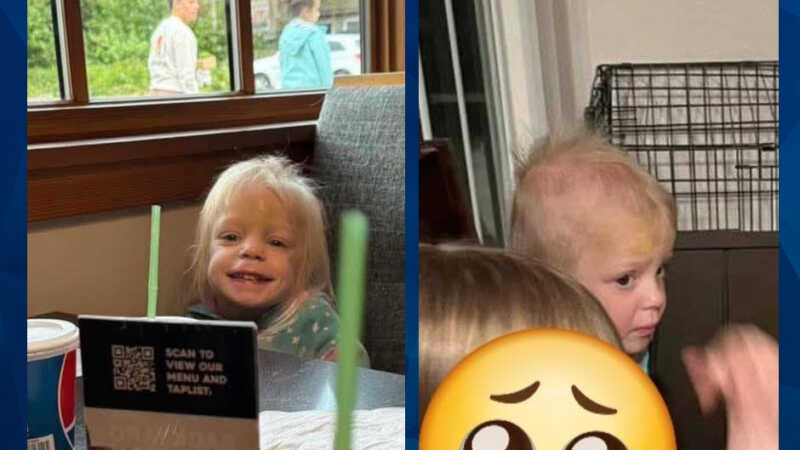
Izabella Loving was five years old.

At an age when children are supposed to measure their days in cartoons, bedtime stories, and scraped knees, Izabella’s world was already shrinking. Her body was failing her. Her strength was fading. And the people meant to protect her were not doing so.
According to prosecutors, as Izabella’s condition worsened, her mother did not call a doctor. She did not rush to an emergency room. She did not ask a neighbor for help.
Instead, she opened a search engine.
The questions were typed quietly, behind a screen, away from anyone who could intervene:
“Signs my child is dying.”
“How long can you go without food.”
“My five year old is peeing blood.”
“Kidneys failing.”
These were not the searches of a mother seeking help.
They were the searches of someone watching a child fade — and doing nothing to stop it.
Izabella lived in a home where, authorities allege, cruelty had become routine. While her siblings slept in a proper bed, she was forced to sleep alone inside a locked, makeshift box. While other children were fed meals, prosecutors say Izabella was often given little more than a piece of bread to survive on.
She was small.
She was vulnerable.
And she had no power to escape the adults controlling her life.
Investigators later described signs of repeated trauma on Izabella’s body. Injuries that told a story of prolonged suffering — not a single moment of violence, but a pattern. A life lived in fear, hunger, and isolation.
Still, no one intervened.
On her final night alive, authorities allege Izabella’s father took her temperature, gave her a bath, and placed her back inside the locked box. Her temperature was low — a warning sign no caregiver should ignore. Hours passed.
Izabella became unresponsive.
By the time emergency services were called, it was too late.

She died in the very place that should have been her safest.
When investigators began unraveling what happened inside that home, the truth came out slowly — and then all at once. The burglary. The lies. The shifting stories. And eventually, the digital trail left behind by a mother who allegedly searched for answers online while her child lay dying nearby.
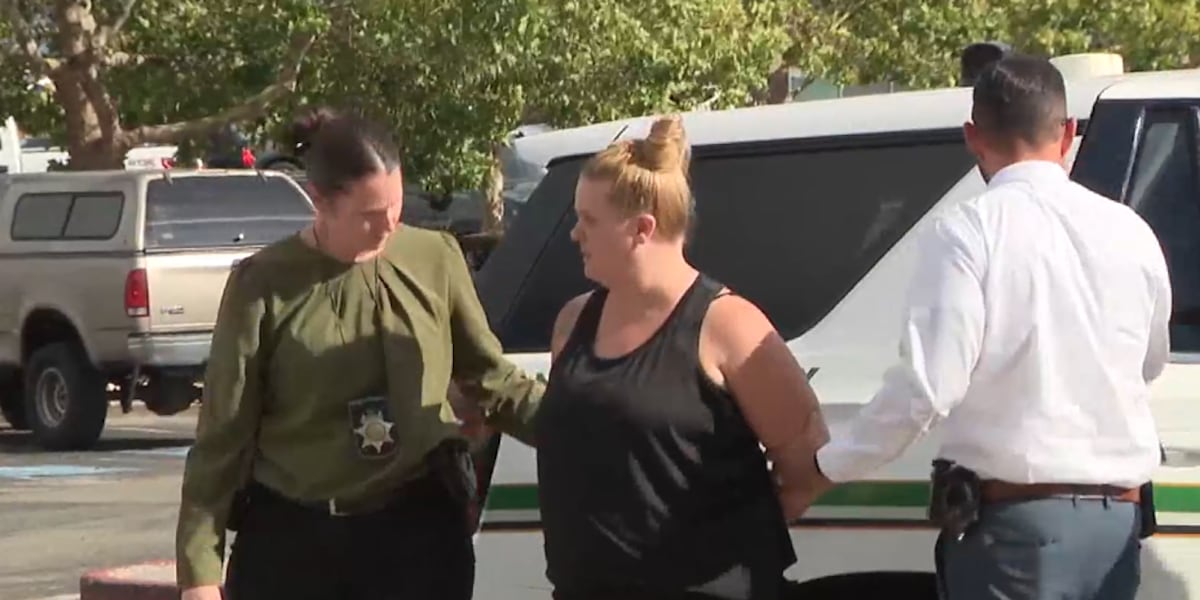
Andrea Loving was initially charged with child abuse causing substantial bodily harm. As more evidence emerged, prosecutors upgraded the charge to murder.
Her husband, Nicholas Loving, has also been charged with murder.

Both parents now stand accused of failing Izabella in the most fundamental way possible: by denying her care, safety, and dignity.
During a police interview, Andrea allegedly said something chilling in its honesty: that she should go to jail for not helping her daughter — and that her husband should go to jail for killing her.
For Izabella, those words came too late.
She never had the chance to explain what she was feeling. Never had the vocabulary to describe hunger the way adults do. Never had the power to demand medical care. She relied entirely on the adults around her to notice, to act, to protect.
They did not.
Instead, prosecutors say, one parent searched the internet.
The other allegedly inflicted the violence.
And a five-year-old girl was left to endure the consequences.
News of Izabella’s death weighed heavily on the community. Vigils were held. People left stuffed animals, flowers, handwritten notes. Strangers who had never met her stood silently, grieving a child whose story felt too cruel to belong in real life.
But this wasn’t a story.
It was a life.
Izabella was not a headline. She was not evidence. She was a little girl with a name, a face, and a future that should have unfolded slowly, not ended abruptly behind closed doors.
Cases like hers force uncomfortable questions into the open.
How many warning signs are missed because abuse happens quietly?
How many children suffer because adults fear consequences more than they value life?
How often does neglect hide behind routine, behind silence, behind the assumption that someone else will notice?
Izabella’s story is not just about what was done to her — it is about what wasn’t done for her.
No one stepped in.
No one interrupted the pattern.
No one made the call that could have saved her.
And when help finally arrived, it came only to document what was already lost.
As the legal process moves forward, courts will determine guilt. Evidence will be argued. Sentences may be handed down. Justice, in its formal sense, will take shape.
But justice does not mean restoration.
Nothing will bring Izabella back.
Nothing will erase her final days.
Nothing will give her the childhood she was denied.
What remains is responsibility — to remember her, to tell her story carefully and truthfully, and to recognize that child abuse does not always look like chaos. Sometimes it looks like quiet neglect. Sometimes it looks like unanswered cries. Sometimes it looks like a search history instead of a phone call for help.
Izabella Loving deserved care.
She deserved protection.
She deserved to grow up.
Instead, she became a reminder — of how fragile children are when the adults in their lives fail them, and how devastating the consequences can be when warning signs are ignored.
Her name should not fade into statistics.
Her life should not be reduced to court documents.
Because Izabella was five years old.
And she should still be here.