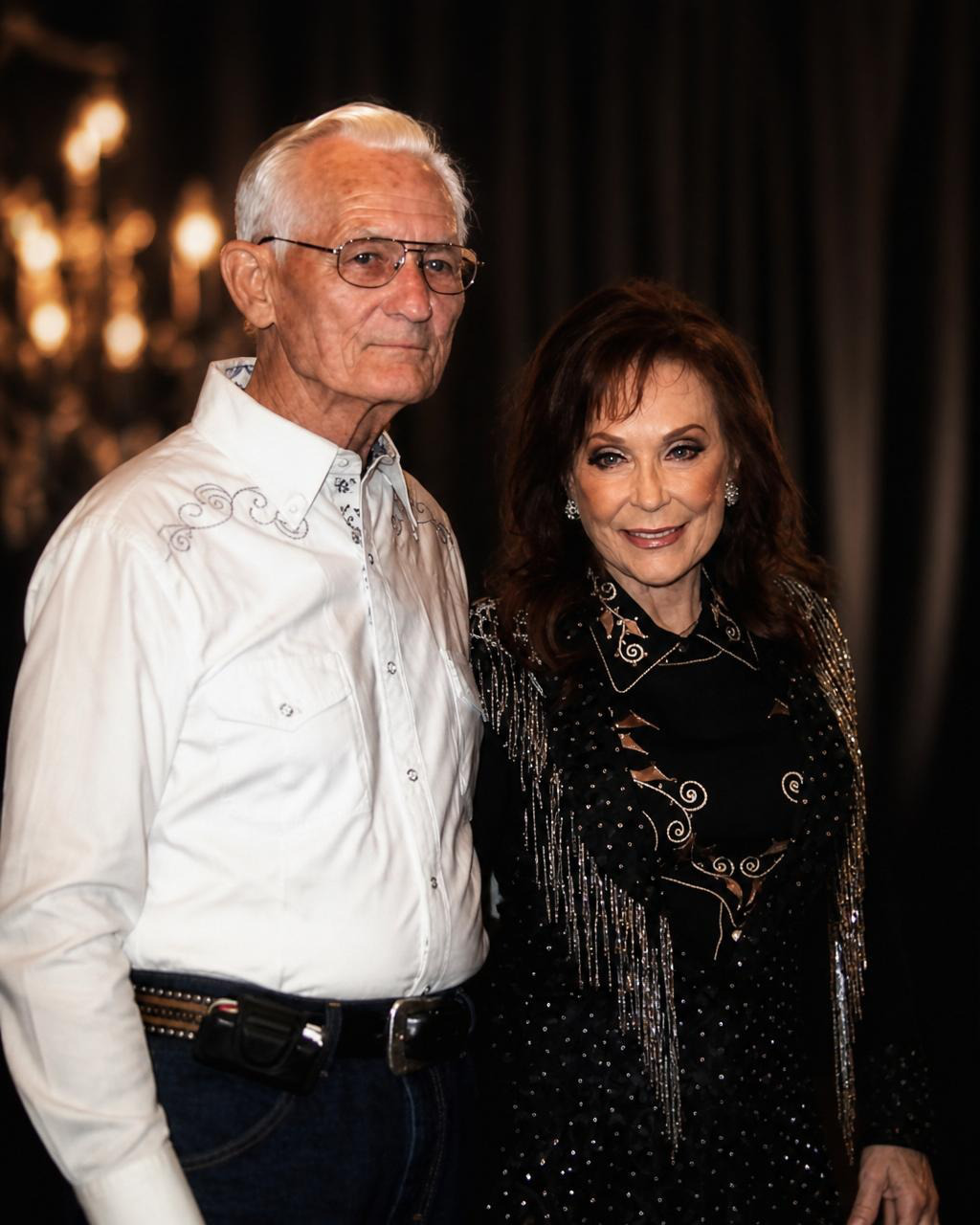
HOLLYWOOD OFFERED TO CUT A ROAD UP THE HILL TO FILM LORETTA LYNN’S CHILDHOOD HOME. HER FAMILY SAID NO. SO THE STUDIO BUILT A FAKE CABIN INSTEAD — AND THE FAKE ONE IS THE ONE THAT BURNED DOWN. There’s a cynical way to tell the Butcher Holler story, and people tell it. Poverty as a brand. Sixty years of selling a coal camp childhood to Nashville, then charging five dollars a head to walk through it. A hollow turned into a gift shop, with RC Cola and MoonPies at the register. The five dollars is real. So is the store. It’s the most visited attraction in eastern Kentucky. But look at who was collecting it. For more than thirty years the man giving the tours was her younger brother, Herman Webb, walking strangers through his own childhood until he died in 2018. He’s the reason there’s a house at all — by 1980 it was falling in, and he rebuilt it himself. His daughter still tells visitors that without her father, nothing would be standing on that hill. Nothing in it is staged. The butter churn is the one their mother used. The well outside is the one Loretta drew water from. There’s still no heat and no plumbing, in the number one tourist stop in the region. A movie studio wanted a road cut into that hillside. The family refused, and Hollywood built its own version a county away. That one’s gone now. The real one is still up the dirt lane, five dollars, no reservations. – Country Music
There is a cynical way to tell the Butcher Hollow story. It says poverty became a brand, and that a childhood cabin was turned into an attraction with a cash register at the end of the road. But the more you learn, the more complicated it becomes. The place people visit is not a staged gimmick. It is a family memory made physical, preserved by people who refused to let it disappear. Loretta Lynn was born in Butcher Hollow, Kentucky, and her childhood home has remained tied to her story for decades.
For years, Loretta Lynn’s younger brother Herman Webb was the one greeting visitors and leading tours. He helped keep the cabin standing after it had begun to fall apart, and the family says the home would not have survived without his work. Today, the site is still presented as part of Loretta Lynn’s Ranch experience, with the cabin replica, museum, and family story all connected to her legacy.
A childhood home that stayed honest
Visitors do not walk through a glossy Hollywood version of rural Kentucky. The cabin is meant to reflect the reality Loretta Lynn came from: a coal-camp childhood shaped by hard work, close family ties, and very little money. The ranch description says the cabin was built in memory of her parents, Ted and Clara Webb, to portray what her early life was like. That is part of why the place has lasted in public memory for so long. It was never trying to pretend the past was easier than it was.
That honesty is also what made the story powerful in the first place. Loretta Lynn built a career by writing and singing from lived experience, and “Coal Miner’s Daughter” turned her upbringing into American music history. The song and the film that followed helped carry Butcher Hollow far beyond eastern Kentucky.
When the 1980 film Coal Miner’s Daughter was made, the production did not shoot inside Loretta Lynn’s actual childhood home. The interior scenes were filmed elsewhere, and the movie used a constructed set to stand in for the cabin. In other words, Hollywood built its own version of the home rather than altering the real one. The replica used in connection with the film was later destroyed by arson, while the real family home remained in Butcher Hollow.
That detail matters because it changes the meaning of the story. The cabin visitors still come to see is not a movie prop. It is the place the family fought to save, and the movie’s fake version is the one that disappeared. The real home stayed behind in the hills, carrying the weight of memory without needing special effects.
Why people still go
People do not make the trip only for nostalgia. They go because the place feels personal. It is one thing to hear Loretta Lynn sing about where she came from. It is another to stand near the cabin, see the well, and understand that the story was never just marketing. The attraction remains one of the region’s best-known stops because it connects fame to something real and stubbornly local.
In the end, the Butcher Hollow story is not really about a fake cabin burning down. It is about what survived instead: family, memory, and a home that stayed true to the woman who came from it. Loretta Lynn’s name may belong to music history, but her childhood home still belongs to the hill.
When people talk about classic country music, they often praise the songs that said a lot in a little space. Simple chords. Direct feelings. A story you could follow before the record needle reached the middle. But Marty Robbins had a different instinct. With “El Paso,” he did not just write a song. He built a full Western in the listener’s mind.
The track was first released in 1959 on Gunfighter Ballads and Trail Songs and then issued as a single in 1960. It went on to become a major hit, reaching No. 1 on both the country chart and the pop chart in the United States, and it also became the first Billboard No. 1 single of 1960. That kind of crossover was rare enough. What made it unforgettable was the shape of the song itself: long, dramatic, and far more cinematic than the radio standards of the day.
A Story Too Big for the Usual Format
“El Paso” runs well past the length most stations preferred at the time, and yet listeners embraced it. The recording follows a narrator drawn into danger by love, jealousy, and regret. There is a cantina, a memorable woman named Felina, a fatal confrontation, and a final ride that turns the whole thing into tragedy. Marty Robbins delivered it with a calm voice that made the violence feel even colder and the sadness even deeper.
According to the song’s long-told origin story, Marty Robbins imagined the narrative while riding in a car across the Southwest, and the details settled into place before the trip was over. Whether people remember the exact road or not, the larger truth remains: Marty Robbins understood that a song could feel like a scene, a setting, and a finale all at once.
Why It Stood Out
Part of the magic was the arrangement. The Spanish-flavored guitar work gave the track a borderland atmosphere that felt distinct from much of mainstream country at the time. That sound, combined with the song’s length and storytelling, made “El Paso” feel almost too ambitious to fit radio. But radio did not reject it. Radio made room for it.
“El Paso” did not just survive its own ambition. It turned that ambition into its identity.
The song also helped define Marty Robbins’ legacy. He was already a respected singer, but “El Paso” gave him a permanent place in American popular music. Decades later, it still feels unusual in the best way: emotional without rushing, dramatic without losing control, and unforgettable from the first line to the final fall.
The Song That Left the Radio Rules Behind
There is a reason “El Paso” still gets discussed as more than a hit. It proved that a country song could be long, strange, and deeply visual without losing the audience. It invited listeners to imagine dust, heat, music, danger, and heartbreak all at once. In that sense, Marty Robbins was not writing against the rules of radio. He was quietly expanding what a radio song could be.
That is why the answer matters so much. The song is “El Paso,” and it remains one of the most vivid stories ever sung in country music.