HE WROTE IT FOR THE TROOPS AND NEVER MEANT TO RECORD IT. TWENTY-FOUR YEARS LATER, IT’S THE BIGGEST HOT 100 HIT OF HIS CAREER. After America’s 250th birthday weekend, Toby Keith’s “Courtesy of the Red, White and Blue (The Angry American)” re-entered the Billboard Hot 100 at No. 11 — higher than anything he ever charted in his lifetime. In one tracking week it pulled 15.3 million official U.S. streams, 2.6 million in airplay audience and 6,000 downloads sold, plus career bests at No. 2 on both Streaming Songs and Digital Song Sales. Back in 2002, the same song stalled at No. 25. “Red Solo Cup” later got him to No. 15. That was his ceiling for more than twenty years. The part that keeps getting left out is that the record almost never existed. Toby wrote the song in the raw months after 9/11 and played it for service members on his USO stops, with no intention of ever taking it into a studio. Then one man heard him do it and said something Toby couldn’t argue his way out of — not a producer, not a label executive. He recorded it. What that man told him is the reason a 24-year-old song is sitting at No. 11 this week. – Country Music
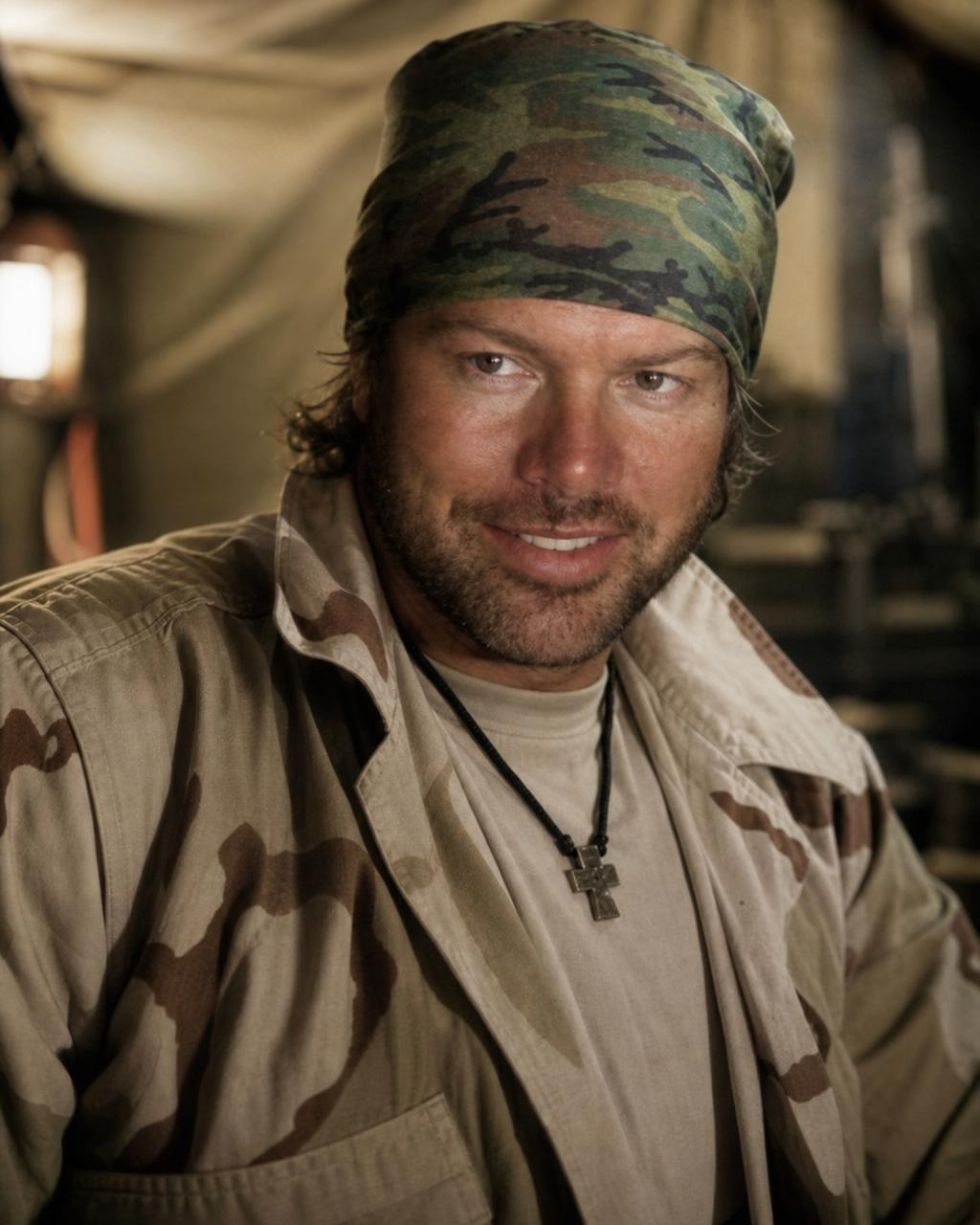
For years, Toby Keith’s “Courtesy of the Red, White and Blue (The Angry American)” felt like a song that belonged to a specific moment in American history. It was written in the raw aftermath of 9/11, shaped by grief, anger, and a deep desire to speak directly to service members. What few people realized at the time was that Toby Keith did not plan to turn it into a studio single at all.
The song began as something more personal than commercial. Toby Keith wrote it in late 2001 after the death of his father, Hubert Covel, earlier that year, and after the attacks of September 11 gave the lyrics even sharper emotional force. He performed it live for troops during USO appearances, where the reaction from military audiences made the song feel less like a product and more like a shared statement.
Then came the moment that changed its future. According to the story Toby Keith later told, General James L. Jones, then Commandant of the Marine Corps, heard the song and pushed Toby Keith to record it. The message was simple and hard to dismiss: if a song lifts morale for the troops and speaks to the country, it deserves to be preserved. Toby Keith eventually took the advice and brought it into the studio.
From live moment to chart history
Released in 2002 as the lead single from Unleashed, the song became one of Toby Keith’s defining records. It reached No. 1 on Hot Country Songs and peaked at No. 25 on the Billboard Hot 100. For years, that Hot 100 position stood as a reminder that the song was huge in country music, but only a partial crossover on the all-genre chart.
That changed much later. After Toby Keith died on February 5, 2024, at age 62 following stomach cancer, the song returned to the charts and kept finding new life. It re-entered Hot Country Songs, later came back to the Hot 100 in the summer of 2025, and then surged even higher during America’s 250th birthday weekend in July 2026. This time, it climbed to No. 11 on the Hot 100, the highest position of Toby Keith’s career on that chart.
Why the song surged again
The timing mattered. The July 4 holiday fell on a Saturday in 2026, concentrating listening into one chart week and giving the song a powerful boost. Its renewed performance was driven by a mix of streaming, airplay, and downloads, showing that the track still connects across generations. On that run, it also hit career bests on Streaming Songs and Digital Song Sales.
What makes the story compelling is not just the numbers. It is the way a song written for troops, once meant only for live performance, ended up becoming a lasting part of Toby Keith’s legacy. The studio version was never the original plan. The reaction of soldiers, and the insistence of James L. Jones, turned a performance piece into a recorded statement.
Sometimes a song finds its own destiny long after the artist thought the story was finished.
Two decades after its release, “Courtesy of the Red, White and Blue” still feels immediate. It is tied to loss, patriotism, controversy, and memory all at once. But above all, it remains a reminder that Toby Keith’s biggest Hot 100 moment came from a song he almost never recorded.
Post navigation
On May 7, 1972, Marty Robbins rolled into Talladega as a part-time NASCAR driver with a full-time music career. He had paid for his own No. 42 Dodge Charger with money from singing, and he fit the old-school image perfectly: a man who could chase a trophy on Saturday night and still make a Grand Ole Opry show later that same weekend.
Robbins qualified ninth, at about 177 mph, which was already respectable in a race that drew hard chargers and serious talent. But once the Winston 500 began, the story changed. David Pearson won the race, Bobby Isaac started from the pole at 192.428 mph, and the lead changed hands 53 times in a fast, tense Talladega battle. Robbins, meanwhile, found himself mixing it up with some of the best in the field. At one point, his car was reportedly clocked at 188 mph.
That was the number that made the weekend unforgettable. It also created the problem.
The Moment He Chose to Tell the Truth
After the race, an inspector reportedly came looking for Marty Robbins and told him to head to Victory Lane for Rookie of the Race honors. Marty Robbins did not go along with the celebration. He said he could not accept it, because the car had been running illegal. According to the story he later told, he repeated himself when officials thought he was joking. Only then did the explanation start to sink in.
The key distinction, in Marty Robbins’ own telling, was simple: illegal was not the same as cheating. That difference mattered to him. He believed a driver who ran illegal should admit it, while a driver who cheated would keep quiet and try to slip away with it. Marty Robbins chose to speak up.
He came away with a last-place result after being dropped from the finish order, and a reported fine of $250 followed. Some accounts list him as 50th, while others note that he was originally shown higher before the penalty was applied.
What Happened in the Garage?
The technical details have never been fully settled, and that is part of what keeps the story alive. Different versions say different things: one says Marty Robbins altered the carburetor in a hotel room; another says the setup was changed with help from Bobby Allison and Eddie Allison; another says the car was adjusted during the race after contact. What is consistent is the outcome: the car was not in legal trim when it was pushed harder than expected.
Robbins later described the move as something he did for the experience, not for the money. He wanted to feel what it was like to run with the leaders and show the crowd he could do it. He was not, by his own account, trying to steal a win. He was trying to taste the front of the field for one afternoon.
A Strange Kind of Respect
What happened next may be the most human part of the story. Robbins said he walked away from Talladega with more friends than he had when the day began. Because he turned himself in, no other driver lost a position or prize money. In a sport built on pressure, pride, and post-race inspection, that mattered.
Marty Robbins liked to say he was not a singer who raced cars. He was a racer who happened to sing. At Talladega, that identity collided with the rulebook, and he made a choice that cost him the finish but preserved something else: his own version of honesty.
That is why the story still lands all these years later. Not because a car once ran 188 mph after qualifying at 177, but because the man behind the wheel decided the difference between illegal and cheating was worth saying out loud.