He Was Only Three — And Everyone Who Should Have Saved Him Failed. – Daily News
1.
On the morning of October 14, a small Texas household began the day like many others. Three-year-old Dawson Cain Zamora was awake, alive, and in the care of the adults who were supposed to protect him. By the end of that day, Dawson would be fighting for his life in a hospital bed, the victim of injuries so severe that doctors would soon determine his brain could no longer function. What followed was a heartbreaking chain of revelations that exposed prolonged harm, failed protection, and a child who never stood a chance.
2.
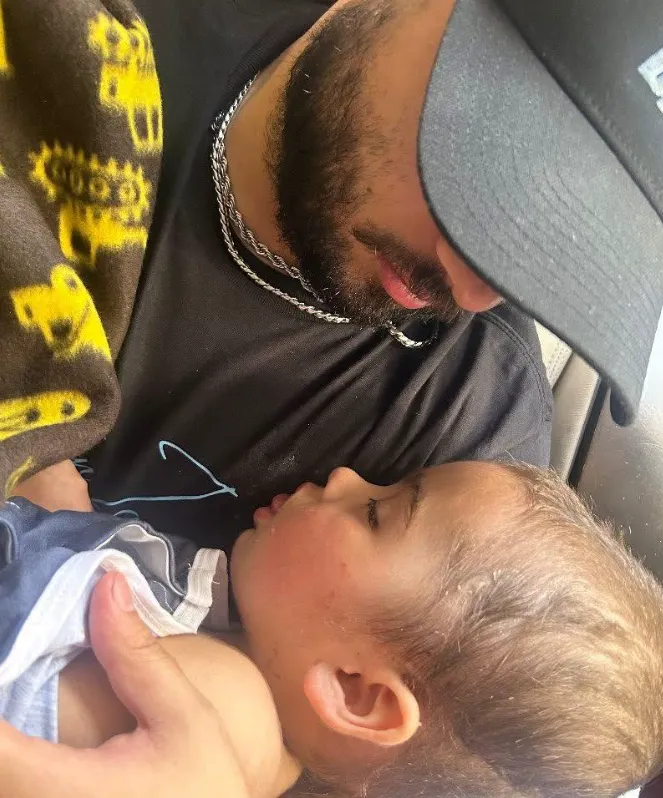
Dawson lived with his mother, 30-year-old Chelsea Rene Berg. That morning, around 7:20 a.m., Berg left for work, leaving Dawson behind with her boyfriend, 30-year-old Christopher Thomas Alexander. Alexander was not a new presence in Dawson’s life. He had been around long enough for concerns to be raised, warnings to be voiced, and evidence to quietly accumulate—evidence that would later become central to a criminal case.
3.
According to records, Alexander was already under court supervision at the time. He was wearing a GPS ankle monitor related to prior charges, a fact that would later stand out sharply in the investigation. Despite this, Dawson was left alone with him. There was no indication that Berg arranged for alternative childcare or supervision that day.
4.
Around lunchtime, Berg received a text message from Alexander stating that Dawson was eating. It was an ordinary message, one that gave no hint of the catastrophic events that had already occurred or were about to occur. Shortly after, that calm was shattered by a frantic phone call. Alexander told Berg he was rushing Dawson to the hospital.
5.
When Alexander arrived at a McKinney-area hospital with Dawson later that day, he told medical staff that he had heard a “thud” from another room and found the child injured. According to him, Dawson had fallen. Almost immediately, doctors recognized that the explanation did not match what they were seeing. Dawson’s injuries were extensive, severe, and inconsistent with a simple accident.
6.
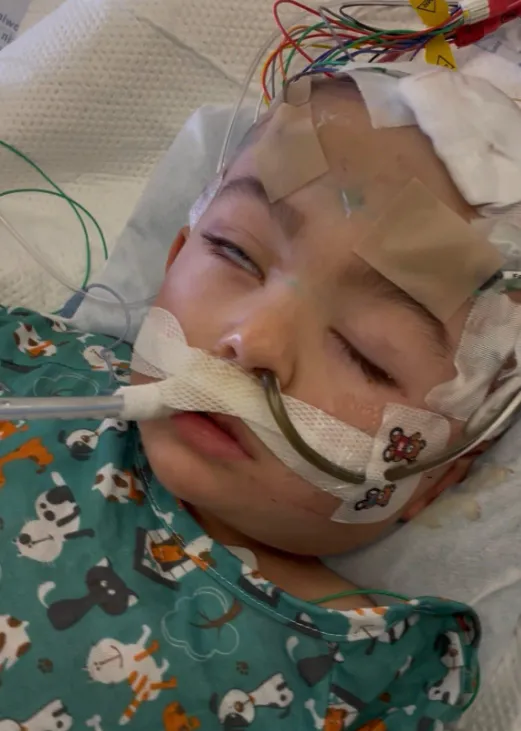
Medical professionals documented catastrophic brain trauma, including bleeding on the brain. They also observed bruises across Dawson’s body in various stages of healing—evidence suggesting repeated harm over time, not a single incident. Additional injuries to his chest and abdomen were noted, further contradicting Alexander’s account.
7.
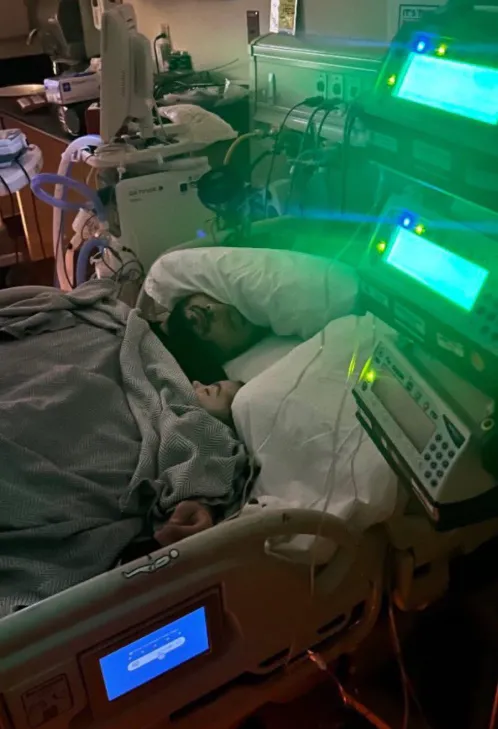
Hospital staff contacted law enforcement without delay. As officers attempted to question Alexander, he refused to speak and immediately retained an attorney. His silence, paired with the medical findings, raised serious concern among investigators. Dawson was placed on life support as doctors worked to stabilize him, though the prognosis was grim.
8.
Detectives then interviewed Chelsea Berg. She told them that Dawson had no visible injuries when she left for work that morning. Photographs taken earlier that day supported her statement. Investigators were now faced with a narrow window of time during which Dawson’s injuries could have occurred—while he was alone with Alexander.
9.
Later on October 14, authorities issued a warrant for Alexander’s arrest. Two days later, on October 16, both Alexander and Berg were taken into custody. Alexander was charged with injury to a child, stalking, and tampering with evidence with intent to impair an investigation. Berg was charged with injury to a child, a first-degree felony.
10.
Berg posted a $100,000 bond and was released the same day, under strict conditions that prohibited any contact with Dawson. As Dawson remained on life support, investigators continued reviewing evidence—particularly text messages between Berg and Alexander that would soon reshape the case entirely.
11.
Those messages painted a devastating picture. In multiple texts sent weeks before Dawson’s injuries, Berg accused Alexander of harming her son. One message dated September 8 stated that Dawson had bruises on his face and jaw and described Alexander as “dangerous.” Another message dated September 18 was even more explicit, stating that Dawson had been hurt every single time Alexander was alone with him.
12.
Despite these messages, Berg continued the relationship and continued leaving Dawson alone with Alexander. Prosecutors would later argue that this knowledge—and her failure to act—played a critical role in what ultimately happened to her child.
13.
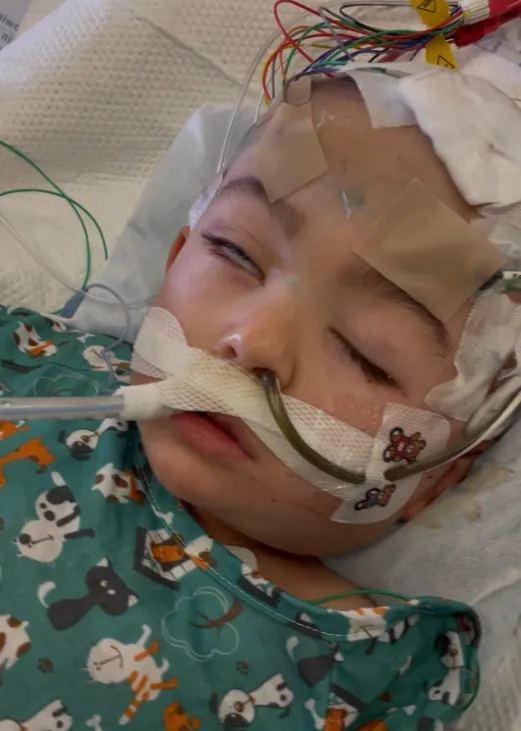
On October 19, Berg was informed that Dawson had no detectable brain activity and was expected to be removed from life support. Her attorney filed an emergency motion asking the court to allow her supervised access to Dawson so she could say goodbye. The request was granted.
14.
However, Dawson’s father, Dahrian Zamora, shared joint legal custody. Under the law, life support could not be withdrawn without the consent of both parents. Despite having said goodbye, Berg refused to consent. Some close to the case later believed this refusal may have been motivated by legal strategy, potentially delaying consequences tied to Dawson’s death.
15.
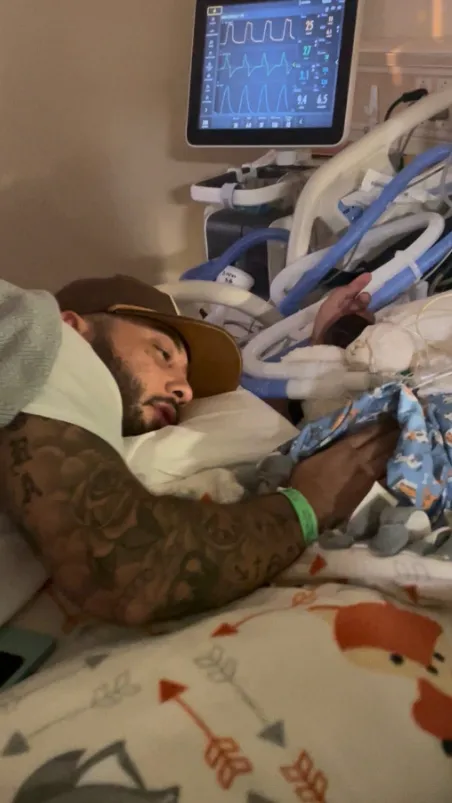
Throughout this period, Dawson’s father never left his son’s side. He was forced to retain legal representation to protect Dawson’s interests and counter ongoing legal actions. Friends described him as devoted, exhausted, and broken—watching his child breathe through machines while navigating a legal system he never expected to face.
16.
On December 7, Dawson Cain Zamora passed away at 10:42 a.m.—on his father’s birthday. The moment marked the end of Dawson’s short life and the beginning of a deeper chapter of grief and accountability. His father would later say Dawson held on just long enough to spend one final birthday with him.
17.
The following day, Dahrian Zamora made a public announcement. He confirmed his son’s death and revealed a major development: Chelsea Berg had been taken into custody and charged with Capital Murder. Prosecutors stated she was charged at the highest level due to her failure to protect her child, despite clear knowledge of ongoing harm.
18.
Dawson’s death has left an irreversible mark. His father now faces a life shaped by loss, memory, and the pursuit of justice for a child who depended entirely on the adults around him. As the legal process continues, one truth stands unshaken—Dawson Cain Zamora did not have to die. He should have been protected. And now, the courts must decide how accountability will be measured for a life that ended far too soon.
1. A Morning That Should Have Been Ordinary
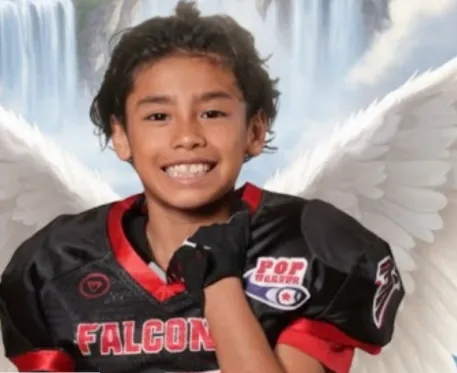
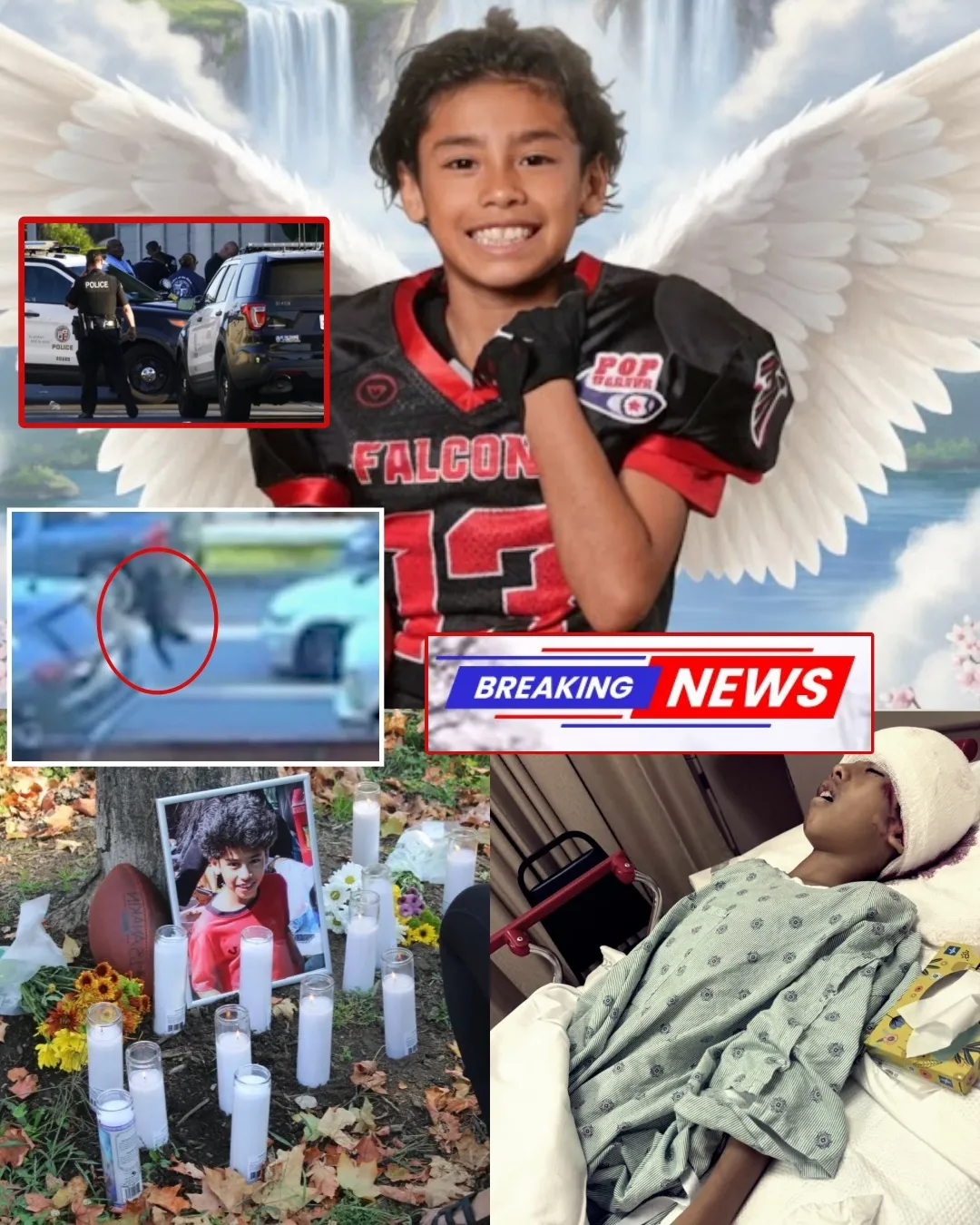
Nine-year-old Anakin Perez left home on what should have been an ordinary school morning.
Like countless children before him, he was following a familiar route —
one walked many times,
one his family trusted.
He carried with him the small rituals of childhood:
the expectation of school,
the comfort of routine,
and the unspoken belief that adults, roads, and systems existed to keep him safe.
That belief would be shattered in a matter of seconds.
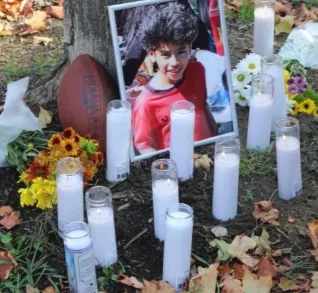
What began as a normal walk to school ended in a tragedy so severe
that it exposed deep fractures in accountability, enforcement,
and the way society protects its most vulnerable members.
2. The Moment That Changed Everything
As Anakin crossed the roadway, a vehicle struck him with force.
Instead of stopping,
the driver continued forward —
dragging the child approximately 72 feet
before leaving him behind and fleeing the scene.
There was no immediate aid.
No attempt to help.
No acknowledgment of the life just altered forever.

In hit-and-run cases, the harm is compounded by abandonment.
For Anakin, that abandonment proved fatal.
Emergency responders arrived,
but the damage had already been done.
A child who should have been thinking about homework and recess
was gone.
3. A Family’s World Collapses
For Anakin’s family, the hours that followed were surreal.
Parents are not meant to outlive their children.
Siblings are not meant to grow up without the laughter
that once filled shared rooms.
The shock was immediate.
But soon, shock gave way to questions —
questions that grew more painful with every answer uncovered.
How could this happen in a school zone?
Why didn’t the driver stop?
And perhaps most disturbingly:
how could the response afterward feel so inadequate?
4. The Driver Who Walked Away
Authorities later located the driver responsible.
What they found shocked the community.
This was not a first-time offender.
Not someone with a clean record who made a tragic mistake.
Records revealed multiple prior DUI offenses —
a documented pattern of dangerous behavior behind the wheel.
That history raised immediate alarms.
If someone with repeated alcohol-related driving violations
was still legally operating a vehicle,
what safeguards had failed
before Anakin ever stepped onto that road?
5. A Citation That Felt Like an Insult
Despite the severity of the incident
and the driver’s documented history,
the initial law enforcement response stunned the public.
Instead of criminal charges,
the driver was reportedly issued a standard traffic citation.
No immediate arrest.
No serious charge reflecting the loss of a child’s life.
To Anakin’s family and neighbors,
the response felt not just insufficient —
but dismissive.
As if the death of a child
had been reduced to a technical violation.
6. Outrage Begins to Spread
Community outrage ignited almost instantly.
Parents, teachers, and residents demanded answers.
Social media filled with disbelief and anger.
Vigils were held —
not only to mourn Anakin,
but to protest what many viewed
as a profound failure of justice.
How could a hit-and-run involving a child in a school zone
result in nothing more than a citation?
How could prior DUI convictions
fail to escalate the consequences?
These questions echoed far beyond Anakin’s neighborhood.
7. The School Zone That Failed
School zones exist for a reason.
Reduced speed limits.
Warning signs.
Heightened enforcement.
All designed to create a protective buffer around children.
In Anakin’s case, those protections failed.
Whether due to lax enforcement,
insufficient infrastructure,
or policy gaps,
the safeguards meant to prevent exactly this kind of tragedy
did not function as intended.
For many parents, the realization was chilling:
if this could happen here,
it could happen anywhere.
8. A Pattern, Not an Isolated Event
As advocates examined the case more closely,
it became clear this was not an isolated failure.
Across the country, families lose children to traffic violence
only to face minimal consequences for drivers involved.
Repeat offenders often remain on the road.
Hit-and-run penalties vary widely.
School zone protections remain inconsistent.
Anakin’s story fit a broader pattern —
one where accountability lags behind harm.
9. The Weight of Prior Warnings Ignored
The driver’s DUI history added another layer of tragedy.
Prior arrests are meant to serve as warnings —
to the individual,
and to the system.
Each conviction is an opportunity to intervene.
To prevent future harm.
In this case, those warnings went unheeded.
The question became unavoidable:
if stronger action had been taken earlier,
would Anakin still be alive?
10. A Family Turns Grief Into Advocacy
In the weeks following Anakin’s death,
his family made a painful decision.
They would not allow his name to fade quietly.
Through tears and exhaustion,
they spoke publicly.
They demanded justice.
They demanded reform.
They called for charges that matched the gravity of the loss.
For tougher penalties for repeat offenders.
For real enforcement in school zones.
Their grief became a catalyst for change.
11. Calls for Legal Accountability
Legal experts weighed in.
They noted that fatal hit-and-run cases
often warrant serious charges —
especially when compounded by prior offenses.
Advocates questioned why prosecutorial discretion
appeared so restrained.
Was it policy?
Oversight?
Reluctance?
Or a systemic undervaluing of traffic-related deaths?
Each possibility was deeply troubling.
12. Policy Reform Enters the Conversation
Anakin’s death began fueling broader policy discussions.
Proposals included:
automatic license revocation for repeat DUI offenders,
mandatory arrests in fatal hit-and-run cases,
enhanced penalties in school zones,
and better inter-agency communication.
These were not abstract ideas.
They were reforms rooted in a single belief:
that one child’s death should prevent another.
13. A Community United by Loss
Vigils continued.
Murals appeared.
Schoolmates wrote letters.
Flowers marked the path Anakin once walked.
Teachers spoke of empty desks
and unanswered questions from children
trying to understand why their friend was gone.
The grief was collective —
but so was the determination.
Anakin was remembered not only as a victim,
but as a boy who loved, laughed, and mattered.
14. Redefining “Accident”
Many rejected the word accident entirely.
When a driver with multiple DUIs
hits a child,
fails to stop,
and flees —
it is not random misfortune.
It is the foreseeable result of unchecked risk.
Language matters, advocates argued,
because it shapes accountability.
Anakin’s death was not unavoidable.
It was preventable.
15. A Legacy That Demands Change
Today, Anakin Perez’s name has become a rallying cry.
His story is cited in council meetings,
policy debates,
and school safety campaigns.
His life, though short,
has sparked conversations that may save others.
Justice for Anakin is no longer only about charges.
It is about ensuring that no family
has to stand where his now stands —
asking why the system failed
when it mattered most.