HE SLEPT ON FRIENDS’ COUCHES FOR YEARS — THEN MERLE HAGGARD CALLED HIS SONG THE BEST HE’D HEARD IN 15 YEARS. Blaze Foley never had a home. He crashed on couches, slept under pool tables in Austin bars, and held his boots together with duct tape. They called him the Duct Tape Messiah. He refused to get a day job because he said it would betray his music. But what most people didn’t know about that night — February 1, 1989 — was why he was even at that house. He went to his friend Concho January’s place to confront Concho’s son Carey, who he believed was stealing the old man’s pension checks. Carey shot him in the chest with a .22 rifle at 5:30 in the morning. Blaze was 39. The jury needed just two hours to acquit Carey on self-defense. His friends held a benefit just to scrape together enough money to bury him. His coffin was wrapped in duct tape. And “If I Could Only Fly” — the song he wrote with nothing to his name — became the title track of Merle Haggard’s acclaimed 2000 album. Ethan Hawke directed a film about him in 2018. – Country Music
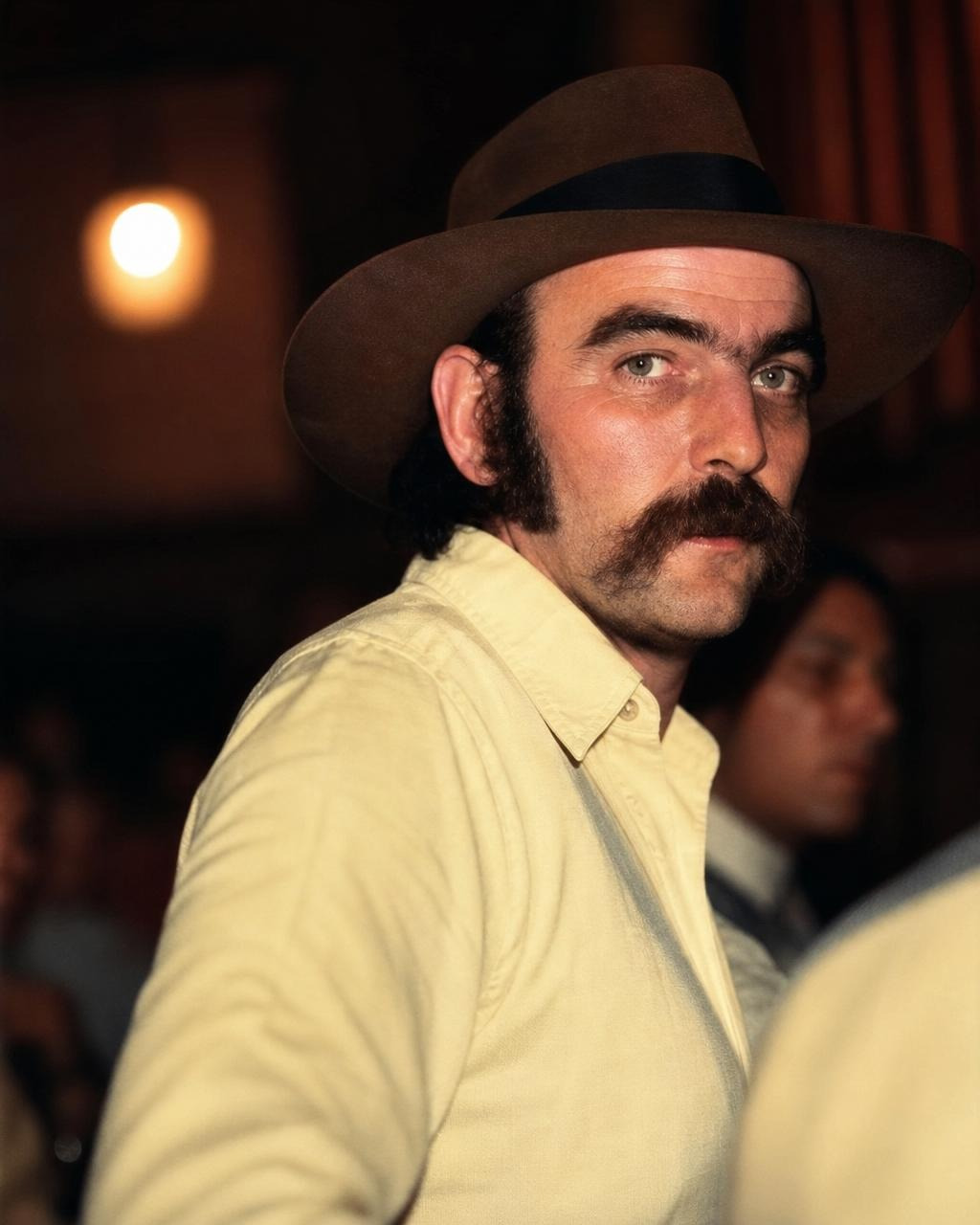
Blaze Foley: The Outlaw Songwriter Who Never Had a Home
Blaze Foley lived as if music mattered more than comfort, pride, or predictability. He slept on friends’ couches, drifted between cheap rooms and bar corners, and even spent nights under pool tables in Austin clubs. His boots were held together with duct tape, and the nickname that followed him, the Duct Tape Messiah, sounded almost too strange to be real. But Blaze Foley was real, and so was the life he chose.
He refused the safety of a day job because he believed it would pull him away from the only thing that gave his life meaning. That choice made him hard to pin down and even harder to forget. He was not polished, not wealthy, and not built for easy success. He was a songwriter surviving on instinct, kindness from friends, and whatever room he could borrow for the night.
The Night That Changed Everything
On February 1, 1989, Blaze Foley went to a house for a reason that had nothing to do with music. He had become convinced that Concho January’s son, Carey January, was stealing the older man’s pension checks. Blaze Foley went there to confront him. What happened next was fast, tragic, and final. Around 5:30 in the morning, Carey January shot Blaze Foley in the chest with a .22 rifle. Blaze Foley was 39 years old.
The aftermath was as rough and lonely as the life he had lived. The jury needed only two hours to acquit Carey January on self-defense grounds. Blaze Foley’s friends gathered what they could and held a benefit to help pay for his burial. Even in death, money was tight, and the final goodbye matched the stripped-down reality of his life. His coffin was wrapped in duct tape, a detail that feels almost impossible until you remember who Blaze Foley was.
The Song That Outlived the Hard Times
Years later, the world began to catch up with what Blaze Foley had left behind. One of his most famous songs, If I Could Only Fly, became a lasting piece of American songwriting. Merle Haggard recorded it and praised it as the best song he had heard in 15 years. That kind of recognition did not erase Blaze Foley’s struggles, but it proved that the songs were always bigger than the circumstances around them.
Blaze Foley did not leave behind a mansion, a fortune, or a clean biography. He left a songbook that kept finding new listeners.
Why Blaze Foley Still Matters
Blaze Foley’s story still reaches people because it feels painfully human. He wanted to live honestly, even when honesty cost him stability. He trusted music to carry what ordinary life could not. That is part of why his name kept moving long after his death, from underground circles to wider recognition.
Ethan Hawke later directed a film about Blaze Foley in 2018, introducing his story to another generation. The movie helped place Blaze Foley where he belonged: not as a legend built out of myth, but as a gifted, troubled, unforgettable songwriter whose life was rough and whose art was beautiful.
Blaze Foley never had much, but he had a voice. And in the end, that voice was enough to be heard.
Post navigation
There are concert moments you remember because they are loud, and then there are the rare ones you remember because they suddenly feel very quiet. In 2004 at Texas Stadium, Alan Jackson shared the stage with George Strait and Jimmy Buffett for a night built on star power, big crowds, and the kind of easy confidence only country legends can bring. But for many people in the crowd, the moment that stayed with them was not the biggest hit or the biggest singalong. It was Alan Jackson standing alone with “Seven Bridges Road.”
The song was not written by Alan Jackson. Steve Young wrote it in 1969, inspired by a real road in Alabama. Later, The Eagles helped turn it into a beloved harmony piece in 1980. By the time Alan Jackson performed it live, the song already carried history. Still, what he did with it that night made it feel brand new.
A Song Finds the Right Voice
Alan Jackson has always had a gift for making classic material feel honest. He does not overwhelm a song. He lets it breathe. With “Seven Bridges Road,” he leaned into that strength. The arrangement was stripped down and rooted in bluegrass, which gave the harmonies space to rise naturally instead of sounding polished or forced.
“Some songs do not need to be rewritten. They just need the right voice at the right time.”
That is what made the performance so powerful. Alan Jackson did not try to own the song in a flashy way. He respected it. He listened to it. And then he sang it with the kind of steady, emotional delivery that makes a live audience lean in without even realizing it.
Why That Night Felt Different
Texas Stadium was packed with around 65,000 people, but the scale of the crowd almost added to the intimacy of the moment. In a setting that huge, it is easy for a performance to become just another part of the show. This one did not. The layered vocals opened up beautifully, and the song seemed to hang in the air longer than expected.
That is the quiet magic of a great live performance. A familiar song can become unforgettable when the singer brings out something the audience did not know it was waiting to hear. Alan Jackson had already built a career with 35 number-one hits, but this moment reminded everyone that charts are only part of the story. Interpretation matters too.
When a Cover Becomes a Memory
The live version later appeared on an album in 2007, without studio polish or extra tricks. That choice mattered. It preserved the feeling of the night exactly as it happened. You can hear the honesty in it, the kind that cannot be manufactured after the fact.
In the end, that is why people still talk about it. Not because Alan Jackson made “Seven Bridges Road” into something entirely different, but because he made it feel deeply lived-in. He proved that a song does not have to be written by the singer to belong to them for three minutes and twenty seconds under the lights.
And in Texas, on that night in 2004, with a stadium full of fans and a song older than many of them, Alan Jackson created one of those rare moments that still gives people chills years later.