HE NEARLY DESTROYED HIMSELF WITH PILLS — THEN WROTE ONE OF THE QUIETEST LOVE SONGS OF HIS LIFE. Johnny Cash did not just write “Flesh and Blood.” In a way, he owed it to the woman who kept believing there was still a man underneath the pills, the rage, and the wreckage. Before the prison concerts turned him into a legend all over again, Cash was disappearing into amphetamines, missed shows, broken promises, and nights so dark he once crawled into Nickajack Cave believing he might never come out. But June Carter kept finding the man the drugs were trying to bury. She searched for his pills and flushed them away. She stayed close when staying would have been easier to explain by leaving. And after Cash found his way back from that cave, love did not sound like fireworks anymore. It sounded quieter than that. A few years later, he wrote a song about walking through the woods, watching willows bend, hearing birds sing, and realizing that even the beauty of the world was not enough by itself. “Flesh and Blood” was not a dramatic declaration. It was a shy confession from a man who finally understood that a stage, a drug, a crowd, and even nature itself could not replace the warmth of one human being who refused to let him vanish. But the real reason those words still feel so personal is the part of the story most fans were never told. – Country Music
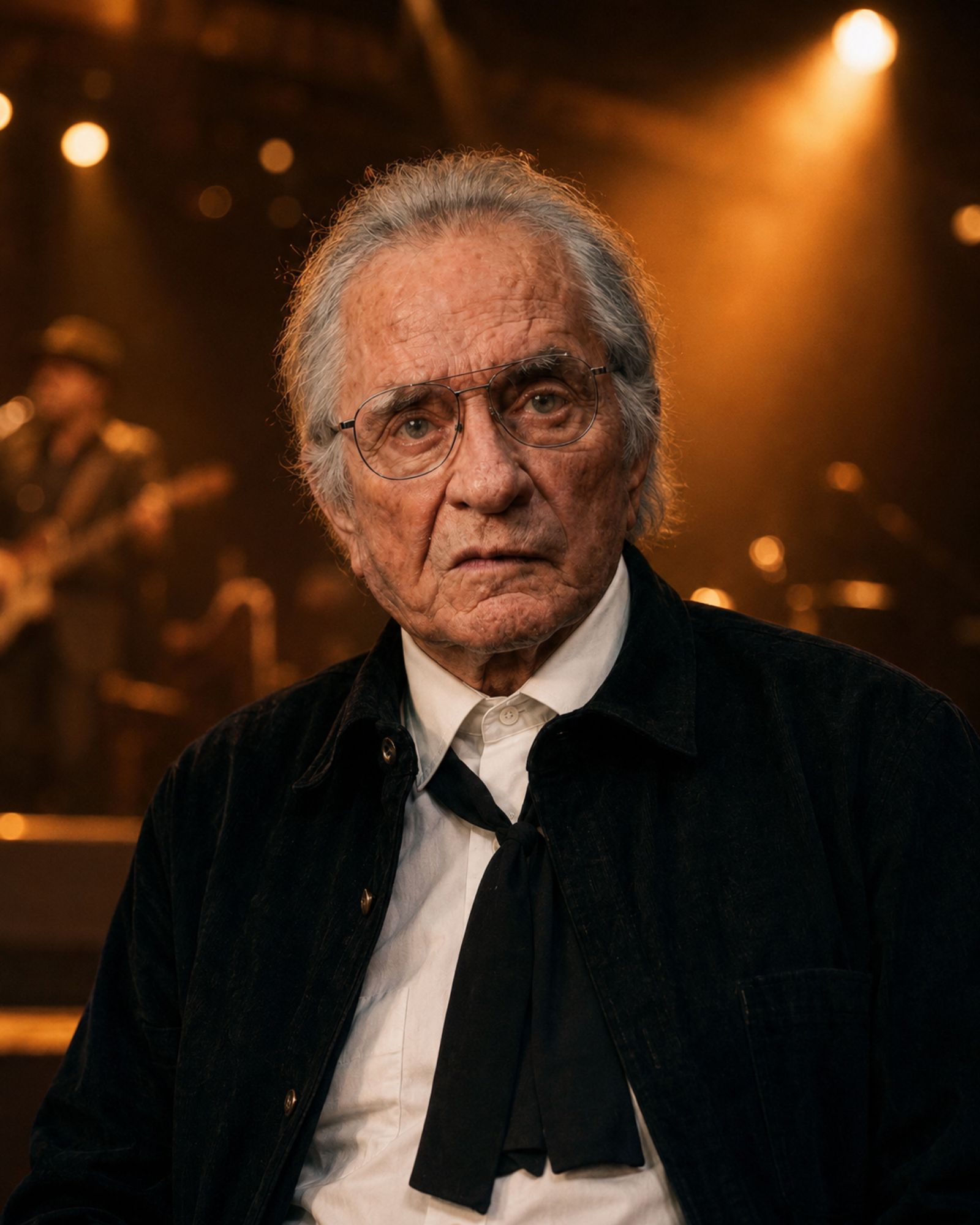
Johnny Cash did not write “Flesh and Blood” as a grand, polished love anthem. He wrote it after years of chaos, after the kind of self-destruction that can hollow a person out from the inside. By the time the song arrived, Cash had already lived through a version of himself that was almost impossible to recognize: exhausted, unpredictable, and drifting farther from stability with every pill he swallowed.
But there was one person who kept looking for the man beneath all of that. June Carter did not treat Johnny Cash like a lost cause. She treated him like someone worth saving, even when he could not fully save himself.
The years when Johnny Cash was slipping away
In the mid-1960s, Johnny Cash was already a giant in country music, but fame did not protect him from collapse. The road was relentless. The pressure was constant. Pills became part of the routine, and soon the routine became the problem. Missed shows, restless nights, and broken commitments began to pile up around him.
He was not just having a hard time. He was unraveling in public.
One of the most haunting moments from that era came when Johnny Cash wandered into Nickajack Cave, so disoriented that he believed he might not make it out. It was a terrifying low point, the kind of story that feels almost unreal until you remember how close some people come to losing everything before they change.
“I was going down, and I knew it.”
That is what makes the next part of the story so powerful. Johnny Cash did not climb out of that darkness alone. He had help, and much of it came from June Carter.
June Carter saw what others could not
June Carter understood Johnny Cash in a way almost nobody else did. She saw the performance, of course, but she also saw the exhaustion behind it. She saw the charm and the damage, the talent and the instability, the public image and the private mess.
When Johnny Cash was spiraling, June Carter kept showing up. She searched for pills and threw them away. She refused to normalize the self-destruction. She stayed close when distance would have been easier, cleaner, and safer for her own life.
That kind of love is not glamorous. It is patient. It is difficult. It asks for courage in ordinary moments, not just dramatic ones.
And that is part of what “Flesh and Blood” carries inside it. The song does not sound like someone trying to impress the world. It sounds like someone who has learned, painfully, that being alive is not the same as being present.
A quieter kind of love
After Johnny Cash began finding his way back, his music changed in subtle ways. The fire was still there, but now there was more tenderness in it. “Flesh and Blood” feels like one of those songs.
It moves through simple images: walking in the woods, hearing birds, watching the natural world go on around him. There is beauty everywhere in the song, but the heart of it is not scenery. It is recognition. Johnny Cash is not just admiring the world. He is realizing that even the best parts of the world cannot replace the closeness of another person.
That is why the song lands so softly and so deeply. It does not shout. It confesses.
Johnny Cash had already lived through fame, collapse, and survival. By the time he sang about flesh and blood, he knew that love was not a spotlight. It was presence. It was the hand that stayed. It was June Carter choosing not to leave when leaving might have made sense.
The real story behind the song
Many fans hear “Flesh and Blood” as a gentle love song, and it is. But it is also a survival song. It comes from a man who had seen how easy it is to vanish into addiction, ego, and despair, and how difficult it is to come back from that place without someone refusing to let go.
The reason the song feels so intimate is that it was not born in comfort. It was born after the wreckage, after the cave, after the pills, after the long and difficult work of returning to himself. Johnny Cash was not writing from a safe distance. He was writing from experience.
And somewhere inside that quiet music is the story of June Carter, who kept believing there was still a man worth reaching for.
That may be the most moving part of all. “Flesh and Blood” is not just about being in love. It is about being found.
Post navigation
On June 27, 2026, Alan Jackson will step onto the stage at Nissan Stadium in Nashville for what is being called his final full-length concert. For fans, that date already feels heavy. It is not only the end of a touring era. It feels like the closing of a door that has been open for generations.
Alan Jackson has never needed a big trick to make people listen. He never had to outrun the room or dress up a song until it forgot where it came from. He sang about ordinary life in a way that made it feel sacred: a front porch, a small-town road, a long workday, a good woman, a father trying to do right by his children. Those details were never small in his hands. They became the heart of the story.
A Goodbye That Feels Bigger Than One Night
There are concerts, and then there are moments when a concert becomes a statement. Alan Jackson’s final full-length show feels like one of those moments. It is not only about a legendary performer saying farewell. It is about a style of country music that may be leaving the main stage with him.
Jackson’s music did something rare. It did not chase attention. It earned it. His voice carried a calm honesty that made listeners lean in. He could sing about heartbreak, faith, family, work, and loss without sounding forced. That restraint is part of what made him stand out. He did not need to shout to be heard.
That is why this farewell feels so emotional. Alan Jackson is not leaving behind noise. He is leaving behind silence — the quiet space where a steel guitar, a steady drum, and a plainspoken lyric can say more than a hundred clever lines. Nashville has changed around him, and the question now is whether the city still knows how to protect the kind of country music he helped define.
The Sound That Made Him a Standard
Alan Jackson built a career on songs that sounded simple at first and then stayed with you for years. He wrote and chose material that felt lived-in. His songs were not trying to be fashionable. They were trying to be true. That truth is what gave them staying power.
Alan Jackson made country music feel human in the most direct way possible.
That is why songs like “Where Were You (When the World Stopped Turning)” still carry such weight. The song did not try to be bigger than the moment. It sat inside it with humility and grief. It gave listeners room to feel what they could not always say. That kind of writing does not age easily. It becomes part of people’s lives.
Even now, newer stars often borrow from the road Alan Jackson helped pave. You can hear pieces of his influence in artists who value storytelling, tradition, and emotional clarity. George Strait, Carrie Underwood, Luke Combs, Miranda Lambert, and others have each helped keep parts of that sound alive. But influence is not the same as replacement. The original voice still matters.
Why This Farewell Feels Personal
Part of the reason fans are reacting so strongly is that Alan Jackson never felt distant. His songs sounded like conversations you might hear from a neighbor, a parent, a friend, or a man sitting alone after a long day. That familiarity created trust. When he sang, people believed him.
And belief matters in country music. The best country songs do not just entertain. They reflect life back to the listener with enough honesty to feel comforting. Alan Jackson understood that instinctively. He built a catalog that respected memory without turning it into decoration.
So when he performs one last full-length concert in Nashville, the emotion will come from more than nostalgia. It will come from recognition. Fans may be watching not just the end of a career, but the end of a certain approach to country music: one built on plain truth, unhurried emotion, and songs that never needed to pretend they were anything else.
What Nashville May Be Losing
Nashville always evolves. That is part of its story. New voices arrive, new sounds take hold, and each generation claims the right to define country music in its own way. But not every change feels like progress to every listener. Some changes feel like subtraction.
Alan Jackson’s farewell raises that deeper question. If a song needs no polish to be powerful, why do so many modern songs seem afraid to be simple? If a voice can carry heartbreak without ornament, why does everything else need to be louder? These are not complaints for the sake of the past. They are questions about what gets lost when a genre moves too far from its own center.
That is what makes this goodbye so memorable. Alan Jackson is not just walking off the road. He is walking away with a piece of country music that newer stars still borrow from, but may never fully replace.
One Last Night, One Last Legacy
When June 27, 2026, arrives, the stadium will likely be filled with fans who know every word and every pause. They will be there for the music, but also for the feeling that they are witnessing history in real time. If the night includes tributes from artists such as George Strait, Carrie Underwood, Luke Combs, and Miranda Lambert, the tributes will matter. But the deepest tribute will be the songs themselves.
Alan Jackson’s legacy is not built on spectacle. It is built on trust, memory, and a voice that made room for everyday life. That is why this final show means so much. It is not only the end of one man’s tour. It may be the last full-scale reminder of a country sound that once felt permanent.
And if that is true, then Nashville is not just saying goodbye to Alan Jackson. It is saying goodbye to a way of hearing itself.