HE DIED ON A FRIDAY. THEN GEORGE STRAIT SAID COUNTRY MUSIC MIGHT NOT HAVE HAD A KING WITHOUT HIM. Johnny Rodriguez left quietly on May 9, 2025, surrounded by family in San Antonio. He was 73. No giant farewell. No weeklong industry reckoning. Just the end of a voice Nashville had never fully known how to honor. But then George Strait wrote the kind of tribute that made people stop. He said Johnny had inspired him from the beginning. Being from South Texas himself, George said Johnny’s success gave him hope — maybe there was room for a guy like him, too. Think about that. The King of Country was saying a kid from Sabinal, Texas, once discovered singing behind bars, helped him believe his own dream was possible. Even Toby Keith’s team carried one more tribute from a man who was already gone, sharing that Toby always called Johnny Rodriguez a major influence on his singing. And months before Johnny passed, his daughter Aubry released a new version of “Pass Me By,” the song that first opened the door for him. He got to hear that. But he never got to hear the Country Music Hall of Fame call his name. Maybe that is the part that still feels unfinished. – Country Music
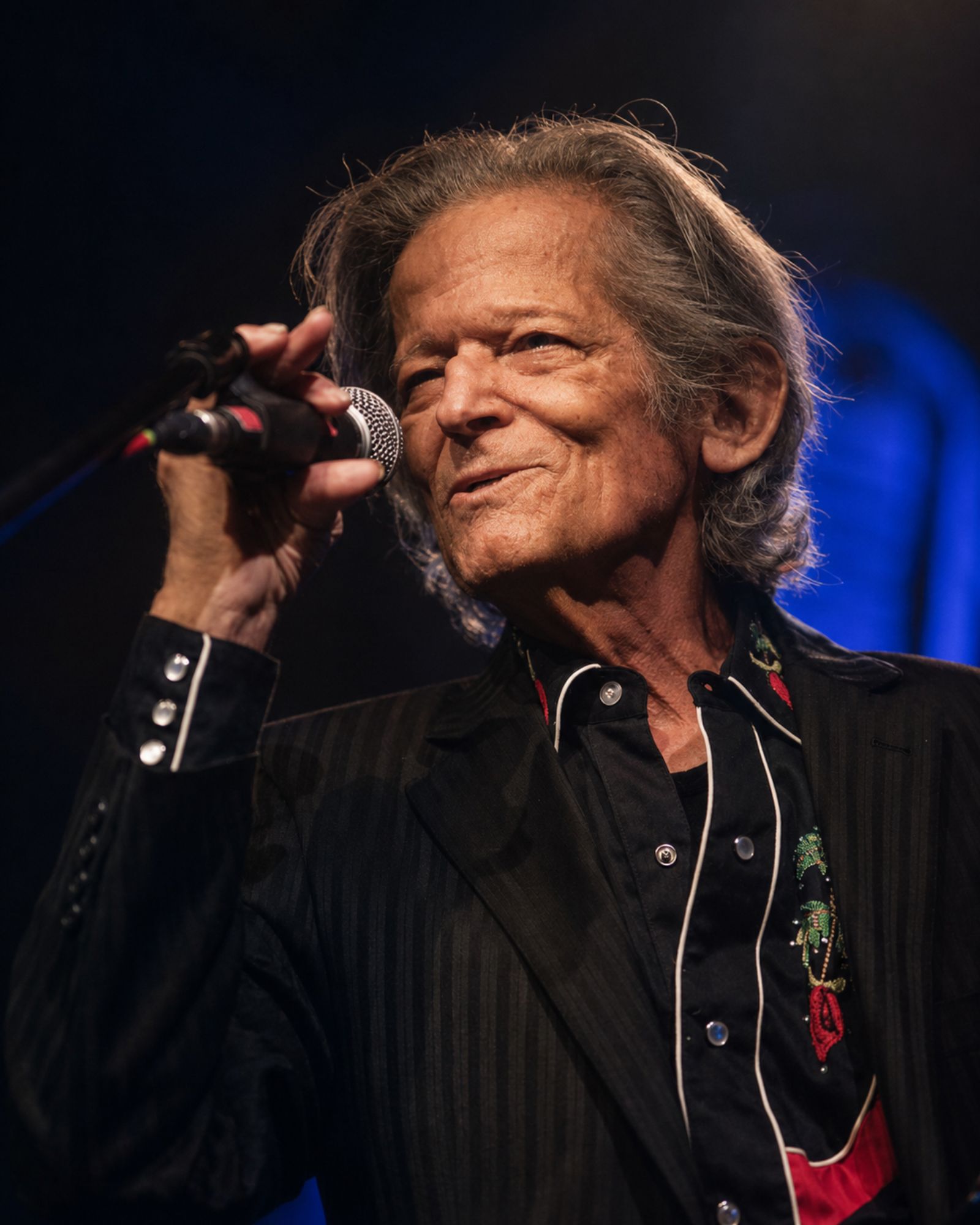
Johnny Rodriguez died quietly on May 9, 2025, in San Antonio, surrounded by family. He was 73. There was no giant public goodbye, no dramatic final curtain, and no weeklong industry spectacle. Just a soft ending for a man whose voice had once carried far enough to change the shape of country music.
For many fans, the news landed with a strange heaviness. Johnny Rodriguez was never the loudest star in the room, but his presence mattered. He came from South Texas with a voice that sounded lived-in, honest, and unmistakably his own. In an era when country music often seemed to have one approved image, Johnny brought something different. He opened a door without asking permission.
The Voice That Made People Listen
Johnny Rodriguez grew up in Sabinal, Texas, and his path into music was not smooth or polished. He was discovered while singing behind bars, a detail that sounds almost too dramatic to be true, yet it became part of the story that people never forgot. What mattered most, though, was not the unusual beginning. It was the sound. Johnny Rodriguez sang with feeling that reached past the radio and into the listener’s chest.
His songs did not try too hard. They felt lived, vulnerable, and real. That was the kind of voice Nashville could use, even when Nashville did not always know what to do with it.
He was not just a singer. He was proof that country music could make room for more than one kind of dream.
George Strait’s Tribute Changed the Conversation
After Johnny Rodriguez’s passing, George Strait said what many people had been feeling. He spoke about Johnny as an early inspiration and made something very clear: Johnny Rodriguez helped show him that a guy from South Texas could belong in country music too.
That tribute hit hard because it came from George Strait, a man many consider the King of Country. When George Strait said Johnny Rodriguez mattered, it was not just a polite gesture. It was recognition. It was a public thank-you from one Texas giant to another.
George Strait’s words reminded people that influence is not always loud or formal. Sometimes it passes quietly from one generation to the next, through a radio speaker, through a stage show, through a young artist wondering if there is a place for him in the world.
Johnny Rodriguez Helped Build the Road
Country music has a long memory when it wants to, but not always a fair one. Some artists become legends in the moment. Others do important work in the shadows and are only fully appreciated later. Johnny Rodriguez often seemed to live in that second category.
He had the respect of fellow artists. He had the ear of listeners. He had the kind of influence that does not always come with the biggest awards. Even Toby Keith’s team shared a tribute after his death, noting that Toby Keith had often called Johnny Rodriguez a major influence on his singing. That kind of admiration says a lot. Great artists notice one another, even across generations.
Johnny Rodriguez was one of those rare singers who could shape a style without forcing it. His phrasing, tone, and emotional honesty left a mark on the music that followed.
A Final Gift Before He Was Gone
In one of the more touching details from the final chapter of his life, Johnny Rodriguez got to hear a new version of “Pass Me By” released by his daughter, Aubry. That song was the one that first opened the door for him, the song that helped introduce his voice to the world. Hearing it return through his daughter must have felt like a full-circle moment, a small but meaningful blessing.
Not every artist gets that kind of ending. Not every family gets to share that kind of bridge between past and present. For Johnny Rodriguez, it was one more reminder that his music did not stop with him. It kept moving.
What Still Feels Unfinished
And yet, for all the love and respect that followed his death, there is still one painful truth hanging in the air. Johnny Rodriguez never heard the Country Music Hall of Fame call his name.
That absence is hard to ignore. It leaves people asking whether country music truly honored one of its own while he was still here to hear it. Maybe that is why the conversation around Johnny Rodriguez feels so emotional now. It is not only about loss. It is about recognition that came close, but not close enough.
Maybe that is the part that still feels unfinished.
Johnny Rodriguez left behind more than recordings. He left behind a route map. He left behind a reminder that country music is bigger when it makes space for voices from different places and different lives. And he left behind a legacy that became even clearer when George Strait said the quiet part out loud: country music might not have had a king without him.
That is not a small statement. It is the kind of statement that arrives late, but still matters. And for Johnny Rodriguez, maybe that is the best kind of ending available now: not silence, but memory. Not a final spotlight, but a truth that finally made it into the room.
Post navigation
Marty Robbins lived like a man who never believed in sitting still. He sang, he raced, he told stories, and he carried himself with the easy confidence of someone who had already decided that life was meant to be used up, not saved for later. That attitude made him a legend. It also made his body pay the price.
The first warning
In 1969, Marty Robbins suffered his first heart attack. For many people, that would have been the moment to step back, slow down, and rethink everything. But Marty Robbins was not built for retreat. Doctors performed a triple bypass, a serious operation that sounded almost frighteningly advanced for the time, and the recovery should have changed him. Instead, it seemed to sharpen his determination.
He returned to the road. He returned to the stage. He returned to NASCAR, where the roar of engines and the smell of fuel seemed to fit his restless spirit. Marty Robbins did not spend much time talking about illness. He did not turn his pain into a public speech. He kept moving, as if motion itself could outrun fear.
Marty Robbins acted like a man who believed the next song, the next race, and the next town were waiting for him no matter what his body said.
A life lived at full speed
That was the strange magic of Marty Robbins. He was not only a country music star. He was a storyteller with a voice that could sound tender, tough, lonely, and fearless all at once. He gave audiences characters, heartbreak, and adventure. He gave them songs that felt bigger than the room they were sung in.
Offstage, he lived with the same intensity. He loved racing. He loved performing. He loved the constant pull of the next challenge. That kind of life can look glamorous from the outside, but it often comes with a cost that only becomes clear later. For Marty Robbins, the cost was written in hospital visits, warning signs, and a heart that had already done more than it should have had to do.
The second heart attack
In 1981, Marty Robbins suffered another heart attack. Even then, he tried to reduce it to something ordinary, calling it “an extra bad case of indigestion.” That line says a lot about him. It was not just humor. It was also a shield. If he could name the pain as something smaller, maybe it would stay smaller. Maybe it would not become the kind of truth that changes everything.
But the body does not always listen to pride. It remembers what the mind tries to minimize.
The final months
On October 11, 1982, Marty Robbins was inducted into the Country Music Hall of Fame. It was a major honor, the kind that confirms a career long after the first applause has faded. He had earned his place among country music’s great voices, and the recognition should have felt like a finish line of sorts.
Instead, Marty Robbins kept going.
Less than a month later, on November 7, he climbed into a race car for what would be the last NASCAR run of his life in Atlanta. It was a gesture that felt perfectly like Marty Robbins: brave, stubborn, and a little defiant. He seemed to live by the idea that as long as he could still show up, he still belonged in the game.
Then, on December 2, his heart failed again. Six days after a quadruple bypass, Marty Robbins died at 57.
The farewell in Nashville
Fifteen hundred people gathered at Woodlawn Funeral Home in Nashville to say goodbye. The crowd was so large that it overflowed into three chapels and spilled down the hallway. Johnny Cash was there. Charley Pride. Roy Acuff. Eddy Arnold. Brenda Lee sang “One Day at a Time,” and the room held the kind of silence that only appears when people understand they are standing at the edge of history.
That funeral was not just a farewell to a singer. It was a farewell to a man who had poured himself into every room he entered. People did not come only because Marty Robbins was famous. They came because he had left something behind in them. His songs, his swagger, his warmth, his relentless spirit — all of it had made an imprint.
What Marty Robbins really left behind
The doctors fixed Marty Robbins’ heart twice, maybe more in spirit than in medicine. But the deeper truth is that Marty Robbins kept giving that heart away long before it stopped. He gave it to the music. He gave it to the crowd. He gave it to the racetrack. He gave it to anyone who needed a song that felt like it had lived a little before reaching them.
That is why his story still matters. Not because it ended too soon, though it did. Not because it was dramatic, though it certainly was. It matters because Marty Robbins showed what it looks like when a person refuses to live cautiously. He chose the road. He chose the stage. He chose the next lap, the next verse, the next moment of being fully alive.
In the end, maybe the doctors repaired the muscle. But Marty Robbins had already spent the heart itself.