HE DIED IN A SAN ANTONIO HOSPICE ON A FRIDAY, AND NO PUBLIC FUNERAL WAS EVER ANNOUNCED. THE GOODBYES ARRIVED ON PHONE SCREENS INSTEAD. Johnny Rodriguez was the second-youngest of ten children in a four-bedroom house in Sabinal, Texas, ninety miles from the border. He was eighteen and locked in a county jail cell when a Texas Ranger heard him singing through the bars and made a phone call to a promoter. That call is the entire career. Church choir. Jail cell. Nashville. Six number ones. On May 9, 2025, Johnny died in San Antonio after entering hospice care. He was 73. There was no service at the Ryman, no line outside a chapel. His daughter Aubry announced it herself in an Instagram post, writing that he had gone peacefully with family around him. The tributes came the same way — typed on phones. Sammy Arriaga wrote that Johnny had given him the courage to be a country singer with Latino roots. Then George Strait posted. Not a press statement. An Instagram story — the kind that disappears after a day. Strait, a South Texas boy himself, wrote that Johnny’s success made him think “maybe there was hope for a guy like me.” He opened that door in 1973. Carthage, Texas, put him in its Hall of Fame in 2007. Nashville’s has still never called his name. – Country Music
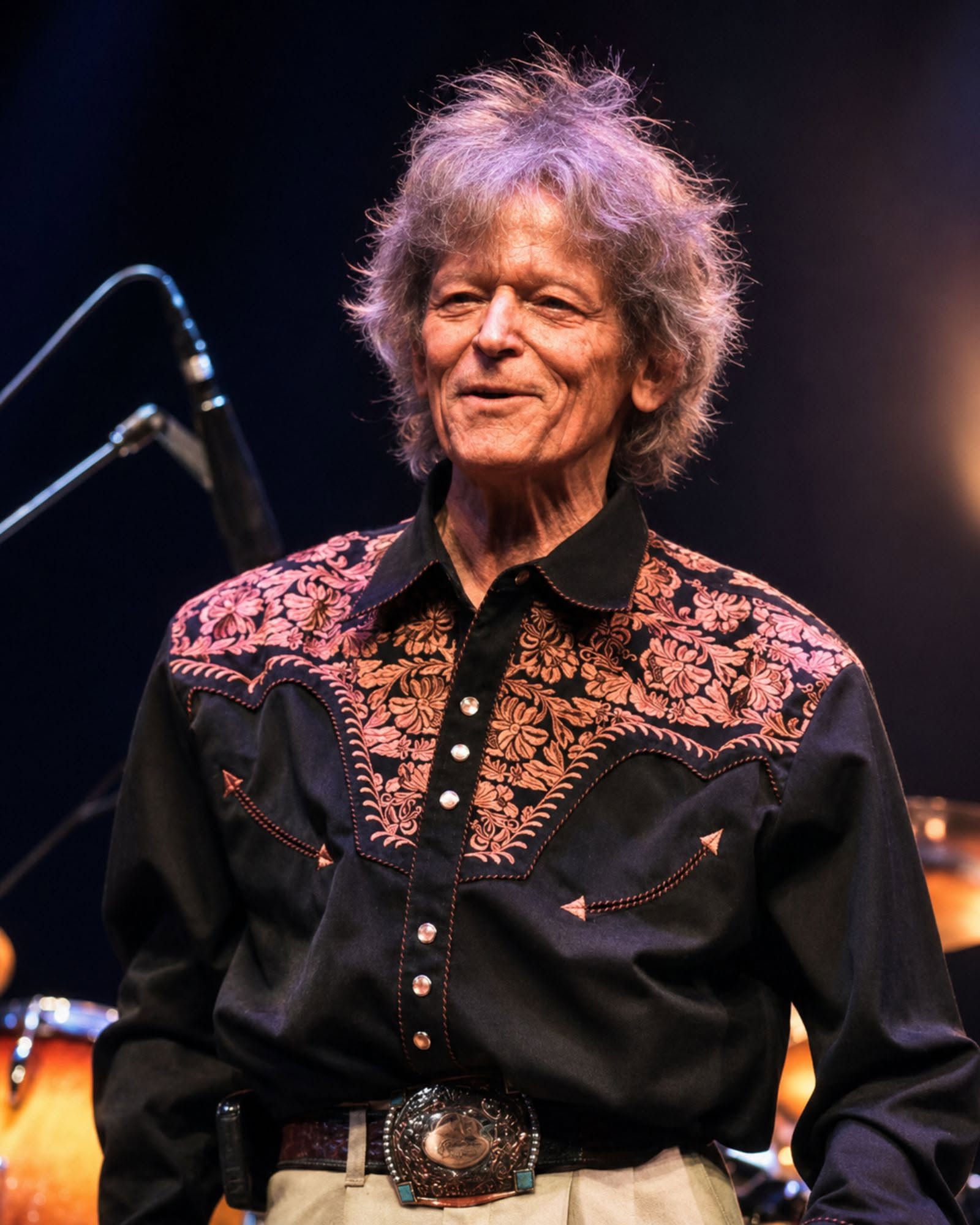
On a Friday in San Antonio, Johnny Rodriguez died in hospice care at the age of 73. The news did not arrive with a public farewell or a big formal service. Instead, it moved through family messages and phone screens, the modern way grief often travels now. His daughter, Aubry, shared that he had gone peacefully with family around him, and the tributes followed in the same quiet, immediate way.
For many fans, the sadness came with a second feeling: disbelief at how far his story had traveled, and how little of it still feels fully recognized. Johnny Rodriguez was born into a large family in Sabinal, Texas, and grew up in a home where music and hard work were part of everyday life. He did not arrive in country music through a polished industry pipeline. He arrived through hunger, talent, and luck that sounded almost like fiction. A Texas Ranger reportedly heard him singing while he was jailed as a teenager, and that moment helped set his future in motion.
A life that began far from Nashville
Johnny Rodriguez’s rise was remarkable because it came from so little formal access. He learned to sing in church, carried that sound into his early years, and eventually made his way to Nashville. From there, he went on to become one of the most visible Mexican-American voices in mainstream country music, earning six No. 1 hits and a place in the genre’s history that still deserves more attention than it has sometimes received.
That history matters because Johnny Rodriguez opened a door for singers who could see themselves in him. His success proved that a South Texas kid with a different background could stand beside the biggest names in country and belong there. That was not a small cultural shift; it was a signal to a whole generation.
The farewell happened online
There was no widely announced public funeral, no line outside a chapel, and no stage crowded with formal speeches. Instead, the goodbye moved through tribute posts and stories. Singer Sammy Arriaga said Johnny Rodriguez had given him courage as a country artist with Latino roots, and George Strait also offered a tribute in an Instagram story, recalling how Johnny Rodriguez’s success made him believe there might be room for a Texas singer like himself.
That detail says a lot about the times we live in. The deepest goodbyes are not always delivered from a podium anymore. Sometimes they appear briefly on a screen, then vanish. But even when the posts disappear, the impact stays.
What remains
Johnny Rodriguez did not just have a career. He had an opening act for other people’s dreams.
His death closes a chapter, but not the story. The songs remain. The influence remains. And for artists who came after him, the most important part may be that he showed up first and proved that the door could open.
Post navigation
When fans gathered at the Grand Ole Opry House to honor Loretta Lynn after her death on October 4, 2022, the room carried more than grief. It carried history. Loretta Lynn was 90 when she died at her home in Hurricane Mills, Tennessee, and the farewell that followed felt like a final chapter for one of country music’s most fearless voices.
Loretta Lynn’s story had always sounded larger than life, but it began in hardship. She rose from a poor Kentucky coal camp, married young, raised a family early, and taught herself guitar before turning her life into songs that were blunt, honest, and deeply human. She sang about marriage, poverty, heartbreak, and the hard truth of being a woman in a world that often expected silence.
At the celebration of life, the tributes came one after another. George Strait performed “Don’t Come Home A-Drinkin’,” Loretta Lynn’s first No. 1 hit. Tanya Tucker sang “Blue Kentucky Girl.” Keith Urban shared a voicemail Loretta Lynn had once left him, then performed “You’re Lookin’ at Country.” Each performance seemed to open another door into the same remarkable life.
Then Alan Jackson stepped onto the stage.
He did not choose one of Loretta Lynn’s signature songs. Instead, Alan Jackson chose “Where Her Heart Has Always Been,” a song he had written after losing his own mother. Before singing, Alan Jackson explained that Loretta Lynn reminded him of her. He described both women as sweet, genuine, outgoing, and unafraid to tell the truth plainly.
A Song That Carried Two Goodbyes
That choice gave the moment extra weight. Alan Jackson had written “Where Her Heart Has Always Been” for his mother’s funeral, and the song already held private grief. Singing it for Loretta Lynn turned the performance into something wider, as if one farewell could carry another. It was not just a tribute. It was a personal act of remembrance.
Some songs are written for one person, but they find their way into many hearts.
For decades, Loretta Lynn was known as the Coal Miner’s Daughter. But on that night, the title was only part of the picture. She was also a mother, a storyteller, a survivor, and a woman who gave country music a sharper honesty. Alan Jackson’s song did not try to compete with that legacy. It honored it with restraint and feeling.
As the final notes faded, the room was left with a quiet truth. Loretta Lynn had spent her life telling the world exactly who she was. In return, the world gathered to say goodbye with songs, memories, and love. And Alan Jackson, standing at the center of it all, reminded everyone that the deepest tributes are sometimes the simplest ones.
She reminded him of Mom. That was enough.