Grandma Somboon: After 80 Years of Chains, She Finally Sleeps in Peace. – Daily News
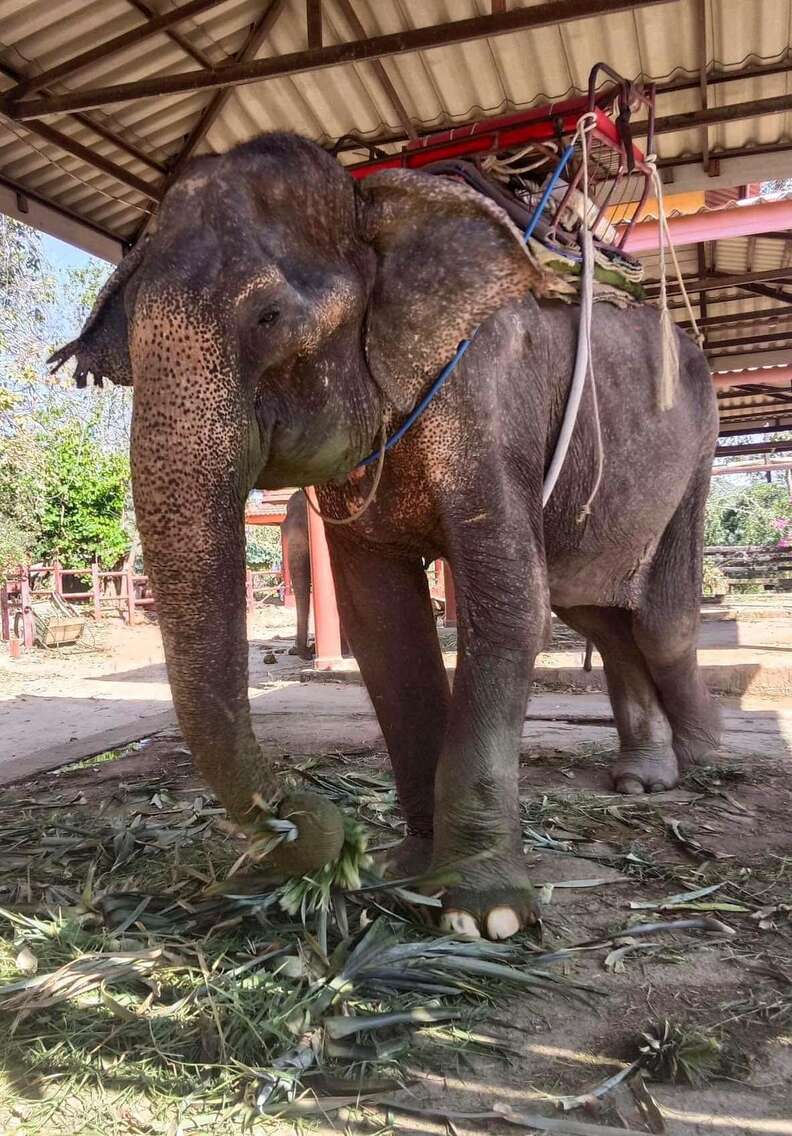
For eight long decades, Grandma Somboon knew only work. Stolen from the wild as a baby, she was robbed of the life she was meant to have and thrust into one of relentless labor. Day after day, year after year, she carried heavy loads in the logging industry, then shifted to the cruel demands of tourism—hauling tourists on her back for hours beneath the hot sun.
For 80 years, Somboon stood on her feet. No freedom. No family herd. No chance to rest.
By the time Save Elephant Foundation learned about her plight, she was frail and worn thin, her body showing the scars of a life denied. She was skinny, her skin dry and cracked, her teeth gone. But her eyes, though tired, still carried a quiet plea—for relief, for kindness, for rest.
The team knew they could not let her final years be spent in chains. They launched a mission to free her.
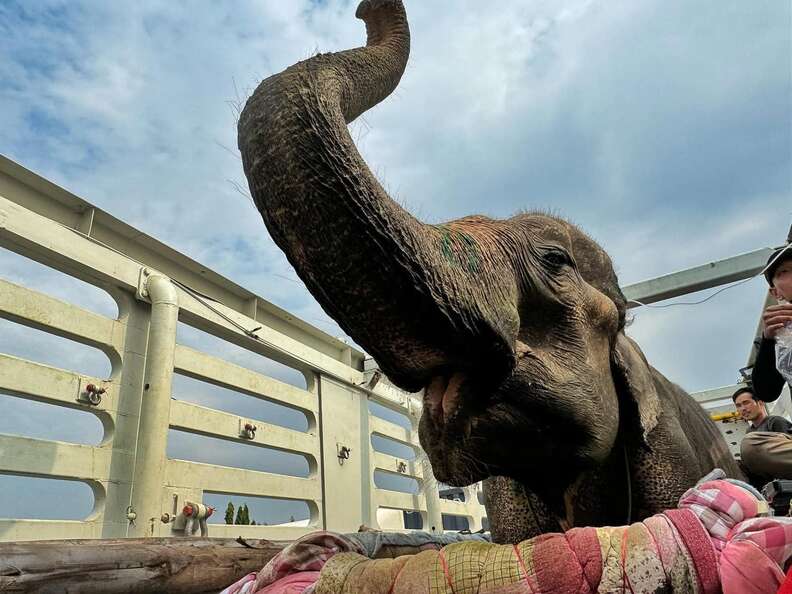
“It’s time for Grandma to be cared for well and allowed to rest,” they wrote.
And at last, in late January, the chains were cut for good. Somboon was loaded carefully for transport and brought to her new home: Elephant Nature Park sanctuary.
What happened next stunned everyone.
Rescued elephants often arrive broken in spirit, their trust shattered. Many take weeks before they dare to lie down, too anxious to surrender to sleep. But not Somboon.
Exhausted from her journey and a lifetime of hardship, she walked straight to the sand pile that had been prepared for her. And there, surrounded by the bustling sounds of the sanctuary, she lowered her weary body and slept. For the first time in 80 years, she wasn’t standing under the weight of chains—she was resting, safe at last.
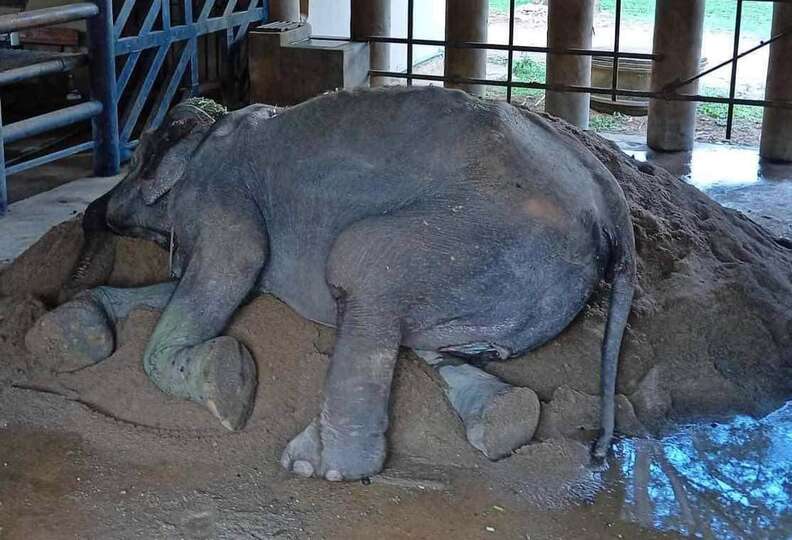
It was more than sleep. It was freedom.
When she awoke, her frail body struggled to rise again. Caretakers rushed to her side, gently lifting her to her feet, reassuring her she wasn’t alone anymore. Since then, they’ve watched over her closely, tending to every need, giving her the care she was denied for so long.
Now, Grandma Somboon is beginning her healing journey. Each day, she enjoys nutritious meals, leisurely walks, and long, playful mud baths that soothe her aching skin. Each day, she learns that no one will hurt her anymore. That her only job now is to live the life she was always meant to have—peaceful, free, and loved.
For the people who saved her, watching Somboon rediscover joy is the greatest reward. For Somboon, it is a chance to finally lay down the burdens she carried her entire life.
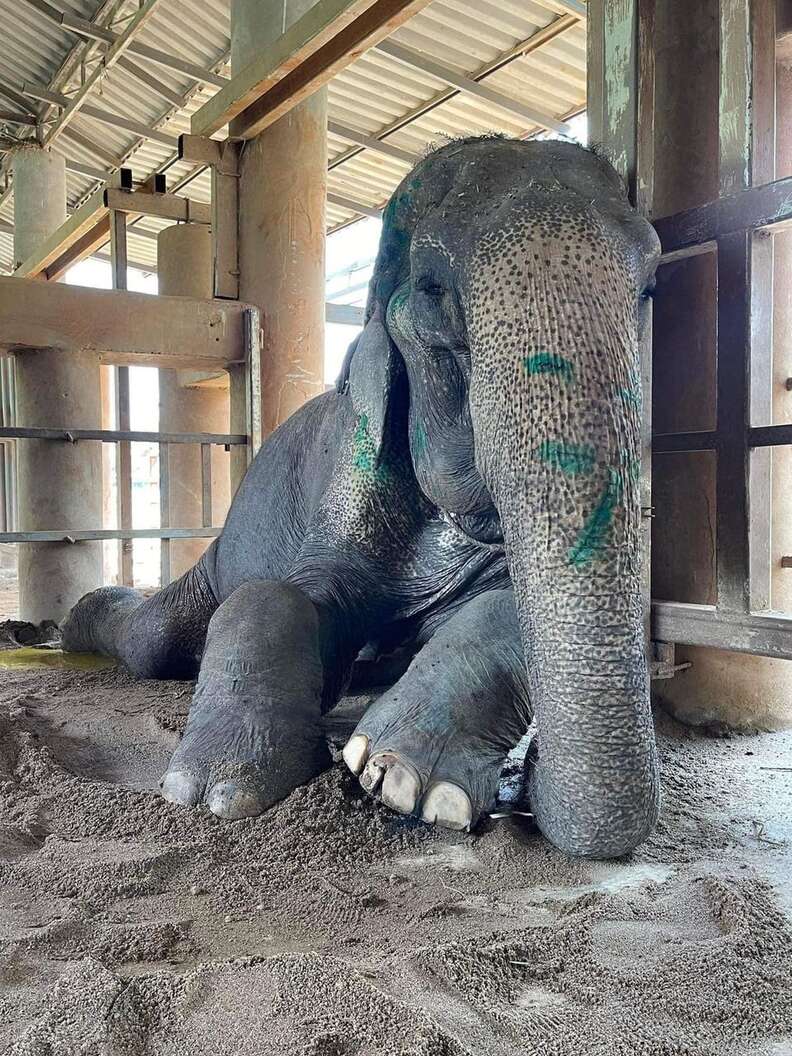
She may be frail, but she is no longer broken. She is Grandma Somboon—an elephant who survived the unimaginable, and who, in her final years, will finally know what it means to be cherished.
Because after 80 years of chains, the sweetest gift of all is rest.

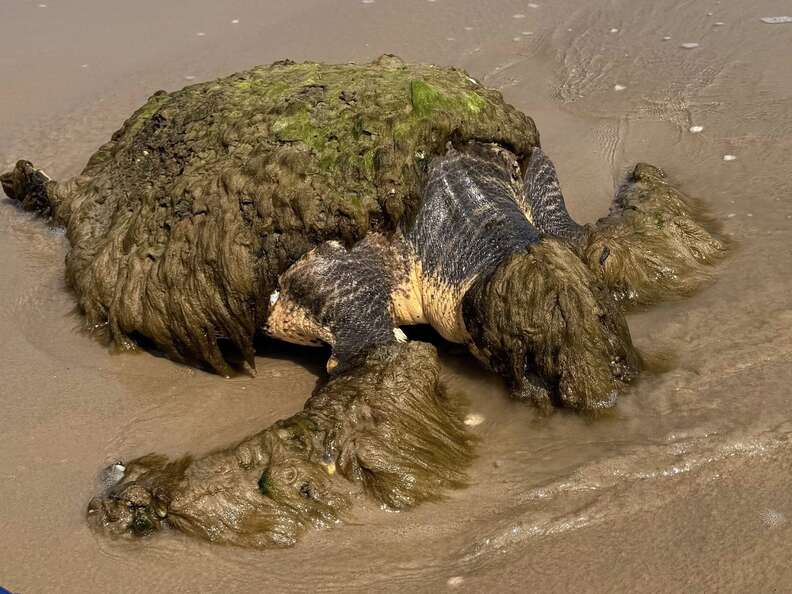
The beach looked ordinary that afternoon—waves rolling, gulls crying, shells scattered across the sand. But then a family walking along the Gulf Coast of Texas noticed something strange, an odd shape lying in the tide line. At first glance, it looked like a lump of seaweed and barnacles washed ashore. But as they drew closer, their hearts sank.
It wasn’t seaweed. It was a sea turtle.
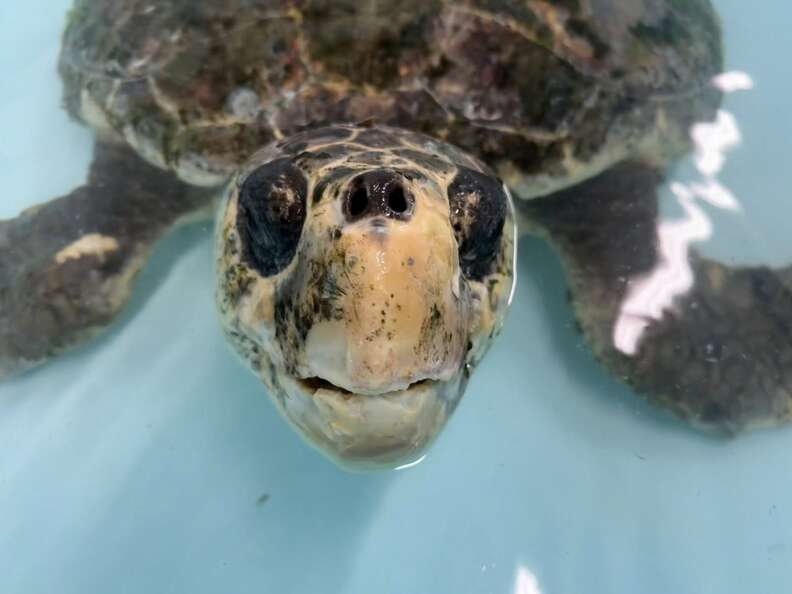
A loggerhead, her shell, face, and flippers were barely visible under a suffocating layer of algae, barnacles, and other sea growth. She was alive, but only just—her breaths shallow, her body weighed down by the living crust that had overtaken her.
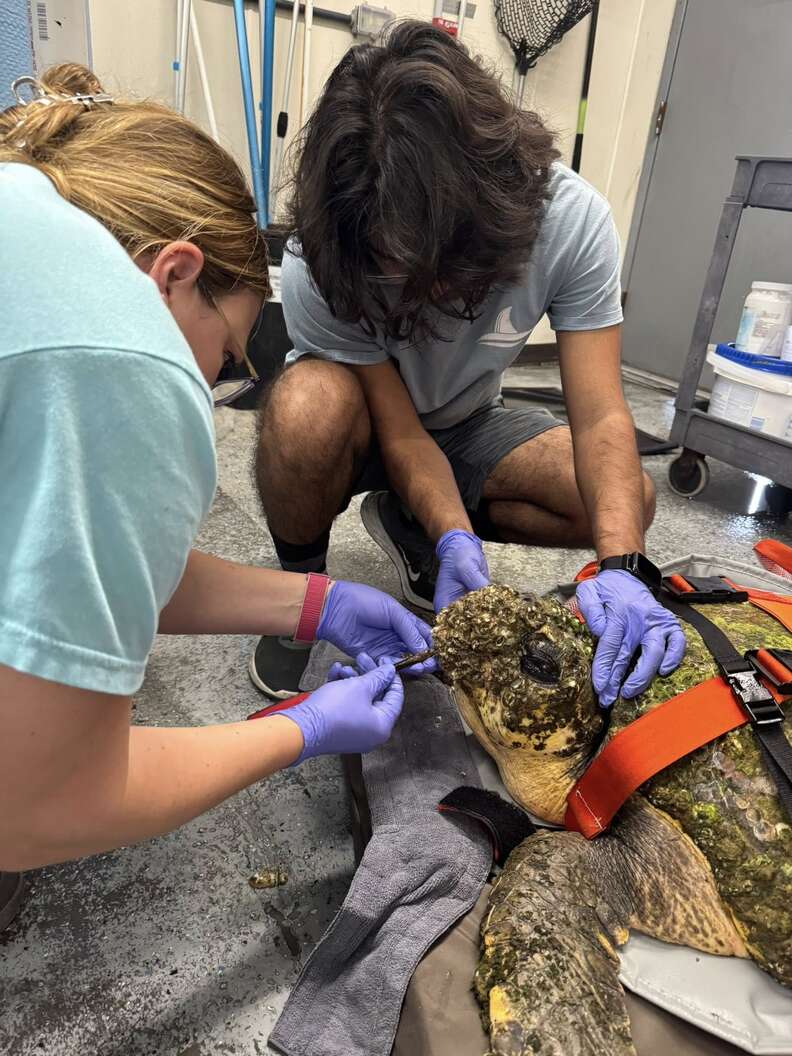
The family knew she didn’t have much time. They quickly called the Gulf Center for Sea Turtle Research (GCSTR), and within hours, a rescue team was on the beach. The turtle was carefully lifted and rushed to the GCSTR rehabilitation hospital, where staff immediately began assessing her condition.
It was heartbreaking, but not surprising. Many stranded turtles arrive in similar states—ill, weakened, unable to swim, and burdened by epibiota, organisms that cling to their shells when they no longer have the strength to keep them at bay.
“This patient washed in with a variety of algae, acorn barnacles, gooseneck barnacles, worms, crabs, skeleton shrimp, bryozoans, and other small invertebrates,” GCSTR explained. The turtle had become a moving island of parasites, her life force drained with every passing day.
Rescuers went to work.
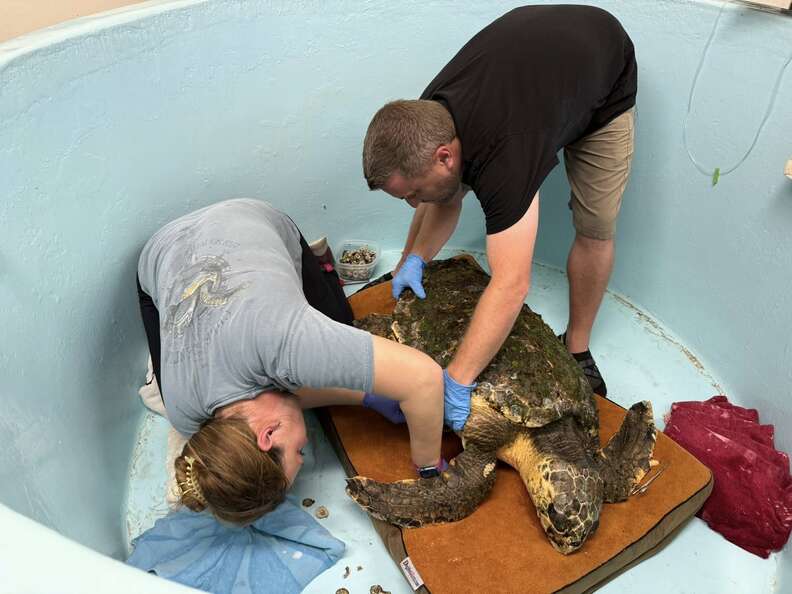
Day after day, they gently removed the hardened barnacles from her shell, flippers, and even her mouth. They cleaned the algae that clung to her, freed her skin from embedded growths, and lightened the terrible weight that kept her from moving. Slowly, as the last barnacle was pried free, relief washed over her tired body. For the first time in months—maybe years—she was no longer a prisoner to the sea life that had overtaken her.
“She was weighed down, with barnacles embedded in her soft tissues and mouth,” GCSTR shared. But now, finally, she was free.
And with freedom came life.
Soon after her cleaning, the loggerhead began eating again. She swam more easily, her movements no longer sluggish but strong and purposeful. Day by day, she gained weight. Day by day, her spirit returned.
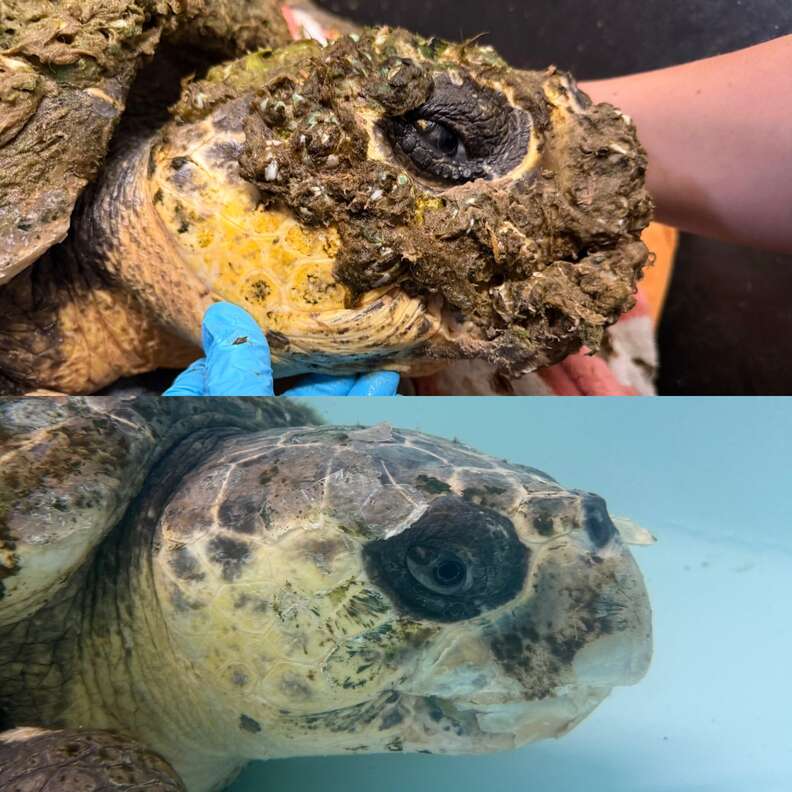
For the rescuers, watching her transformation was nothing short of miraculous. To see an animal once on the brink of death now glide through the water again was a reminder of why they do this work.
She is not out of danger yet. Recovery takes time, and her body still needs healing. But she is fighting. She is eating. She is swimming. And she is proving that even when buried under the heaviest burdens, life can still break through.
One day soon, if her recovery continues, the rescuers hope to return her to the ocean—the vast blue home she belongs to. And when that day comes, she will slip back into the waves unburdened, free to swim where the current carries her.
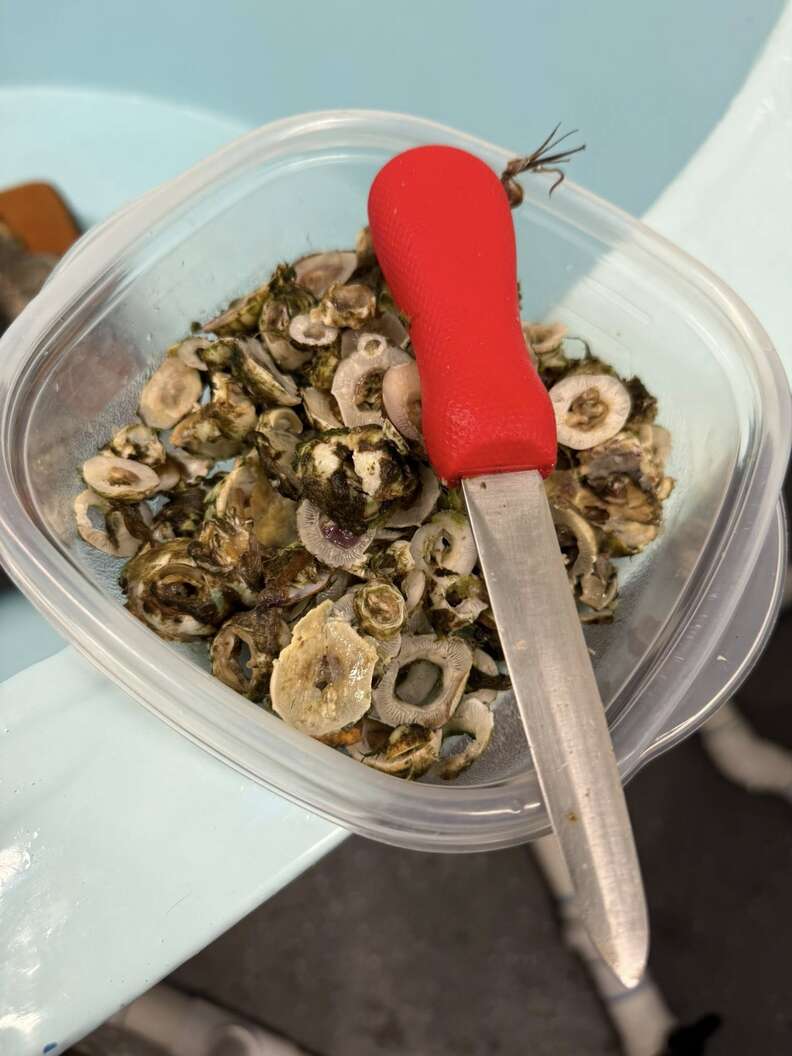
Her survival is more than just one turtle’s story. It is a reminder of the power of compassion—the strangers who stopped on a beach, the scientists who labored over every detail of her care, the countless people who now cheer her on from afar.
For now, she remains in recovery. But her eyes are brighter, her body stronger, and her spirit unbroken.
And when she returns to the sea, she will carry with her not just her own resilience—but the love of every person who believed she was worth saving.