GEORGE JONES LET TAMMY WYNETTE KEEP THE HOUSE, THE BUS, AND THE BAND — BUT HE COULDN’T STOP COMING BACK TO THE MEMORY. When Tammy Wynette’s divorce from George Jones became final in 1975, it did not end like a clean country song. There were no tidy goodbyes, no easy villain, no painless way to split a life that had been sung in front of the whole world. George had given her plenty of reasons to leave. The drinking, the disappearances, the missed shows, the chaos that kept turning love into damage. But when it came time to fight over what they had built, he later said he didn’t. Tammy kept the house, the tour bus, the band, and their daughter. George walked away with the voice everyone knew — and the wreckage only he could carry. That is what made their songs together hurt so much after the divorce. They did not sound like two stars acting out heartbreak. They sounded like two people standing inside the ruins of something they both still recognized. Some loves end. Some keep singing long after the papers are signed. – Country Music
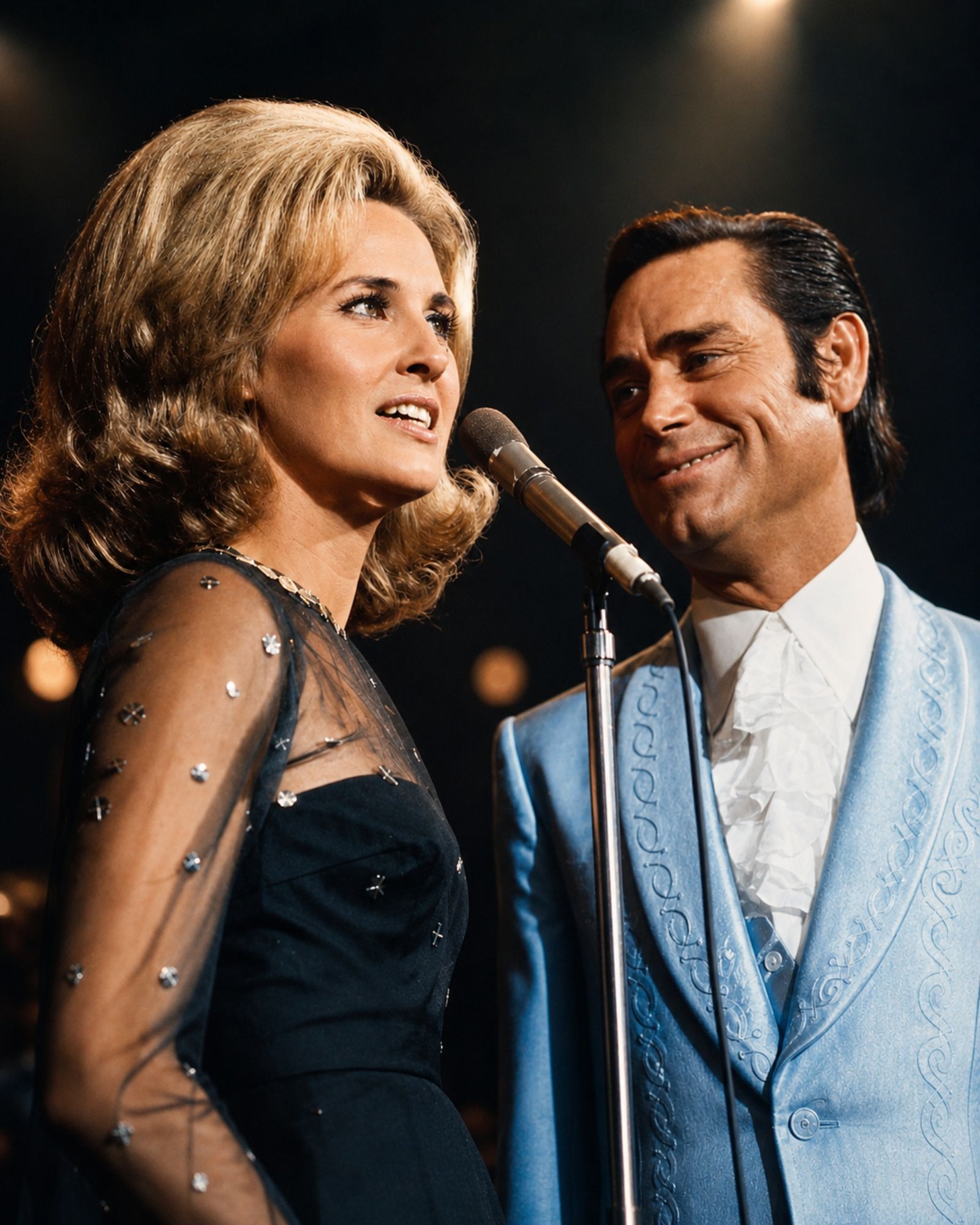
When Tammy Wynette’s divorce from George Jones became final in 1975, it did not feel like a clean ending. It felt like the closing of a chapter that had already been torn at the edges for years. Their story was never simple, and the final papers did not make it simple either. There was no neat farewell, no easy villain, and no way to divide a life that had been lived so loudly in public.
By the time the marriage ended, George Jones had already become one of the most complicated figures in country music. He was brilliant, unpredictable, beloved, and often impossible to hold onto. Tammy Wynette, meanwhile, had grown into her own force, with a voice that could sound fragile and unbreakable at the same time. Together, they made music that seemed to understand heartbreak before the listeners even did.
A Marriage Built on Fame and Friction
George Jones and Tammy Wynette were more than a celebrity couple. They were a country music event. Their voices fit together in a way that made every duet feel personal, almost too personal, as if listeners were hearing a private argument and a private apology at once. Behind the applause, though, there were real strains. The drinking, the disappearing acts, the missed commitments, and the instability all left marks that could not be hidden forever.
Tammy Wynette did what many people do when love becomes too heavy: she kept trying until she could not anymore. By the mid-1970s, the marriage had reached a breaking point. The divorce was painful, but it was also necessary. It was the legal end of a relationship that had already been damaged in ways the public could only guess at.
What Tammy Wynette Kept
When the divorce settlement was decided, George Jones did not make a fight over everything. Tammy Wynette kept the house, the bus, the band, and their daughter. Those were not small things. They were the center of a working life, the practical pieces that held a career together. In a sense, Tammy Wynette kept the machinery of motion, the things that allowed life to keep moving forward.
George Jones walked away with something less visible but harder to measure: the weight of memory. He was still George Jones, still the man with one of the greatest voices in country music, but the ending left a mark. Sometimes what a person gives up is not the property or the money. Sometimes it is the version of life that might have been different if the damage had stopped sooner.
Some endings are written in paperwork. Others stay alive in the music.
The Songs Still Hurt
What made George Jones and Tammy Wynette so unforgettable after the divorce was the way their songs together continued to ache. They did not sound like two performers pretending to feel brokenhearted. They sounded like two people who still recognized the ruins of what they had once built. That is why their duets carried so much emotional force. Every harmony seemed to hold a memory. Every pause seemed to remember something that had been lost.
Fans could hear it, even if they did not know every detail. There was tenderness there, but also regret. There was love, but love that had already been tested too many times. Their music became a place where the ending of the marriage and the beginning of the legend overlapped.
George Jones and the Memory That Would Not Leave
George Jones could move on in some ways, but he could not fully outrun what had happened. That is the strange thing about a life lived in the spotlight: people think the public only remembers the music, but the artist often remembers the history behind it. For George Jones, Tammy Wynette remained part of the story even after the marriage was over. Not in a simple, nostalgic way, but as a memory that kept returning with force.
The past does that. It shows up in songs, in interviews, in familiar places, and in the silence between performances. George Jones had a voice that could make pain sound beautiful, but the real pain was not always easy to sing away. The divorce may have ended the marriage, but it did not erase the bond, the conflict, or the years they spent building something bigger than either of them alone.
Why Their Story Still Matters
People still talk about George Jones and Tammy Wynette because their story feels human in a way that fame cannot hide. They loved, fought, lost, and kept going. They made music that reflected real life instead of polished fantasy. And when the marriage ended, Tammy Wynette kept the house, the bus, and the band, while George Jones kept carrying what could not be handed over.
That is why their story still resonates. Some loves end. Some keep singing long after the papers are signed. George Jones and Tammy Wynette proved that the final word in a relationship is not always the end of feeling. Sometimes the ending just becomes another verse.
Post navigation
People love to treat Me and Bobby McGee like a road trip anthem. It gets blasted from car speakers, sung with the windows down, and passed around like a badge of freedom. But beneath the easy sing-along feeling, there is something much sadder, quieter, and more human going on. Kris Kristofferson did not write a simple celebration. He wrote loss in disguise.
That is what makes the song last. On the surface, it moves like a bright memory: two people traveling, laughing, drifting through open roads and small-town moments. But if you listen closely, the song is already looking backward. It is not happening in the present tense. It is a remembrance. Bobby is already gone before the story fully begins.
A Happy Song That Arrives Too Late
One of the most powerful tricks in the song is its time frame. So much of it is told as if the speaker is reaching back through memory, trying to hold onto someone who cannot be held anymore. That choice changes everything. Every image of motion and freedom carries an ache underneath it. The highway does not feel endless. It feels temporary. The joy does not feel secure. It feels borrowed.
That is why the song hits so hard. Kristofferson lets the listener feel the warmth first. He gives us the movement, the chemistry, the sense of being alive beside someone who understands us. Then, almost without warning, the bottom drops out. The emotional shift is not loud. It is devastating because it is quiet.
“Freedom’s just another word for nothing left to lose.”
People often quote that line as if it is a victory statement, something to print on a shirt or frame on a wall. But inside the song, it lands differently. It sounds less like triumph and more like resignation. It is the voice of someone who has reached a place where loss has already done its work. Freedom, in that moment, is not glamorous. It is what remains when everything else is gone.
Why the Line Hurts Instead of Inspires
The line is famous because it is simple, but its simplicity is deceptive. It does not mean that having nothing is a beautiful form of liberation. It means there is no more fear because there is nothing left to risk. That is a lonely kind of freedom. It is the freedom of exhaustion, detachment, and grief.
That is why the song feels so different when you stop treating it like a party soundtrack. It becomes a quiet elegy. A funeral does not always have to sound slow or formal. Sometimes it sounds like a person remembering the best days of their life and realizing those days are over. Sometimes it sounds like laughter that no longer has anywhere to go.
The Genius of Emotional Misdirection
Kris Kristofferson understood something many writers miss: if you want to break a heart, do not start with the break. Start with the attachment. Let the listener believe in the people, the road, and the freedom. Let them enjoy the moment. Then remove the person who made the moment matter.
That emotional misdirection is what gives the song its power. It is not asking us to watch heartbreak from a distance. It invites us to live inside the happiness first. By the time the sadness appears, it feels personal. We are not just hearing about loss. We are losing something ourselves.
This is why Me and Bobby McGee survives every generation. It can be sung loudly, but it is built from grief. It can feel upbeat, but its foundation is memory. It can sound like freedom, but it keeps pointing back to absence. That tension is what makes it unforgettable.
The Real Question Behind the Chorus
So the next time the chorus comes on and everybody sings along without thinking, there is a better question to ask. Not whether the song is happy or sad, but what kind of freedom it is really describing. Is it liberation, or is it what grief feels like after it has stripped everything away?
That question does not ruin the song. It deepens it. It turns a familiar classic into something more honest. The greatest songs often do that. They give us a melody we can sing and a truth we have to sit with later.
And maybe that is the real brilliance of Kris Kristofferson’s writing. He did not just write about leaving. He wrote about what it feels like when the leaving is already done, and all that remains is the echo.