GARTH GOT A STADIUM FAREWELL. GEORGE STRAIT GOT RECORD-BREAKING CROWDS. LORETTA LYNN WENT HOME QUIETLY ON A TUESDAY MORNING. Loretta Lynn had already done what country music once thought a woman was not supposed to do. First woman to win CMA Entertainer of the Year. First female country artist with a gold album. Sixteen No.1 hits. A Presidential Medal of Freedom. Songs radio stations tried to ban because she wrote too honestly about marriage, motherhood, cheating men, birth control, and women who were tired of being quiet. She did not need a farewell tour to prove what she meant. On October 4, 2022, Loretta died peacefully in her sleep at her ranch in Hurricane Mills, Tennessee. She was 90. No final stadium. No last walk to center stage. No closing speech under the lights. Just home. And maybe that was the part that fit her best. Loretta had spent her whole life turning ordinary rooms into country music — kitchens, bedrooms, porches, coal camps, places where women told the truth because nobody else was listening. Some artists need a final roar. Loretta Lynn left like the mountain girl she had always been: quietly, at home, with every song still speaking for her. – Country Music
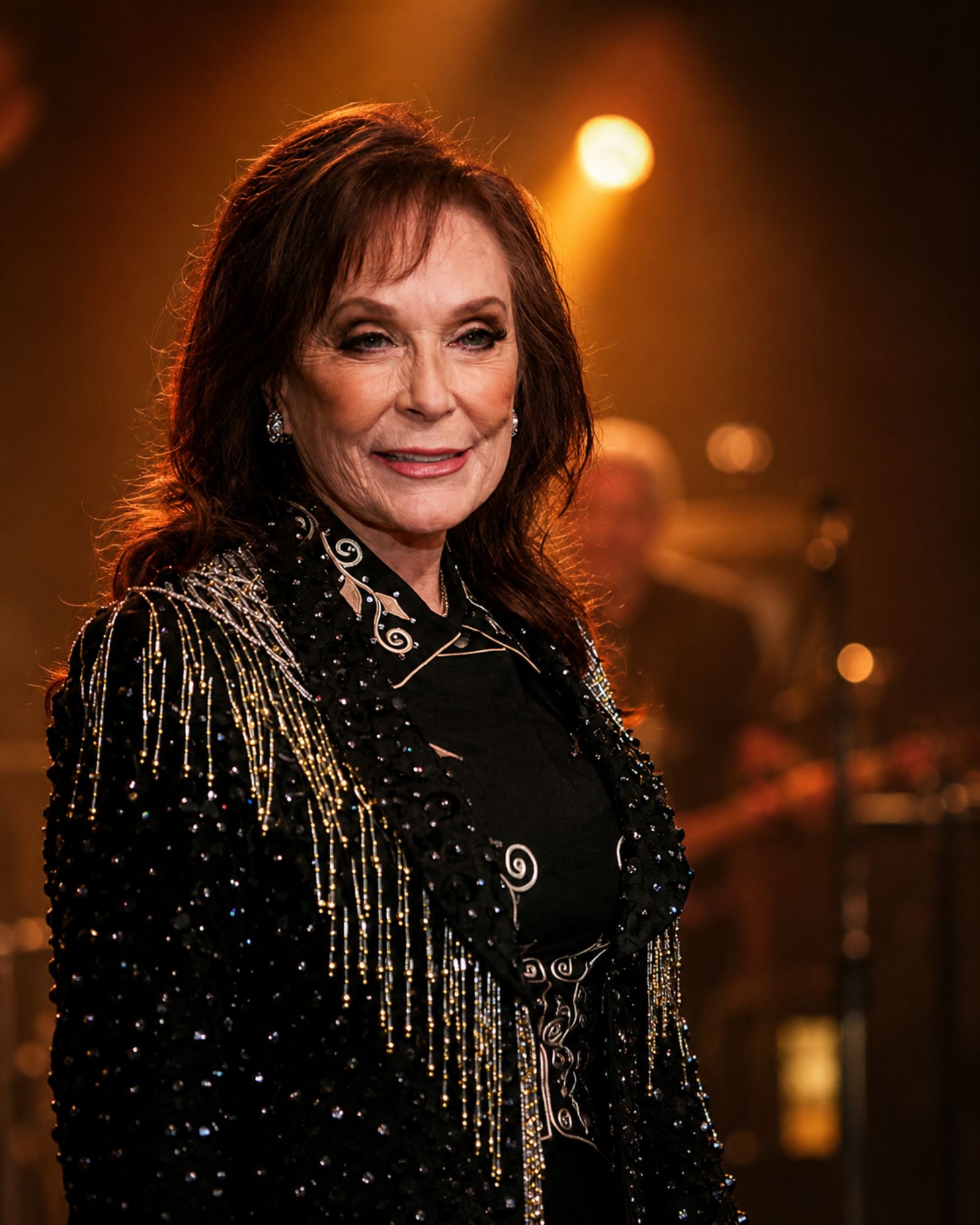
Loretta Lynn’s Quiet Farewell: The Country Legend Who Never Needed a Final Stadium Bow
Garth Brooks got a stadium farewell. George Strait got record-breaking crowds. Loretta Lynn went home quietly on a Tuesday morning.
That contrast says a lot about country music, but it says even more about Loretta Lynn. She did not build her legacy around spectacle. She built it around truth. Long before she became a legend, Loretta Lynn was already saying the things many people were afraid to say out loud.
A woman who changed the rules
Loretta Lynn had already done what country music once thought a woman was not supposed to do. She became the first woman to win CMA Entertainer of the Year. She became the first female country artist to earn a gold album. She scored 16 No. 1 hits. She received the Presidential Medal of Freedom. And she did all of it while writing songs that sounded like real life, not polished fantasy.
Her music talked about marriage, motherhood, cheating men, birth control, hard work, and the daily pressure of being a woman in a world that expected silence. Some radio stations tried to ban her songs because she was too honest. That only seemed to make her stronger.
Loretta Lynn did not sing from a distance. She sang from inside the life she was living.
From humble beginnings to country royalty
Loretta Lynn’s story began far from the bright lights of Nashville. She grew up in poverty in Butcher Hollow, Kentucky, and the sense of struggle that shaped her childhood never left her music. She sang about working people because she was one of them. She knew what it felt like to count every dollar, to carry responsibility too young, and to keep going anyway.
That background gave her songs their force. When Loretta Lynn sang, listeners believed her because she was not pretending. She wrote about the lives many country stars only brushed past, and she gave women a voice when the genre was still learning how to make room for one.
The songs that made people listen
Some artists are remembered for one signature hit. Loretta Lynn gave country music a whole shelf of them. Her catalog became a kind of conversation with America, one verse at a time. She was sharp, funny, stubborn, and deeply human. Her songs could make people laugh, nod in recognition, or feel a little exposed because she had put their private thoughts into words.
She did not need a farewell tour to prove what she meant. By the time she reached the end of her life, Loretta Lynn had already turned ordinary rooms into country music: kitchens, bedrooms, porches, coal camps, and every place where women told the truth because nobody else was listening.
Her final homecoming
On October 4, 2022, Loretta Lynn died peacefully in her sleep at her ranch in Hurricane Mills, Tennessee. She was 90 years old. There was no final stadium, no last walk to center stage, no closing speech under the lights. Just home.
And maybe that was the part that fit her best.
Loretta Lynn’s farewell was quiet, but her life had never been small. She had spent decades making sure women like her were heard. She had stood at the center of country music and spoken plainly in a world that often preferred polished answers. When the time came, she left the same way she had often lived: on her own terms.
A legacy that still feels alive
Even now, Loretta Lynn’s influence is everywhere. Modern country artists still draw from the honesty she made famous. Songwriters still study the way she could tell a hard truth without losing warmth. Fans still return to her music because it feels lived-in, not manufactured.
That is why her quiet passing felt so moving. It was not a grand ending designed to compete with anyone else’s farewell. It was a reminder that some legacies do not need fireworks. They last because they were built on something stronger.
Loretta Lynn went home quietly on a Tuesday morning. But the world she helped change is still listening.
Post navigation
Merle Haggard did not sing “Tonight the Bottle Let Me Down” to make drinking sound romantic. He sang it because the one thing that was supposed to numb the hurt had finally stopped working.
That is the gut punch.
This is not a party song. It is not a hangover song either. It is the moment a man realizes his last coping mechanism has quit on him. The glass is full, he is still swallowing, and somehow he still feels everything.
Merle did not dress that truth up. No big confession. No promise to change. No dramatic speech from the end of the bar. Just a man sitting there with a drink in his hand, discovering that the bottom had a basement.
That was what made him dangerous as a songwriter. He did not turn pain into a lesson. He turned it into something you could recognize before you were ready to admit it.
A Song That Refused to Pretend
Some drinking songs make the bottle sound like escape. Merle Haggard made it sound like the moment escape stopped working. That is why the song hits so hard. It does not celebrate the bottle. It exposes it.
There is a raw honesty in the way the idea lands. The night is still there. The ache is still there. The loneliness is still there. The bottle is present, but it cannot do the job anymore. That is not rebellion. That is exhaustion.
When people hear Merle Haggard, they often hear the steel in his voice first. What they sometimes miss is the vulnerability underneath it. He could sound tough without sounding fake. He could sound weary without sounding weak. That balance is rare, and it is part of why his music still feels alive.
The Man Behind the Line
Merle Haggard understood pain because he did not keep it at a distance. His life carried real detours, hard consequences, and long stretches of self-destruction and reflection. He did not write from a safe place on the outside. He wrote from inside the mess.
That is why “Tonight the Bottle Let Me Down” lands like a confession even when it is delivered with restraint. The song does not need to shout. It knows the listener will hear what is being said between the lines: the bottle was never the solution, only the pause button.
And sometimes even the pause button fails.
The bottle didn’t save Merle Haggard that night. It just proved how deep the pain had gone.
Why the Song Still Feels Personal
People keep returning to Merle Haggard because his songs do not feel manufactured. They feel lived in. He had a gift for writing about disappointment, regret, pride, and survival in a way that felt close enough to touch.
That is why this song still matters. Many listeners have known the same moment in a different form. Maybe it was not a bottle. Maybe it was a distraction, a habit, a relationship, a screen, or some other escape that used to help and then suddenly did not. The feeling is the same: whatever used to cover the wound has slipped away, and the wound is still there.
Merle Haggard never asked the listener to admire the pain. He asked the listener to recognize it.
The honesty is the hook
That is what makes the song unforgettable. It does not offer a polished ending. It offers recognition. And recognition can be more powerful than advice. A listener hears it and thinks, Yes, that is exactly how it feels when the thing that used to help stops helping.
In that sense, Merle Haggard was writing about more than alcohol. He was writing about disappointment in its purest form: the moment you realize the object of your trust has failed you.
What Merle Haggard Left Behind
Merle Haggard’s legacy is not built only on hits. It is built on emotional truth. He wrote with the plainspoken force of someone who had seen enough to stop pretending. That is why his songs age well. They are not locked to a trend. They are locked to a feeling.
“Tonight the Bottle Let Me Down” remains powerful because it tells the truth many people avoid saying out loud. The deepest pain is not always loud. Sometimes it shows up quietly, in the silence after the coping mechanism fails.
Merle Haggard knew that silence. He wrote it into a song. And in doing so, he gave listeners something more valuable than comfort. He gave them honesty.
That is the reason the song still hurts. Not because it glorifies the bottle, but because it reveals the moment the bottle can no longer hide the hurt.
Merle Haggard did not sing for the illusion. He sang for the truth beneath it. And that truth still hits hard today.