GARTH BROOKS SANG ABOUT HIM BEFORE THEY EVER MET — THEN TRIED TO GIVE HIM HALF HIS LIVER WHEN HE WAS DYING. Chris LeDoux won the world bareback riding championship in 1976. Then he recorded 22 albums in a friend’s basement, sold cassettes from the back of his truck at rodeos, and almost nobody outside the cowboy circuit knew his name. Then Garth Brooks — a young nobody from Oklahoma — put LeDoux’s name in his very first single. Overnight, the world discovered what rodeo fans had known for years. When LeDoux was diagnosed with a fatal liver disease in 2000, Brooks didn’t send flowers. He offered part of his own liver. It wasn’t compatible. But LeDoux never forgot. “He’s kind of like my guardian angel,” LeDoux said. “Every time I need some help, he’s there.” He got a transplant from another donor. He made two more albums. Then the cancer came back, and this time there was no angel big enough to stop it. – Country Music
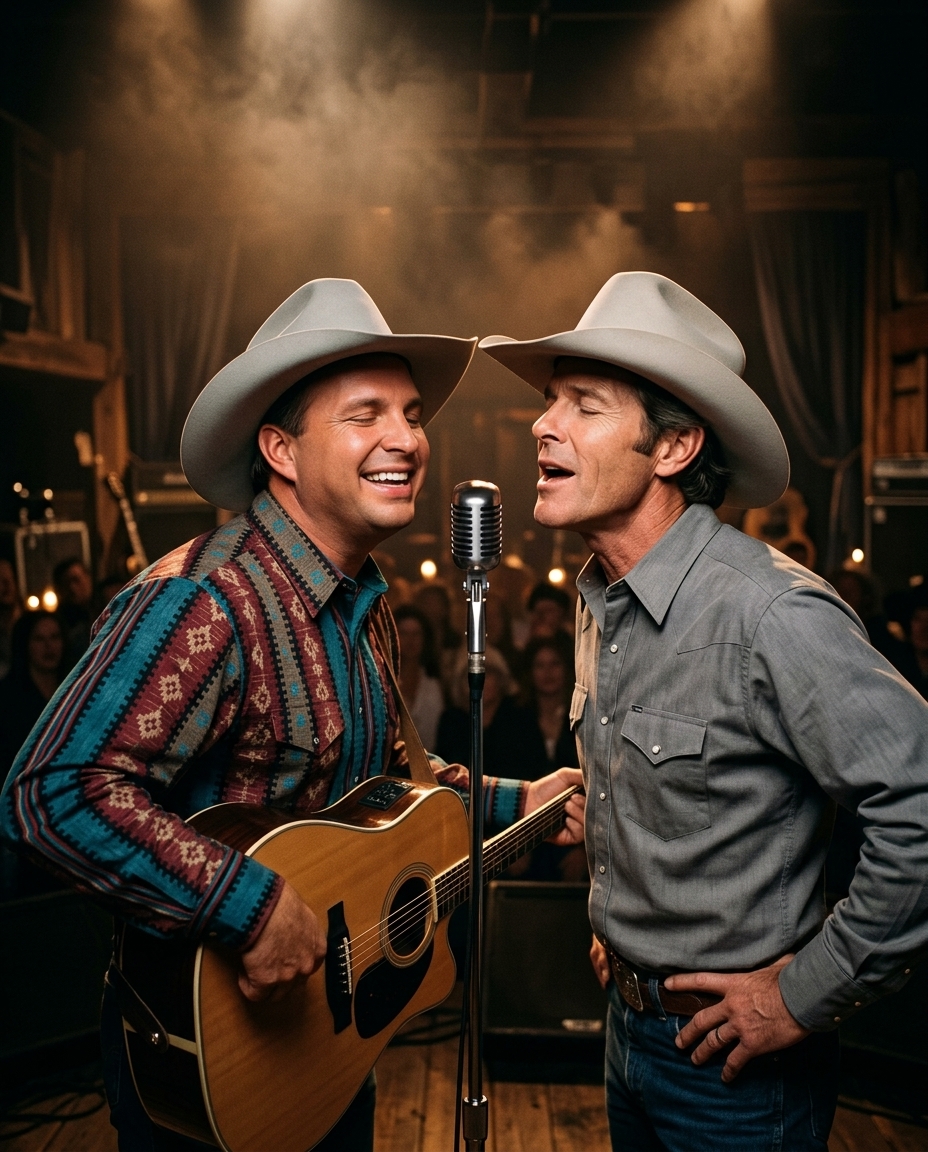
Before Nashville fully knew the name Chris LeDoux, rodeo fans already did. Long before the country music industry opened its doors, Chris LeDoux had built a reputation the hard way: in dust, danger, and silence. Chris LeDoux was not created by a label or a radio campaign. Chris LeDoux was shaped in rodeo arenas, where applause came fast and pain lasted longer.
In 1976, Chris LeDoux won the world championship in bareback riding, a title that would have been enough for most people to build a lifetime around. But Chris LeDoux was never just one thing. After the rides were over, Chris LeDoux kept another dream alive by recording songs about the life he knew best. Those songs were not polished to impress executives. They were honest, rough-edged, and full of the people, places, and heartbreaks of the cowboy world.
Chris LeDoux recorded album after album outside the mainstream system, selling tapes at rodeos and out of the back of his truck. It was grassroots in the truest sense. Fans did not discover Chris LeDoux through glossy magazine covers. They found Chris LeDoux because the songs felt real. They sounded like campfire stories, long highways, hard falls, and the kind of pride that does not need explanation.
The Song That Changed Everything
Then came a young singer from Oklahoma named Garth Brooks.
When Garth Brooks released “Much Too Young (To Feel This Damn Old)”, one lyric landed with unusual force. Garth Brooks sang about a “worn-out tape of Chris LeDoux,” and with that single line, something shifted. For many listeners, it was the first time they had ever heard the name. For Chris LeDoux’s longtime fans, it felt like a private truth had suddenly been announced to the world.
That mention was more than a lyric. It was a bridge. Garth Brooks was still on the way up, but Garth Brooks used that early moment to point toward someone who had already earned respect the hard way. It said something about both men. It showed how deeply Garth Brooks admired Chris LeDoux, and it introduced Chris LeDoux to country fans who had never set foot near a rodeo arena.
Success followed, but Chris LeDoux never lost the spirit that made people trust him in the first place. Even after wider recognition came, Chris LeDoux still felt like one of the few artists whose songs had dirt on their boots.
When Admiration Became Something Bigger
In 2000, Chris LeDoux was diagnosed with a severe liver disease that changed everything. The news was frightening, and the road ahead was uncertain. At that point, Garth Brooks could have done what many people do in moments like that: send kind words, make a public statement, and hope for the best.
But Garth Brooks did something far more personal.
Garth Brooks offered part of his own liver to Chris LeDoux.
It was an extraordinary act, not because it would make headlines, but because it came from genuine loyalty and love. The donation was not possible in the end, because Garth Brooks was not a compatible match. Still, the gesture stayed with Chris LeDoux. It was not forgotten, and it was not treated lightly.
“He’s kind of like my guardian angel.”
That is how Chris LeDoux described Garth Brooks, and it is difficult to hear those words without feeling the depth behind them. Chris LeDoux knew what Garth Brooks had tried to do. Chris LeDoux understood that some friendships are proven not in speeches, but in what someone is willing to risk when it matters most.
The Time Chris LeDoux Bought — and the Ending Nobody Wanted
Chris LeDoux did receive a transplant from another donor, and for a while, it seemed like more time had been granted. Chris LeDoux returned to music. Chris LeDoux kept creating. Chris LeDoux made more albums and kept giving fans the voice they had always trusted.
But life was not finished being cruel. Cancer returned, and this battle was one Chris LeDoux could not outride. In 2005, Chris LeDoux died at just 56 years old.
That ending still hurts because the story carries so much grit, loyalty, and heart. Chris LeDoux lived like the songs were true because they were. Garth Brooks did not just honor Chris LeDoux in a lyric. Garth Brooks stood beside Chris LeDoux in the most human way possible when the stakes became painfully real.
That is why this story still lasts. It is not only about fame, or even music. It is about respect recognized early, friendship proven under pressure, and the kind of bond that leaves a mark long after the voices go quiet. Chris LeDoux may have started far from the spotlight, but by the end, Chris LeDoux had something even more lasting: a legacy built on truth, and a friend who was willing to give part of himself to keep that legacy alive a little longer.
Post navigation
Some country music stories are built on comeback tours, headline scandals, and long careers spent chasing one more hit. Connie Smith’s story feels different. It begins the way legends often do — with a voice so striking that people stopped what they were doing and listened. But what made Connie Smith unforgettable was not only how powerfully Connie Smith sang. It was also what Connie Smith was willing to leave behind.
When Connie Smith arrived in country music, there was nothing cautious about it. The debut was immediate, undeniable, and historic. Connie Smith’s first single shot to number one and stayed there for eight weeks, the kind of beginning most artists spend an entire lifetime hoping for. Connie Smith was only twenty-three years old. In a town that measured success by chart positions, radio spins, and crowded marquees, Connie Smith seemed to have everything lined up perfectly.
Nashville loves a fast rise. It always has. A new voice appears, bright and certain, and suddenly every door opens at once. For Connie Smith, that moment came with all the usual promises: bigger stages, more records, more attention, more reasons to believe the climb had only just begun. From the outside, it looked like the story of a woman who had no reason to slow down.
But fame has always asked for more than applause deserves. It asks for time, for privacy, for stillness, and sometimes for parts of a person that cannot be replaced once they are gone. Connie Smith faced a choice that many artists quietly fear. Keep feeding the machine, or step back before it starts deciding who you are.
Connie Smith chose something rarer than celebrity. Connie Smith chose peace.
A Different Kind of Strength
There is a strange assumption in entertainment that walking away must mean failure, regret, or defeat. But that does not fit Connie Smith’s story. Connie Smith did not step back because the gift disappeared. Connie Smith did not leave because the audience stopped caring. Connie Smith stepped back while the spotlight still wanted more.
That is what makes the story linger. Here was a woman with the whole industry at her feet, and instead of giving every waking hour to the next booking and the next headline, Connie Smith chose faith, family, and a life that did not depend on constant public attention. In a business trained to reward noise, Connie Smith made a quiet decision. That quiet may have confused the industry, but it also revealed character.
The marquees changed. Other names took their place. Country music kept moving, as it always does. New stars arrived, new trends followed, and the machine rolled forward without pausing long enough to wonder what it had lost. That is often how the business works. It celebrates quickly, replaces quickly, and forgets quickly.
But great artists are not measured only by how often they appear. They are measured by what remains when they are gone from view.
The Voice George Jones Never Forgot
George Jones, a singer known for recognizing the truth in a voice, never changed his answer. When asked who the greatest female country singer in the world was, George Jones kept saying the same name: Connie Smith.
“The best female country singer in the world.”
That kind of praise means something different when it comes from George Jones. It was not empty politeness. It was recognition from one giant to another. George Jones understood that some voices carry more than melody. Some voices carry ache, conviction, restraint, and honesty all at once. Connie Smith had that kind of voice. The sort that does not need to shout to break your heart.
And maybe that is why Connie Smith’s story still resonates. Not because Connie Smith disappeared, but because the gift never vanished. It remained in the records, in the memory of listeners, and in the respect of artists who knew exactly how rare that sound was.
When Silence Says More Than Fame
There is something deeply moving about a person who reaches the top and still chooses a quieter road. In modern culture, stepping away is often treated like a mistake. But Connie Smith’s life suggests something else. Sometimes walking away is not surrender. Sometimes it is wisdom.
Connie Smith had the world in hand and simply decided the world was not the only thing worth holding. That choice gave the story its lasting power. Fans remember the songs, of course. They remember the voice. But many also remember the dignity of someone who understood that a full life cannot always be measured by public success.
Some stars burn brighter by staying visible. Others become timeless because they refuse to let fame consume everything else. Connie Smith belongs to the second kind. The industry may have moved on. The billboards may have changed. But a voice like Connie Smith’s does not disappear just because the room gets quieter.
Some voices do not fade. They simply choose silence, and in that silence, they become impossible to forget.