Four Little Lives, One Tragic Night: Remembering the Children Lost in the Taylors Crash. – Daily News
The night of December 7, 2018, began quietly, the way rural nights often do when the world seems to hold its breath.
In Taylors, the roads were dark and mostly empty, stretching through fields and trees under a cold, watchful moon. Porch lights glowed faintly in the distance. It was the kind of night when nothing feels urgent, when families assume everyone will make it home safely because that is how most nights end.
Just before 12:30 a.m., that quiet was shattered.
A van carrying five people moved along those back roads. Inside were four children—small bodies trusting the seats beneath them to carry them safely home. The fifth person was an adult behind the wheel, someone they knew, someone responsible for their lives.
Then the van drifted off the right side of the road.

There was no dramatic warning, no long skid, no second chance. Metal struck trees with sudden, violent force, the sound ripping through the stillness of the night. When everything stopped moving, the silence that followed was heavier than before.
By the time first responders reached the wreckage, three children were already gone.
Four-year-old Arnez Yaron Jamison Jr.
Six-year-old Robbiana Evans
Eight-year-old Jamire Halley
Their lives ended there, in the darkness, before dawn had a chance to arrive.
The fourth child, two-year-old Ar’mani Jamison, was still alive when help came. She was pulled from the wreckage and rushed to the hospital, where doctors worked through the night and into the next day, fighting for a life barely begun.
For hours, hope clung to the possibility that at least one child might survive.
But on Sunday afternoon, around 5:20 p.m., Ar’mani’s small body could no longer hold on.
Four children.
Four futures erased in a single crash.
Four names forever spoken together.
Investigators later said it is believed the children were not wearing seatbelts. That detail alone carries unbearable weight. It turns grief into something sharper, more haunting—because it suggests how preventable the loss might have been. A click. A pause. A moment of responsibility that could have changed everything.
The driver of the van was 27-year-old Arnez Yaron Jamison Sr., the father of the two youngest children and a trusted presence in the others’ lives. After the crash, he was charged with four counts of felony DUI resulting in death, along with driving under suspension, child endangerment, and other violations.
But before charges and courtrooms, there was a mother waiting at home.
Earlier that evening, she had been cleaning, moving through ordinary tasks, believing her children would soon return. Jamison Sr. had taken them to visit another one of his children in town—something that didn’t initially raise alarm.
As the hours passed, the house remained quiet.
Too quiet.
The clock crept closer to midnight. The roads were dark. The silence grew louder. Worry settled into her chest like a heavy stone.
She tried calling.

Again and again, she reached for her phone, hoping to hear a familiar voice, hoping to be told they were just running late. But no one answered. Each unanswered call deepened the fear.
Then the phone rang.
It wasn’t the call she was waiting for. It was the hospital.
In that moment, her life split into two parts: everything before, and everything after.
No parent is prepared for that call. No words can soften what it means to be told your children have been hurt—or worse. For this mother, the loss was not one child, not two, but four.
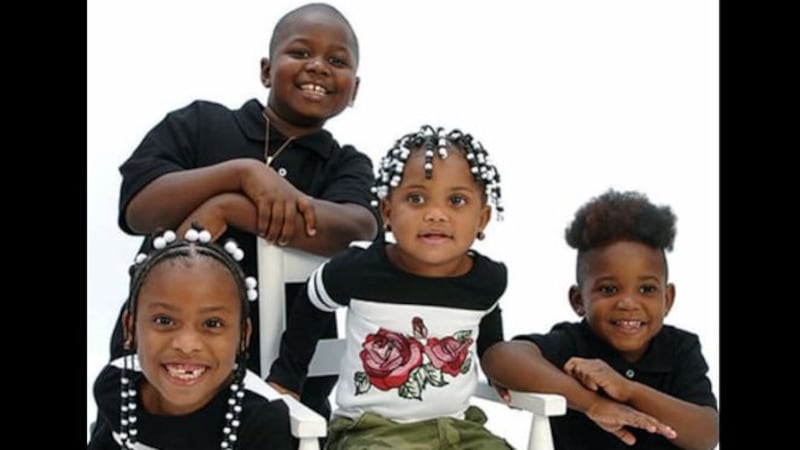
Jamire Halley, eight years old, was already stepping into a role as protector. He loved sports and carried himself with a quiet seriousness, watching over younger siblings as if it were his natural duty.
Robbiana Evans, six, was bright and full of life. She loved the color pink and took pride in helping her mother, eager to feel grown and useful. Her laughter once filled rooms that would soon feel painfully empty.
Arnez Yaron Jamison Jr., just four, had already fought battles many never face. As a baby, he had a cancerous lymph node removed and later lived with sickle cell disease. Despite it all, he kept going—small, resilient, unaware of how brave he truly was.
Ar’mani Jamison, two years old, adored her older siblings. She followed them everywhere, her world built on their presence and protection. She never had to learn what life was like without them—because she never lived long enough to.
To lose one child is unimaginable. To lose four at once is a kind of grief the mind struggles to comprehend. It is loss multiplied, layered, crashing in waves that never fully recede.
In the days that followed, the community struggled to find words. Parents hugged their children tighter. Neighbors spoke in hushed voices. Candlelight vigils flickered in the cold, each flame a fragile attempt to honor lives that ended too soon.
Court proceedings would come later—slow, procedural, heavy with legal language. Charges would be read. Evidence reviewed. Responsibility debated.
But no courtroom could return what had been taken.
For the mother, grief did not arrive all at once. It came in moments—four empty beds, four missing voices, four spaces at the table that would never be filled again. It came when toys were found, when favorite colors appeared in stores, when songs played that once made her children dance.
People told her to be strong.
They always do, even when strength feels impossible. What they often mean is that they don’t know how to sit with pain this deep.
Memorials were held. Names were spoken. Candles lit. Balloons released into the sky, as if lifting them might ease the weight left behind.
Jamire.
Robbiana.
Arnez Jr.
Ar’mani.
Four names. Four stories. Four children who should still be here.
People called them angels, because that feels kinder than accepting the violence of their loss. It places them somewhere safe, somewhere untouched by sirens and shattered glass.
But even angels are missed.
Even angels leave behind silence that echoes through a house.
Even angels cannot ease the ache of a mother who wakes each day to a world that will never be the same.
This tragedy is a reminder written in grief and silence. It speaks of responsibility. Of choices. Of how fragile the line is between an ordinary night and irreversible loss.
It asks us to pay attention, because children depend entirely on adults to protect them.
There are no perfect endings to stories like this. Only remembrance. Accountability. And the hope that lessons are learned before the next quiet night is broken by sirens.
So we say their names.
So they are never reduced to statistics.
Rest peacefully, Jamire Halley.
Rest peacefully, Robbiana Evans.
Rest peacefully, Arnez Yaron Jamison Jr.
Rest peacefully, Ar’mani Jamison.
Four little lives. One tragic night.
Forever remembered.
The morning began like thousands of others in New York—early, cold, and indifferent to the lives moving quietly through it. Commuters hurried to work. Traffic lights blinked between red and green. The city breathed, unaware that in a few moments, it would take something irreplaceable.
Kianna Underwood was crossing the street.

It was just after dawn, the sky still pale and undecided, when the 33-year-old stepped into a marked crosswalk. She did what pedestrians are taught to do: wait for the signal, look both ways, trust that the rules of the road meant something.
She never made it across.
A black Ford Explorer struck her without warning. The impact threw her forward, violent and sudden, ripping her from the ordinary rhythm of the morning. Before anyone could fully understand what was happening, she was hit again—this time by a second vehicle, a black-and-gray sedan.
Witnesses would later describe a nightmare that unfolded in seconds but would live with them forever. Kianna became trapped beneath the car, her body dragged for nearly two city blocks as the vehicle sped away.
Two blocks.
No brakes.
No hesitation.
No one stopping.

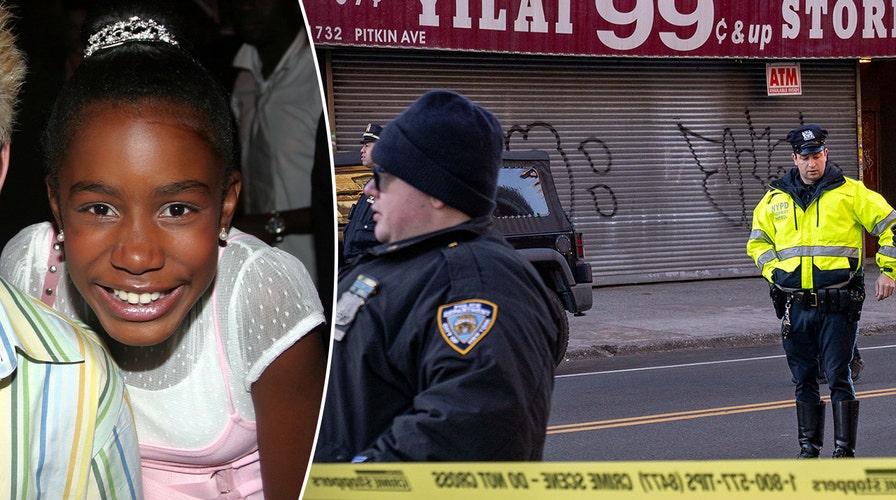
When the car finally disappeared into traffic, Kianna Underwood lay motionless on the street. Emergency responders arrived quickly, but there was nothing they could do. She was pronounced dead at the scene.
The drivers of both vehicles fled. As of now, no arrests have been made.
And just like that, a life that once brought joy to millions ended alone on an ordinary city street.
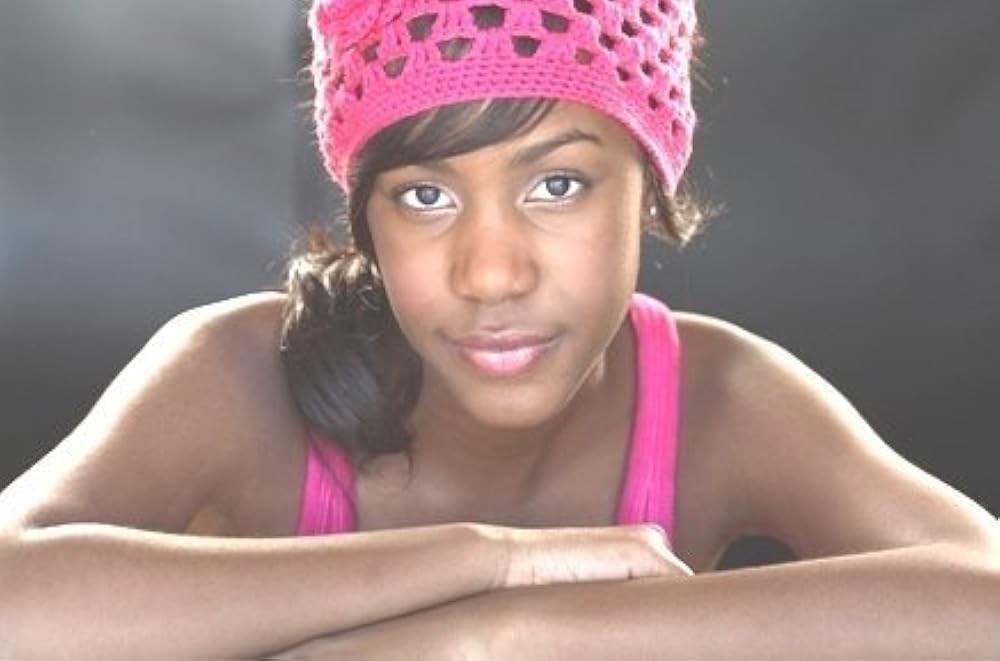
For many, Kianna Underwood will always be remembered as a familiar face from childhood—a bright presence on Nickelodeon during an era when Saturday nights meant laughter, sketches, and a sense of carefree fun.
She was a regular performer on All That, the beloved sketch-comedy series that shaped a generation. Between 2004 and 2005, she appeared in seven episodes, holding her own in a cast known for its energy, humor, and talent. She also lent her voice to Fuchsia Glover on Little Bill, becoming part of a show that reached children who may not even know her name today—but remember her voice, her timing, her warmth.
She appeared on screen alongside seasoned actors in films like The 24 Hour Woman and the animated holiday special Santa, Baby!, building a résumé before most children her age fully understood what a career was.
To audiences, she was funny. Sharp. Effortless.
But to those who knew her, Kianna was more than a former child star.
She was a daughter.
A friend.
A woman still figuring out who she was beyond the spotlight.
Like many child actors, Kianna’s life after television was quieter, more private. Fame fades, but growing up does not pause for it. She navigated adulthood away from the cameras, building a life that belonged to her—not to ratings or scripts.
Those close to her describe her as thoughtful and resilient, someone who carried both the pride of her early accomplishments and the weight that often comes with them. She understood what it meant to peak early in the public eye and then be expected to redefine yourself in silence.
She was doing that work.
And she deserved the time to keep doing it.
Instead, her story was violently cut short by drivers who chose escape over humanity.

Hit-and-run deaths are uniquely cruel. They don’t just kill; they abandon.
They leave victims alone in the road.
Families waiting for calls that should never come.
Investigators chasing shadows instead of answers.
In Kianna’s case, the cruelty feels compounded. This wasn’t a dark alley or an unmarked crossing. She was in a crosswalk, following the law, trusting that the most basic social contract—stop when someone is in your path—would be honored.

It wasn’t.
The New York Police Department’s Highway District Collision Investigation Squad continues to investigate, combing through traffic footage, witness statements, and fragments of time that might lead to accountability. But for Kianna’s loved ones, every hour without answers stretches grief into something sharper.
Justice, if it comes, will arrive too late to save her.
News of her death spread quickly online, rippling through communities of fans who suddenly realized the girl they once watched on television had grown up—and then been taken.
Social media filled with memories, clips from All That, and messages of disbelief.
“How is this real?”
“I grew up watching her.”
“This is heartbreaking.”
But behind the headlines and hashtags is a family trying to comprehend a loss that feels impossible to explain.
No parent expects to outlive their child.
No family expects a phone call that begins with, “There’s been an accident.”
No amount of childhood fame prepares someone to be mourned this way.
A life cut short.
A future erased.
A name now spoken in the past tense.
Kianna Underwood’s death has reignited conversations about pedestrian safety, reckless driving, and the devastating frequency of hit-and-run incidents in major cities. Advocates point to a growing pattern: drivers fleeing scenes out of fear, panic, or a belief they might get away with it.
Sometimes, they do.
And sometimes, the cost is paid by someone who did nothing wrong.
The tragedy is not just that Kianna died.
It’s that she was left.
That no one stopped.
That the people responsible chose their freedom over her life.
At 33, Kianna was not a memory.
She was a present.
She was a becoming.
She had already lived multiple lives—child actor, young adult, private citizen—and still had countless versions of herself ahead. She was old enough to understand hardship, young enough to still imagine change.
Now, those possibilities exist only in the imaginations of the people who loved her.
There is no ending that makes this feel complete.
No sentence that resolves it.
No justice that restores what was lost.
There is only remembrance.
Remembering a little girl who made millions laugh.
Remembering a woman who deserved to cross a street and make it to the other side.
Remembering that behind every headline is a human life with history, hope, and unfinished dreams.
Kianna Underwood should be alive today.
And until those responsible are found, her story stands as both a mourning and a warning—a reminder that in a city that never sleeps, we cannot afford to stop caring for one another.
May she be remembered not for how she died, but for how brightly she once lived.
And may the silence left behind by her absence never be mistaken for indifference.