Flames of Loss: The Heart-Wrenching Story of a Family Taken Too Soon 4282
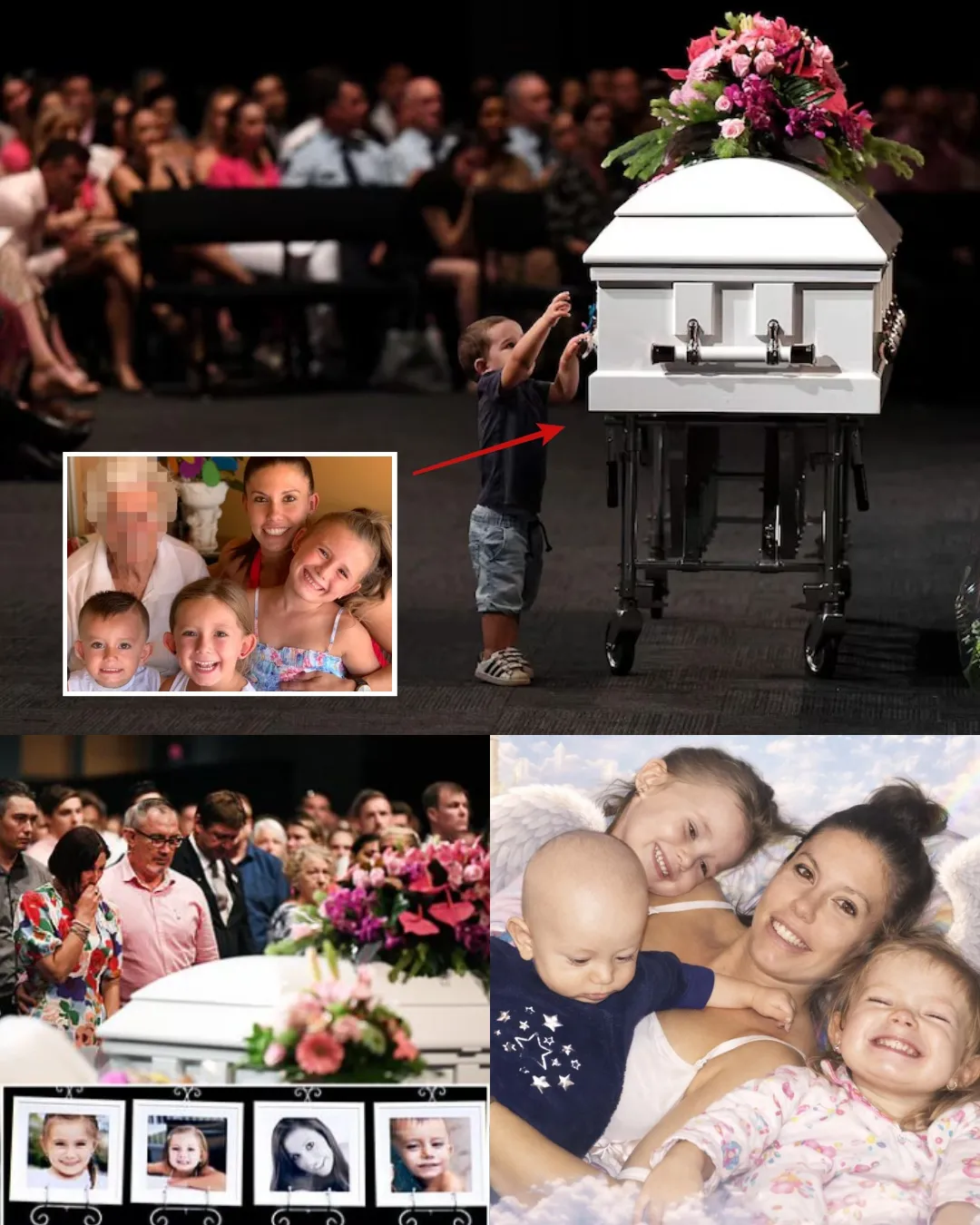
On the morning of February 19, 2020, Brisbane woke beneath a bright Australian sky.
The air was warm, the kind that makes school mornings feel like any other — backpacks packed, shoes tied, breakfast dishes left in the sink.
Hannah Clarke, thirty-one years old, kissed her mother on the cheek, called for her three children, and walked them out to the car.

Aaliyah was six, bright-eyed and thoughtful, already dreaming of being a teacher.
Laianah, four, was mischievous, a bundle of laughter who never sat still.
And little Trey, three, clutched his toy dinosaur like a talisman, refusing to let it go.

It was a scene of ordinary life — a mother driving her children to school, ready to face another day.
But fate had chosen that morning to become a scar on a nation’s heart.
As Hannah reversed out of her parents’ driveway, her estranged husband, Rowan Baxter, appeared suddenly.

He had been waiting — patient, deliberate, and filled with something far darker than anger.
Before Hannah could react, he forced his way into the car, carrying a can of petrol.
In moments, everything changed.
He poured the fuel, the sharp smell filling the small car, and struck a flame.

The explosion tore through the stillness of the suburban street.
Neighbors ran out screaming.
The air filled with smoke, with the sound of Hannah’s cries, with the unbearable sight of fire consuming what had moments ago been a mother’s safe space.
The three children — Aaliyah, Laianah, and Trey — were gone before help could arrive.

Hannah, her body engulfed in flames, stumbled from the car, her skin seared, her voice broken.
She was alive, but barely.
In those final hours, as paramedics rushed her to the hospital, she spoke — not of revenge, not of hate — but of her children.
She told them what had happened, so the truth would never die with her.
That courage — the will to speak while every breath burned — would later move an entire nation.

For years before that day, Hannah had lived under the shadow of control.
To outsiders, the Clarkes seemed like any other family — smiling photos, birthday parties, social media posts filled with sunshine.
But behind the lens, Hannah’s life was quietly shrinking.
Rowan Baxter was charming when he wanted to be.

A former rugby player, fit and charismatic, he knew how to make people like him.
At first, Hannah believed she’d found someone strong, someone who would love her deeply.
Instead, he used that love as a weapon.
He dictated how she dressed, who she spoke to, where she went.

He’d tell her she was lucky to have him, that no one else would ever want her.
It began with jealousy, then isolation, then control.
Hannah’s friends noticed her disappearing — skipping gatherings, withdrawing from the world.
Even her laughter, once so easy, became rare.

By the time she realized how deep she was trapped, fear had replaced hope.
Still, she endured, believing she could keep her children safe by staying.
But coercive control is a quiet violence — it eats away at freedom long before a hand is ever raised.

When Hannah finally found the strength to leave, she took her children and moved in with her parents, Sue and Lloyd Clarke.
They welcomed her home, grateful she had escaped, believing she was safe now.
She filed police reports, sought custody protection, attended counseling.

She did everything society tells victims to do.
Yet, none of it was enough.
Because the system, like so many others across the world, could not yet see coercive control for what it truly is — a precursor to tragedy.

That February morning was supposed to be a new beginning.
Hannah had a job interview later that week.
She had started jogging again, laughing again, rediscovering fragments of the woman she used to be.

Her parents had noticed the change — a spark returning to her eyes.
Then, in one unimaginable instant, all of it was stolen.
The flames that engulfed that car didn’t just end four lives.
They ignited a national reckoning.

In the days that followed, Australia mourned.
Flowers covered the Clarke family’s front yard.
Strangers stood in the rain, leaving teddy bears, drawings, and letters addressed to “Aaliyah, Laianah, and Trey — the angels of Brisbane.”
The Prime Minister spoke.
Journalists wept on air.

But amid the grief, something began to shift.
People started asking why.
How could a woman who had done everything right still end up unprotected?

How many others were living quietly in fear, unseen and unheard?
Hannah’s story became a mirror — reflecting a painful truth about how society viewed domestic violence.
Not just as bruises or broken bones, but as control, manipulation, and the slow erasure of autonomy.

Sue and Lloyd Clarke could have retreated into silence.
No one would have blamed them.
They had lost their daughter and grandchildren in a single day — a grief too vast for words.
Yet, they chose to speak.
They turned their pain into purpose.

In honor of Hannah and the children, they founded Small Steps 4 Hannah, a foundation committed to changing the way Australia responds to domestic abuse.
Its name came from something Hannah once said — that small steps, taken consistently, can lead to great change.
Through public talks, educational programs, and advocacy, the Clarkes began pushing for laws that recognize coercive control as a form of domestic violence.
They met with lawmakers, police officers, counselors, and survivors.
Every speech, every meeting, every tear became part of a movement that carried Hannah’s spirit forward.

In time, the impact was undeniable.
Public awareness campaigns emerged across Australia.
Legislation began to evolve.
Schools introduced lessons about respect and emotional safety.
Support services trained their staff to recognize the early signs of controlling behavior.
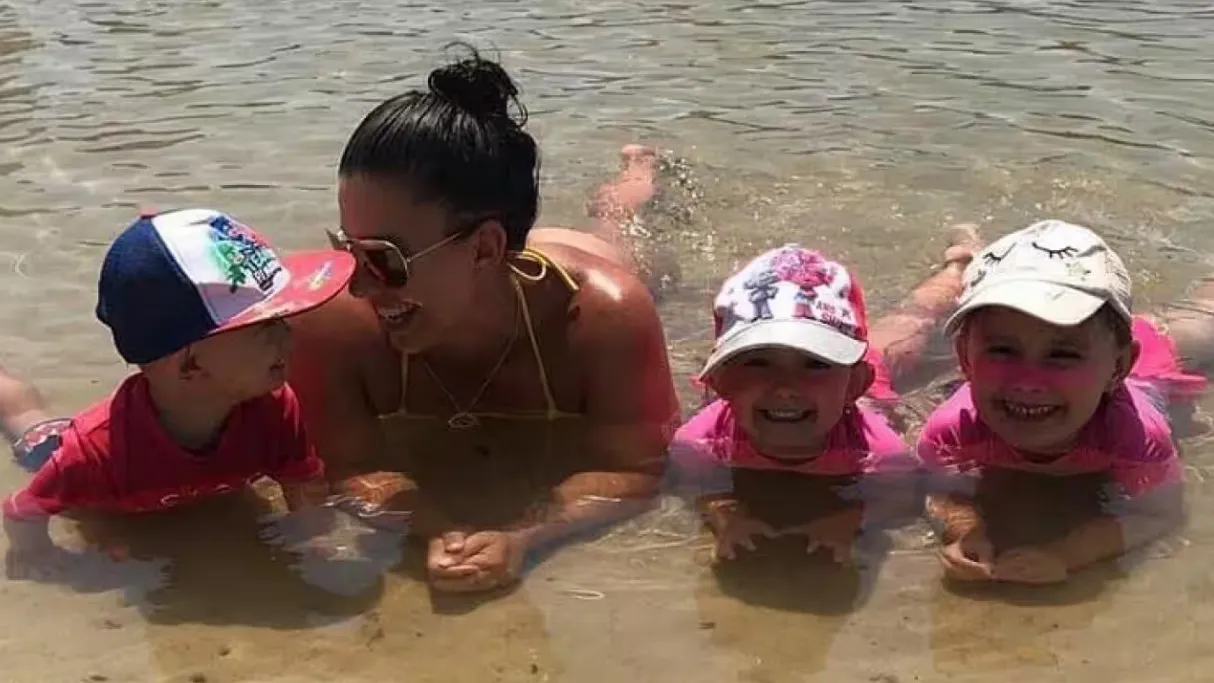
Hannah’s story became a catalyst for transformation — a voice that continued speaking long after her final breath.
Her name joined the ranks of women whose deaths forced nations to change.
But this time, her parents were determined that it wouldn’t just be another tragedy forgotten in statistics.
They wanted prevention, not memorials.

Sue Clarke once said in an interview, her eyes red from crying, “We couldn’t save Hannah, but maybe we can save someone else’s daughter.”
Those words became the heartbeat of their mission.
At public events, when Sue and Lloyd speak, there’s always a pause when they mention the children’s names.
The audience holds its breath, as though time itself stops to honor them.

And in that stillness, people feel it — the weight of loss, but also the echo of love.
Because Hannah’s story, as dark as it is, is also one of resilience.
Even in her last moments, she fought to be heard.
Even in death, she became a voice for others.

Years have passed now, but her legacy endures.
Small Steps 4 Hannah has grown into a national movement.
It funds educational workshops, supports survivors, and advocates for early intervention.
Each February, on the anniversary of her death, communities across Australia light candles — not just for Hannah and her children, but for all who have lived through violence and survived to rebuild.

At these vigils, there’s often a sense of quiet hope.
Children play near the candles, laughter mingling with the hum of remembrance.
Hannah’s story no longer belongs to tragedy alone.
It belongs to transformation.

If you stand in Camp Hill today, where the flames once rose, you’ll see flowers planted along the street.
You’ll see a mural — bright, alive — showing Hannah and her three children surrounded by butterflies.
People stop to look, to touch the painted wall, to whisper promises they’ll never forget.

In schools, teachers use Hannah’s story to teach students about kindness, consent, and respect.
In police stations, officers are trained to recognize the patterns she endured.
And in homes across Australia, women leaving abusive relationships know they are not alone — that someone fought this fight before them, and that her courage changed the world.

Hannah Clarke will always be remembered — not for the way she died, but for the way she lived.
A mother who loved without limit.
A daughter who never stopped trying to protect her family.
And a woman whose final act of truth-telling became the spark for national reform.
Her parents’ foundation continues her mission — step by step, story by story — proving that out of unimaginable pain can rise something luminous.
Small steps became big ones.
And through them, Hannah’s light continues to walk beside every survivor who dares to begin again.
Chained in the Rain: How Lily Found Her Second Chance 520


Some stories are silent at first, whispered in mud, fear, and neglect — until someone finally stops to listen. Lily’s story is one of those voices, fragile but unbroken, waiting for the world to notice.
She lay in the mud for days, chained and forgotten. Her tiny body trembled beneath a thin layer of fur, ribs sharp against the cold. The rusted chain around her neck anchored her not only to an old post but to a life that had long since abandoned her. Rain turned her small yard into a swamp, and every droplet only reminded her of the harshness of a world that had passed her by.
Across the fence, a neighbor watched. An old man with a limp, he had seen her struggle day after day. Her eyes, dull yet pleading, followed him as he moved about his yard. And finally, unable to bear it any longer, he reached for his phone. “She’s dying,” he said, voice trembling. “No one’s coming for her.” That call changed everything.

Rescuers arrived at dusk, lifting Lily gently, as if she were a child. The journey to safety was careful and quiet, her small frame trembling against the warmth of human hands. At the vet’s office, weeks of filth were washed away with warm water, revealing a wary, curious dog beneath. One rescuer whispered softly, “You’re safe now.” For the first time in what felt like forever, Lily’s tail twitched.
Recovery was not instant. She was too weak for surgery immediately, so the team focused on medicine, soft meals, and patience. Day by day, she gained strength. A tail wag here, a tentative sniff there — each small gesture a sign that the spark within her had not been extinguished. The first time she took a wobbly walk outside, she stopped, lifted her nose, and breathed in the scent of grass. Her eyes glimmered with a light that had been missing for years.

Finally, the day came when she was strong enough for surgery. The procedure was critical, and the waiting was unbearable. But Lily pulled through, awakening to find her favorite rescuer beside her, whispering words of praise and comfort: “You did it, girl.” In that moment, fear gave way to relief, and pain to possibility.
Today, Lily’s life is filled with softness and joy. Her fur is glossy again, her steps confident, and her heart full of trust. She loves her blue blanket, daily walks, and the neighbor whose single phone call saved her life. She has learned to play, to rest, and to enjoy the warmth of care that once seemed impossible. Her story is no longer one of chains and mud but of courage, resilience, and the quiet power of compassion.

Lily reminds us that sometimes, all it takes to change a life is to notice, to act, and to care. In a world that moves too fast, she is proof that a second chance — even for the most overlooked among us — can turn despair into hope, and silence into a story worth hearing.