First Steps: A Baby Elephant’s Fight to Stand. – Daily News

The miracle of life in the wild often unfolds quietly, unseen by human eyes. But sometimes, nature allows us a rare glimpse into its most tender moments. Such was the case in northern Botswana, where a newborn elephant, just minutes old, wobbled into the world and immediately began the struggle for its first steps.
The calf was impossibly small compared to its towering mother, its skin still glistening, its legs trembling under the weight of a body it had not yet learned to command. The instinct to rise was immediate. With determination that seemed far too great for a creature so young, it placed one unsteady foot forward, then another, only to topple over in a heap of folds and flailing legs.

But the little one did not surrender. Again and again, it tried, eyes blinking at the strange new light, ears flapping clumsily. Each fall was met not with defeat, but with another attempt.
Watching close by, wildlife photographer Grant Atkinson captured the unforgettable scene. “We came across this mother who had just given birth,” he explained. “The little one was struggling to take its first steps.”
The mother, patient and protective, hovered nearby. With her trunk, she reached down to nudge and lift, lending strength when her calf’s own body failed. At times, she scattered dust around them, perhaps to cover the scent of afterbirth from potential predators, perhaps simply as part of the instinctive ritual of birth.
Her presence was a steady reassurance—an anchor in a brand-new world.

The calf’s determination and the mother’s devotion merged into a powerful symbol of survival. Each wobble forward became a lesson in perseverance. Each tumble was a reminder that failure is part of learning. And finally, after several attempts, the baby elephant stood tall—or as tall as its tiny legs could manage.
It swayed, unsteady, but upright. A triumph. The first of many victories it would need in a life filled with challenges.
Of course, the triumph was fleeting. Within moments, gravity reclaimed the calf and it stumbled once more. But this, too, was part of the journey. For elephants, as for humans, the road to strength begins with stumbles.

Atkinson, who has spent years documenting wildlife across Africa, was struck by the raw beauty of the scene. The encounter was not about the drama of predators or the vastness of the savanna. It was about something quieter, but no less profound—the simple, universal struggle to begin.
In those tender minutes, the world was distilled into two figures: a mother and her calf, locked in a timeless ritual of love, resilience, and instinct.
The calf’s journey had just begun. There would be more falls, more tumbles, more uncertain steps. But each one would build strength, balance, and confidence. And with every fall, the mother would be there—steadfast, guiding, and teaching, just as countless generations before her had done.

It is in such moments that the wilderness speaks to us most clearly. We see in the baby elephant’s struggle a reflection of our own lives—the falls, the persistence, the quiet triumphs. We see in the mother’s care the unspoken truth that love is not just comfort, but encouragement, urging us to stand when we feel we cannot.
For those lucky enough to witness it, this heartwarming encounter was a reminder of the raw beauty of beginnings. A reminder that the first steps, no matter how unsteady, are always the ones that matter most.
And so, in the vast openness of Botswana, a baby elephant wobbled, stumbled, and finally stood—taking its place in the great story of life.

Not far from my home, there is a wide open field. At first glance, it looks ordinary—green grass swaying in the wind, sunlight stretching across the fence posts, and two horses grazing peacefully. To the casual passerby, the horses seem no different from any others. But if you stop for a moment—if you really pause—you’ll notice something extraordinary.

One of the horses is blind. His eyes, clouded and distant, reveal the truth: he cannot see the field around him. In many places, such a horse might have been put down, considered useless or too great a burden. But not here. His owner chose compassion over convenience, giving him not only life but dignity. A safe home, a chance to exist with purpose, even in darkness. That decision alone is something beautiful.
And yet, the story doesn’t end there.
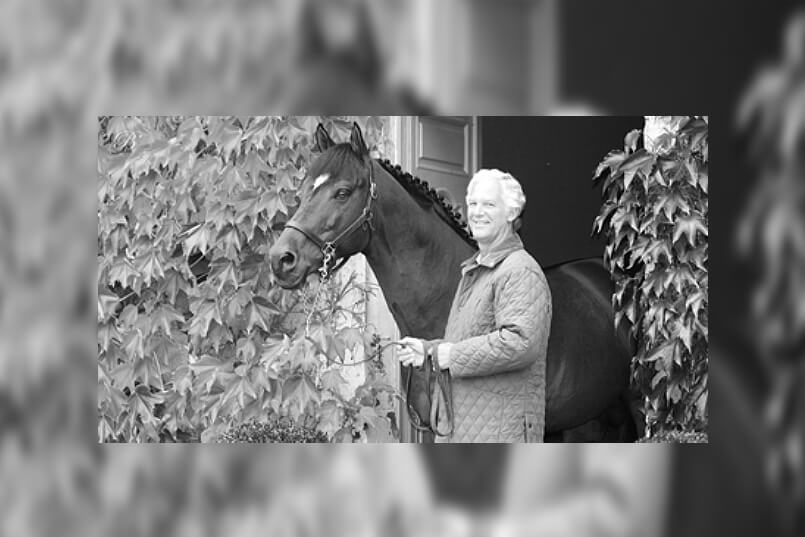
If you stand quietly near the fence, you’ll hear the faint sound of a bell ringing through the air. Soft, delicate, almost musical. Look closer and you’ll see its source—a small bell fastened to the halter of the second horse, the smaller one. She wears it proudly, not as decoration, but as a lifeline. The bell is her gift to her friend, guiding him across the field, letting him know she is near.
The blind horse listens carefully, tilting his ears toward the sound. Step by step, he follows her lead, trusting that the bell will never lead him into harm. And she—his faithful companion—never forgets her role. She grazes, but always lifts her head to check on him. She walks, but always slows her pace, making sure the bell rings steadily so he can follow. Each evening, when the day comes to an end and they make their way back to the barn, the little horse stops often to glance behind, ensuring her friend is not too far away. She waits. She listens. She leads him home.
Standing there, watching them, it’s impossible not to see the greater truth reflected in their friendship.
God, like the loving owner of these horses, never discards us because of our imperfections. He doesn’t throw us away when we stumble, when our vision fails, when life leaves us broken. Instead, He surrounds us with people—friends, family, even strangers—who become our “bells.” They guide us, steady us, remind us that we are not alone. And sometimes, He calls us to be the ones wearing the bell—to guide others who cannot find their way.

In life, we switch places often. Some days, we are the blind horse, leaning on the faithfulness of those who care for us. Other days, we are the guide, carrying the bell that helps someone else walk through their own darkness. Both roles matter. Both roles are sacred.
And so, the field with two horses becomes more than just a place of grass and fences. It becomes a lesson in love, trust, and friendship. A reminder that true companions don’t abandon you when the way is hard. They ring their bell, look back to check on you, and walk with you all the way home.
Good friends are like that. You may not always see them, but you can feel their presence. You know they are there.
So let me say this: I will listen for your bell, and I ask that you listen for mine. For in the gentle ringing of trust and care, we will always find our way.