Ex-Nickelodeon Child Star Kianna Underwood Killed in NYC Hit-And-Run. – Daily News
The morning began like thousands of others in New York—early, cold, and indifferent to the lives moving quietly through it. Commuters hurried to work. Traffic lights blinked between red and green. The city breathed, unaware that in a few moments, it would take something irreplaceable.
Kianna Underwood was crossing the street.

It was just after dawn, the sky still pale and undecided, when the 33-year-old stepped into a marked crosswalk. She did what pedestrians are taught to do: wait for the signal, look both ways, trust that the rules of the road meant something.
She never made it across.
A black Ford Explorer struck her without warning. The impact threw her forward, violent and sudden, ripping her from the ordinary rhythm of the morning. Before anyone could fully understand what was happening, she was hit again—this time by a second vehicle, a black-and-gray sedan.
Witnesses would later describe a nightmare that unfolded in seconds but would live with them forever. Kianna became trapped beneath the car, her body dragged for nearly two city blocks as the vehicle sped away.
Two blocks.
No brakes.
No hesitation.
No one stopping.

When the car finally disappeared into traffic, Kianna Underwood lay motionless on the street. Emergency responders arrived quickly, but there was nothing they could do. She was pronounced dead at the scene.
The drivers of both vehicles fled. As of now, no arrests have been made.
And just like that, a life that once brought joy to millions ended alone on an ordinary city street.
For many, Kianna Underwood will always be remembered as a familiar face from childhood—a bright presence on Nickelodeon during an era when Saturday nights meant laughter, sketches, and a sense of carefree fun.
She was a regular performer on All That, the beloved sketch-comedy series that shaped a generation. Between 2004 and 2005, she appeared in seven episodes, holding her own in a cast known for its energy, humor, and talent. She also lent her voice to Fuchsia Glover on Little Bill, becoming part of a show that reached children who may not even know her name today—but remember her voice, her timing, her warmth.
She appeared on screen alongside seasoned actors in films like The 24 Hour Woman and the animated holiday special Santa, Baby!, building a résumé before most children her age fully understood what a career was.
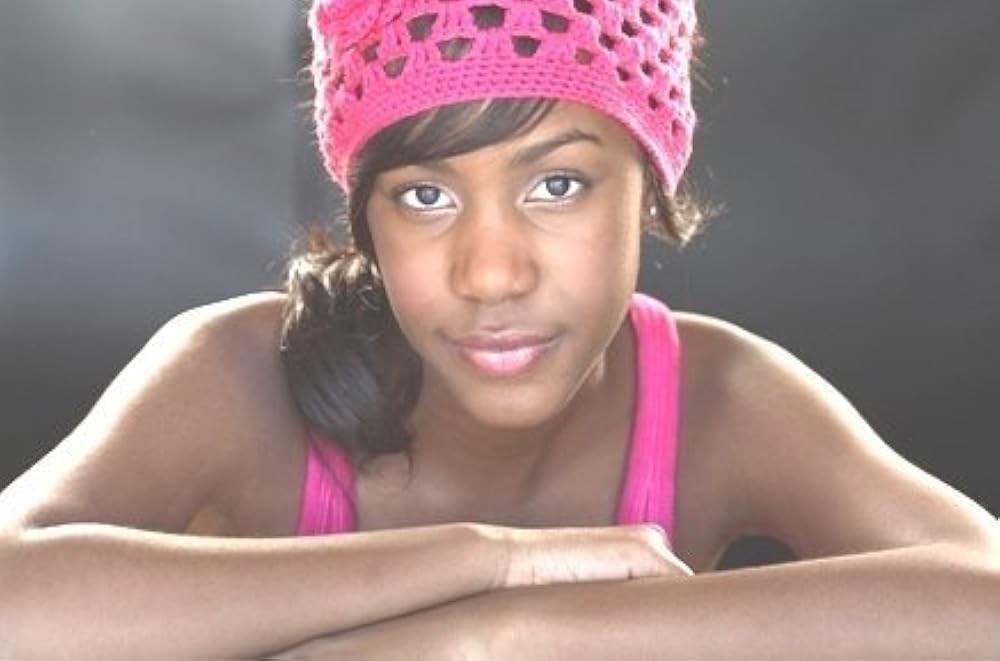
To audiences, she was funny. Sharp. Effortless.
But to those who knew her, Kianna was more than a former child star.
She was a daughter.
A friend.
A woman still figuring out who she was beyond the spotlight.
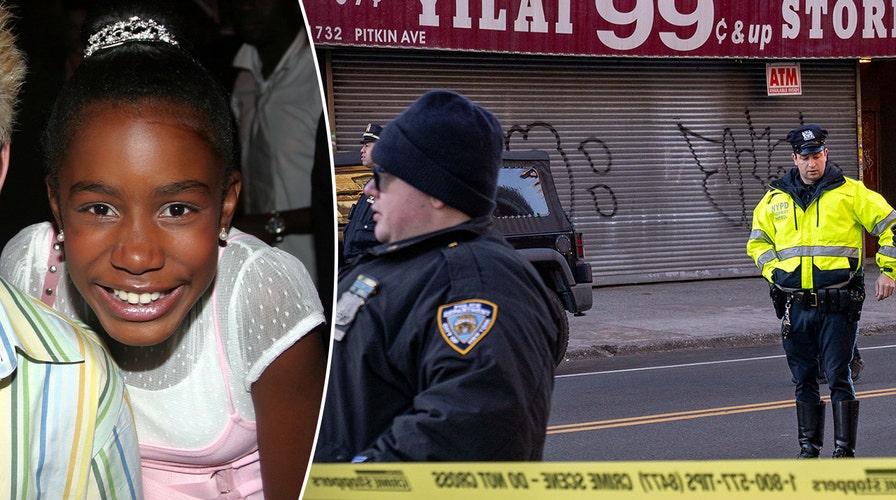
Like many child actors, Kianna’s life after television was quieter, more private. Fame fades, but growing up does not pause for it. She navigated adulthood away from the cameras, building a life that belonged to her—not to ratings or scripts.
Those close to her describe her as thoughtful and resilient, someone who carried both the pride of her early accomplishments and the weight that often comes with them. She understood what it meant to peak early in the public eye and then be expected to redefine yourself in silence.
She was doing that work.
And she deserved the time to keep doing it.
Instead, her story was violently cut short by drivers who chose escape over humanity.

Hit-and-run deaths are uniquely cruel. They don’t just kill; they abandon.
They leave victims alone in the road.
Families waiting for calls that should never come.
Investigators chasing shadows instead of answers.
In Kianna’s case, the cruelty feels compounded. This wasn’t a dark alley or an unmarked crossing. She was in a crosswalk, following the law, trusting that the most basic social contract—stop when someone is in your path—would be honored.

It wasn’t.
The New York Police Department’s Highway District Collision Investigation Squad continues to investigate, combing through traffic footage, witness statements, and fragments of time that might lead to accountability. But for Kianna’s loved ones, every hour without answers stretches grief into something sharper.
Justice, if it comes, will arrive too late to save her.
News of her death spread quickly online, rippling through communities of fans who suddenly realized the girl they once watched on television had grown up—and then been taken.
Social media filled with memories, clips from All That, and messages of disbelief.
“How is this real?”
“I grew up watching her.”
“This is heartbreaking.”
But behind the headlines and hashtags is a family trying to comprehend a loss that feels impossible to explain.
No parent expects to outlive their child.
No family expects a phone call that begins with, “There’s been an accident.”
No amount of childhood fame prepares someone to be mourned this way.
A life cut short.
A future erased.
A name now spoken in the past tense.
Kianna Underwood’s death has reignited conversations about pedestrian safety, reckless driving, and the devastating frequency of hit-and-run incidents in major cities. Advocates point to a growing pattern: drivers fleeing scenes out of fear, panic, or a belief they might get away with it.
Sometimes, they do.
And sometimes, the cost is paid by someone who did nothing wrong.
The tragedy is not just that Kianna died.
It’s that she was left.
That no one stopped.
That the people responsible chose their freedom over her life.
At 33, Kianna was not a memory.
She was a present.
She was a becoming.
She had already lived multiple lives—child actor, young adult, private citizen—and still had countless versions of herself ahead. She was old enough to understand hardship, young enough to still imagine change.
Now, those possibilities exist only in the imaginations of the people who loved her.
There is no ending that makes this feel complete.
No sentence that resolves it.
No justice that restores what was lost.
There is only remembrance.
Remembering a little girl who made millions laugh.
Remembering a woman who deserved to cross a street and make it to the other side.
Remembering that behind every headline is a human life with history, hope, and unfinished dreams.
Kianna Underwood should be alive today.
And until those responsible are found, her story stands as both a mourning and a warning—a reminder that in a city that never sleeps, we cannot afford to stop caring for one another.
May she be remembered not for how she died, but for how brightly she once lived.
And may the silence left behind by her absence never be mistaken for indifference.
The fog was thick that morning, the kind that turns headlights into floating ghosts and makes distance feel like a lie. Logan rode his Harley low and steady, shoulders hunched against the cold, eyes narrowed as the interstate stretched ahead in pale gray strips. It was early—too early for traffic to be forgiving, too late for the road to be empty.
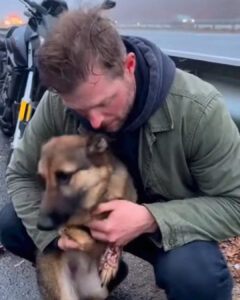
He almost missed it.
At first, it looked like debris. Something dark and low against the concrete median, half-hidden by mist and motion. Logan’s instincts tightened before his mind caught up.
That’s not trash.
He slowed instinctively, heart thudding. As he drew closer, the shape moved.
A dog.
Small. Curled tight. Pressed against twisted metal like it had nowhere else to go.
Logan swore and swerved hard, angling his bike sideways across the lane without thinking. Tires screeched behind him. Horns erupted. Someone shouted. But Logan was already off the bike, boots hitting asphalt as he ran toward the median.
The dog didn’t bark.
That was what scared him most.
The animal was wedged between bent guardrail and concrete, one paw caught badly, swollen and bloody. Its body shook so hard its teeth chattered, eyes wide and glassy with terror. Cars roared past inches away, wind ripping at its fur, noise pounding from every direction.
The dog was frozen—not playing dead, not aggressive.
Just overwhelmed.
“It’s okay,” Logan said, breathless, dropping to his knees despite the traffic. “Hey… hey, I see you.”
The dog flinched at the sound of his voice but didn’t snap. Didn’t growl. Just stared at him like he was the last thing left in the world.
Logan pulled out his pocketknife with hands that shook harder than he wanted to admit. The metal was bent inward, biting into flesh. He tested it gently. The dog whimpered—a thin, cracked sound that went straight through Logan’s chest.
“I know,” he whispered, voice rough. “I know it hurts. I’m not gonna rush you.”
A car blasted its horn behind him.
“Move!” someone yelled.
Logan didn’t look back.
He shifted his body to shield the dog from the wind, crouching low, jacket flapping. Every second felt like borrowed time. He wedged the knife carefully into the twisted metal and pried.
The guardrail didn’t budge.
The dog’s breathing sped up. Panic surged through its small body, muscles tensing, paw straining uselessly.
“Hey,” Logan said quickly, dropping the knife and pressing his forehead gently against the dog’s head. “Look at me. Look at me, buddy. Stay here with me.”
The dog’s eyes flicked to his.
Just for a second.
That was enough.
Logan tried again, this time using both hands, knuckles tearing as the metal finally groaned and shifted. Pain flared up his arms, but he ignored it.
One last pull.
The paw came free.
The dog collapsed forward instantly, all strength gone, slumping straight into Logan’s arms like a switch had been flipped. Its body shook violently as it pressed its face into his chest, tongue darting out to lick his jaw, his chin, his beard—salt and blood and gratitude all mixed together.
Logan wrapped himself around the dog without thinking, curling his body protectively, back to the traffic.
“Good,” he breathed, voice breaking. “You’re okay. You’re okay now.”
The dog clung to him, paws digging weakly into his jacket, breathing shallow but steadying. Logan rocked slightly, matching the rhythm of the animal’s breath to his own, murmuring nonsense words just to keep the sound going.
Around them, the highway seemed to hesitate.
Cars slowed. Some stopped. The noise softened—not gone, but muted, like the world had decided to pause.
Someone shouted that help was coming. Someone else blocked another lane.
Logan barely heard them.
All he could feel was the small heartbeat against his chest and the tremble slowly easing beneath his hands.
“You’re safe,” he whispered. “I’ve got you. Just breathe with me.”
The dog’s body sagged, exhaustion finally winning. Its head drooped against Logan’s shoulder, eyes half-closing, trusting him completely.
Logan swallowed hard.
He thought about how easily this could have gone another way. How one more car, one more second, one less person willing to stop could have erased this life entirely. How the dog hadn’t cried out, hadn’t fought, hadn’t done anything but wait.
Waited for someone to notice.
Sirens arrived not long after—police, then animal control. Hands reached in gently, blankets appeared, voices softened. The dog was lifted carefully from Logan’s arms, wrapped and cradled like something precious.
As they carried the dog away, its eyes opened once more, searching.
Logan stepped forward instinctively.
“I’m here,” he said, touching its head one last time. “You did good.”
The dog’s tail thumped weakly beneath the blanket.
Logan leaned back against his bike, legs shaking now that the adrenaline was fading. His hands were scraped and bleeding. His jacket torn. He didn’t notice until someone pointed it out.
“You saved that dog,” a stranger said quietly.
Logan shook his head, staring down the road where the fog was beginning to lift. “Nah,” he said. “He just needed someone to stop.”
Later, after the road reopened and traffic flowed again as if nothing had happened, Logan rode home slower than usual. The hum of the engine felt different. The world felt different.
He couldn’t stop thinking about the weight of that small body in his arms. About the way fear had turned into trust in a matter of seconds. About how fragile life was—and how stubborn it could be.
That night, Logan checked his phone and found a message from the shelter.
The dog had a broken paw, dehydration, shock—but he would live.
Logan sat down heavily, breath leaving him in a long exhale he hadn’t realized he was holding.
He visited the dog a week later.
The bandage was big and clumsy, the cone ridiculous, but the moment Logan walked in, the dog’s tail went wild. He tried to stand, failed, and barked once—hoarse and happy.
Logan laughed, crouching down. “Easy there,” he said. “Still gotta take it slow.”
The dog leaned into him, nose pressed into Logan’s chest, exactly where he’d been held on the highway.
They named him Fog.
Because some things are found only when the world is hard to see.
Logan didn’t plan to adopt a dog that morning. He hadn’t planned to stop traffic, bleed on the asphalt, or kneel in front of speeding cars for a stranger with four legs.
But sometimes, the road puts something in front of you that isn’t about where you’re going.
It’s about who you’re willing to stop for.
And that morning, in the fog, Logan chose one small life over everything else—and both of them made it home.