EVERYONE TOLD HER TO LEAVE HIM FOR FORTY-EIGHT YEARS. AT 64, SHE STOOD AT HIS GRAVE AND WHISPERED THE WORDS SHE COULDN’T SAY BEFORE. She didn’t get there alone. She never could have. And for most of her marriage, she didn’t want to admit it out loud. She was Loretta Webb from Butcher Hollow, Kentucky. A coal miner’s daughter, married at 15, a mother of four by 21, dragged across the country to Custer, Washington, where she had no friends, no family, and a husband everyone said she should leave. Then there was Doolittle. The drunk. The cheat. The man who hit her — and got hit back twice. The one who walked into a Sears Roebuck in 1953 and spent seventeen dollars he didn’t have on a Harmony guitar, because he heard her singing around the house and believed she sounded like something the world should hear. He pushed her onto a stage in 1960 when she begged not to go. He told a bandleader she was the best country singer alive, next to Kitty Wells. He mailed her first record to 3,000 radio stations from the trunk of their car. And for forty-eight years, she wrote hit songs about everything he did wrong. Then came August 22, 1996. Diabetes. Heart failure. Five days before his seventieth birthday. She buried him in Hurricane Mills, Tennessee. And standing at the grave, she finally said the words forty-eight years of fighting had never let her say: “Without Doo, there would have been no Loretta Lynn.” Some debts get paid in money. The ones that matter get paid in the rest of your life. So what did Loretta finally see at his grave that forty-eight years of marriage had hidden from her — and why did she spend the next twenty-six years calling the man who hurt her the only force behind everything she ever became? – Country Music
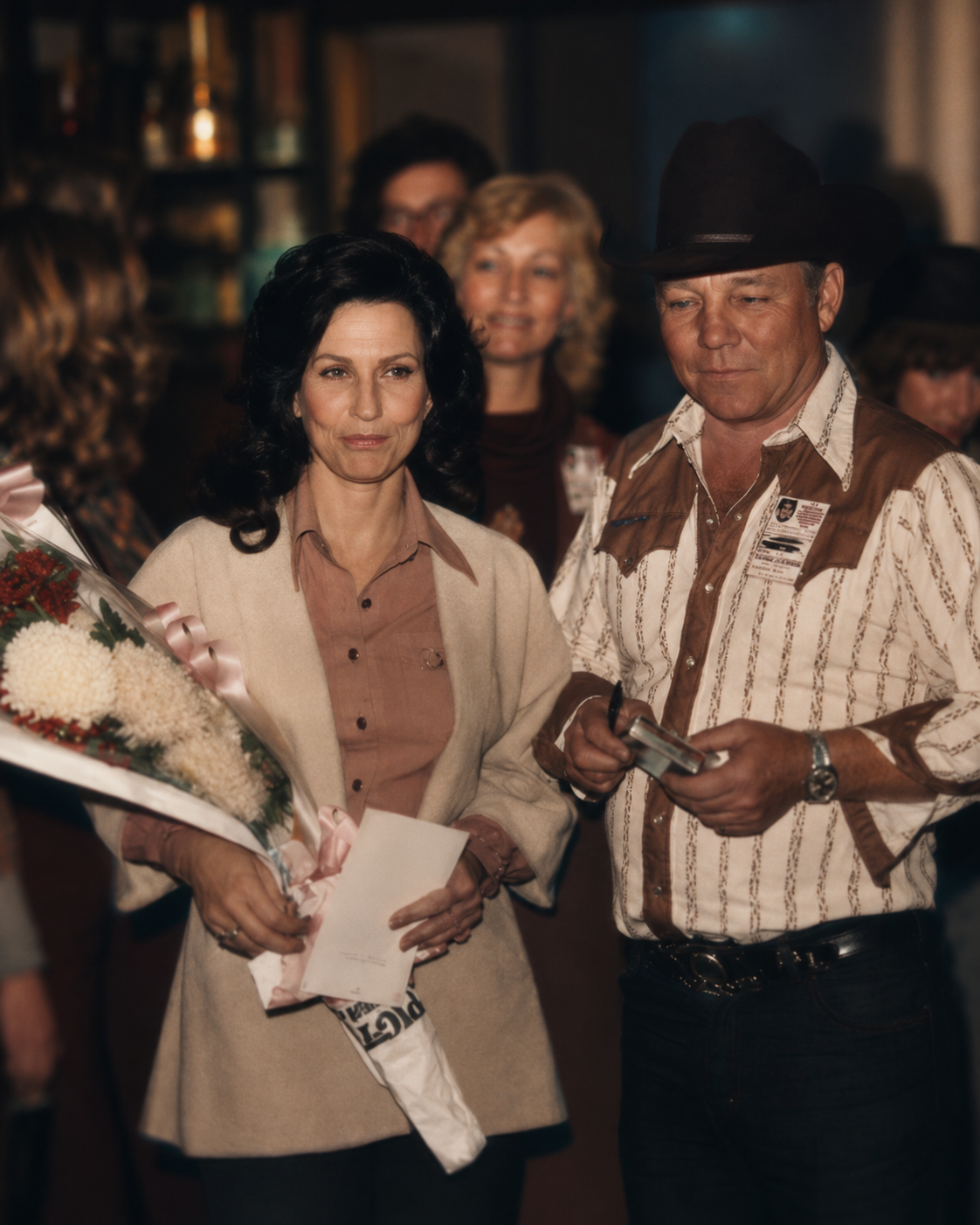
Everyone told Loretta Lynn to leave Doolittle Lynn. Not once. Not quietly. Not only when the fights were fresh or the rumors were loud. For years, people looked at Loretta Lynn’s life from the outside and saw a man who drank too much, strayed too often, and hurt her in ways no woman should have had to carry.
But Loretta Lynn’s story was never simple enough to fit inside one sentence.
Loretta Webb came from Butcher Hollow, Kentucky, a coal miner’s daughter with a voice shaped by hard mornings, crowded rooms, and the kind of poverty that teaches a person to be tough before childhood is finished. Loretta Webb married Oliver “Doolittle” Lynn when Loretta Webb was still a teenager. By the time many young women were just learning who they wanted to become, Loretta Lynn was already a wife, already a mother, and already living far from everything familiar.
Custer, Washington, was not Butcher Hollow. There were no old hills to lean on there. No family close enough to run to. No easy way to explain the loneliness of being young, poor, married, and overwhelmed in a place that did not feel like home.
And then there was Doolittle Lynn.
Doolittle Lynn could be rough. Doolittle Lynn could be reckless. Doolittle Lynn could wound Loretta Lynn with words, choices, and silence. Loretta Lynn never polished that part of the story into something prettier than it was. Loretta Lynn sang about it. Loretta Lynn joked about it. Loretta Lynn fought back in her own way. And in song after song, Loretta Lynn turned private hurt into public truth.
Yet beneath all that trouble, there was one strange, stubborn fact Loretta Lynn never forgot.
Doolittle Lynn believed in Loretta Lynn before the world knew her name.
In 1953, Doolittle Lynn bought Loretta Lynn a Harmony guitar from Sears Roebuck. It was not a grand gift from a rich man. It was the kind of purchase that mattered because there was not much money to spare. Doolittle Lynn had heard Loretta Lynn singing around the house, and something in him decided that voice did not belong only between kitchen walls.
That guitar did not fix the marriage. It did not erase pain. It did not make Doolittle Lynn a gentle man. But it did open a door.
Years later, Doolittle Lynn pushed Loretta Lynn toward stages Loretta Lynn was afraid to step onto. Doolittle Lynn bragged about Loretta Lynn when Loretta Lynn did not know how to brag about herself. Doolittle Lynn told people Loretta Lynn could sing. Doolittle Lynn helped mail records, chase radio stations, and carry the dream forward when the dream looked too far away to touch.
“Without Doo, there would have been no Loretta Lynn.”
That sentence became one of the most complicated truths of Loretta Lynn’s life.
Because how does a woman thank the man who hurt her? How does a wife make peace with a husband who was both storm and shelter? How does a country singer look back across forty-eight years of marriage and admit that the same man who broke her heart also helped hand her the future?
On August 22, 1996, Doolittle Lynn died five days before his seventieth birthday. Loretta Lynn buried Doolittle Lynn in Hurricane Mills, Tennessee, on the land that had become part of the legend they built together.
By then, Loretta Lynn had become more than a singer. Loretta Lynn had become a voice for women who were tired, angry, faithful, trapped, funny, strong, and honest all at once. Loretta Lynn had sung about husbands who wandered, wives who stayed, mothers who worked, women who knew their own worth, and marriages that survived on grit more than romance.
Standing near Doolittle Lynn’s grave, Loretta Lynn was not looking at a perfect love story. Loretta Lynn was looking at a life that had cost her something and given her something at the same time.
Maybe what Loretta Lynn finally saw there was not forgiveness in the easy sense. Maybe Loretta Lynn saw the whole man at once. The man who caused tears. The man who bought the guitar. The man who pushed her toward microphones. The man who gave her songs without always meaning to. The man people told her to leave, and the man whose belief helped carry her name into country music history.
For the next twenty-six years, Loretta Lynn did not pretend Doolittle Lynn had been harmless. Loretta Lynn also did not pretend Doolittle Lynn had been nothing.
That was the power of Loretta Lynn’s honesty. Loretta Lynn could hold two truths in the same hand. Doolittle Lynn hurt Loretta Lynn. Doolittle Lynn helped make Loretta Lynn possible.
Some marriages become legends because they look beautiful from the outside. Loretta Lynn and Doolittle Lynn became unforgettable because their story looked painfully human from every angle.
And in the end, the words Loretta Lynn carried to Doolittle Lynn’s grave were not soft because the road had been easy. The words were soft because after forty-eight years, Loretta Lynn understood the debt, the damage, the love, and the music had all been tangled together.
Without Doolittle Lynn, there may never have been the Loretta Lynn the world came to know. And without Loretta Lynn, the world may never have understood how complicated love can sound when it is finally told in the truth.
Post navigation
When Marty Robbins won a Grammy in 1971 for “My Woman, My Woman, My Wife,” the world heard a love song. Marizona Baldwin may have heard something much heavier: the sound of twenty-two years finally being named.
Marty Robbins was not just another country singer with a good voice and a clean stage suit. Marty Robbins was one of the men who helped shape the sound of country music for millions of listeners. Marty Robbins gave the world hits, stories, cowboy ballads, and a voice that could make a room go still.
But behind the applause, behind the records, behind the tours and the bright lights, there was a woman who knew a very different version of the story.
Marizona Baldwin married Marty Robbins on September 27, 1948. Back then, Marty Robbins was not yet a country music legend. Marty Robbins was a young man trying to build a future, working hard, singing where Marty Robbins could, chasing something that still seemed far away. Marizona Baldwin married the man before the fame, before the awards, before the long absences became part of daily life.
That is the part people often forget. Fans meet the star after the dream comes true. A wife often lives through the years when the dream is still hungry.
The Woman Behind the Empty Chair
As Marty Robbins became more famous, the road became more demanding. There were shows to play, places to be, people waiting to hear Marty Robbins sing. Country music loved Marty Robbins, and Marty Robbins loved the life that music gave Marty Robbins.
But at home, Marizona Baldwin had a life of her own to carry. Marizona Baldwin raised their children through the long Nashville years. Marizona Baldwin kept the house standing when the schedule pulled Marty Robbins away. Marizona Baldwin learned how to live with waiting, and then, perhaps, how to stop waiting too much.
There are kinds of loneliness that do not make noise. A quiet kitchen. A child asking when Daddy is coming home. A dinner that gets covered and saved. A front door that stays closed long after dark.
Marizona Baldwin was not standing on stage with Marty Robbins. Marizona Baldwin was not the one taking bows. But without Marizona Baldwin, the life Marty Robbins returned to may not have remained there at all.
“Some women don’t leave because they are weak. Some women stay because they are stronger than anyone ever bothered to notice.”
A Song Written Too Late, But Not Too Empty
Then came “My Woman, My Woman, My Wife.” Released in 1970, the song was not a flashy declaration. It was a confession wrapped in melody. Marty Robbins sang about a woman who had endured hardship, disappointment, and sorrow, yet still stood beside the man she loved.
To fans, the song was beautiful. To anyone who understood marriage, it may have sounded like an apology.
The line that stayed with people most was simple and devastating: “Lord, give her my share of Heaven.” It sounded like a man finally realizing that love is not measured by how loudly it is praised in public, but by what it survives in private.
Around that same chapter of life, Marty Robbins faced serious heart trouble. A man who had spent years running from one stage to another suddenly had to stop. Illness has a way of making applause sound far away. It has a way of bringing the quiet people into focus.
And when Marty Robbins looked back at the woman who had remained, the song seemed to become more than a hit. It became a debt.
Why Marizona Baldwin Stayed Silent
That may be the most haunting question. What did Marizona Baldwin really go through in all those years, and why did Marizona Baldwin never turn it into a public story?
Maybe Marizona Baldwin was private. Maybe Marizona Baldwin came from a generation that carried pain without announcing it. Maybe Marizona Baldwin believed love was not something to perform for strangers. Or maybe Marizona Baldwin knew that the world would always ask about Marty Robbins first, no matter how much of the story belonged to Marizona Baldwin.
There is dignity in silence, but silence should not be mistaken for an easy life.
Marty Robbins and Marizona Baldwin remained married for thirty-four years, until Marty Robbins died on December 8, 1982. By then, the song had become part of the Marty Robbins legacy. But the deeper legacy may have been the woman who inspired it without asking to be famous for it.
Marizona Baldwin did not need to be in the room when the Grammy was won for the truth to be there. Marizona Baldwin was already inside the song.
And maybe that is why “My Woman, My Woman, My Wife” still hurts a little when people listen closely. It is not only a tribute to a wife. It is the sound of a man realizing that the person who gave the most was the one the world saw the least.