East Haven Tragedy: A Ordinary Morning, a Violent Death, and the Child Left in the Middle of a Debate That Won’t End. – Daily News
The morning in East Haven began like countless others.
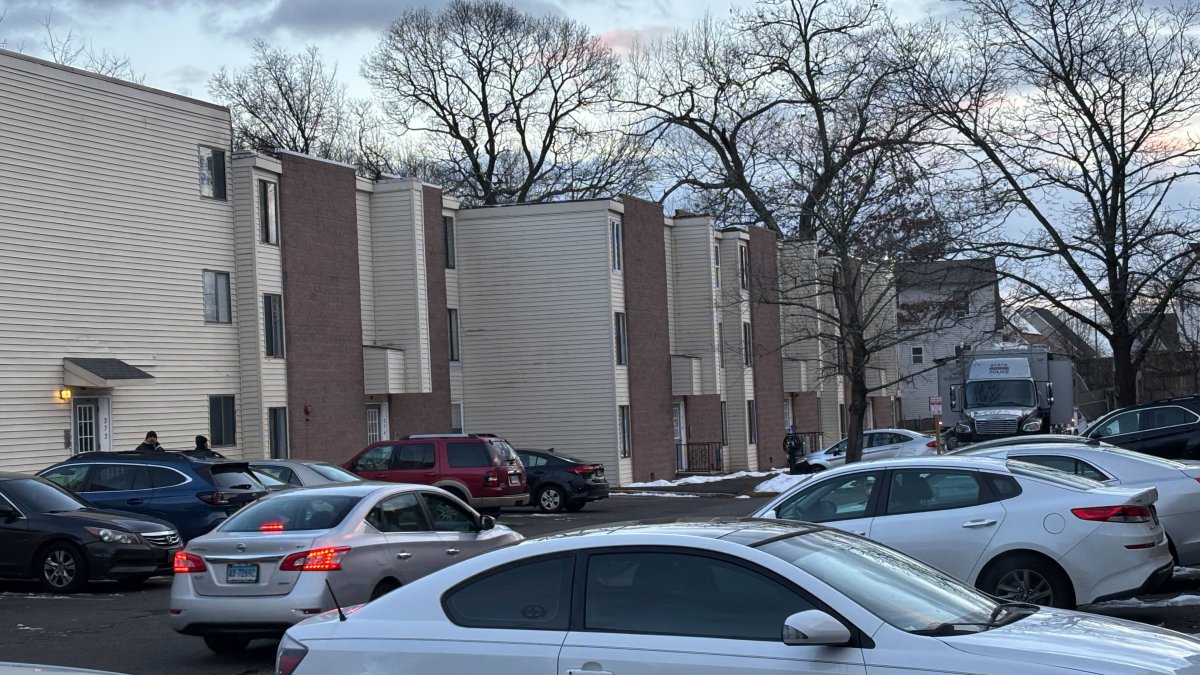
Apartment doors opened and closed. Coffee brewed. Parents hurried, children lingered. Nothing in the air warned that violence was about to tear through an ordinary home and leave a permanent scar on a family—and a community.
But by 8:10 a.m., normal life was gone.
Multiple 911 calls flooded dispatchers almost at once. Voices overlapped, cracked, and trembled. The words were incomplete, panicked, urgent.
Someone was being attacked.

Police arrived within minutes. What they found inside the apartment complex would stay with them long after their shifts ended.
In a hallway, a young woman lay bleeding from multiple stab wounds. Blood pooled beneath her. Her body shook as she struggled to breathe. She was conscious, terrified, and fighting to stay alive.
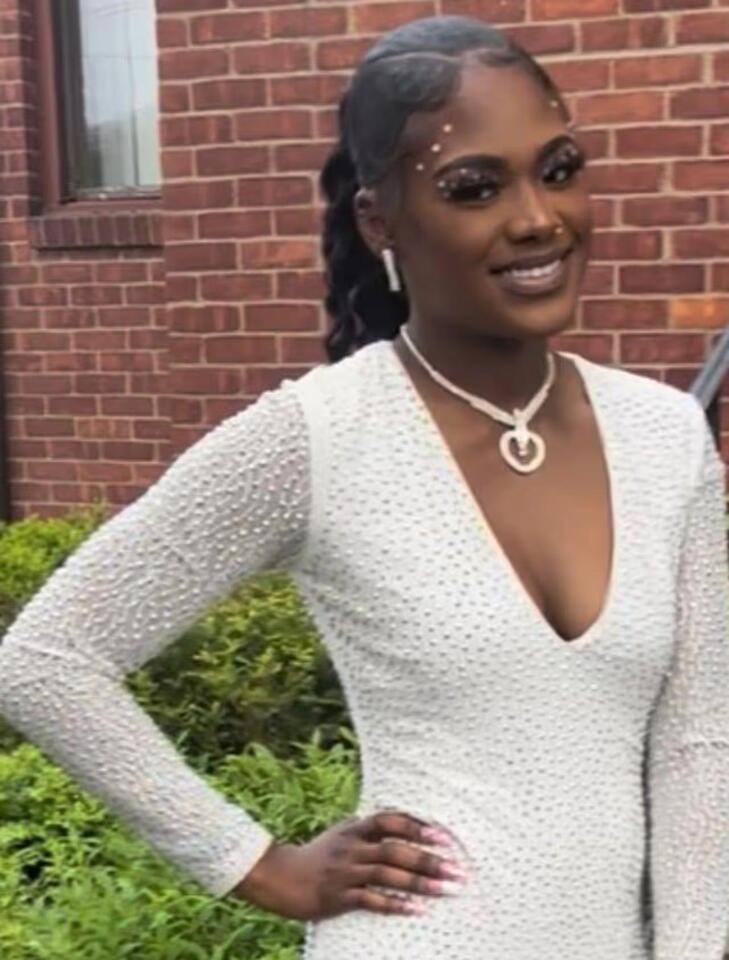
Her name was Destiny Rumley.
She was 21 years old.
Officers tried to stabilize her as emergency medical crews rushed in. She was transported to Yale New Haven Hospital at top speed.
Doctors fought for her life.
They lost.
Destiny died from her injuries—her life ending not quietly, not peacefully, but violently, in a space meant to be safe.
And nearby, unseen at first, was the most heartbreaking detail of all.
Her child was there.
The Child Who Saw Too Much
Inside the apartment, police found the suspect still present. A large knife lay nearby. According to authorities, the suspect—also 21—had called 911 himself after the stabbing and then barricaded inside the unit.
A tense confrontation followed. Officers moved quickly, aware of the danger and the unknowns.
Eventually, the suspect was taken into custody.
Then officers turned their attention to the smallest person in the room.
A three-year-old child.

Physically unharmed.
Emotionally exposed to something no child should ever witness.
The toddler was safely removed from the apartment. Officers carried the child gently, carefully, as if afraid that even a raised voice might deepen the trauma already etched into that young mind.
Some wounds never bleed.
Destiny Was More Than a Headline
In news reports, Destiny Rumley quickly became “a 21-year-old victim.”
But Destiny was more than that.

She was a young mother still figuring life out. Someone’s daughter. Someone’s friend. Someone’s entire world.
At 21, she was still growing—still learning, still making plans. Her future should have included years of laughter, mistakes, growth, and moments shared with her child.
Instead, her story ended in a hallway.
Neighbors struggled to process what had happened. Some had heard shouting. Others only realized something was wrong when sirens filled the air.
Afterward, the building felt different.
Hallways fell silent. Doors closed more slowly. Conversations softened. Fear and sadness lingered long after the police tape came down.
The apartment remained—but the life inside it was gone.
The Part That Divides People
As details emerged, public reaction split sharply.
Not over whether Destiny mattered—most agreed she did.
But over how something like this happens.
Some called it an isolated act of violence. Others saw a larger failure—of systems, of awareness, of protection.
Questions surfaced that made people uncomfortable:
-
Were there warning signs no one intervened in?
-
How often does violence escalate quietly until it explodes?
-
What responsibility does society bear when children witness brutality inside their own homes?
Some insisted the tragedy should remain private.
Others argued that silence is exactly what allows these patterns to repeat.
The debate grew louder, because this was not just about Destiny—it was about what her death represents.
A Child Who Will Grow Up With Absence
The three-year-old child may not remember every detail.
But trauma does not require memory to leave its mark.
Experts say early exposure to violence can surface years later—in anxiety, confusion, fear, or unexplained anger. The child will grow up with questions no one can fully answer.
Who was my mother?
Why didn’t she come home?
Why does everyone go quiet when her name is mentioned?
Loss like this doesn’t disappear with time. It simply changes shape.
Justice, and Its Limits
The suspect was charged with murder and additional offenses, including risk of injury to a minor. Bond was set at $2.5 million. Court proceedings will follow.
Documents will be filed. Arguments will be made. A sentence will one day be handed down.
But justice is procedural.
Grief is not.
No verdict will return a mother to her child. No sentence will erase what that toddler saw. No ruling will make the future feel whole again.
The First Responders Carry It Too
For police and emergency responders, scenes involving children leave deep scars.
They are trained for danger—not for heartbreak.
They act professionally, decisively, quickly. But afterward, the images follow them home. The silence. The blood. The child.
Some moments never fully fade.
What Remains After the Headlines Move On
Destiny Rumley’s name will appear in news articles for a short time.
Then another story will replace it.
But for her family, the story never ends.
Birthdays will arrive without her. Holidays will feel incomplete. Her child will grow taller, older, and farther from the moment she was lost—yet shaped by it all the same.
Her presence will exist in photos, stories, and quiet moments of longing.
She will be both remembered and missed.
Why This Story Matters
Violence witnessed by children carries a particular cruelty. It steals innocence in ways that cannot be undone. It creates wounds invisible to the eye but deep enough to last a lifetime.
Destiny’s death forces difficult reflection:
About how quickly anger turns deadly.
About how private suffering becomes public tragedy.
About how children often pay the highest price.
Destiny Rumley was 21 years old.
Her life mattered.
Her death should not be reduced to a statistic or a passing headline.
She deserved safety.
Her child deserved peace.
Her family deserved more time.
As East Haven mourns, there is no easy path forward—only remembrance, accountability, and the hope that speaking about tragedies like this might prevent another child from witnessing the same horror.
May Destiny be remembered not only for how she died—but for who she was.
And may the child she left behind grow surrounded by care, stability, and love.
Because violence does not end in one moment.
Its echoes last for generations.
There are moments in life that split time in two.

Before.
And after.
For me, that moment came when my youngest daughter, Kali, took her last breath in my arms.
There is no language that truly prepares a mother for that instant. No class, no warning, no story you hear from someone else that can soften it. Your body moves on instinct, trying to do what it has always done — protect, soothe, fix. But your heart refuses to accept what your eyes are seeing.
Closing my baby up was the hardest thing I have ever done.
Every part of me screamed against it. Every instinct I have ever had as a mother begged me to pull her back, to warm her, to breathe for her if I had to. Love tells you that you can always do something. Reality tells you that sometimes, even love is not enough to keep a child here.

That night, the world changed forever.
Kali was my youngest daughter, but she was also my twin in spirit. From the beginning, it was always us. My shadow. My heartbeat outside my body. Where I went, she followed. Where she laughed, I laughed harder. Where she hurt, I felt it deep in my chest.
She had a way of grabbing my face with both hands, forcing me to look at her, and saying, “Mommy, listen.”
And I always did.

I listened to her laugh.
I listened to her fears.
I listened to the sound of her breathing when it became tight and strained — the sound that had haunted me for years.
Because Kali lived with asthma.
Asthma is a word people say lightly. It’s treated like an inconvenience, a condition you “manage,” something that fits neatly into prescriptions and routines. People say, Oh, she’ll be fine, or You worry too much.
But asthma is not gentle.

Asthma is panic.
Asthma is watching your child fight for air.
Asthma is counting seconds and praying lungs will obey.
I knew that. I had lived that fear again and again.
I took Kali to the emergency room more times than I can count. I chose hospital lights over silence. Oxygen over convenience. I chose life, every single time, even when people rolled their eyes or questioned me.
Her father used to get frustrated. He worried about the bills. He said I took her in too often. I tried to explain what it felt like to watch a child’s chest struggle, to hear that wheeze that meant danger. I tried to explain that asthma doesn’t always give warnings — that one attack can be the last.

I even tried to explain it in court.
I tried to explain it to Judge Rhonda K. Forsberg.
I spoke about Kali’s fragile breathing, about how quickly things could turn, about how every flare-up felt like a ticking clock. I begged for urgency. I begged for protection. I begged for belief.
And still, my baby was sent home.
That is the part that breaks me in ways I cannot fully put into words.

Because I fought. I did not ignore signs. I did not stay quiet. I did not choose comfort over caution. I chose my child — again and again — until the system chose differently.
The night Kali died, I watched fear fill her eyes. She looked at me the way children do when they believe their mother can fix anything. I held her. I spoke to her. I tried to keep the air in her lungs with my arms alone.
And for the first time in her life, I couldn’t.
When her breathing stopped, something inside me shattered so completely that I am not sure it will ever fully come back together. Grief does not knock politely. It steals your breath the way asthma stole hers. It comes in waves that feel like drowning.
My house feels wrong now.

Too quiet.
Too still.
Too empty in the spaces she once filled.
Every corner echoes with her presence — her voice, her footsteps, the way she would appear beside me without warning. Sometimes I catch myself listening for her, forgetting for a split second that she is gone.

People say, “She’s with God now.”
I believe that. I hold onto that belief with everything I have left.
But belief does not erase responsibility here on earth.
Sending my baby home did not end my journey. It began it.
Because Kali will not become just another statistic.

I will take her name to the Department of Justice.
I will take her name to Washington, D.C.
I will take her name into every room where decisions are made without urgency for children like her.
This is not just about anger. It is about accountability. It is about awareness. It is about protecting children whose illnesses are too often minimized until it is too late.
Some people will say this was “just” an asthma attack. They will say these things happen. They will try to soften the edges of something that should never be softened.
But I know what I saw.

I saw terror.
I saw suffocation.
I saw time slip through my fingers while my child fought for oxygen.
Asthma is not just wheezing. It is watching your baby drown on dry land.
And when it ends, it leaves a silence that screams.

A silence no apology can fill.
A silence that lives with you forever.
I am still Kali’s mother. Death did not change that. Love did not stop because her heart did.
I will carry her into every meeting, every letter, every step forward. Kali will walk beside me into rooms she never got to enter herself. Her voice will be in mine. Her name will demand attention.

To the mothers reading this: listen to your instincts. Do not let anyone convince you that you are doing too much. Doing too much can save a life.
To the systems meant to protect children: do better. Do not dismiss chronic illness as inconvenience. Do not measure care in dollars instead of lives.
Grief has given me a responsibility I never asked for — but I will carry it. I will speak until change is forced. I will say her name until the world remembers it.

Kali, Mommy is listening.
I hear you in every breath I take.
And I promise you this:
You will never be forgotten.


