DON WILLIAMS WAS CALLED THE GENTLE GIANT. TO A LOT OF PEOPLE THAT WAS AN INSULT: NO EDGE, NO ACHE, COUNTRY YOU COULD FALL ASLEEP TO. THEN THERE’S “GOOD OLE BOYS LIKE ME.” The complaint is easy to make and people make it. That warm baritone never pushed, never broke, never bled. Music for a waiting room. A man who sang for forty years and never once let you see it cost him anything. Then play the one from 1980, the one Bob McDill wrote for him. In three verses it name-drops Thomas Wolfe and Tennessee Williams, sets a Stonewall Jackson picture over a child’s bed, and follows a Southern boy who learns to talk like the man on the six o’clock news so he can get out — and never quite does. It’s a song about class, and shame, and running from a place that never leaves you. That’s the trick people miss about Williams. The calm wasn’t emptiness. It was a man refusing to oversell a lyric that was already doing the work. Hand that song to a belter and it turns to soup. He just told it, quietly, and trusted you to hear it. It went to No. 2. It should have been No. 1, but that was never how you measured him. Some folks say his records put them to sleep. What do you hear in that one? – Country Music
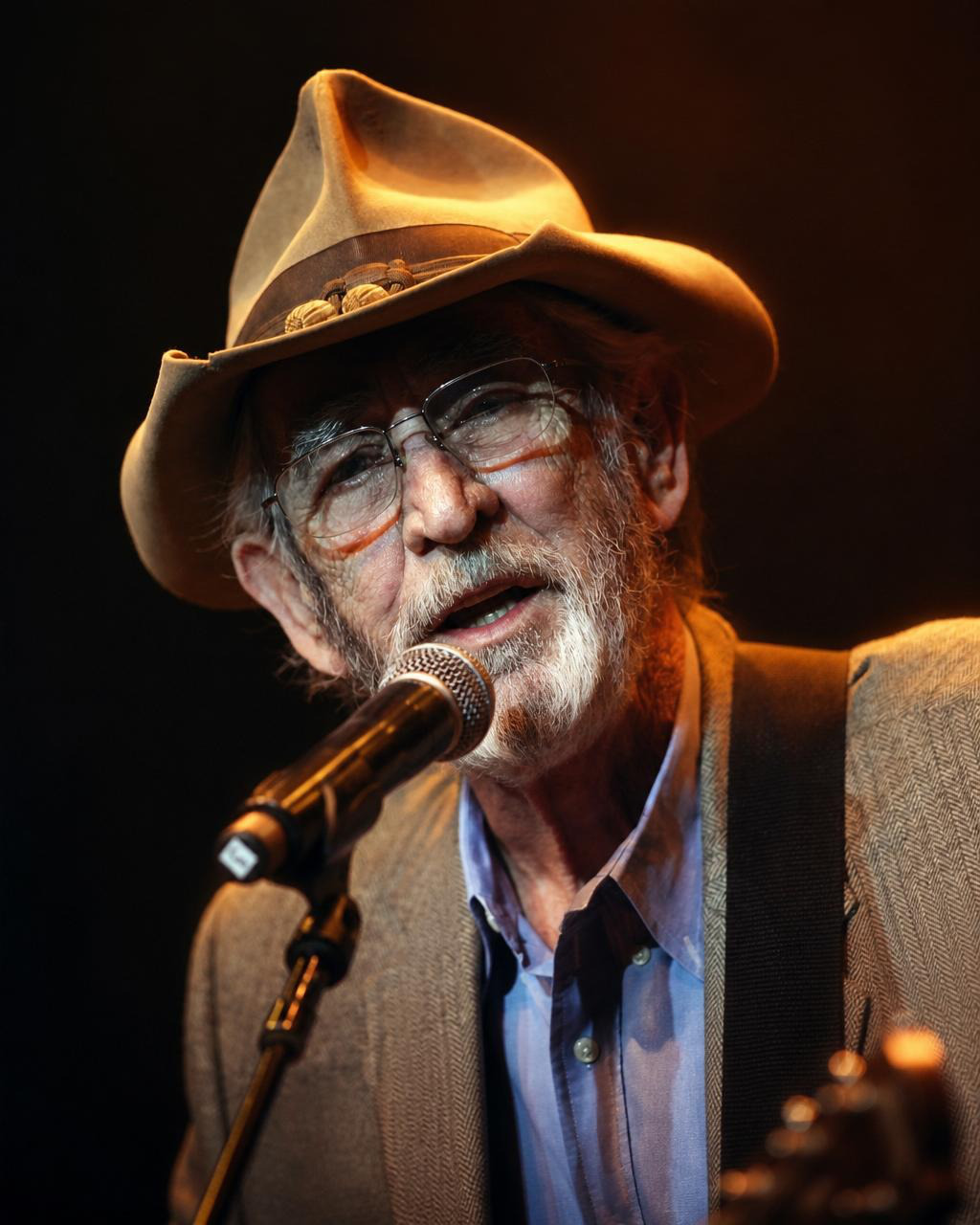
Don Williams was called the Gentle Giant, and plenty of listeners took that label as a slight. Too smooth, too calm, too easy, they said. The voice never seemed to strain, never clawed at the air, never asked to be noticed. To some ears, that sounded like country music for the background.
But then there is “Good Ole Boys Like Me,” released in March 1980 from the album Portrait. Written by Bob McDill, it reached No. 2 on the Billboard Hot Country Singles chart and became one of the clearest examples of what Don Williams could do better than almost anyone: make a song feel lived in, not performed. The track does not shout its meaning. It lets it arrive slowly, like a memory you did not realize you still carried.
A song about leaving, and never really leaving
“Good Ole Boys Like Me” is built on movement. It names literary figures, Southern icons, and the kind of childhood details that stay lodged in a person’s mind long after the house, the town, or the boyhood self is gone. At its center is a young man trying to step out of his origins, trying to learn a new way of speaking and a new way of being seen. But the song understands something painful: reinvention does not erase where you came from. It only teaches you how to carry it more quietly.
That is why Don Williams mattered so much on this record. A louder singer might have turned the song into a sermon or a confession. Don Williams does neither. He sounds almost conversational, but that calm is not emptiness. It is restraint. It is trust. He lets Bob McDill’s writing do the heavy lifting, and in doing so, he makes every line land harder.
Why the softness works
There is a reason the song still feels sharp decades later. It is not just about nostalgia or Southern identity. It is about class, embarrassment, ambition, and the strange ache of trying to become someone else without fully abandoning the person you were. That kind of emotional tension does not need a dramatic vocal. It needs honesty.
Sometimes the quietest voice is the one that tells the hardest truth.
Don Williams understood that better than most. His gift was not force. It was control. He could take a lyric that was already full of feeling and keep it from spilling over. In “Good Ole Boys Like Me,” that discipline gives the song its lasting weight.
What people hear now
So when someone says Don Williams’ records put them to sleep, the answer is simple: maybe they were listening for drama in the wrong place. “Good Ole Boys Like Me” is not sleepy. It is reflective, wounded, and wiser than it first appears. It hears the cost of leaving, the pull of home, and the way a past life can follow a man all the way into success.
That is why the song endures. Not because it is loud, but because it is true.
Post navigation

When Alan Jackson Turned a CMA Performance Into a Country Music Protest
In country music, some moments last because they are polished. Others last because they are raw. The 1999 CMA Awards gave the world one of the rawest moments ever seen on a live stage, when Alan Jackson interrupted his own performance to stand up for George Jones and the song Choices.
The problem began before the show
George Jones had been nominated for Single of the Year for Choices, a song that faced hard truths with no apology. The CMAs wanted him to perform only a shortened version at the ceremony, and Jones refused to go along with that. He stayed home. The decision turned a normal awards show into a quiet challenge over how much respect country legends should be given.
Alan Jackson was scheduled to perform Pop a Top. He walked onto the stage as planned, but he did not stay inside the plan for long. Partway through the song, he stopped and shifted into Choices, singing George Jones’s song instead of finishing his own. The crowd responded with a standing ovation. Jackson then walked off the stage and did not return to his seat for the rest of the night.
Why the moment hit so hard
The performance worked because it felt personal. Alan Jackson was not making a polished television statement. He was reacting in real time, on national television, and everyone in the room could feel the tension between the show’s control and the song’s meaning. For many fans, it looked like a direct defense of George Jones and of traditional country music itself.
George Jones later said that watching the broadcast at home moved him and Nancy Jones to tears. That detail matters because it shows the moment was not just about headlines or show business theater. It reached the person it was meant to honor.
A legacy built on more than one night
People still argue about whether the performance was a stunt or a sincere act of loyalty. Maybe it was both in the way public gestures often are. It was dramatic, unforgettable, and unmistakably public. But it was also rooted in a long-standing respect between two artists who understood the difference between radio-friendly polish and songs that told the truth.
That is why the story still travels so well. The CMAs wanted a shorter segment. George Jones refused to shrink himself. Alan Jackson answered by stepping out of his own spotlight and putting Jones back at the center of the room.
Some country music moments are remembered because they were loud. This one is remembered because it was brave.
In the end, the question is less about whether the act was calculated and more about what it meant. Alan Jackson did not just sing a song. He made a statement in front of millions, and he did it for a legend who had earned the right to be heard in full.