DOC WATSON WAS BLIND FROM THE TIME HE WAS A BABY. FOR TWENTY-ONE YEARS, THE HAND THAT LED HIM ONTO EVERY STAGE BELONGED TO HIS SON. Eddy Merle Watson was named for Eddy Arnold and Merle Travis. He picked up a guitar at 15, and in 1964 he went out on the road with his father — driving him, guiding him, and playing rhythm behind the finest flatpicker in America. But Merle never loved the road. He kept a farm outside Lenoir, North Carolina, and other pickers sometimes filled his chair on tour so he could stay home. At 4:15 in the morning on October 23, 1985, Merle was working alone with a saw on houses he owned when a piece of wood struck his arm. He drove his tractor to a neighbor’s place to get it bandaged. Coming back down the drive, he took the turn too sharp. The tractor went over an embankment and landed on top of him. He was 36. He died where he fell. Doc had lost, in his own words, the best friend he ever had in this world. The night before the funeral he decided he would never play again. Then he dreamed he was sinking in dark quicksand, and a strong hand reached back for him — “Come on, Dad, you can make it.” He never wrote a song about it. Three years later he built something instead: MerleFest, held every spring in Wilkesboro, North Carolina, drawing tens of thousands. Doc played it until the end. He died in 2012 at 89, and he rests near Merle in Deep Gap, in the same mountains where they both began. – Country Music
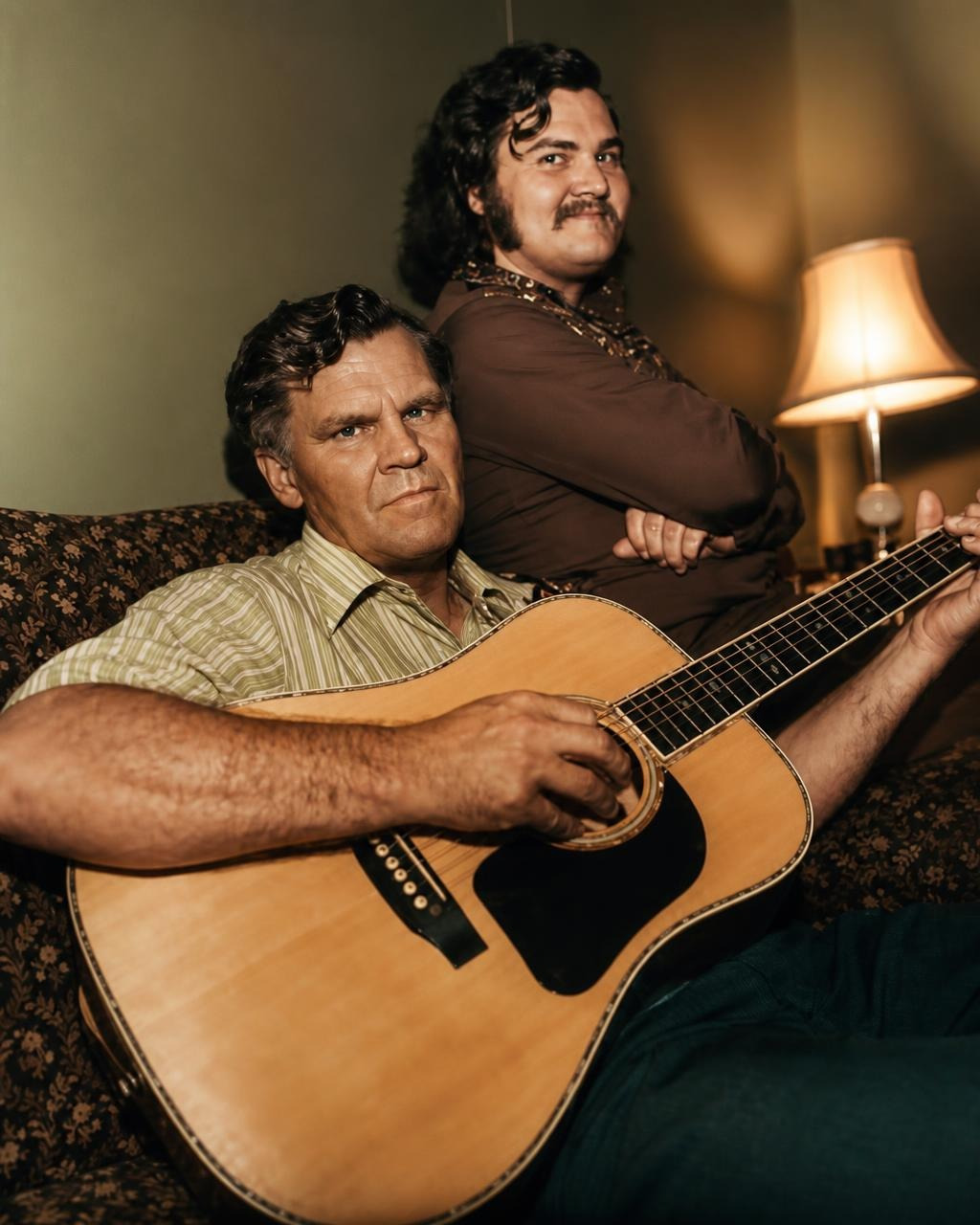
For more than two decades, the story of Doc Watson and his son Merle Watson was written in small, steady moments: a hand on an elbow, a seat beside a truck, a rhythm guitar behind one of the greatest flatpickers in American music. Doc Watson had been blind since childhood, and in public life he often depended on the quiet confidence of the people closest to him. None mattered more than Merle Watson.
Eddy Merle Watson was named for Eddy Arnold and Merle Travis, and that name seemed to carry a little of both tradition and promise. By the time he was 15, Merle Watson was already picking up the guitar. In 1964, he went on the road with his father, not as a shadow, but as a partner. Merle Watson drove, guided, and played rhythm while Doc Watson took the lead with a style that helped define acoustic guitar for generations.
Still, the road was never the whole life. Merle Watson loved home and kept a farm outside Lenoir, North Carolina. When touring demanded too much, other musicians sometimes filled his chair so he could stay close to the life he preferred. That detail says a lot about him: Merle Watson was not chasing a spotlight. Merle Watson was building a life that could hold music and family at the same time.
The Day Everything Changed
On the morning of October 23, 1985, Merle Watson was working alone near properties he owned. A piece of wood struck his arm. After driving his tractor to a neighbor’s place to have the injury bandaged, he headed back home. On the drive, a turn came too sharply. The tractor went over an embankment and landed on top of him. Merle Watson was 36 years old.
For Doc Watson, the loss was devastating. In his own words, he had lost the best friend he ever had in this world. The night before the funeral, Doc Watson decided he would never play again. Then came a dream that seemed to give him back his footing: he was sinking in dark quicksand, and a strong hand reached for him, saying, “Come on, Dad, you can make it.”
Come on, Dad, you can make it.
Doc Watson did not turn that grief into a song. Instead, he turned it into something lasting. Three years later, in 1988, MerleFest was born in Wilkesboro, North Carolina, as a festival named for Merle Watson and rooted in the music the Watson family helped shape. Over time, MerleFest grew into a major spring tradition, drawing musicians, fans, and families who came for the music and stayed for the sense of connection.
What Remains
Doc Watson kept performing at MerleFest for years, carrying memory into the present with every set. He died in 2012 at the age of 89, and he rests near Merle Watson in Deep Gap, North Carolina, in the mountains where both lives began. It is a simple ending for a story that held so much movement, travel, loss, and devotion.
The deeper truth of their story is not only that one man guided another. It is that love can become a kind of partnership, and partnership can become legacy. Doc Watson and Merle Watson made music together, but they also made a way of remembering. That is why the story still feels alive: it is about a father, a son, and the hand that kept reaching back when the road turned dark.