CHARLEY PRIDE SANG AT BASEBALL GAMES, HONKY-TONKS AND SMALL CLUBS FOR 11 YEARS BEFORE COUNTRY MUSIC FINALLY HANDED HIM A MAJOR AWARD. THEN HE WON TWO OF ITS BIGGEST PRIZES ON THE SAME NIGHT. Around 1960, Charley Pride was still chasing two dreams in Montana. He played baseball whenever he could. Before games, he sang the national anthem. When people began arriving early to hear him, he was paid a little extra to perform several more songs. At night, he sang in honky-tonks and small clubs. There was no tour bus. No gold record. No guarantee that Nashville would ever give a Black country singer a real chance. Charley kept going. He traveled to Nashville, endured years of rejection and finally signed with RCA. His first two singles failed. The third, “Just Between You and Me,” reached the Top 10 in 1967 and earned him his first Grammy nomination—but not the trophy. More hits followed. “All I Have to Offer You Is Me” became his first No. 1. By 1971, the man who had once sung before small-town baseball games was one of country music’s biggest stars. On October 10, 1971, Charley walked into the CMA Awards after roughly 11 years of performing. He left with Male Vocalist of the Year. Then they called his name again for Entertainer of the Year. His first major awards did not arrive quietly. After 11 years of waiting, country music gave Charley Pride two of its highest honors on the same night. – Country Music
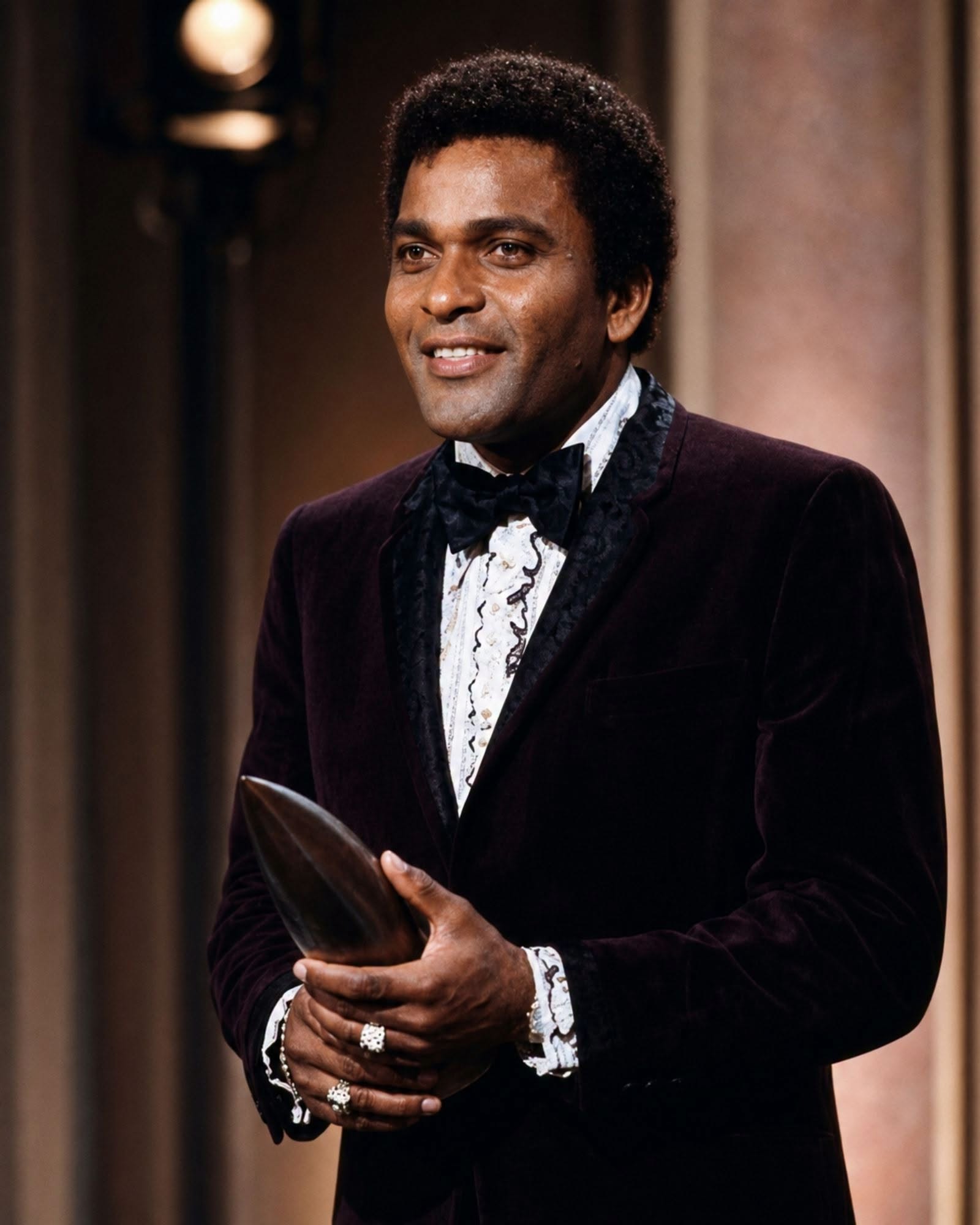
Charley Pride’s Long Road to Country Music Glory
Before Charley Pride became one of country music’s biggest names, he was living two lives at once. In the early 1960s, he was still chasing baseball dreams in Montana, and he also kept his music going wherever he could. He sang before games, and when people arrived early to hear him, he was often asked to stay and sing a few more songs. At night, he performed in honky-tonks and small clubs, building a career one crowd at a time.
There was no easy path waiting for Charley Pride. He was a Black country singer trying to break through in a business that did not hand out chances freely. Still, Charley Pride kept moving forward. He went to Nashville, faced rejection, and eventually signed with RCA. Even then, success did not arrive all at once. His first two singles did not chart, and he had to keep believing in the work while the wider audience caught up.
The Song That Changed Everything
That breakthrough came in 1967 with “Just Between You and Me.” The song reached the Top 10 and gave Charley Pride his first Grammy nomination. It was an important moment, but it was not the end of the wait. More hits followed, and Charley Pride continued to grow from a promising singer into a major star. “All I Have to Offer You Is Me” became his first No. 1 country hit and helped show that his voice belonged at the center of the genre.
By then, Charley Pride had already spent years working for every step forward. The long nights, the small stages, and the steady travel were part of the story that made his success feel earned. Fans were responding, radio was responding, and Nashville could no longer ignore what Charley Pride had become.
On October 10, 1971, Charley Pride walked into the CMA Awards after roughly 11 years of performing. When the night was over, country music had given him two of its biggest prizes: Male Vocalist of the Year and Entertainer of the Year. It was a powerful shift. Charley Pride did not just win; he won in a way that marked the size of the journey.
After years of singing in baseball parks, honky-tonks, and small clubs, Charley Pride finally stood at the top of country music on a night that changed his place in history.
The victory felt bigger because it came after so much waiting. Charley Pride had spent more than a decade proving himself before the major awards arrived. Then, in one unforgettable night, country music gave him two of its highest honors at once. For Charley Pride, the applause was not just about fame. It was a recognition of persistence, talent, and a career built without shortcuts.
Charley Pride’s story remains moving because it began with uncertainty and ended with respect. He kept singing when the rooms were small. He kept going when the answers were slow. And when country music finally opened the door, Charley Pride walked through it with the kind of grace that made the moment unforgettable.
Post navigation
Long before Don Williams became a country music legend, before the quiet voice, the easy smile, and the “Gentle Giant” nickname, he was simply a young husband trying to build a life. On April 10, 1960, Don Williams married Joy Bucher. He was 20 years old, still years away from the spotlight, and still working the kinds of jobs that kept a family moving forward when music could not yet pay the bills.
That early life was not glamorous. Don Williams worked ordinary jobs, including oil-field work and collecting debts, while he kept playing music around Texas. Through all of it, Joy Williams stayed beside him. Their life together was built in the quiet spaces: the long days, the uncertain years, and the steady decision to keep going even when success was still far away.
A Marriage That Grew Before the Fame
Don Williams and Joy Williams raised two sons, Gary and Tim. By the time the world began to notice Don Williams, the foundation of his life had already been laid at home. First came the Pozo-Seco Singers. Then came Nashville. Then came the long run of songs that made him one of country music’s most dependable hitmakers.
His career would eventually include 17 No. 1 country hits and an induction into the Country Music Hall of Fame in 2010. But even with all that success, Don Williams never seemed to lose the calm, grounded manner that made fans trust him. He sang as if he understood the weight of ordinary life, because he had lived it.
The Woman Who Knew Him First
Joy Williams remained outside the spotlight, but her role was never small. She knew Don Williams before the packed theaters, before songs like “I Believe in You” reached listeners around the world, and before the public saw him as a legend. In many ways, she knew the part of Don Williams that mattered most: the man before the fame.
In 2016, Don Williams retired from touring. He said it was time to hang up his hat and enjoy quiet time at home with the people who had loved him through it all. That quiet ending felt true to the life he had built. He never chased noise. He valued home, family, and the long loyalty that lasts longer than applause.
Only 151 Days Into Their 58th Year
On April 10, 2017, Don Williams and Joy Williams completed 57 years of marriage. Then, only 151 days into their 58th year, Don Williams died on September 8, 2017, at age 78. The numbers are simple, but the meaning is heavy. A long marriage had been interrupted too soon.
The world remembers Don Williams for singing about lasting love without raising his voice. Joy Williams knew the longest love story of his life was the one they lived together.
That is the part history should never rush past. Don Williams became famous for calm, timeless songs, but the quiet strength behind those songs was already there at the beginning, standing beside him in Joy Williams.