AT 82, MOE BANDY HAS 10 #1 HITS, 66 CHARTED SONGS, AND FIVE GOLD ALBUMS — BUT HE SPENT 12 YEARS AS A SHEET METAL WORKER BEFORE NASHVILLE EVER KNEW HIS NAME. AND THEY STILL HAVEN’T PUT HIM IN THE HALL OF FAME. Moe Bandy grew up in San Antonio with rodeo dust in his blood. By 16, he and his brother Mike were riding bulls across Texas — until the broken bones piled up and a guitar seemed safer than a bronc. For 12 years, he bent sheet metal for his father by day and sang in smoky honky-tonks at night. No label wanted him. So he took out a personal loan, recorded “I Just Started Hatin’ Cheatin’ Songs Today” — and pressed just 500 copies. That song changed everything. 10 #1 hits. 40 Top 10s. Five gold albums. He became the voice of real country — drinking songs, cheating songs, songs that blue-collar America lived every Friday night. Yet at 82, Moe Bandy is still touring, still making crowds sing along to “Bandy the Rodeo Clown” — and still waiting for a call from the Country Music Hall of Fame that has never come. And the reason he keeps showing up might say more about him than any plaque on a wall ever could. – Country Music
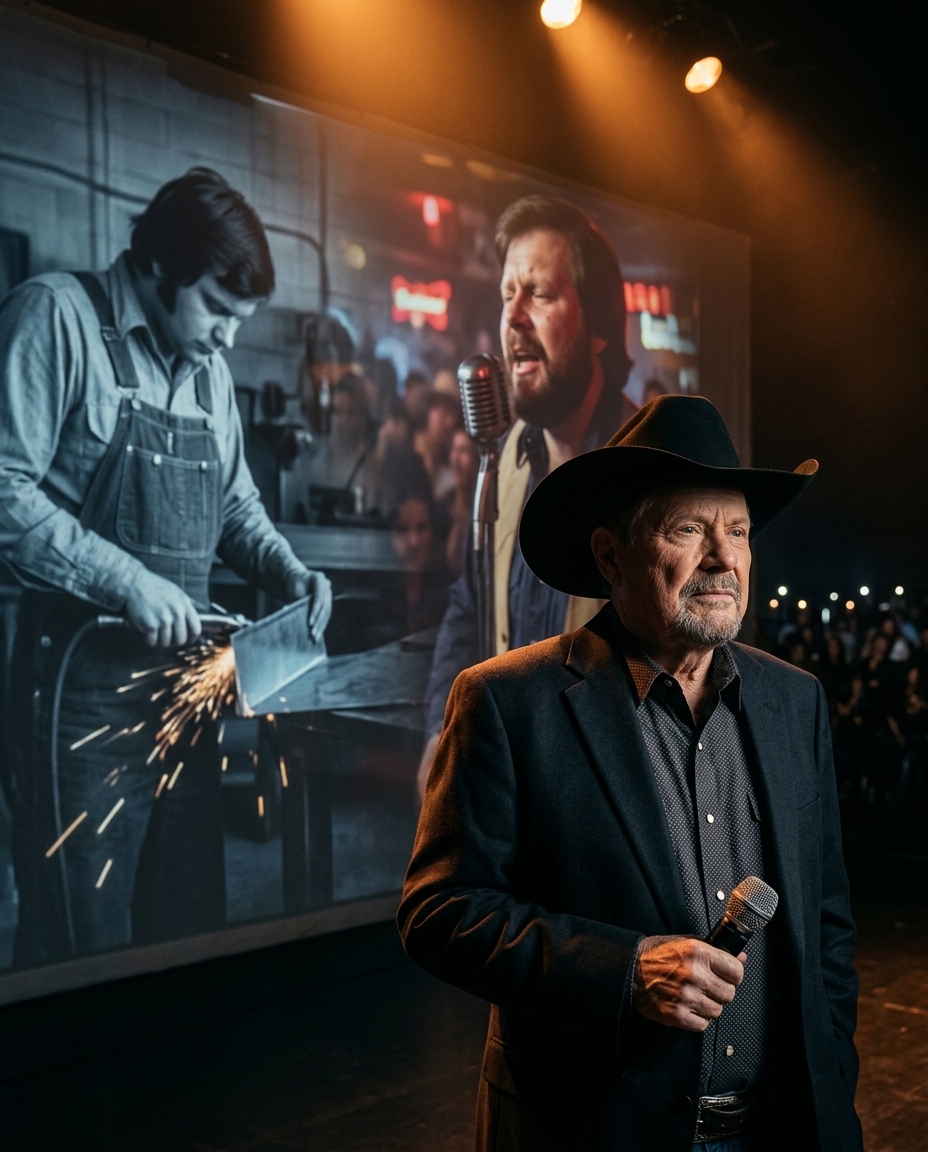
Moe Bandy has the kind of country music story that feels almost too grounded to be legendary. There is no overnight discovery, no polished shortcut, no easy line from talent to fame. Before Nashville knew the name Moe Bandy, Moe Bandy was a working man in San Antonio, spending his days bending sheet metal for his father and his nights singing in clubs filled with smoke, noise, and people who knew exactly what heartbreak sounded like.
That might be the most important part of the story. Moe Bandy did not sing about blue-collar life from a distance. Moe Bandy lived it. For twelve years, Moe Bandy worked a full-time trade while chasing country music after hours, carrying the kind of determination that does not look glamorous from the outside. It looks tired. It looks stubborn. It looks like a man betting on himself long after other people would have stopped.
Before the Hits, There Was Rodeo Dust and Hard Work
Long before the gold albums and chart success, Moe Bandy was a Texas kid with rodeo on his mind. Moe Bandy and brother Mike were riding bulls as teenagers, pushing toward danger with the confidence that only young men seem to have. But rodeo has a way of collecting payment. The broken bones began to add up, and eventually music became the road that made more sense.
Even then, it was not a clean break into the business. Moe Bandy played honky-tonks and beer joints while holding down the family trade during the day. That detail matters because it explains something listeners have always heard in the voice. Moe Bandy never sounded like someone trying to imitate country music. Moe Bandy sounded like someone who had already met the people inside those songs.
The Small Record That Opened a Big Door
For a long time, record labels were not rushing to take that chance. So Moe Bandy did what many real believers do when the industry says no: Moe Bandy found another way. A personal loan helped finance the recording of I Just Started Hatin’ Cheatin’ Songs Today, and only a small batch of copies was pressed at first. It was a modest move, almost fragile when viewed against the size of what came after.
But country music has always had room for songs that travel the slow way, from jukebox to local radio, from one believer to the next. That single became the crack in the wall. After that came the run that would make Moe Bandy one of traditional country’s most dependable hitmakers.
Ten number-one hits. Forty Top 10 songs. Sixty-six charted records. Five gold albums. Those are not sympathy numbers. Those are Hall of Fame numbers in the eyes of many fans, especially for an artist who helped keep the hard-country spirit alive when style and sound were constantly changing around him.
The Voice of Honky-Tonk Honesty
Moe Bandy built a catalog around the truths many singers were too polished to touch directly. Drinking songs. Cheating songs. Barroom songs. Songs where pride and regret sit at the same table. There was humor in some of them, pain in many of them, and a lived-in honesty in almost all of them.
Bandy the Rodeo Clown became one of the defining records of Moe Bandy’s career, but the title alone does not explain why it lasted. The song worked because Moe Bandy understood wounded pride, public performance, and the quiet sadness that can hide behind a crowd’s applause. That understanding gave the song weight.
It also helps explain why audiences still sing along. They are not just remembering a hit. They are recognizing a voice that never talked down to the people who bought the tickets.
Still Touring, Still Waiting
Now, at 82, Moe Bandy is still out there. Still touring. Still stepping in front of crowds who know the words. Still carrying a career that should not need defending but somehow still does when Hall of Fame season rolls around and the phone stays quiet.
The absence is hard to ignore. Moe Bandy has the résumé, the influence, the longevity, and the kind of songbook that helped define an era of real country music. Yet the Country Music Hall of Fame call has still not come.
Maybe that says something frustrating about recognition. But maybe Moe Bandy’s response says something even bigger about character.
Because Moe Bandy keeps going anyway.
That may be the most revealing part of this story. Not the awards. Not the statistics. Not even the hits. The deeper truth may be that Moe Bandy never needed a plaque to prove who Moe Bandy was. The work already did that. The songs already did that. The crowds still doing every word to Bandy the Rodeo Clown already do that.
Some artists chase legacy. Moe Bandy built one the slow way, with calloused hands, late-night sets, and songs that sounded like people you might actually know. Whether the Hall of Fame ever catches up or not, that kind of legacy is already standing on its own.
Post navigation
Some country music stories are loud. Others move quietly through the years, carried by loyalty, memory, and work that never really stops. David Frizzell’s story belongs to the second kind.
Long before awards, chart-topping singles, and industry applause, David Frizzell was just a boy from Texas trying to keep up with a family already marked by music. David Frizzell was on the radio at only nine years old, singing in a small town and learning early what it meant to stand in front of a microphone. Most children that age are still figuring out who they are. David Frizzell was already stepping into the world that would define his life.
By 12, David Frizzell was on tour with his older brother, Lefty Frizzell. Not as the headliner. Not as the star. David Frizzell was carrying bags, watching from the side, and absorbing every moment. Lefty Frizzell was not just a successful singer. Lefty Frizzell was one of the great shapers of country music, a voice that reached deep into the genre and left fingerprints on artists like Merle Haggard, Willie Nelson, and George Jones.
That kind of shadow can do two things to a younger brother. It can crush him, or it can teach him how to endure.
David Frizzell chose endurance.
Living in the Shadow of a Giant
There is something deeply human about being close enough to greatness to see its cost. David Frizzell did not know Lefty Frizzell as a legend first. David Frizzell knew Lefty Frizzell as a brother. That changes everything.
When Lefty Frizzell died at 47, the loss was bigger than one man. It was the end of a chapter that had shaped country music, but it was also a private family wound. Nashville would later honor Lefty Frizzell with a place in the Hall of Fame in 1982, and rightly so. But the family name did not stop needing someone to carry it once the applause faded.
David Frizzell stayed.
David Frizzell served in the Air Force, built his own career, and proved again and again that he was more than a footnote in someone else’s legend. David Frizzell found success the hard way, through years of work, persistence, and a willingness to keep showing up.
A Career of His Own
For many listeners, David Frizzell became unforgettable through the warm chemistry of the hit duet with Shelly West, You’re the Reason God Made Oklahoma. The song struck a nerve with country audiences and climbed all the way to No. 1. It was not a novelty moment. It was proof. David Frizzell could reach people on his own terms.
Then came another No. 1, the solo hit I’m Gonna Hire a Wino to Decorate Our Home, a song with humor, timing, and personality that showed another side of David Frizzell’s artistry. Along the way, David Frizzell earned a Grammy nomination and won CMA Song of the Year, achievements many artists spend a lifetime chasing and never touch.
David Frizzell did not borrow a career from the Frizzell name. David Frizzell built one while carrying the weight of it.
That is what makes the silence around David Frizzell so striking. The success was real. The longevity was real. The contribution was real. Yet Nashville never seemed to look at David Frizzell with the same sense of legacy that surrounded Lefty Frizzell.
The Work That Went Beyond Fame
Maybe the clearest sign of David Frizzell’s heart was not a hit record at all. David Frizzell wrote the book on Lefty Frizzell’s life, preserving the story instead of letting it drift into half-memory. Merle Haggard wrote the foreword, a quiet but powerful acknowledgment of how much Lefty Frizzell mattered and how seriously David Frizzell took the responsibility of telling that story right.
That feels important, because some people protect a legacy for publicity. Others do it because love leaves them no choice.
David Frizzell spent six decades keeping the Frizzell name alive. Not because it guaranteed attention. Not because it brought easy recognition. But because family, in country music as in life, often becomes its own calling.
Nashville celebrated Lefty Frizzell, and history says it should have. But David Frizzell’s journey asks a harder question: what do we owe the people who keep the flame burning after the spotlight moves on?
Maybe that is the part only a little brother could understand. David Frizzell was never just chasing his own success. David Frizzell was carrying memory, grief, pride, and devotion all at once. And sometimes, that kind of faithfulness says more about a man than any hall of fame ever could.