AT 23, MERLE HAGGARD WALKED OUT OF PRISON — SEVEN YEARS LATER, HIS PAST TOPPED THE CHARTS. On November 3, 1960, a 23-year-old Merle Haggard walked out of San Quentin Prison on parole, carrying more than two years of his sentence in silence. Freedom didn’t erase the label—it followed him. For years, the past trailed every stage, every song, every look from the crowd. Then came Branded Man—not a confession, but a reckoning. Seven years after the gates closed behind him, that semi-autobiographical song climbed to No. 1, turning scars into truth. The album Branded Man topped the charts, too, as if the man history tried to brand finally wrote his own name across the Billboard. What really happened between prison bars and that first No. 1… lives between the lines. – Country Music
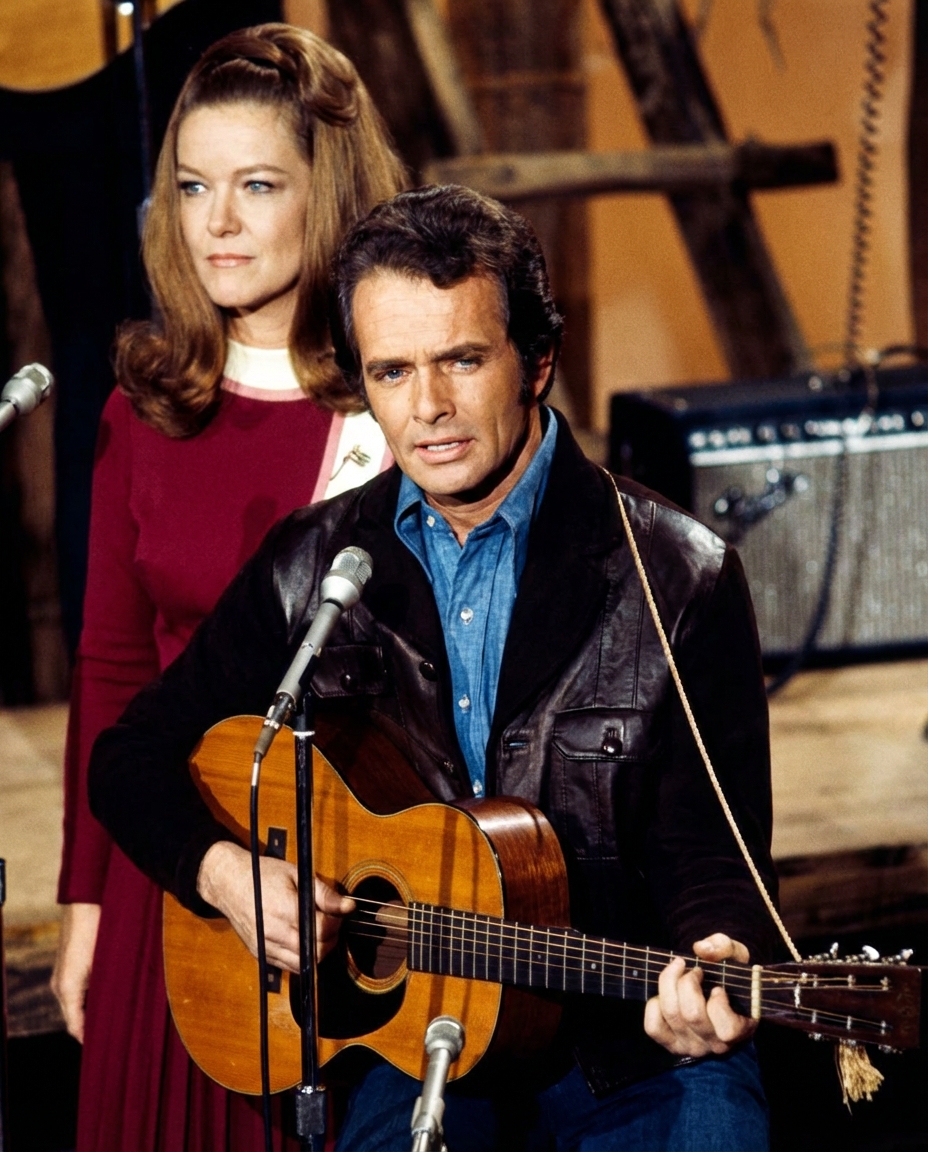
On November 3, 1960, a 23-year-old Merle Haggard stepped out of San Quentin Prison on parole with a kind of quiet that didn’t feel like relief. It felt like caution. The sky was the same sky other people got to look up at every day, but for Merle Haggard it seemed almost unfamiliar—like freedom was something you had to earn twice: once by leaving, and once by staying out.
He didn’t carry much. He didn’t need to. The label was the heavy thing, and it didn’t fit in a bag. It clung to him in the way strangers measured his face a second too long, in the way doors opened politely but not warmly, in the way a handshake could turn into a test. Some men leave prison and try to forget. Merle Haggard left prison and found out that forgetting wasn’t on the menu. The past was hungry, and it followed him like a shadow that refused to shorten.
The Kind of Freedom That Still Has Bars
Parole was not a celebration. Parole was a tightrope. Every day had rules you couldn’t see, and the punishment for slipping was always waiting, patient as a clock. In those early years, Merle Haggard learned how to move carefully through ordinary life—how to keep his head down in a room full of noise, how to smile without inviting questions, how to work like someone trying to outrun his own name.
Music was there, but it wasn’t the clean escape people like to imagine. Music did not erase what happened. Music simply gave Merle Haggard a place to put it. A melody could hold what he couldn’t say in daylight. A lyric could confess without begging. A stage could feel like a witness stand and a sanctuary at the same time.
Freedom didn’t erase the brand—it just taught Merle Haggard where it was burned in.
In the clubs and dance halls, he could feel it: the pause when someone recognized his story, the way a rumor could arrive before he did. Some audiences came for the songs. Others came to look at the man behind them, like they were checking if the trouble was still there, still alive, still dangerous. Merle Haggard wasn’t interested in being a spectacle. He was interested in being honest—and honesty, he learned, could be louder than any confession shouted into a microphone.
“Branded Man” Wasn’t an Apology
Then came “Branded Man.” When people describe it as semi-autobiographical, they often say it softly, like they’re afraid of making it too real. But that was the point: it was real. Not polished. Not cleaned up for comfort. It wasn’t a plea for sympathy, and it wasn’t a performance of regret meant to win the room.
It was a reckoning—the kind where you stop trying to outrun the past and instead turn around to face it. The song didn’t say, “Forget what I did.” It said, “This is what the world calls me, and this is what it costs.” Merle Haggard took what could have been a permanent mark and put it into a story he controlled.
That’s what made it dangerous in the best way. Plenty of people wanted outlaw energy as a costume. “Branded Man” was not a costume. It was a scar shown without theatrics. And for listeners who had ever been judged by one chapter of their life—whether they admitted it or not—it landed like a truth they recognized in their bones.
Seven Years Later, the Past Climbed the Charts
There’s a particular kind of twist to what happened next: seven years after the gates closed behind Merle Haggard, “Branded Man” climbed to No. 1. Not in spite of his past, but because he refused to lie about it. The song topped the charts like a challenge—like a man history tried to brand had finally written his own name across the Billboard.
And the album Branded Man rose, too, as if the public was admitting something it rarely says out loud: people don’t only connect to perfection. People connect to survival. They connect to the hard-earned voice of someone who knows what it means to pay for a mistake and still keep walking.
Some listeners heard it as a warning. Some heard it as a mirror. But nobody could call it fake. Merle Haggard wasn’t selling a myth about redemption that wraps everything up neatly. He was offering something messier and more human: the idea that a person can be marked by the past and still be worthy of a future.
What Happened Between the Bars and the First No. 1
It’s tempting to treat success like a clean ending. A hit song. A chart position. A headline. But the real story doesn’t live in the numbers. It lives in the long stretch of days when nobody was clapping yet—when Merle Haggard had to decide what kind of man he would be when the world wasn’t watching, or when it was watching for the wrong reasons.
What really happened between prison bars and that first No. 1 lives between the lines: the nights he chose discipline over impulse, the mornings he kept going even when the stigma showed up before he did, the slow courage of putting his truth into a song and letting strangers hold it.
Merle Haggard didn’t escape his past. Merle Haggard transformed it. And when “Branded Man” reached the top, it wasn’t just a victory for a record. It was proof that the name the world gives you doesn’t have to be the one that lasts.
Post navigation
In the world of country music, some men sing from their throat. Others sing from a wound. Vern Gosdin was the latter.
Nashville insiders used to whisper a half-joking warning to one another: “Don’t put Vern in the booth unless you’ve got a box of tissues ready.” It wasn’t a comment on weakness. It was a statement of fact. Something happened when Vern Gosdin stepped up to a microphone. The room didn’t just listen. It held its breath.
On paper, his voice was technically flawless. Perfect pitch. Effortless control. A tone smooth enough to glide, strong enough to carry. But none of that explains why his recordings felt heavier than most. The secret wasn’t his range. It wasn’t how high he could go or how deep he could fall.
It was the way his voice broke.
Not sloppy. Not accidental. It cracked like crystal hitting a marble floor in an empty room. Clean. Sharp. And unmistakably lonely. That fracture carried something you couldn’t rehearse — the sound of a man who had lived the words long before he ever sang them.
Vern Gosdin didn’t perform heartbreak. He documented it.
His life was marked by failed marriages, personal losses, and the kind of disappointments that don’t make headlines but quietly reshape a person. Dreams that didn’t pan out. Promises that expired. Relationships that ended not with explosions, but with silence. Where other artists tried to escape their pain, Vern stayed with it.
He didn’t hide the wreckage. He organized it into verses.
In the studio, he didn’t ask for tricks or distractions. No overproduction. No walls of sound. He didn’t need a band to hide behind. All he needed was a microphone and enough space to let the truth come through. Engineers learned not to interrupt him. Musicians learned to follow, not lead. The song always knew where it wanted to go.
Listeners felt it immediately. His records didn’t just play — they lingered. They sat with people in dark kitchens, empty living rooms, long drives with nowhere urgent to be. His songs weren’t about drama. They were about aftermath. About what happens when the shouting is over and you’re left alone with what’s real.
That’s why fans trusted him.
They didn’t hear a man pretending to hurt for a hit record. They heard someone who had already paid the price and was simply telling the truth about it. Each note felt like a confession that wasn’t asking for forgiveness — just understanding.
The nickname came naturally. People called him “The Voice.” Not because he was loud. Not because he was flashy. But because when Vern Gosdin sang, it sounded like the song itself had finally found the right mouth to speak through.
Yet there’s a quiet irony in that title.
For all the comfort his music gave others, Vern Gosdin himself carried his pain largely alone. He turned his wounds into something beautiful, something shared, something healing for strangers. And in doing so, he made it easy for the world to forget the man behind the sound.
Maybe he wasn’t just “The Voice.”
Maybe he was simply a man trying to articulate his pain so beautifully that we all listened… and forgot to ask if he needed comfort too.