A Mother’s Final Act Was Protection: The Dunwoody Shooting That Killed Crystal Williams and Danyel Sims. – Daily News
Crystal Williams was only twenty-two when she realized something inside her life had gone terribly wrong.

It didn’t arrive as a single dramatic moment. It crept in quietly—through tension that never fully lifted, through fear she couldn’t quite explain, through the growing understanding that staying was more dangerous than leaving. Crystal had lived with her ex-boyfriend, Justin Deion Turner, for just a short time, barely two months, but that was long enough for her instincts to speak clearly.
She needed to go home.
Home, to Crystal, didn’t just mean a physical place. It meant safety. It meant her mother. It meant breathing without fear and waking up without dread. Leaving wasn’t an act of rebellion or anger. It was an act of survival.

When Crystal told her mother, Danyel Sims, there was no hesitation.
Danyel was forty-six, a woman shaped by years of loving fiercely and protecting instinctively. She didn’t need details to understand. She heard what her daughter didn’t yet have the language to fully say. As mothers often do, she recognized the danger before it fully revealed itself.
“We’re getting you home,” she told Crystal.

Danyel was that kind of mother—the kind who showed up without being asked, who stood firm without raising her voice, who believed that love meant action. When her children were in trouble, she didn’t debate. She moved.
On September 6, 2020, Crystal, Danyel, and Crystal’s younger brother, Malachi, were doing something painfully ordinary.
They were leaving.
No shouting. No confrontation. Just the quiet intention of packing a life into a vehicle and driving away. Another teenager sat in the back seat. The SUV waited in the parking lot like it always had.

Concrete.
Parked cars.
An ordinary afternoon.
Nothing looked dangerous.
But danger does not always announce itself.
As they prepared to leave, Justin Deion Turner appeared. He positioned himself deliberately, blocking the SUV, cutting off their exit. In that instant, the air changed. Fear didn’t scream—it settled, cold and absolute.

Crystal understood immediately.
He knew she was leaving.
What followed unfolded in seconds, but those seconds would echo forever.
Turner opened fire.
Gunshots shattered the ordinary sounds of the day. Glass exploded. Metal screamed. Life fractured. There was no time to think, no time to run.
Crystal Williams was killed.

Danyel Sims was killed.
Malachi was critically injured.
The teenager in the back seat survived physically unharmed, but no one in that vehicle escaped unchanged. Trauma does not need to leave scars on the skin to be permanent.
In the chaos of those moments, one truth became clear later through testimony and memory.
Danyel did what mothers have done for generations.
She shielded her children with her body.

It wasn’t a decision made with thought or strategy. It was instinct, pure and ancient. When danger came, Danyel placed herself between violence and the people she loved most. Her final act was protection.
Crystal, too, had been acting out of courage.
She wasn’t trying to provoke or threaten. She was trying to leave. She believed—like so many do—that distance would bring safety, that going home would end the danger. She trusted that her mother’s presence would mean protection. She trusted that leaving was the right thing to do.
And it was.
What happened was not because Crystal left. It happened because someone could not accept her choice to do so.

Justin Deion Turner was arrested shortly after. He was charged with two counts of murder and aggravated assault. The legal system began its slow, methodical process—court dates, filings, charges that attempt to place order around chaos.
But no charge can undo what happened in that parking lot.
For Danyel’s husband, Crystal and Malachi’s stepfather, the loss was immediate and devastating. He spoke of a home that no longer felt whole. Of routines that no longer made sense. Of silence where laughter once lived.
Danyel had been the center of their family—the steady presence that kept everything balanced. She was warmth and structure, comfort and strength. Without her, the world felt permanently tilted.
Crystal’s absence carved its own wound.
She was young. Her life was just beginning. Friends remembered her as gentle, thoughtful, hopeful. She had plans beyond survival. She wanted peace. Independence. Joy. She believed she could step away from something dangerous and build something better.
She should have been allowed that chance.
Malachi survived, but survival carries its own weight. Healing is not just physical—it is emotional, psychological, lifelong. He carries the memory of that day with him always. He remembers his mother shielding him. He knows his sister was trying to escape. Those truths shape a person forever.

The family’s grief did not arrive all at once. It came in waves.
Some days were quiet, heavy with absence. Other days were sharp, overwhelming. Time did not erase the pain—it simply taught them how to exist alongside it.
The community responded with shock and sorrow. Many had never met Crystal or Danyel, yet felt deeply connected by the injustice of their deaths. There were vigils. Candles flickered in the dark. Names were spoken aloud, refusing to let them fade.
Because this story is not just about a shooting.
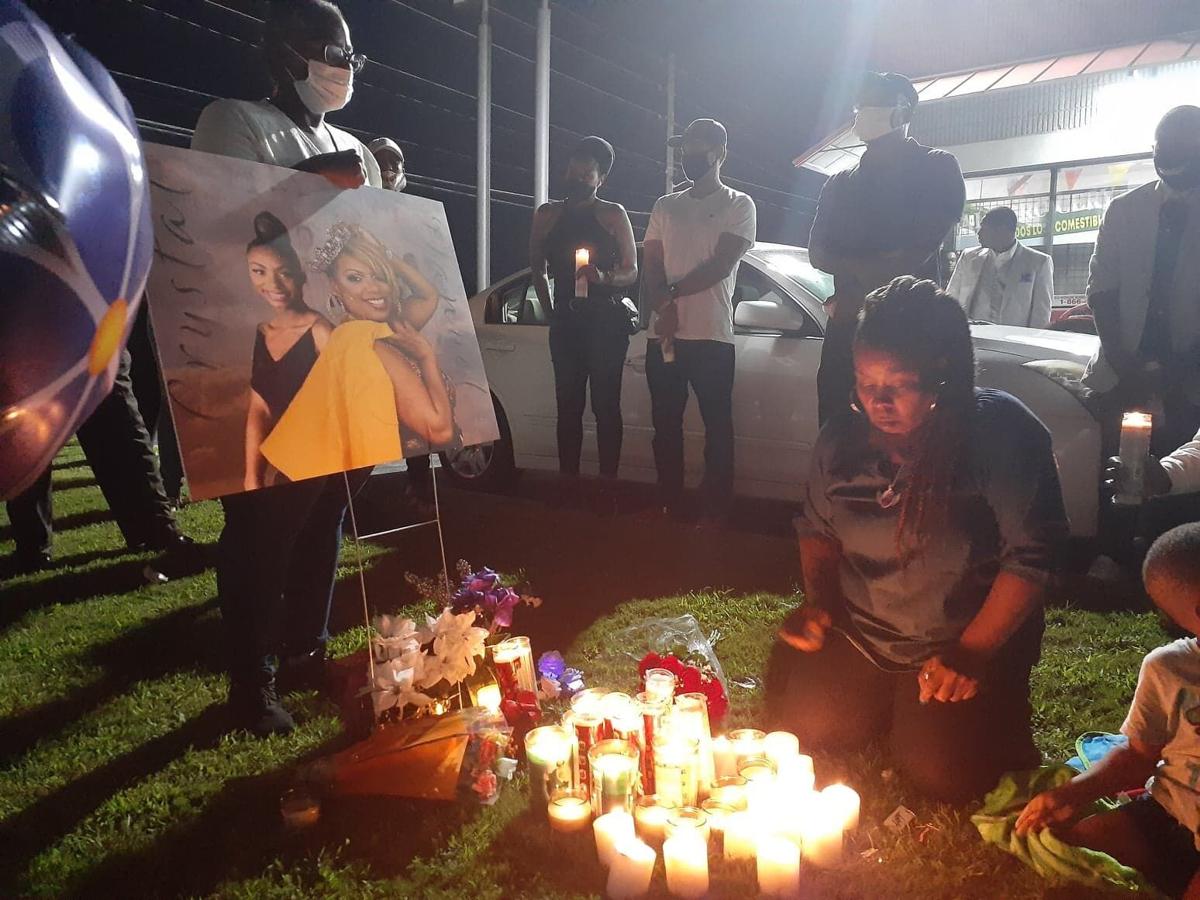
It is about what happens when control is challenged.
Leaving an abusive or controlling relationship is often the most dangerous moment. That truth is deeply uncomfortable, but it must be acknowledged. Crystal’s decision to leave was not reckless—it was brave. Danyel’s decision to stand beside her was not foolish—it was love.
The failure lies not with the victims, but with the person who believed ownership mattered more than life.
Crystal and Danyel did nothing wrong.
They were trying to go home.

Their story forces difficult reflection. About how society supports—or fails to support—those trying to leave dangerous situations. About how warning signs are often seen only in hindsight. About how protection should never require sacrifice.
Danyel’s final act was not fear.
It was love.
Crystal’s final choice was not defiance.
It was hope.

Their names now carry meaning beyond tragedy. They stand as reminders of courage, of maternal protection, of the urgency to take threats seriously and intervene sooner.
Crystal Williams should still be here.
Danyel Sims should still be here.
They should have made it home together.
Remembering them is not only about honoring loss—it is about demanding change. Because leaving should never be deadly. Protection should never cost a life.
May their memory be carried with dignity. May their love be remembered louder than the violence that took them. And may no mother ever again have to make protection her final act.
There are stories that arrive like thunder—sudden, loud, impossible to ignore.
And then there are stories that come softly, unfolding over time, asking the world to slow down long enough to truly see them.
This is one of those stories.

It is the story of Sameg Miller, an eight-year-old girl whose life changed in a single, violent moment—and of a mother who refused to let go for six long years. It is a story about love that stayed when everything else fell away. About a fight that never made headlines, but reshaped every breath of the people who lived inside it.
And it is the story of the day that fight ended—on the very day her mother was born.
The Day Everything Changed

September 7, 2019 began like any other day. There were no warnings, no sense that time was about to split into a before and an after.
Sameg was riding in the car with her family when another driver, a woman who passed out at the wheel, crossed the double yellow lines. The car slammed into a truck—then into Sameg’s vehicle.
The impact was devastating.
When first responders arrived, they found a little girl who had been laughing and moving only hours earlier now clinging to life. Her injuries were catastrophic:
She was paralyzed from the neck down.
She could no longer speak.
She was declared 80% brain dead.
She could not breathe on her own.

Doctors spoke in careful, heavy tones. Some said she would not survive the night. Others doubted she would make it through the hour.
But Sameg did.
And that was only the beginning.
A Hospital Becomes a World

For most families, hospitals are places you pass through. For Sameg, the hospital became her universe.
Days turned into months.
Months turned into years.
Five years.
Then six.
Machines breathed for her when her lungs could not. Tubes fed her. Nurses turned her fragile body to protect her skin and bones. Doctors tracked every number, every flicker of change that meant she was still holding on.

Sameg could not move.
She could not speak.
She could not hug her family back.
But she was alive.
And she was fighting.
Her mother never left.
She learned the language of monitors and alarms. She learned which sounds meant danger and which meant survival. She learned how to sleep in chairs, how to cry silently, how to pray when words stopped working.
There is no guidebook for parenting a child suspended between life and death. There is only love—and the decision to stay, even when staying breaks you.
Her mother stayed through every surgery, every emergency, every night when the question lingered in the dark: Will she still be here in the morning?

Still a Child
To the outside world, Sameg might have looked like a patient.
To her family, she was still a child.
They decorated her room. Played her favorite music. Brushed her hair gently. Talked to her as if she could answer—because hope, sometimes, sounds exactly like a one-sided conversation.
There were moments—tiny, precious moments—when her eyelashes fluttered at the sound of her mother’s voice. Moments when a monitor quickened, as if recognizing someone familiar. Moments that felt like quiet proof that somewhere inside, Sameg was still there.
Those moments became milestones.
Bigger than birthdays.
Bigger than holidays.
They were reasons to keep believing.

The Long Test of Faith
Six years is a lifetime in hospital time.
Doctors came and went. Nurses retired. Entire wings were renovated. Other families arrived, healed, and went home—while Sameg remained.
People say time heals.
Sometimes, time doesn’t heal.
Sometimes, it simply asks how much you’re willing to endure.
Her mother endured everything.
Even when doctors said recovery would never come. Even when hope felt thin and fragile. Even when exhaustion pressed down like weight on her chest.
She held her daughter’s hand. She whispered stories. She told her she was proud. She told her she was loved.
Every single day.
The Day Heaven Opened
Then came the day no one was prepared for.
Six years after the crash, Sameg’s body finally grew too tired to keep fighting.
She passed away.
On her mother’s birthday.
The day a mother entered the world became the day her daughter left it.
There is something unbearably cruel about that kind of symmetry—and something hauntingly intimate. Their lives had always been intertwined. In the end, even their timelines crossed one last time.
Her mother did not lose her child in a single moment. She lost her piece by piece over six years—through machines, tubes, and silent nights.
But this was the day she had to say goodbye.

What Strength Really Looks Like
We often imagine strength as loud and dramatic.
But real strength is quiet.
It looks like a child who never spoke again, yet inspired everyone who knew her story.
It looks like a mother who stayed when others might have broken.
It looks like a family who built a home in hospital hallways.
Sameg’s courage was not visible in movement or words. It lived in endurance. In presence. In the simple, extraordinary act of continuing to live.

She was paralyzed.
She was voiceless.
She was gravely injured.
And still—she fought for six years.
That is not just tragedy.
That is courage.

A Legacy That Remains
Sameg’s passing was not only an ending. It was the closing of a battle that lasted longer than anyone imagined—and the beginning of a legacy.
A legacy of quiet strength.
Of love that did not leave.
Of a mother who carried her child through every impossible day.
Her story matters because it reminds us how fragile life is. How quickly everything can change. And how powerful love can be when it refuses to let go.
Somewhere, another parent is sitting beside a hospital bed, holding a small hand, praying for a miracle.
Sameg’s story tells them this: You are not alone.

For Sameg
She did not get the childhood she deserved.
She did not get to run, dance, grow up, or chase dreams.
But she got love.
She got devotion.
She got six years of life that she fought for with everything inside her.

And that matters.
Today, her mother’s heart is shattered—but her daughter is free.
Free from machines.
Free from pain.
Free from the bed she never left.

Free.
Six years.
Countless prayers.
One little girl who held on longer than anyone believed possible.
And one mother who stayed.
Always.


